We will reply to your message within two hours.
Also known as mild steel, low-carbon steel is easy to machine, form, and weld. It's widely fabricated into parts that don’t require high strength.
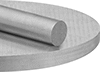
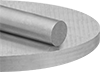
These rods are precision ground and held to a strict straightness tolerance, so they're ready for turning in a lathe.
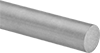
These rods are zinc galvanized for good corrosion resistance.
The matte plating on these rods increases corrosion resistance and wear resistance.
These sheets and bars are zinc galvanized for good corrosion resistance.
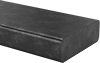
With a thickness that's precision ground to a tight tolerance, these bars are sometimes called flat stock.
The galvannealed coating allows these steel sheets to be painted without prepping the surface. They're easier to weld and more scratch resistant than zinc-galvanized steel sheets. Use them for outdoor signs, cabinets, and doors.
Coated with an aluminum-silicon alloy, these sheets resist corrosion while withstanding long-term exposure to high temperatures. Use in drying ovens, furnaces, and smokestacks.
Also known as black-annealed wire.
This wire is zinc galvanized for good corrosion resistance.
Coated with PVC for corrosion resistance, this carbon steel wire will stand up to outdoor use.
Made of stiff low-carbon steel to deflect less under load, these H-bars are commonly used in machine bases, construction, platforms, and frames.
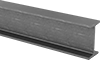
Made of rigid low-carbon steel, these I-beams are often used in construction, framing, lifting, and hoisting applications.
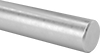
Ready for turning in a lathe, these rods are precision ground and held to a strict straightness tolerance.
The lead additive acts as a lubricant, which allows 12L14 carbon steel to withstand very fast machining. It's used to fabricate a wide variety of machine parts.
The same steel used in automobile bodies, this AHSS (advanced high-strength steel) allows you to fabricate high-strength parts using thinner material than you could with other types of steel. It is formable, weldable, and more economical than alloy steel.
This UHSS (ultra high-strength steel) allows you to fabricate high-strength parts using thinner material than you could with other types of steel. It is formable, weldable, and more economical than alloy steel.
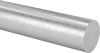
Ready for turning in your lathe, these rods are precision ground and held to a strict straightness tolerance.
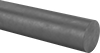
These rods are hardened for increased abrasion and impact resistance. Also known as chrome-moly steel, 4140 alloy steel resists fracturing from repeated stress.
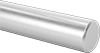
The chrome plating on these rods increases corrosion resistance.
Also known as chrome-moly steel, this versatile 4140 alloy steel is used for a wide range of parts, such as gears, axles, shafts, collets, and die holders. It resists fracturing from repeated stress.
Often called ETD-150, these rods are made from a modified version of 4140 alloy steel and have been drawn at high temperatures for excellent strength.
These hex bars are hardened for increased abrasion and impact resistance. They are also stress relieved to reduce the chance of warping during machining.
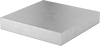
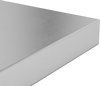
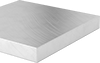
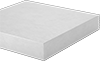
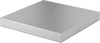
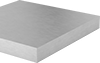
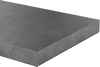
Also known as flat stock, the thickness on these sheets and bars is held to a tight tolerance.
Because the thickness is oversized, you can finish these bars to your exact requirements.
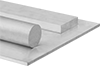
These sheets and bars are hardened for increased abrasion and impact resistance. Also known as chrome-moly steel, 4140 alloy steel resists fracturing from repeated stress.
The thickness is oversized for finishing to your exact requirements.
Also known as chrome-moly steel, this versatile 4140 alloy steel is used for a wide range of parts, such as axles, shafts, collets, and die holders. It resists fracturing from repeated stress.
4130 alloy steel has a low carbon content that provides good weldability. It's often used for gears, fasteners, and structural applications.
4130 alloy steel has a low carbon content that provides good weldability. It's often used for structural applications.
4130 alloy steel has a low carbon content for good weldability. It's often used for gears, fasteners, and structural applications.
Also known as chrome steel, 52100 is an extremely hard and wear-resistant material. It’s used for parts such as bearings, bushings, and punches.
Also known as chrome steel, 52100 is an extremely hard and wear-resistant material. This wire is often used for small-diameter bearings, bushings, and punches.
Easier to machine than 52100 alloy steel rods, these extremely hard and wear-resistant tubes are often used to create bearings, bushings, and other cylindrical parts that are under constant stress. They’re also known as chrome steel.
Use for power transmission and structural applications that involve extreme impact, heat, and wear.
A modified version of 4340 alloy steel, 300M is used in applications that require high yield strength, such as torsion bars and drive shafts.
While the low carbon content makes 8620 alloy steel easy-to-weld, it's the nickel, chromium, and molybdenum content that provides wear resistance.
Often used for gears, shafts, and ball screws, 4150 alloy steel resists wear from friction and abrasion.
The addition of lead gives 41L40 the best machinability of all the alloy steel we offer.
Offering excellent resistance to cracking from impact and compression, C300 alloy steel is often used for dies and tooling. It is also known as maraging steel and VascoMax.
A vacuum arc remelting (VAR) casting process gives 9310 superior strength, hardness, and fatigue resistance over other types of alloy steel. It's often machined into heavy duty gears, clutch parts, and ratchets.
Heat treated for enhanced hardness and strength, A514 alloy steel is suitable for structural applications and supporting heavy loads.
5160 alloy steel handles repeated cycles of stress without breaking just like spring steel. It’s often used to make flat springs.
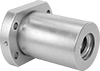
Found in hand-powered clamps, vises, grates, doors, and work tables, lead screws and nuts have broad, square threads that are well suited for quick assembly, high clamping forces, and lifting and lowering heavy objects.
These metric lead screws and nuts have broad, square threads that are well suited for quick assembly, high clamping forces, and lifting and lowering heavy objects. They're commonly found in hand-powered clamps, vises, grates, doors, and work tables.
Also known as single-start and self-locking lead screws and nuts, these have a single thread that runs the length of the screw. The nut travels only when the screw turns, so your system won't unexpectedly move when the lead screw is at rest.
Multiple thread channels (also known as thread starts) create faster linear travel than lead screws with a single thread start.
Also known as trapezoidal-thread lead screws and nuts.
Internal ball bearings provide smooth low-friction travel in applications that require high speeds, accurate positioning, and repeatable movement. Also known as single-start metric ball screws and nuts, these have a single thread that runs the length of the screw.
Also known as single-start ball screws and nuts, these have a single thread that runs the length of the screw. They operate with more torque than fast-travel ball screws and nuts.
Multiple thread channels (also known as thread starts) create faster linear travel than ball screws with a single thread start.
Keep your ball screw spinning without the ball nut damaging your system. When the ball nut reaches the stop pin at either end of the ball screw, it disengages and begins to idle.
Thread these one-piece collars onto an Acme lead screw.
Mount these two-piece collars anywhere on an Acme lead screw without removing components.
A set of ball bearings reduces friction and secures the end of a ball or lead screw.
A set of ball bearings reduces friction and secures the end of a metric ball or lead screw.
Mount these externally threaded shafts into tapped holes rather than using a shaft support, or attach a hex nut, shaft collar, or other threaded accessory.
Combine these general purpose shafts with a linear bearing and shaft support to create a basic linear motion system.
Internal threads allow you to mount these shafts onto threaded studs and fasteners, no shaft supports needed.
Lighter than solid shafts, hollow shafts reduce your total system weight and allow you to run various media such as electrical wiring, compressed air tubing, coolants, or lubricants through the center.
Use these general purpose shafts with bearings, sprockets, and gears to transmit rotary motion.
Combine with a machine key to transmit torque to gears, sprockets, and other power transmission components.
Attach threaded accessories, such as mixer propellers and fan blades, to the end of these shafts.
Connect these internally threaded shafts directly to threaded components, or use a fastener to secure.
A flat surface area allows set screws to dig into the shaft for securely mounting gears, sprockets, and bearings.
A shoulder near the end of the shaft provides a stop for gears, sprockets, and bearings.
Clip retaining rings into the grooves to separate and position gears, sprockets, and bearings.
Grooves on the surface of these shafts transmit rotary power while allowing bearings to move freely along the length of the shaft.
Designed for use with right-hand, internally threaded rod ends, these rods have right-hand threads on both ends. Use them for remote valve operators, throttle controllers, shifting mechanisms, and virtually any push/pull assembly.
Designed for use with right-hand, externally threaded rod ends, these rods have right-hand threads on both ends. Use them for remote valve operators, throttle controllers, shifting mechanisms, and virtually any push/pull assembly.
Similar to turnbuckles, these rods have right-hand threads on one end and left-hand threads on the other so you can make a linkage that adjusts for tension. Add right- and left-hand threaded rod ends to build your linkages.
Similar to turnbuckles, these rods have right-hand threads on one end and left-hand threads on the other so you can make a linkage that adjusts for tension.
Also known as rod‐end bearings, ball joint rod ends have an eyelet and a ball that swivels to support angular misalignment.
These internally threaded rod ends have an eyelet and a ball that swivels to support angular misalignment. Also known as rod-end bearings.
A carbon fiber-reinforced insert or PTFE liner reduces wear, handles shock loads, and eliminates the need for lubrication.
An oil-embedded bronze insert slowly releases lubricant throughout the life of these internally threaded rod ends.
An oil-embedded bronze insert slowly releases lubricant throughout the life of the rod end.
Connect your grease gun to the fitting to lubricate. Internal threads mate with rod end bolts, threaded rods, and other components with male threads.
Connect your grease gun to the fitting to lubricate.
An oil-embedded bronze insert slowly releases lubricant to the rod end. Connect your grease gun to the fitting to relubricate.
These internally threaded rod ends have an oil-embedded bronze insert that slowly releases lubricant over time. Connect your grease gun to the fitting to relubricate.
Made to extremely tight tolerances, these externally threaded rod ends are for applications that require positioning accuracy, such as accelerators and other types of control linkages.
Made to extremely tight tolerances, these internally threaded rod ends are for applications that require positioning accuracy, such as accelerators and other types of control linkages.
With at least 55° of ball swivel, these externally threaded rod ends accommodate greater misalignment than any other we offer.
With at least 55° of ball swivel, these rod ends accommodate greater misalignment than any other internally threaded rod end we offer.
Made of cadmium-plated steel, these externally threaded rod ends generally handle higher loads than stainless steel, aluminum, and nylon rod ends.
Made of cadmium-plated steel, these internally threaded rod ends generally handle higher loads than stainless steel, aluminum, and nylon rod ends.
These anodized aluminum rod ends are lighter than stainless steel rod ends and have good corrosion resistance.
These anodized aluminum rod ends are lighter than stainless steel rod ends and have good corrosion resistance. Internal threads mate with rod end bolts, threaded rods, and other components with male threads.
These internally threaded rod ends have an innovative body design that keeps the ball from being pushed out when supporting thrust loads.
An innovative body design keeps the ball from being pushed out when supporting thrust loads.
These externally threaded steel rod ends handle loads that are at least 25% higher than other comparably sized rod ends.
These internally threaded steel rod ends handle loads that are at least 25% higher than other comparably sized rod ends.
Along with internal threads, these rod ends have a double row of precision ball bearings that allows high speeds and smooth operation.
A double row of precision ball bearings allows high speeds and smooth operation.
With a ball joint at the top of the shank, these rod ends pivot in the middle of the body instead of in the eyelet. Use them for linear push applications that require movement along the length of the connecting rod.
Without changing the ID, these inserts handle some misalignment on rod ends.
These steel rod ends are machined to SAE standards.
Made of zinc-plated steel or stainless steel, these clevis rod ends offer more corrosion resistance than standard steel clevis rod ends.
Make quick adjustments to these rod ends by inserting and releasing the clevis pins without the need to bend them into place.
A male-threaded shank lets you build a linkage with a tapped tube or any female-threaded connection.
Thread or weld the unfinished shank of these rod ends to meet your specific linkage needs.
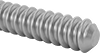
Good for general purpose applications where corrosion and high strength aren’t a concern, these rod end bolts are made of carbon steel.
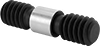
These alloy steel rod end bolts have the highest tensile strength of any fully threaded rod end bolt we offer.
Create pivoting connections in applications that require high shear strength—the partially threaded shank of these rod end bolts withstands more side force than a fully threaded shank.
Also known as swing bolts and eyebolts, these internally threaded rod end bolts have no moving parts. They're designed to make pivoting or hinge movements in applications that don't need to compensate for misalignment.
These alloy steel bolts have the highest tensile strength of any blank rod end bolt we offer.
With a rubber bushing, these bolts reduce noise and vibration—attach them to rods, pipes, tubes, and cable linkages that have male threading. They’re commonly known as isolated rod ends.
To reduce noise and vibration, these bolts have a rubber bushing—connect them to rods, pipes, tubes, and cable linkages that have female threading. They’re also known as isolated rod ends.
These black-oxide steel rod end bolts are heat treated for added strength.
These linkages offer excellent wear resistance. They consist of internally threaded ball joint rod ends with a ball stud attached to simplify mounting.
Able to stand up to frequent use, these linkages offer excellent wear resistance. They consist of ball joint rod ends with a ball stud attached to simplify mounting.
These internally threaded linkages have a slippery PTFE liner that reduces wear and eliminates the need for lubrication.
A slippery PTFE liner reduces wear and eliminates the need for lubrication.
Along with excellent wear resistance, these linkages have a grease fitting for easy lubrication. An internally threaded rod end connects to threaded rods, studs, and other parts with male threads.
These internally threaded linkages have an oil-embedded bronze insert that slowly releases lubricant throughout the life of the joint.
An oil-embedded bronze insert slowly releases lubricant throughout the life of the joint.
Along with excellent wear resistance, these linkages have a grease fitting for easy lubrication.
Use these bent linkages for light duty applications.
These ball joint linkages are made of steel.
Use these linkages to create inline pivoting connections. They have internal threads on one end and external threads on the other.
Use these externally threaded linkages to create inline pivoting connections.
Also known as spherical bearings, swivel joints support angular misalignment. Press them into a hole or housing where a ball joint rod end won’t fit.
A hex drive on one end allows these rods to be turned with a hex key for ease of installation.
These stud anchors strengthen the parts of buildings where steel framing connects to concrete. They’re also known as Nelson studs.
Reduce the chance your concrete will crack from expansion and contraction and other tensile stresses.
Mount one of these rods between the plunger and contact point to extend the reach of your indicator.
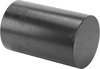
Grind these hardened steel blanks to the size and shape you need.
Typically used with thick-wall and high-pressure iron and steel unthreaded pipe fittings. Also known as Schedule 80.