


Filter by
Chain Standard
Roller Chain Type


System of Measurement


Component


Chain Style

Length
Material

Chain Pitch Type
Roller Diameter
Pin Diameter
U.S.–Mexico–Canada Agreement (USMCA) Qualifying
DFARS Specialty Metals
Export Control Classification Number (ECCN)
Mounting Hole Diameter
Performance
Attachment Roller Chain Links
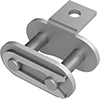 | 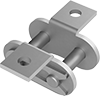 | 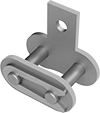 | 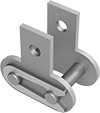 | 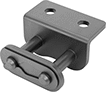 |
Connecting Link A-1 Attachment | Connecting Link K-1 Attachment | Connecting Link SA-1 Attachment | Connecting Link SK-1 Attachment | Connecting Link WA-2 Attachment |
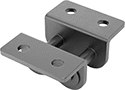 | 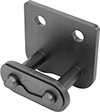 | 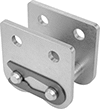 | 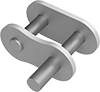 | 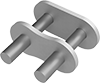 |
Connecting Link WK-2 Attachment | Connecting Link WSA-2 Attachment | Connecting Link WSK-2 Attachment | Connecting Link D-1 Attachment | Connecting Link D-3 Attachment |
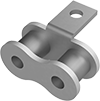 | 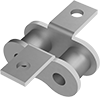 | 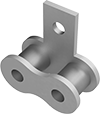 | 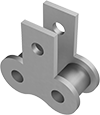 | |
Adding Link A-1 Attachment | Adding Link K-1 Attachment | Adding Link SA-1 Attachment | Adding Link SK-1 Attachment |
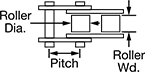 |
Links | Chain | ||||||||||||||
|---|---|---|---|---|---|---|---|---|---|---|---|---|---|---|---|
Attachment | Roller Chain | Connecting Link | Adding Link | ||||||||||||
Style | Type | Trade No. | Std. | Pitch | Roller Dia. | Roller Wd. | Working Load, lb. | Each | Each | Per Ft. | |||||
Steel | |||||||||||||||
| A-1 | Tab | 80 | ANSI | 1" | 0.625" | 5/8" | 4,250 | 7321K21 | 00000 | 7321K22 | 00000 | 6261K177 | 000000 | ||
| K-1 | Tab | 80 | ANSI | 1" | 0.625" | 5/8" | 4,250 | 7321K23 | 00000 | 7321K24 | 0000 | 6261K177 | 00000 | ||
| SA-1 | Tab | 80 | ANSI | 1" | 0.625" | 5/8" | 4,250 | 7321K48 | 0000 | 7321K49 | 0000 | 6261K177 | 00000 | ||
| SK-1 | Tab | 80 | ANSI | 1" | 0.625" | 5/8" | 4,250 | 7321K51 | 00000 | 7321K52 | 0000 | 6261K177 | 00000 | ||
| WA-2 | Tab | 80 | ANSI | 1" | 0.625" | 5/8" | 4,250 | 7321K284 | 00000 | ——— | 0 | 6261K177 | 00000 | ||
| WK-2 | Tab | 80 | ANSI | 1" | 0.625" | 5/8" | 4,250 | 7321K288 | 00000 | ——— | 0 | 6261K177 | 00000 | ||
| WSA-2 | Tab | 80 | ANSI | 1" | 0.625" | 5/8" | 4,250 | 7321K293 | 00000 | ——— | 0 | 6261K177 | 00000 | ||
| WSK-2 | Tab | 80 | ANSI | 1" | 0.625" | 5/8" | 4,250 | 7321K297 | 00000 | ——— | 0 | 6261K177 | 00000 | ||
| D-1 | Pin | 80 | ANSI | 1" | 0.625" | 5/8" | 4,250 | 7321K69 | 00000 | ——— | 0 | 6261K177 | 00000 | ||
| D-3 | Pin | 80 | ANSI | 1" | 0.625" | 5/8" | 4,250 | 7321K71 | 00000 | ——— | 0 | 6261K177 | 00000 | ||
Corrosion-Resistant-Coated Steel | |||||||||||||||
| A-1 | Tab | 80 | ANSI | 1" | 0.625" | 5/8" | 4,250 | 2452K14 | 0000 | ——— | 0 | 7210K5 | 00000 | ||
| K-1 | Tab | 80 | ANSI | 1" | 0.625" | 5/8" | 4,250 | 2452K34 | 00000 | ——— | 0 | 7210K5 | 00000 | ||
| SA-1 | Tab | 80 | ANSI | 1" | 0.625" | 5/8" | 4,250 | 2452K24 | 0000 | ——— | 0 | 7210K5 | 00000 | ||
| SK-1 | Tab | 80 | ANSI | 1" | 0.625" | 5/8" | 4,250 | 2452K44 | 00000 | ——— | 0 | 7210K5 | 00000 | ||
Roller Chain and Links
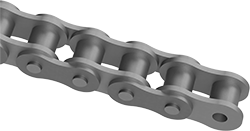 |
Chain |
 |
Connecting Links |
 |
Adding Links |
 |
Adding-and-Connecting Links |
|
Pair this chain with sprockets to transmit power between rotating shafts. Like the chain on a bike, the side plates have a figure-eight shape that grips the sprockets without slipping.
Lubrication is key to smooth operation and long chain life. Routinely apply oil by hand or install an oil dispenser for continuous lubrication.
Steel—The go-to for roller chain, steel is strong and economical. While proper lubrication helps prevent rusting, it’s not as corrosion resistant as coated or stainless steel.
Corrosion-Resistant-Coated Steel—Combines the strength of steel with the corrosion resistance of stainless steel. The coating has been tested to withstand 500 hours of salt spray, so it holds up well in wet and outdoor conditions.
Corrosion-Resistant 304 Stainless Steel—Won't corrode from frequent washdowns and mild chemicals, including ammonia often found in cleaning solutions.
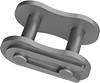
Connecting Link—Use a single link to join both ends of your chain. Start by removing the spring clip or cotter pin from the link’s side plate. Then, slide the link pins into the mating rollers at each end of your chain and snap the clip back on. Also known as master links.
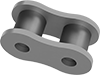
Adding Link—Attach with a connecting link to extend the length of your chain. Each link adds a length equal to the chain’s pitch. Also known as roller
links.
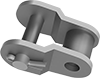
Adding-and-Connecting Link—An all-in-one link for adding and connecting. It adds a half-pitch length at the roller end, allowing finer length adjustments than full-pitch links. The pin end connects to your chain—except for trade number 25, which requires a separate connecting link. Remove
the side plate to install. Also known as half links and offset links.
Chain | Connecting Links | Adding Links | Adding-and-Connecting Links | ||||||||||||
|---|---|---|---|---|---|---|---|---|---|---|---|---|---|---|---|
Roller Chain | |||||||||||||||
Trade No. | Std. | Pitch | Roller Dia. | Roller Wd. | Working Load, lb. | Per Ft. | Each | Each | Each | ||||||
Single Strand | |||||||||||||||
Steel | |||||||||||||||
| 80 | ANSI | 1" | 0.625" | 5/8" | 4,290 | 6261K177 | 000000 | 6261K196 | 00000 | 6261K246 | 00000 | 6261K266 | 000000 | ||
Corrosion-Resistant-Coated Steel | |||||||||||||||
| 80 | ANSI | 1" | 0.625" | 5/8" | 4,100 | 7210K5 | 00000 | 7210K525 | 0000 | 7210K732 | 0000 | 7210K526 | 00000 | ||
Corrosion-Resistant 304 Stainless Steel | |||||||||||||||
| 80 | ANSI | 1" | 0.625" | 5/8" | 390 | 6264K88 | 00000 | 6264K55 | 00000 | 6264K65 | 00000 | 6264K75 | 00000 | ||
Heavy Duty Roller Chain and Links
|
Chain |
|
Connecting Links |
|
Adding Links |
|
Adding-and-Connecting Links |
|
Minimize shock loads—the thick side plates on this chain absorb jolts from motor startups, emergency braking, and sudden reversing. Like the chain on a bike, the side plates have a figure-eight shape that grips sprockets to transmit power between rotating shafts without slipping.
Lubrication is key to smooth operation and long chain life. Routinely apply oil by hand or install an oil dispenser for continuous lubrication.
Steel—The go-to for roller chain, steel is strong and economical. While proper lubrication helps prevent rusting, it’s not as corrosion resistant as coated or stainless steel.
Steel with Through-Hardened Pins—Even stronger than standard steel chain, the pins in this chain are treated to withstand the most extreme shock loads.
Connecting Link—Use a single link to join both ends of your chain. Start by removing the spring clip or cotter pin from the link’s side plate. Then, slide the link pins into the mating rollers at each end of your chain and snap the clip back on. Also known as master links.
Adding Link—Attach with a connecting link to extend the length of your chain. Each link adds a length equal to the chain’s pitch. Also known as roller
links.
Adding-and-Connecting Link—An all-in-one link for adding and connecting. It adds a half-pitch length at the roller end, allowing finer length adjustments than full-pitch links. The pin end connects to your chain. Remove the side plate to install. Also known as half links and offset links.
Chain | Connecting Links | Adding Links | Adding-and-Connecting Links | ||||||||||||
|---|---|---|---|---|---|---|---|---|---|---|---|---|---|---|---|
Roller Chain | |||||||||||||||
Trade No. | Std. | Pitch | Roller Dia. | Roller Wd. | Working Load, lb. | Per Ft. | Each | Each | Each | ||||||
Single Strand | |||||||||||||||
Steel | |||||||||||||||
| 80H | ANSI | 1" | 0.625" | 5/8" | 3,400 | 7265K6 | 000000 | 7265K624 | 00000 | 7265K626 | 00000 | 7265K625 | 00000 | ||
Steel with Through-Hardened Pins | |||||||||||||||
| 80H | ANSI | 1" | 0.625" | 5/8" | 3,300 | 5522N86 | 00000 | 5522N47 | 0000 | 5522N48 | 0000 | 5522N49 | 00000 | ||
ANSI Roller Chain Spring Clips
 |
Clip Shown Installed |
 |
For Roller Chain Trade No. | Lg. | Ht. | Pkg. Qty. | Pkg. | |||
|---|---|---|---|---|---|---|---|
Steel | |||||||
| 80 | 1 5/8" | 5/8" | 5 | 5501N17 | 00000 | ||
Flat-Edge Roller Chain and Links
 |
Chain |
 |
Connecting Links |
 |
Adding Links |
 |
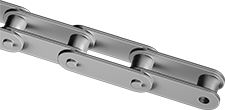
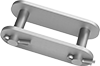
No more hang-ups thanks to the flat, oblong side plates that create a level surface to keep items moving along conveyor lines. Unlike standard roller chain, there are no divots to snag products. Pair this chain with sprockets to transmit power between rotating shafts.
Lubrication is key to smooth operation and long chain life. Routinely apply oil by hand or install an oil dispenser for continuous lubrication.
Steel—The go-to for roller chain, steel is strong and economical. While proper lubrication helps prevent rusting, it’s not as corrosion resistant as coated or stainless steel.
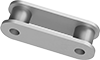
Connecting Link—Use a single link to join both ends of your chain. Start by removing the spring clip or cotter pin from the link’s side plate. Then, slide the link pins into the mating rollers at each end of your chain and snap the clip back on. Also known as master links.
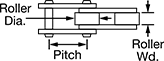
Adding Link—Attach with a connecting link to extend the length of your chain. Each link adds a length equal to the chain’s pitch. Also known as roller
links.
Low-Maintenance Roller Chain and Links
 |
Chain |
 |
Connecting Links |
 |
Adding-and-Connecting Links |
|
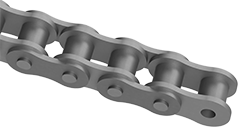
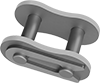
Forget the mess and the stress, this chain has bearings that run reliably with little or no need for lubrication. Like the chain on a bike, the side plates have a figure-eight shape that grips sprockets to transmit power between rotating shafts without slipping.
Oil-Embedded Open Bearings—Made from porous bronze saturated with oil, these bearings don’t require lubrication.
Steel—The go-to for roller chain, steel is strong and economical. It’s best for dry environments since moisture will cause it to rust.
Connecting Link—Use a single link to join both ends of your chain. Start by removing the spring clip or cotter pin from the link’s side plate. Then, slide the link pins into the mating rollers at each end of your chain and snap the clip back on. Also known as master links.
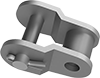
Adding-and-Connecting Link—An all-in-one link for adding and connecting. It adds a half-pitch length at the roller end, allowing finer length adjustments than full-pitch links. The pin end connects to your chain. Remove the side plate to install. Also known as half links and offset links.
Hollow-Pin Roller Chain and Links
 |
Chain |
 |
Connecting Links |
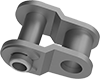 |
Adding-and-Connecting Link |
|
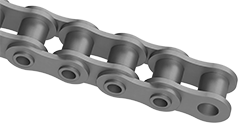
Slide rods or other attachments straight through the rollers. With hollow pins, there’s no need to take this chain apart or add attachment links like you would with standard roller chain. Pair the chain with sprockets to transmit power between rotating shafts. It’s commonly used in conveying applications.
Lubrication is key to smooth operation and long chain life. Routinely apply oil by hand or install an oil dispenser for continuous lubrication.
Steel—The go-to for roller chain, steel is strong and economical. While proper lubrication helps prevent rusting, it’s not as corrosion resistant as coated or stainless steel.
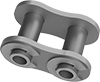
Connecting Link—Use a single link to join both ends of your chain. Start by removing the spring clip or cotter pin from the link’s side plate. Then, slide the link pins into the mating rollers at each end of your chain and snap the clip back on. Also known as master links.
Adding-and-Connecting Link—An all-in-one link for adding and connecting. It adds a half-pitch length at the roller end, allowing finer length adjustments than full-pitch links. The pin end connects to your chain. Remove the side plate to install. Also known as half links and offset links.
