We will reply to your message within two hours.
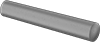
Use these metal dowel pins as pivots, hinges, shafts, jigs, and fixtures to locate or hold parts.
Slip these pins in and out during maintenance or prototyping—they’re undersized to make alignment easier.
To remove these pins, thread a screw or tool into the tapped hole, then pull them out.
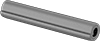
The flat side of these pins relieves trapped air, making them easier to insert in and remove from blind holes. To remove, thread a screw or tool into the tapped hole, then pull the pin out.
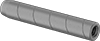
A spiral groove cut into these pins relieves trapped air but stays in 360° contact with the hole for a secure fit that's easy to insert in and remove from blind holes. To remove, thread a screw or tool into the tapped hole, then pull the pin out.
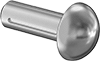
Grooves hold these pins in place, and a round head gives them a finished appearance.
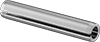
Also known as roll, tension, split, and expansion pins, these pins have a slot along one side that you squeeze closed to install them into unthreaded holes.
These spiral pins remain flexible after installation, so they absorb shock and vibration better than slotted spring pins. They work well in holes that are out of round.
For tough jobs, these spiral pins are 30% stronger than our standard coiled spring pins. They remain flexible after installation to absorb shock and vibration, and work well in holes that are out of round.
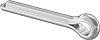
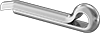
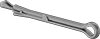
Also known as split pins, these have one prong slightly longer than the other so they’re easy to open. Bend prongs outward to secure.
For parts that spin or are otherwise difficult to access, slide these pins in and tap them with a hammer for a temporary hold. Reposition work, then bend the prongs outward to secure.
Slide these heavy duty pins into the through-hole in a clevis pin, then hit them with a hammer to wedge the prongs open.
To remove these pins, hit the small end with a punch to drive the pin out.
These internally threaded pins sit flush in an assembly. For easy removal from a blind hole, thread a screw into the pin and pull out.
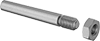
Threads on these pins stick out for easy removal from blind holes. Tighten the hex nut to draw the pin out.
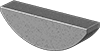
Woodruff keys work well near shaft shoulders and on tapered shafts. These keys have a rounded shape that makes them easy to remove when parts need to be taken apart frequently. Use them in light duty applications to connect gears and other components to shafts. Also known as half moon keys.
Straight keys, with a square or rectangular cross section, are the most common type of key. Install them in keyways to transmit torque from shafts to gears and other components.
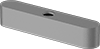
Thread a screw through the tapped hole to pop these keys out of a keyway. When installed, they fill oval keyways completely, reducing stress on the key and shaft. The rounded ends make it easy to slide gears, hubs, and other components into place.
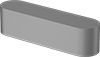
When installed, these keys fill oval keyways completely, reducing stress on the key and shaft. The rounded ends make it easy to slide gears, hubs, and other components into place. These are also known as feather keys.
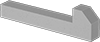
These keys have a tapered body that wedges in to the keyway for a more secure fit than standard machine keys. The gib head makes them easy to remove when parts need to be taken apart frequently, such as for maintenance or prototyping.
Cut this stock to length to create the machine key you need. Straight keys, with a square or rectangular cross section, are the most common type of key. Install in a keyway to transmit torque from shafts to gears and other components.
Also known as split pins, these have one prong slightly longer than the other so they’re easy to open.
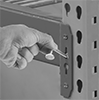
Prevent forklifts from knocking pallet racks apart—these 90° pins lock horizontal beams in place so you can safely load and unload pallets.