
We will reply to your message within two hours.
More
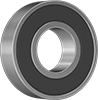
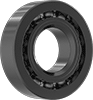
These steel ball bearings handle higher loads than stainless steel and plastic bearings.
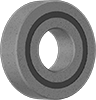
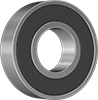
A solid polymer lubricant surrounds the balls, eliminating the need for additional lubrication. Because it's solid, the lubricant blocks out water and dust, extending the life of the bearing.
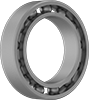
For greater accuracy and higher speeds, these bearings are made to tighter tolerances than standard ball bearings.
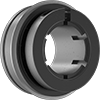
For use on tapered shafts and round shafts with adapter sleeves, these ball-bearings have a spherical raceway to compensate for shaft misalignment.
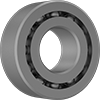
Good for use in electric motors and power generators, these bearings have ceramic balls that insulate against stray current to prevent damage to the bearing.
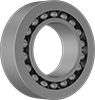
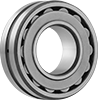
With a spherical raceway and two rows of balls, these bearings compensate for shaft misalignment.
A solid polymer lubricant surrounds the balls, eliminating the need for additional lubrication. Bearings are 440C stainless steel.
Good for applications with incidental food contact, these 440C stainless steel bearings have a food-grade, solid polymer lubricant between the balls and race that eliminates the need for additional lubrication.
Bearings are 440C stainless steel for good corrosion resistance.
Quickly secure these bearings onto shafts with the clamp-on collar for a concentric, mar-free hold.
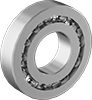
Install these bearings for use with combined radial and thrust loads. They are often used in spindle applications and can be combined with cylindrical roller bearings to better handle radial loads.
These bearings have twice as many contact points as angular-contact ball bearings.
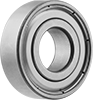
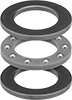
Steel balls and washers allow these bearings to handle higher loads than bearings with stainless steel components.
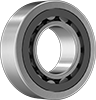
With cylindrical rollers to distribute load over a large surface area, these bearings are often used to support heavy loads at high speeds in applications such as power generation and metal recycling.
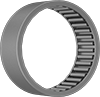
Also known as drawn-cup roller bearings, these are our thinnest roller bearings. The outer ring is drawn out to form a lip that holds the bearing together.
Two rows of rollers give these bearings load capacities over five times higher than comparably sized tapered-roller bearings.
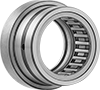
A built-in thrust ball bearing reduces wear from adjacent shaft components, while the needle-roller bearing supports radial loads.
The addition of iron and aluminum gives these aluminum-bronze bearings high strength and excellent corrosion resistance—making them suitable for use in marine and mining applications.
These bronze bearings are strong, wear resistant, and excellent at handling shock loads.
Use where high loads and speeds are not required.
With oil for reduced friction and iron for added strength, these bearings handle frequent stops and starts in high-load applications.
A figure-8-shaped groove provides a flow path for lubricant, distributing it evenly along the bearing’s surface.
Ball bearings operate with less friction than other bearings, so they can run at higher speeds.
Roller bearings have a thinner profile and larger contact area than ball bearings, making them stronger and more space-efficient than ball bearings.
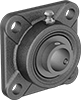
A bolt in each corner makes for a secure, even hold.
The tapered rollers in these bearings support large shafts at high static loads.
Ball bearings operate with less friction than other bearings, so you can run them at higher speeds.
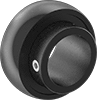
Swap out worn inserts instead of replacing the entire mounted unit.
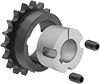
Insert these bushings into the bore of your sprocket for flush or recessed mounting.
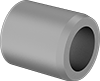
Mount these hubless bushings flush into your sprocket or pulley for a slim profile with no protruding screws.
Also known as jig bushings, these metric drill bushings fit inside fixture plate holes to guide drill bits, counterbores, reamers, and other cutting tools. They improve accuracy so that your drilled holes and cuts are consistent from part to part.
Precisely align, level, and adjust spacing on fasteners and shafts with these shims.