We will reply to your message within two hours.
More
With the highest lead content of all the brass alloys, 360 offers the best machinability. Often called free-machining and free-cutting brass, it stands up to high-speed drilling, milling, and tapping operations with minimal wear on your tools. It’s commonly used for gears, pinions, and lock components.
The diameter of these rods is held to a ±0.0002" tolerance.
The most formable brass we offer, 260 offers better weldability than 300 series brass but it’s not as machinable. Sometimes called cartridge brass, it's commonly used for ammunition casings, radiator components, and decorative door hardware.
353 brass is more formable than 385 brass while maintaining good machinability. Commonly called engraver’s brass, it’s well suited for fabrication processes such as knurling and threading. Use it to make nuts, gears, drawer pulls, and hinges.
A lead-free alternative to 485 brass, 464 brass offers good weldability, strength, and wear resistance. It’s widely used for marine hardware, pump and propeller shafts, and rivets.
Often called architectural bronze, 385 brass is easy to machine and has excellent formability when heated. It is typically used for handrails, ornamental trim, and hardware, such as hinges and lock bodies.
Also known as high-leaded naval brass, 485 brass contains lead for good machinability. It is commonly used for marine hardware, valve stems, and screw machine products.
Offering the highest yield strength of all our brass, 330 has a low lead content for a good balance of machinability and formability. It's used for fire station poles, pump cylinder lines, and plumbing accessories.
Diameter is oversized to allow for finishing.
These rods are precision ground for a tight diameter tolerance of ±0.0005".
Offering excellent antifriction qualities, 932 bronze also offers good strength and wear resistance. It's also known as SAE 660 and is often used for bearings, bushings, and thrust washers.
Powdered bronze is pressed and then impregnated with SAE 30 oil to make this material self-lubricating.
An excellent alternative to oil-filled bronze, graphite-filled bronze provides dry lubrication in temperatures as high as 700° F.
Known for its ability to resist stress cracking and fatigue, 544 bronze also offers good formability and excellent machinability. It's commonly called phosphor bronze.
954 bronze contains a minimum of 10% aluminum for strength and weldability. It is also known as aluminum bronze. It's widely used for bearings, bushings, valve bodies, and worm gears.
954 bronze contains a minimum of 10% aluminum for strength and weldability. It is also known as aluminum bronze. It's widely used for bearings, bushings, valve bodies, and worm gears. The strength of this material increases with heat treating.
Frequently called manganese brass, 863 bronze can handle heavy loads and high speeds when properly lubricated.
An easier-to-machine alternative to 932 bronze, 936 also has better corrosion resistance. It's also called modified SAE 64.
AMPCO® 18 is a premium aluminum-bronze alloy that combines strength with superior wear resistance.
Commonly called silicon-bronze, 655 bronze contains more silicon than other bronze alloys, making it suitable for all types of welding.
A low-lead alternative to 316 bronze, 642 bronze is just as machinable with higher strength. It is also called aluminum-silicon-bronze.
The addition of nickel gives 630 bronze high strength. It is also called aluminum-nickel-bronze.
For a good combination of strength, machinability, and weldability, choose 955 bronze.
Also known as leaded commercial bronze, 316 contains lead for good machinability.
Because 510 bronze is very strong and formable, it is the best choice for applications involving repetitive motion, such as springs and bellows.
Found in hand-powered clamps, vises, grates, doors, and work tables, lead screws and nuts have broad, square threads that are well suited for quick assembly, high clamping forces, and lifting and lowering heavy objects.
These metric lead screws and nuts have broad, square threads that are well suited for quick assembly, high clamping forces, and lifting and lowering heavy objects. They're commonly found in hand-powered clamps, vises, grates, doors, and work tables.
Also known as single-start and self-locking lead screws and nuts, these have a single thread that runs the length of the screw. The nut travels only when the screw turns, so your system won't unexpectedly move when the lead screw is at rest.
Multiple thread channels (also known as thread starts) create faster linear travel than lead screws with a single thread start.
Also known as trapezoidal-thread lead screws and nuts.
Start brazing with this assortment that includes alloy without cadmium for joining dissimilar metals, alloy without cadmium for copper and copper alloys, and a jar of flux.
Use these cadmium-free alloys with most metals in general purpose applications.
No need to add flux—these alloys have it built in.
Use these alloys with most metals in general purpose applications.
These alloys create stronger bonds than standard brazing alloys.
When melted, these alloys form a thin liquid that easily flows into smaller gaps than standard gap-filling brazing alloys.
These alloys melt into thicker liquid than standard brazing alloys, which allows them to fill larger gaps.
These alloys melt into thicker liquid than standard brazing alloys for copper, which allows them to fill larger gaps.
Join copper tubing and tube fittings with a stronger bond than standard brazing rings for copper.
These alloys create stronger bonds than standard brazing alloys for copper.
Use these alloys for general purpose applications.
These alloys are also known as trimetal brazing strips. They have silver with nickel alloy sides and a copper core.
Also known as trimetal brazing strips, these alloys have silver with nickel alloy sides and a copper core.
These electrodes are commonly used for metallic carbon arc welding of brass, bronze, and copper to themselves, and to mild steel, stainless steel, and cast iron.
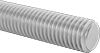
Brass threaded rods are corrosion resistant in wet environments, electrically conductive, and nonmagnetic.
These metric brass threaded rods are corrosion resistant in wet environments, electrically conductive, and nonmagnetic.
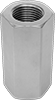
Brass coupling nuts are corrosion resistant in wet environments and electrically conductive.
Typically used with high-pressure brass and bronze threaded pipe fittings.
Typically used with low-pressure brass and bronze threaded pipe fittings.
Typically used with precision extreme-pressure brass and bronze threaded pipe fittings.
Typically used with medium-pressure brass and bronze threaded pipe fittings.
Typically used with brass and bronze unthreaded pipe fittings.
Protect electrical systems from lightning strikes on structures up to seventy-five feet tall.
A fluorescent orange handle makes these retrievers stand out, so they’re less likely to be misplaced.
LEDs light the magnetized tip for picking up screws, nuts, and other small steel objects in dark areas.
Connect float valve bodies and floats with these rods.
These rod end bolts are good for wet and corrosive environments—for maximum mounting flexibility, cut the fully threaded shaft to whatever length you need.
Pivot and hinge components in wet and corrosive environments with these stainless steel or brass rod end bolts.
Made to extremely tight tolerances, these externally threaded rod ends are for applications that require positioning accuracy, such as accelerators and other types of control linkages.
Made to extremely tight tolerances, these internally threaded rod ends are for applications that require positioning accuracy, such as accelerators and other types of control linkages.