

Filter by
System of Measurement
Voltage

Electrical Connection


Current @ Voltage


NEMA Type


Cord Length
REACH
U.S.–Mexico–Canada Agreement (USMCA) Qualifying
DFARS Specialty Metals
Export Control Classification Number (ECCN)
USB Chargers
 |  |  |
Style 1 | Style 2 | Style 3 |
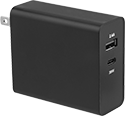 | 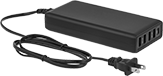 | 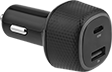 |
Style 9 | Style 10 | Style 13 |
 |
NEMA 1-15 Plug |
Straight Blade NEMA 1-15 Plug
| |
Style 1 | Style 2 |
| |
Style 3 | Style 9 |
| |
Style 10 | NEMA 1-15 Plug |
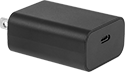
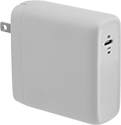
USB-C—USB-C chargers are quickly becoming the new standard, often seen on new phones and tablets. Some are USB-C Power Delivery 3.0 certified, so they charge your devices on average 3-4 times faster than standard chargers because they send more power over your cable. 18W chargers will power phones and tablets sold after 2016. 27W chargers will power small laptops. Choose chargers with an output greater than 27W to charge large laptops and other high-power devices.
USB-A—USB-A chargers have the traditional USB connection. 5W chargers are typically used with small electronic devices such as speakers, routers, and cameras. 10.5W chargers are typically used with phones and tablets sold before 2016. 18W chargers will power phones and tablets sold after 2016. To charge large laptops and other high-power devices, use chargers with an output greater than 27W.
Cannot Be Sold To—Chargers cannot be sold to the listed areas due to energy efficiency regulations.
Output | ||||||||||||||||
|---|---|---|---|---|---|---|---|---|---|---|---|---|---|---|---|---|
Style | Connection (No. of Ports) | Power | Voltage | Input Voltage, V AC | Cord Lg., ft. | Low-Voltage Output Protection | Voltage Regulator Type | Shock Protection Class | Features | Certification | External Power Supply Efficiency Std. | Specs. Met | Cannot Be Sold To | Each | ||
| 1 | USB-C (1) | 18 W | 5V DC, 9V DC, 12V DC, 15V DC | 100 to 240 | — | — | Switching | II | USB-C Power Delivery 3.0 | UL Listed, C-UL Listed | DoE Level VI, CoC Tier 2 | UL 2089 | — | 3741T31 | 000000 | |
| 1 | USB-C (1) | 27 W | 5V DC, 9V DC, 12V DC, 15V DC | 100 to 240 | — | LPS | Switching | II | USB-C Power Delivery 3.0 | UL Listed, C-UL Listed | DoE Level VI, CoC Tier 2 | UL 2089 | — | 3741T32 | 00000 | |
| 2 | USB-C (1) | 65 W | 5V DC, 9V DC, 12V DC, 15V DC, 20V DC | 100 to 240 | — | — | — | — | USB-C Power Delivery 3.0 | UL Listed, C-UL Listed | DoE Level VI | — | — | 7499N32 | 00000 | |
| 3 | USB-C (1) | 100 W | 5V DC, 9V DC, 15V DC, 20V DC | 100 to 240 | — | LPS | — | — | USB-C Power Delivery 3.0 | UL Listed | DoE Level VI | — | Canada | 7499N22 | 00000 | |
| 9 | USB-A (1) USB-C (1) | 12 W 39 W | 5V DC 5V DC, 9V DC, 15V DC | 100 to 240 | — | LPS | — | — | — | UL Listed | DoE Level VI | — | Canada | 7499N13 | 00000 | |
| 10 | USB-C (1) USB-A (4) | 86 W 12 W | 5V DC, 9V DC, 12V DC, 15V DC, 20V DC 5V DC | 100 to 240 | 4 | — | — | — | USB-C Power Delivery 3.0 | UL Listed, C-UL Listed | — | — | Canada | 7499N23 | 000000 | |
Vehicle Plug
|
Style 13 |
USB-C—USB-C chargers are quickly becoming the new standard, often seen on new phones and tablets. Some are USB-C Power Delivery 3.0 certified, so they charge your devices on average 3-4 times faster than standard chargers because they send more power over your cable. 18W chargers will power phones and tablets sold after 2016. 27W chargers will power small laptops. Choose chargers with an output greater than 27W to charge large laptops and other high-power devices.
USB-A—USB-A chargers have the traditional USB connection. 5W chargers are typically used with small electronic devices such as speakers, routers, and cameras. 10.5W chargers are typically used with phones and tablets sold before 2016. 18W chargers will power phones and tablets sold after 2016. To charge large laptops and other high-power devices, use chargers with an output greater than 27W.
Output | |||||||||
|---|---|---|---|---|---|---|---|---|---|
Style | Connection (No. of Ports) | Power | Voltage | Voltage, V DC | Features | Certification | Each | ||
| 13 | USB-C (1) USB-A (1) | 60 W 18 W | 5V DC, 9V DC, 12V DC, 15V DC, 20V DC 5V DC, 9V DC, 12V DC | 12 | USB-C Power Delivery 3.0 | CE Marked | 7499N21 | 000000 | |
AC to DC Adapter Cords
 |
 |
Negative |
 |
Positive |
 |
NEMA 1-15 Plug |
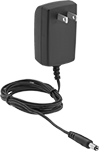
Plug these adapter cords into a standard outlet and they change AC voltage to DC voltage. These cords use switching regulation, so they produce the stated voltage even when your outlet’s power or the power drawn by your device fluctuates. It also means they won’t get too hot. They have an LPS low-voltage output and Class II shock protection, so if something fails inside these cords, they’ll limit the risk of electrical shocks. These cords meet U.S. and Canadian safety standards as well as U.S. DOE (Department of Energy) Level VI standards for energy efficiency.
When choosing an adapter, match the output voltage and polarity of your device. Look for the polarity illustration on your device or the adapter you're replacing. The current you choose should, at a minimum, match your device. You can choose a higher current, but it will not improve performance.
Output Connection | Input Connection | Negative Polarity | Positive Polarity | |||||||||||||||||
|---|---|---|---|---|---|---|---|---|---|---|---|---|---|---|---|---|---|---|---|---|
Electrical Connection | Voltage, V DC | Current, amp | End ID, mm | End OD, mm | End Shape | Electrical Connection | Voltage, V AC | Current, amp | NEMA Type | End Shape | Lg., ft. | Electrical Protection Type | Certification | External Power Supply Efficiency Std. | Color | Each | Each | |||
| Barrel | 15 | 0.56 | 2.1 | 5.5 | Straight | Straight Blade | 120, 240 | 0.4 | 1-15 | 90° Elbow | 6 | Overvoltage, Short Circuit | UL Listed, C-UL Listed | DoE Level VI | Black | 70235K671 | 00000 | 70235K664 | 00000 | |
| Barrel | 15 | 0.56 | 2.5 | 5.5 | Straight | Straight Blade | 120, 240 | 0.4 | 1-15 | 90° Elbow | 6 | Overvoltage, Short Circuit | UL Listed, C-UL Listed | DoE Level VI | Black | 70235K672 | 0000 | 70235K669 | 0000 | |
| Barrel | 15 | 0.8 | 2.1 | 5.5 | Straight | Straight Blade | 120, 240 | 0.4 | 1-15 | 90° Elbow | 6 | Overvoltage, Short Circuit | UL Listed, C-UL Listed | DoE Level VI | Black | 70235K682 | 00000 | 70235K673 | 00000 | |
| Barrel | 15 | 0.8 | 2.5 | 5.5 | Straight | Straight Blade | 120, 240 | 0.4 | 1-15 | 90° Elbow | 6 | Overvoltage, Short Circuit | UL Listed, C-UL Listed | DoE Level VI | Black | 70235K683 | 00000 | 70235K681 | 00000 | |
| Barrel | 15 | 1.2 | 2.1 | 5.5 | Straight | Straight Blade | 120, 240 | 0.5 | 1-15 | 90° Elbow | 6 | Overvoltage, Short Circuit | UL Listed, C-UL Listed | DoE Level VI | Black | 70235K694 | 00000 | 70235K686 | 00000 | |
| Barrel | 15 | 1.2 | 2.5 | 5.5 | Straight | Straight Blade | 120, 240 | 0.5 | 1-15 | 90° Elbow | 6 | Overvoltage, Short Circuit | UL Listed, C-UL Listed | DoE Level VI | Black | 70235K697 | 00000 | 70235K692 | 00000 | |
| Barrel | 15 | 1.6 | 2.1 | 5.5 | Straight | Straight Blade | 120, 240 | 0.8 | 1-15 | 90° Elbow | 6 | Overvoltage, Short Circuit | UL Listed, C-UL Listed | DoE Level VI | Black | 70235K72 | 00000 | 70235K98 | 00000 | |
| Barrel | 15 | 1.6 | 2.5 | 5.5 | Straight | Straight Blade | 120, 240 | 0.8 | 1-15 | 90° Elbow | 6 | Overvoltage, Short Circuit | UL Listed, C-UL Listed | DoE Level VI | Black | 70235K7 | 00000 | 70235K699 | 00000 | |
| Barrel | 15 | 2.4 | 2.1 | 5.5 | Straight | Straight Blade | 120, 240 | 1.3 | 1-15 | 90° Elbow | 6 | Overvoltage, Short Circuit | UL Listed, C-UL Listed | DoE Level VI | Black | 70235K711 | 00000 | 70235K705 | 00000 | |
| Barrel | 15 | 2.4 | 2.5 | 5.5 | Straight | Straight Blade | 120, 240 | 1.3 | 1-15 | 90° Elbow | 6 | Overvoltage, Short Circuit | UL Listed, C-UL Listed | DoE Level VI | Black | 70235K718 | 00000 | 70235K707 | 00000 | |
Detachable-Cord AC to DC Adapters
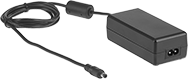 | 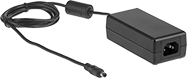 |
IEC C8 Input and Barrel Output | IEC C14 Input and Barrel Output |
 |  |
IEC C8 Input | IEC C14 Input |
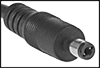 | |
Barrel Output | Positive |
Couple these adapters with a cord that matches your outlet and length requirements to run DC-powered electronics. Instead of plugging directly into an outlet, the body of these adapters sits on the floor or other surface, so it remains out of the way and won’t block multiple outlets. These adapters use switching regulation—they produce the stated voltage even when your outlet’s power or the power drawn by your device fluctuates. Most have an LPS low-voltage output, so if something fails inside these adapters, they’ll limit the risk of electrical shocks. They meet U.S., Canadian, and European safety standards. Many also meet U.S. and European standards for energy efficiency.
When choosing an adapter, match the output voltage and polarity of your device. Look for the polarity illustration on your device or the adapter you're replacing. The current you choose should, at a minimum, match your device. You can choose a higher current, but it will not improve performance.
IEC C8—Adapters with an IEC C8 input require power cords with a C7 socket. With Class II shock protection, they have two levels of insulation that prevent electrical shocks.
IEC C14—Adapters with an IEC C14 input require power cords with a C13 socket. They have Class I shock protection and prevent electrical shocks with a combination of insulation and a protective ground.
Output Connection | Input Connection | ||||||||||||||||||||||||||||||||||||||||||||||||||||||||||||||||||||||||||||||||||||||||||||||||||
|---|---|---|---|---|---|---|---|---|---|---|---|---|---|---|---|---|---|---|---|---|---|---|---|---|---|---|---|---|---|---|---|---|---|---|---|---|---|---|---|---|---|---|---|---|---|---|---|---|---|---|---|---|---|---|---|---|---|---|---|---|---|---|---|---|---|---|---|---|---|---|---|---|---|---|---|---|---|---|---|---|---|---|---|---|---|---|---|---|---|---|---|---|---|---|---|---|---|---|---|
Voltage, V DC | Current, amp | Polarity | End ID, mm | End OD, mm | End Shape | Electrical Connection | Voltage, V AC | Current, amp | End Shape | Lg., ft. | Shock Protection Class | Electrical Protection Type | Color | Each | |||||||||||||||||||||||||||||||||||||||||||||||||||||||||||||||||||||||||||||||||||||
IEC C8 Input × Barrel Output | |||||||||||||||||||||||||||||||||||||||||||||||||||||||||||||||||||||||||||||||||||||||||||||||||||
| 15 | 1.3 | Positive | 2.1 | 5.5 | Straight | Straight Blade | 120, 240 | 0.5 | Straight | 5 | II | Overcurrent, Overvoltage, Short Circuit | Black | 3824N11 | 000000 | ||||||||||||||||||||||||||||||||||||||||||||||||||||||||||||||||||||||||||||||||||||
IEC C14 Input × Barrel Output | |||||||||||||||||||||||||||||||||||||||||||||||||||||||||||||||||||||||||||||||||||||||||||||||||||
| 15 | 1.3 | Positive | 2.1 | 5.5 | Straight | Straight Blade | 120, 240 | 0.5 | Straight | 5 | I | Overcurrent, Overvoltage, Short Circuit | Black | 3824N104 | 00000 | ||||||||||||||||||||||||||||||||||||||||||||||||||||||||||||||||||||||||||||||||||||
International AC to DC Adapter Cords
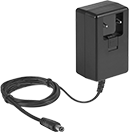 |
Adapter |
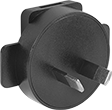 | 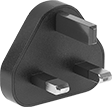 | 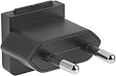 |
AS 3112 Plug (Australia and New Zealand) | BS 1363 Plug (United Kingdom ) | CEE 7/16 Plug (European Union) |
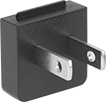 | | |
NEMA 1-15 Plug (North America) | Negative | Positive |
Output Connection | Input Connection | Negative Polarity | Positive Polarity | ||||||||||||||||||||||||||||||||||||||||||||||||||||||||||||||||||||||||||||||||||||||||||||||||
|---|---|---|---|---|---|---|---|---|---|---|---|---|---|---|---|---|---|---|---|---|---|---|---|---|---|---|---|---|---|---|---|---|---|---|---|---|---|---|---|---|---|---|---|---|---|---|---|---|---|---|---|---|---|---|---|---|---|---|---|---|---|---|---|---|---|---|---|---|---|---|---|---|---|---|---|---|---|---|---|---|---|---|---|---|---|---|---|---|---|---|---|---|---|---|---|---|---|---|---|
Electrical Connection | Voltage, V DC | Current, amp | End ID, mm | End OD, mm | End Shape | Electrical Connection | Voltage, V AC | Current, amp | End Shape | Lg., ft. | Electrical Protection Type | Color | Each | Each | |||||||||||||||||||||||||||||||||||||||||||||||||||||||||||||||||||||||||||||||||||||
AS/NZS 3112, BS 1363, CEE 7/16, × NEMA 1-15 Plugs | |||||||||||||||||||||||||||||||||||||||||||||||||||||||||||||||||||||||||||||||||||||||||||||||||||
| Barrel | 15 | 1.6 | 2.1 | 5.5 | Straight | Straight Blade | 120, 240 | 0.8 | 90° Elbow | 5 | Overvoltage, Short Circuit | Black | 3574N39 | 000000 | 3574N37 | 000000 | |||||||||||||||||||||||||||||||||||||||||||||||||||||||||||||||||||||||||||||||||||
| Barrel | 15 | 1.6 | 2.5 | 5.5 | Straight | Straight Blade | 120, 240 | 0.8 | 90° Elbow | 5 | Overvoltage, Short Circuit | Black | 3574N41 | 00000 | 3574N38 | 00000 | |||||||||||||||||||||||||||||||||||||||||||||||||||||||||||||||||||||||||||||||||||
