We will reply to your message in the morning.
Made from silicone, these sealants are RTV (room-temperature vulcanizing).
These sealants include a material certificate with traceable lot number, test report, and product shelf life.
Resistant to mold and mildew, these sealants are well suited to high-humidity environments.
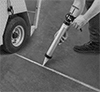
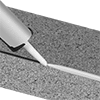
Thinner than non-sagging sealants, these flow easily into cracks and have a smooth finish.
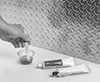
Also known as neutral-cure sealants, these won't discolor copper, brass, and concrete.
Clear enough to read through, this UV-resistant sealant allows optimal light transmission for use with solar cells and fiber optics.
Apply these sealants in cold temperatures, on wet surfaces, and even through running water.
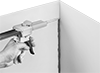
A combination of hardness and surface tension makes these sealants resistant to punctures, cuts, and abrasion.
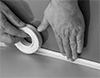
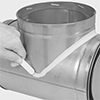
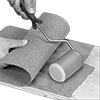
Press this adhesive-backed plastic tape into place for an immediate light-duty seal.
Mix a small amount of water-based paint with this caulk to match the color of your surface.
These structural sealants combine the mechanical strength of an adhesive with excellent sealing properties and high flexibility.
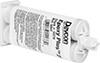
These non-sagging sealants will not drip while hardening on vertical and overhead surfaces.
Impervious to the swelling effects of oil, fuel, and solvents, use these high-strength sealants to assemble and repair fuel systems and tanks.
Also known as Torr Seal, this sealant forms a rigid bond that seals leaks on vacuum systems or components.
Fix roof leaks in cold and wet conditions. These sealants can even be applied underwater.
These sealants are non-sagging, so they won't drip from vertical and overhead surfaces.
The textured finish matches concrete surfaces.
Thinner than non-sag sealants, these flow easily into cracks and have a smooth finish.
Designed for use on ovens and kilns, these sealants form a durable, rock-hard seal after firing.
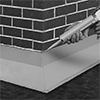
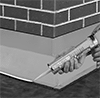
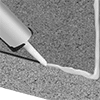
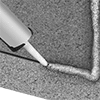
Prepare joints and surfaces to ensure proper sealant adhesion.
A ceramic cover makes these seals more chemical resistant than the seals with a silica cover. They resist acids (except hydrofluoric and phosphoric), diluted alkalies, most refrigerants, salts, and grease. Seals can withstand temperatures up to 1700° F.
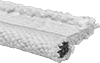
Alumina silicate is loosely woven to create these ceramic seals that are stronger and more flexible than Ultra High- and Low-Temperature Rope Seals. They can handle temperatures from –300° to 2300° F.
Made from tightly woven calcium alumina silicate, these seals can handle temperatures from –300° to 1100° F.
Pull off a small piece of putty and stick lightweight objects to a surface.
Also known as Gorilla Glue, this glue expands to form stronger bonds than other glue.
Apply this glue like tape for a no-mess alternative to liquid adhesives, hot melts, and staples. Also known as adhesive transfer tape.
The 3M VHB adhesive on these rolls offers a strong hold that can replace rivets, spot welds, and other permanent fasteners.
These small tabs of pressure-sensitive adhesive offer convenient, no-mess bonding.
Temporarily stabilize objects on flat surfaces with this clear, reusable adhesive.
This putty-like glue cures into a pliable rubber. Use it to repair seals and cracks, or mold it into hooks and bumpers.
Often used on diesel engines, exhaust systems, and gas turbines, these adhesives withstand high temperatures and provide excellent electrical insulation.
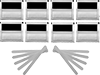
Assortments include eight different epoxies in 0.1-oz. packets to handle a variety of small jobs.
To allow time to adjust and position parts, these epoxies remain workable for at least 90 minutes.
Even when used under water, these adhesives maintain their strength.
With excellent resistance to corrosive chemicals and salt water, these epoxies work in tough conditions.
For quick repairs, these epoxies begin to harden in 6 minutes or less.
Epoxies are the strongest and most weather- and chemical-resistant structural adhesives. They work especially well on metals.
For invisible bond lines, these adhesives dry clear.
These machinable epoxies are mixed with steel, but won’t rust, so they can be used to repair cracks and threaded holes.
Fasten hard-to-bond plastics, such as polypropylene and polyethylene, with these epoxies.
Toughened adhesives are blended with rubber particles for better impact resistance than standard epoxies. They form flexible, resilient bonds.
Acrylics bond to the widest range of materials, especially plastics, and require the least amount of surface preparation.
No need to mix these acrylics—apply adhesive to one surface and activator to the other, then bring surfaces together to bond.
Toughened adhesives are blended with rubber particles for better impact resistance than standard acrylics. They form resilient bonds.
With high shear strength and peel strength, these form the strongest bonds of our urethane adhesives.
Urethane adhesives are the most flexible, so they bond dissimilar materials and damp vibration.
Spray a thin, uniform coat of adhesive on one or both surfaces, air dry, and then bring together to form strong bonds.
Splice rubber O-rings and other gaskets with this chemical resistant adhesive.
Form bonds with twice the strength of our other spray adhesives.
The polyurethane glue in these cartridges has nearly twice the shear strength of other hot-melt adhesives.
This glue remains flexible after curing to accommodate joint movement.
When heated, these glue sticks melt and quickly begin to harden. Use them to seal packaging and form other low- to medium-strength bonds.
This cement has excellent temperature resistance for sealing insulation joints on ovens and furnaces.
Mixed with rubber for better impact resistance than standard instant-bond adhesives, these adhesives form strong, resilient bonds.
Accommodate joint movement with these adhesives that remain pliable when cured.
Make strong, instant bonds on a variety of materials—but not your skin.
For flexible bonds that resist cracking, these adhesives stay pliable.
For easy positioning, these adhesives begin to harden only when exposed to light.
Use these thick gels, also known as super glue, on vertical surfaces or to fill gaps between parts.
Bond glass and stone to drywall, treated lumber, and subfloors.
These adhesives resist temperatures up to 500° F.
Apply these adhesives on two surfaces, air dry, and then bring together to bond.
An alternative to solder, these flexible, silver-filled adhesives accommodate joint movement. Use them to bond electrical components and repair circuits.
Secure threaded fasteners at temperature extremes—from -300° F to 2100° F.
Improve instant-bond adhesive performance on hard-to-bond materials.
Use cartridges with a standard caulk gun for quick and easy dispensing.
These gasket makers come in a can.
Our highest temperature gasket material, this is made of high-alumina ceramic and can withstand temperatures up to 2600° F.
Remove silicone, foam sealants, caulk, wet or dry latex-based foams, and construction adhesives.
These surface fillers can be used on vertical surfaces without sagging. They repair cracked, worn, and damaged surfaces.
Knead the epoxy-coated patch and resin together to make repairs to pipes, tanks, drums, and containers in the field.
These surface fillers come in a pen for precision application. After applying, use the LED on the back of the pen to instantly cure.
Able to withstand temperatures up to 2300° F, these ceramic surface fillers are often used as thermal insulation on brick, mortar, burner blocks, furnace holders, and thermocouples.
Also known as sloshing compounds, these surface fillers bond to rough, rusty surfaces in fuel tanks to repair leaks and prevent further corrosion.
Mix these two-part epoxy surface fillers to create a strong repair in wet environments or underwater.
Mix this two-part epoxy—a resin-aggregate blend and a pigmented hardener—to create a grout that resists chemicals and doesn't require sealing. Use on ceramic, concrete, and stone floor and wall tiles.
A high silver content allows these surface fillers to conduct electricity and heat. Use them to fill gaps and rebuild missing material on electrical connections or to assemble new components.
Used on ceramic, concrete, and stone floor and wall tiles, grout consists of fine sand, masonry cement, and coloring.
Stop slow-flowing and weeping leaks in concrete. Also known as hydraulic cement, these crack fillers begin to harden in three to five minutes to create a permanent fix that won't shrink.
Stop active leaks of up to 50 gallons per minute in concrete, brick, and stone. These crack fillers begin to harden within seconds to create a permanent fix that won't shrink.
Fill in and shape horizontal, vertical, and overhead concrete surfaces, such as steps and columns.
Keep the surface of your porcelain fixtures looking like new.
Able to withstand temperatures of up to 2000° F, these coatings absorb heat and release it later. Use them to improve the thermal efficiency of heaters, furnaces, and ovens to reduce energy costs. Also known as high-emissivity coatings.
Made with Viton® fluoroelastomer, use these coatings to create a flexible coating on rollers, heavy equipment, and anything else that’s exposed to corrosive chemicals or extreme temperatures.
Use these coatings in kitchens, furnace areas, and ships on plastic, metal, wood, and masonry.
Spray these coatings on glass to create a clear, scratch-resistant surface that repels oil and water. They’re also known as oleophobic and hydrophobic coatings.
Longer-lasting than antislip tape, these coatings contain grit to provide traction. They’re good for areas with pedestrian traffic.
Used to insulate, create grips, and color-code components, these coatings resist high temperatures, light abrasion, and corrosion.
Use these coatings on tanks to create a low-friction lining that prevents bubble formation and turbulence in the liquids within.
Formulated to draw heat away from sensitive electronic components, these potting compounds have higher thermal conductivity than standard potting compounds.
Urethanes withstand a wide range of temperatures and are the best choice for cold-temperature applications. They have excellent flexibility, good chemical and moisture resistance, and provide good electrical insulation.
Clear enough to read through, these UV-resistant potting compounds allow optimal light transmission for use with LEDs, solar cells, and fiber optics.
Refinish porcelain sinks, tubs, and tile and give laminates a high-gloss finish.
Apply these wear-resistant coatings to wood to protect from scuffs, water, and oil damage.
Change the mix ratio of these heat-transfer potting compounds to achieve the right hardness for your application.
The strongest of the potting compounds, epoxies are rigid and wear resistant. They have excellent chemical and moisture resistance, withstand a wide range of temperatures, and provide excellent electrical insulation.
No mixing required—these potting compounds come ready to apply.
Clear enough to read through, this coating allows optimal light transmission for use with LEDs, solar cells, and fiber optics.
Commonly used by electronics manufacturers and research labs, apply these coatings to floors and walls to protect equipment from static electricity buildup.
These coatings are often used on castings, dies, and mirrors to prevent rust, abrasion, and moisture penetration.
These thin primers penetrate deeply into concrete floors to create a hard surface that can then be coated with any urethane or epoxy coating.
Increase paint’s ability to bond to hard, smooth surfaces, such as tile and metal.
Create a washable writing surface.
Enhance, renew, and protect surfaces.
Unlike fiberglass and silica, this sleeving won't irritate skin, so it's easier to handle. It has a temperature rating of 1100° F or higher.
Spray these primers onto a mounting surface to quickly and smoothly apply signs, labels, and protective films.