



Clear All
Strand Type Strand Type |
|---|
 | Double |
Roller Chain Trade Size Roller Chain Trade Size | Show |
|---|
|
Roller Chain Trade Size Roller Chain Trade Size | Hide |
|---|
Link Type Link Type |
|---|
|
Component Component |
|---|
 | Link |

Material Material |
|---|
|
Roller Chain Standard Roller Chain Standard |
|---|
|
Roller Diameter Roller Diameter |
|---|
|
Working Load Working Load |
|---|
|
Pitch Type Pitch Type |
|---|
|
Roller Width Roller Width |
|---|
|
DFARS (Defense Acquisition Regulations Supplement) DFARS (Defense AcquisitionRegulations Supplement)  |
|---|
RoHS (Restriction of Hazardous Substances) RoHS (Restriction ofHazardous Substances) |
|---|
|
About Roller Chain and Sprockets
More
ANSI Roller Chain and Links
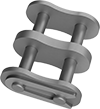
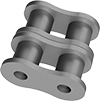
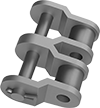
Connecting links are also known as master links. They're used to join the ends of a chain length. The side plate is easy to remove for attaching to a chain. Adding links are also known as roller links. They require two connecting links to join chain. Adding-and-connecting links are also known as half links and offset links. A combination of connecting and adding links, they join chain that requires an odd number of links. For trade size 35 and up, the side plate is easy to remove for attaching them to chain.
 For technical drawings and 3-D models, click on a part number.