


Clear All
Chain Style Chain Style |
|---|
 |
| Roller |


Lacing Lacing |
|---|
|
Roller Chain Trade Size Roller Chain Trade Size | Show |
|---|
|
Roller Chain Trade Size Roller Chain Trade Size | Hide |
|---|

Overall Width Overall Width |
|---|
|
Strand Type Strand Type |
|---|
 | Single |
Breaking Point Breaking Point |
|---|
|
Specifications Met Specifications Met |
|---|
Pin Diameter Pin Diameter |
|---|
|
Material Material |
|---|
|
DFARS (Defense Acquisition Regulations Supplement) DFARS (Defense AcquisitionRegulations Supplement)  |
|---|
RoHS (Restriction of Hazardous Substances) RoHS (Restriction ofHazardous Substances) |
|---|
|
Pitch Type Pitch Type |
|---|
|
Roller Chain Standard Roller Chain Standard |
|---|
|
Link Type Link Type |
|---|
|
About Roller Chain and Sprockets
More
ANSI Roller Chain and Links for Flat-Belt Pulleys
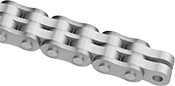
Chain
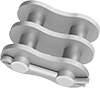
Clevis Connecting Link
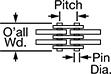
Also known as leaf chain and counterbalance chain, this chain is used with pulleys rather than sprockets for low-speed pulling and as counterweight chain for machine tools, elevator and oven doors, and forklift masts. Made of interlaced plates held together by rivet pins, it has a higher tensile strength than roller chain and is used with flat pulleys instead of sprockets.
When servicing worn leaf chain, replace the entire chain—do not splice chains together or mix old and new chain.
Clevis connecting links attach your chain to a clevis.
 For technical drawings and 3-D models, click on a part number.