We will reply to your message within two hours.
More
Offering high electrical conductivity and formability, 110 copper is 99.9% pure. Also known as ETP copper, it's often used in electrical applications, such as for bus bars and wire connectors, as well as for flashing, gaskets, and rivets.
With 99.99% copper content, 101 copper has higher purity than 110 copper, resulting in superior electrical conductivity. It's commonly called OFE and OFHC copper. Use it in electrical applications, such as for coaxial cables and terminal lugs.
A thin layer of titanium is bonded to these copper rods for long life and dimensional stability in corrosive environments.
Also called tellurium copper, 145 copper contains tellurium, which makes it more machinable than all other copper while maintaining good corrosion resistance and high electrical conductivity. It’s often used for transformer and circuit-breaker terminals, welding torch tips, and fasteners.
With the addition of lead, this beryllium copper alloy forms small chips that won’t clog machines when it’s drilled or cut, so it is ideal for automated production lines.
182 copper is stronger, harder, and more wear resistant than 110 copper. Also known as RWMA Class 2 chromium copper, it's commonly used in resistance welding, for circuit-breaker parts, and for molds to make plastic parts.
From fasteners to ferrules to fittings—machine these rods into parts that stand up to salt water. Made of copper nickel, also called cupro nickel, they resist rusting better than stainless steel.
Commonly used in water treatment plants, these tubes withstand salt water and can be used to make shims, ferrules, and washers.
Rated RWMA Class 4, 172 beryllium copper is the strongest beryllium copper alloy that is also electrically conductive and extremely wear resistant. It’s often used in inserts, die facings, and molds for plastic that need to withstand stress over repeated use.
Even though they have similar performance properties to beryllium copper, these copper rods don't require special machining techniques.
These 17510 beryllium copper rods are not only conductive, but also non-sparking and non-magnetic, making them suitable for mines, oil rigs, and navigational tools.
Often used to make bearings and couplings in tough transportation, oil- and gas-drilling, and marine industries, these rods resist fatigue and corrosion. Also known as ToughMet™ 3 rods.
The addition of phosphorus makes 122 copper easier to weld and braze than 110 copper. It has excellent resistance to corrosion caused by water, soil, and weather, making it the go-to material for plumbing and underground applications.
Use these rods for electrodes in the electrical-discharge machining of dense material, such as tungsten carbide—they’re 75% tungsten for wear and arc-erosion resistance and 25% copper for electrical and thermal conductivity. They’re also known as Elkonite rods.
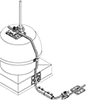
Protect electrical systems from lightning strikes on structures up to seventy-five feet tall.
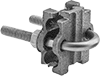
Connect bare-copper ground wire to grounding rods.
The flat tip creates a larger weld and can be used when appearance is less important.
The pointed tip is best for tight areas or for a small weld.
Bronze threaded rods are stronger and more resistant to salt water than brass rods.
Also called close nipples, these Schedule 40 nipples are threaded on both ends to the center.
Also known as Pressure Class 200 pipe.