We will reply to your message within an hour.
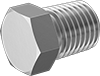
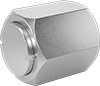
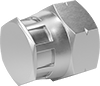
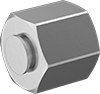
Use these corrosion-resistant fittings in a low-pressure pipe line.
Unlike other stainless steel fittings, these are made in the U.S.A. for superior quality. As another marker of quality, they come with a certificate with a traceable lot number and test report that guarantees material composition.
The male threads on these fittings have a sealant applied for extra leak protection.
Choose these fittings when you want the same high-quality found in our low-pressure pipe fittings, but need more strength to handle higher pressures.
When space is at a premium choose these compact fittings.
Use these heavy duty, corrosion-resistant fittings in high-pressure flow applications.
Use these fittings in extreme-pressure conditions up to 15,000 psi.
These fittings are made to tighter tolerances than other stainless steel pipe fittings. They are also known as instrumentation fittings.
Butt-weld fittings allow for a smooth, flush connection that provides maximum flow.
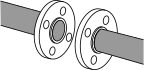
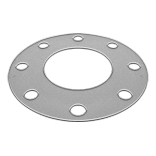
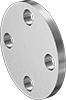
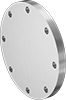
Bolt two same-size flanges together with a gasket to create an access point within a pipe line.
Press these fittings onto stainless steel pipe using a crimping tool for a permanent, leak-tight connection that's faster than threading or welding and doesn't require heat.
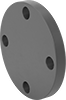
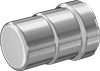
Socket-connect fittings are easier to weld than butt-weld fittings because the fitting doesn't need to align perfectly to the pipe. Slip the pipe into the socket and weld.
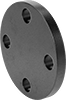
Use these heavy duty forged flanges for high-pressure applications.
Also known as Code 61 SAE hydraulic flanges.
The strongest socket-connect fittings we offer, these heavy duty forged fittings are also known as Pressure Class 6000.
Also known as Schedule 10 fittings, these are thin, lightweight, and corrosion resistant.
Use these fittings for low-pressure applications in noncorrosive environments.
To prevent leaks in low-pressure lines, the male threads on these fittings have an acrylic sealant already applied for extra protection.
Suitable for use in fire-protection applications, these pipe fittings are made of cast iron, so they are brittle and can be quickly opened with the strike of a sledge hammer.
The galvanized finish on these fittings provides fair corrosion resistance. Fittings are for use in low-pressure applications.
These fittings can stand up to high-pressure applications. Use them in noncorrosive environments.
The heavy duty caps and plugs in these assortments come in various sizes and stand up to high-pressure flow applications. Made of steel, they’re for use in noncorrosive environments.
A galvanized finish gives these fittings better corrosion resistance than our plain steel high-pressure fittings. Also known as Pressure Class 3000 fittings.
For use in noncorrosive environments, these fittings have better strength than our low-pressure iron and steel pipe fittings.
A galvanized finish gives these fittings fair corrosion resistance. They have the strength to handle medium-pressure applications.
These fittings are strong enough to handle extreme pressures, yet small enough to fit into cramped spaces.
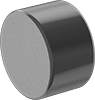
Made to tighter tolerances than other steel pipe fittings, these are also known as instrumentation fittings.
The strongest steel fittings we offer, these can withstand extreme-pressure applications.
Socket-connect fittings are easier to weld than butt-weld fittings because the fitting doesn't need to align perfectly to the pipe. Slide the pipe into the socket and weld.
With thicker, stronger walls than our standard-wall butt-weld pipe fittings, these fittings stand up to your high strength applications.
Forged for extra strength, these heavy duty unthreaded flanges can withstand high-pressure applications.
Bolt two flanges of the same size together with a gasket to create an access point in a pipe line.
Even in temperatures as low as -46°, these A350 LF2 steel flanges won’t become brittle, so they absorb impact better than other low-pressure steel flanges.
Crimp these fittings onto steel pipe to form a tightly sealed connection that’s faster than threading or welding and doesn’t require heat.
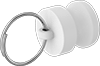
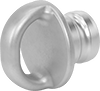
FM-approved for fire protection applications, these flanges are cast iron, so they're brittle and can be quickly opened by hitting them with a sledge hammer.
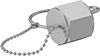
Also known as Pressure Class 6000 fittings, these heavy duty forged fittings are the strongest steel fittings we offer.
For excellent strength in extreme-pressure applications, choose these heavy duty Pressure Class 1500 flanges.
The grooved ends on these iron fittings connect to pipe with a clamp to easily install piping systems.
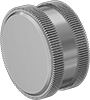
These brass fittings have the strength to handle high-pressure applications.
Not only do these brass fittings have the strength to handle high-pressure applications, the male threads have a sealant applied for extra protection against leaks.
Use these heavy-duty brass fittings for high-pressure drinking water applications.
The plating on these brass fittings creates a shiny finish and provides extra protection in corrosive environments. Fittings have the strength to handle high-pressure applications.
Use these fittings in low-pressure flow applications. They have good corrosion resistance.
Less than an inch in length, these miniature fittings work well in low-pressure pipe lines that are tight on space.
The male threads on these brass fittings have a sealant applied for extra protection against leaks. Also known as Pressure Class 125 fittings, they are built for use in low-pressure applications.
Used in low-pressure pipe lines, these brass fittings have a plating that makes them shiny and improves corrosion resistance.
Plated with nickel, these brass fittings resist rust better than steel and unfinished brass fittings. Select them when you need more strength in corrosive environments to handle higher pressures than our low-pressure fittings.
Choose these fittings when you need better strength than our low-pressure brass and bronze pipe fittings.
Also known as instrumentation fittings, these have the most precise threads and the tightest tolerances of all the brass pipe fittings we offer.
Extreme pressures are no problem for these heavy-duty brass fittings.
When you're unsure of the exact thread type you need, these fittings have universal threads that are compatible with the most common ones (NPT, NPTF, BSPP, BSPT).
Also known as Silbraze fittings.
Bolt these flanges to another same-size flange with a gasket to create an access point within a pipe line. They are also known as Silbraze flanges.
In addition to being lightweight, these aluminum fittings offer good corrosion resistance. Use them in low-pressure flow applications.
Designed for medium-pressure applications, these fittings have better strength than our low-pressure aluminum pipe fittings.
Also known as Pressure Class 3000 fittings, these have the highest pressure rating of all the aluminum pipe fittings we offer.
Also known as Schedule 40 fittings, these have thicker walls than our thin-wall aluminum unthreaded pipe fittings.
Use these unthreaded flanges in low-pressure applications. Also known as Pressure Class 125 flanges.
Twist these fittings onto aluminum pipe for quick, sealed connections—no threading, soldering, or welding necessary. Use them to build a compressed air system in half the time it would take to build a copper or steel system.
Titanium has similar strength to steel, but is approximately 40% lighter. It has better corrosion resistance than most stainless steel alloys and can handle corrosive substances, such as salt water and acids.
Connect these fittings to Schedule 80 pipe. With thicker, stronger walls than standard-wall fittings, they can handle heavy duty supply applications, such as water processing, wastewater treatment, and irrigation.
Bolt two same-size flanges together with a gasket to create an access point within a line. They are also known as Pressure Class 150 flanges. They have thick, strong walls to handle heavy duty industrial plumbing and water supply applications, such as water processing, waste water treatment, and irrigation.
Connect these fittings to Schedule 40 plastic pipe—they are the industry standard for residential and commercial low-pressure plumbing and water supply applications. They are plastic for good corrosion resistance.
Watch water flow through your line. These fittings are compatible with Schedule 40 pipe, the industry standard for residential and commercial low-pressure plumbing and water supply.
Use for pressures up to 200 psi. Also known as insert fittings, these slide into semi-flexible plastic pipe and secure with a clamp.
Connect to CPVC pipe for use in high-temperature plumbing and water supply applications.
Bolt two same-size flanges together with a gasket to create an access point within a line. They are also known as Pressure Class 150 flanges. Use in high-temperature plumbing and water supply applications up to 200° F.
Made of polypropylene, these fittings won’t deteriorate when exposed to the damaging effects of ultraviolet light and are suitable to use outdoors. They have the chemical resistance to withstand acids, solvents, and other harsh substances.
Use these polypropylene flanges in outdoor environments—they resist the damaging effects of ultraviolet light. They have the chemical resistance to stand up to acids, solvents, and other harsh substances. Bolt two same-size flanges together with a gasket to create an access point within a line. Flanges are also known as Pressure Class 150 flanges.
Also known as manifold flange fittings, these have a clamp-together design that lets you access your line for routine maintenance. Fittings resist acids, solvents, and other harsh chemicals. They won’t deteriorate when exposed to the damaging effects of ultraviolet light, so they’re suitable for outdoor use.
Extreme temperatures are no problem for these fittings—they’re made of PTFE, so they can withstand a wider temperature range than any of our other plastic pipe fittings for chemicals. They are commonly used in high-purity chemical flow processes, such as semiconductor and clean room applications.
Flanges have excellent corrosion resistance to handle a wide range of acids and other highly-corrosive chemicals. Use in metal surface treating applications, plating solution lines, and other chemical process applications. They are reinforced with fiberglass layers for better strength and durability than any of our other pipe flanges for chemicals. Bolt two same-size flanges together with a gasket to create an access point within a line.
Made of PVDF that’s finished to a 12 Ra smoothness, these fittings handle some of the harshest chemicals without leaching contaminants into your line. Comparable to Kynar, they handle most organic solvents that would dissolve CPVC, and chlorine or nitric acid that would weaken polypropylene.
Not only do these PFA fittings have the chemical resistance to handle acid and salt water, they also have better crack resistance than other plastic pipe fittings for chemicals. They are commonly used in high-purity chemical flow processes, such as semiconductor and clean room applications.
The inside of these fittings won’t leach contaminants into your line or accumulate particles—they’re polished to an ultra-smooth 12 Ra finish, which also makes it easy to clean. Made of polypropylene, they resist organic solvents, acids, and alkalis better than CPVC fittings.
These fittings are an economical option for chemical waste systems. Fittings are ABS plastic, which has excellent strength and impact resistance and good chemical resistance.
These Schedule 40 fittings are the industry standard for gravity-flow drain, waste, and vent (DWV) applications.
With thinner walls than Schedule 40 fittings, these are lighter in weight and have more space on the inside for high-flow applications, such as underground gravity-flow sewer and storm drainage lines. They are also known as SDR 35 fittings.
The snap-together design allows you to quickly connect these fittings to pipe with no cement required. Fittings are typically used in gravity-flow drainage applications.
Made of corrosion-resistant plastic, these fittings won’t deteriorate when used in oil applications. They have high strength and impact resistance.
Use these plastic fittings to connect gasoline fuel lines to machines and equipment. They have excellent corrosion resistance as well as high strength and impact resistance.
Made of PVDF, also known as Kynar, these fittings stand up to the harsh chemicals used to clean food processing lines. Unlike other plastic fittings, such as nylon and acetal fittings, they’ll resist degrading when exposed to strong alkali and highly acidic solutions.
Made of either nylon or acetal, these fittings resist corrosion, so they won't deteriorate in food processing applications. They won’t transfer tastes or odors to your food or beverages.
To make installing and maintaining systems easy, these connectors come with clamps that form a strong seal on pipe and fittings once tightened.
Metal cam-and-groove couplings have better durability than plastic cam-and-groove couplings.
Made of polypropylene, these cam-and-groove couplings are lighter in weight than metal cam-and-groove hose couplings.
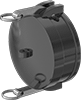
Insert these caps into a cam-and-groove socket to protect the end of the coupling from damage. The attached handle allows you to easily maneuver hose.
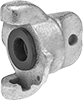
Couplings have an identical claw-style head that connects to another twist-claw hose coupling with a quarter twist.
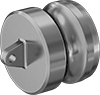
Use these dust caps and plugs to keep contaminants out of your hose line.
Fittings are threaded on both ends so you can connect them directly to a threaded hose or to pumps, cylinders, and other equipment in your hydraulic system.
Couplings are metal, which has better durability than plastic cam-and-groove hose couplings. They consist of a plug and a socket that connect and disconnect quickly. Use them if you need frequent access to a line. To connect, insert the plug into the socket and push the levers down.
Couplings are plastic, which is lighter in weight than metal cam-and-groove hose couplings. They consist of a plug and a socket that connect and disconnect quickly. Use them if you need frequent access to a line. To connect, insert the plug into the socket and push the levers down.
Use these plugs when you need a cap, bumper, and handle in one piece. Made of aluminum, they will seal your chemical or petroleum line.
Use these CGA fittings to connect welding hose to pressure regulators and torches.
Attach these fittings to garden hose for a variety of water supply applications. They are metal for better durability than plastic garden hose fittings.
Made of nylon, these fittings are lighter in weight than metal garden hose fittings. Attach them to garden hose for a variety of water supply applications.
Made of ductile iron, these couplings are tough enough to handle sand, cement, and other abrasive solids and slurries. Use their cam-and-groove fittings to quickly connect and disconnect medium- to large-diameter hose lines.
Couplings are made of FDA listed materials, so they’re suitable for food and beverage applications and won’t impart tastes or odors to the product. They consist of a plug and a socket that connect and disconnect quickly. Use them if you need frequent access to a line. To connect, insert the plug into the socket and push the levers down.
A cap, bumper, and handle in one. Not only do these fittings seal your food or beverage line, they extend past the socket’s levers, so they take the brunt of damage from bumps and drops.
To keep contaminants out of your gas line, add these dust caps and plugs to natural and LP gas couplings when they’re not connected. All work with couplings that are rated ANSI Z21.41/CSA 6.9 for use with gas fuel appliances.
Solder these fittings to tubing for a permanent, leak-tight connection. They are also known as sweat fittings.
Crimp these fittings to copper tubing with a crimping tool for a leak-tight connection that doesn’t require heat or soldering. They are comparable to Viega ProPress fittings.
Also known as instrumentation fittings, these are made to tighter tolerances than standard compression fittings. They are compatible with Parker CPI fittings.
No sleeve is required to assemble these fittings, which makes for a faster, more convenient installation compared to 37° flared fittings. They are also known as refrigeration and SAE fittings.
Choose these metal fittings when you need better durability than our plastic push-to-connect fittings.
A nut with two sleeves (ferrules) gives these fittings extra gripping power. The sleeves bite into tubing as you tighten the nut, creating a strong seal.
Use these fittings at pressures up to 9,700 psi. Also known as instrumentation fittings, they are made to tight tolerances for use in high-precision applications. They are compatible with Swagelok®, Let-Lok, and Parker A-Lok fittings.
The smooth finish inside these stainless steel quick-clamp fittings makes it easy to remove product residue.
Also known as I-line fittings, these fittings have a male adapter that interlocks with a female adapter for more support than standard quick-clamp fittings.
Polished to a 20 Ra finish, these fittings have an extra-smooth interior that prevents product buildup and inhibits bacteria growth.
Also known as KF, QF, and NW fittings, these fittings are for high-vacuum applications, such as vacuum coating and heat treating, leak testing, and analyzing gases.
Also known as JIC (Joint Industrial Council) fittings, these provide a tight metal-to-metal seal on stainless steel tubing that is flared to 37°.
The threads on the tube end of these fittings are Class 3A or 3B and adhere to tighter tolerances than other 37° flared fittings.
A PTFE seal on the tube end of these fittings allows for an extra-strong connection in high-vibration applications.
A single sleeve (ferrule) bites into tubing as you tighten the nut, creating a strong seal. The nut and sleeve are included.
Polished to at least a 15 Ra finish on the inside, these fittings have an ultra-smooth interior surface that helps prevent contamination. They are also known as ultra-high-purity fittings.
Fittings are polished to a32 Ra and under finish on the interior.
Twist these fittings onto high-vacuum tubing to quickly make sealed, high-vacuum connections without the need for clamping, welding, or tools.
An alternative to bolt-together fittings, these fittings handle larger tube OD sizes than quick-clamp fittings. Also known as ISO-K high-vacuum fittings, the clamps have claws that grab hold of fittings with flanged ends.
Create access points in ultra-high-vacuum lines or chambers by bolting two same-size flanges together with a copper gasket between them. The flanges’ sharp edges dig into the copper gasket and form an extremely tight seal, which means they handle higher vacuum pressures than other high-vacuum fittings with rubber gaskets.
For high-vacuum systems with tube sizes too large for quick-clamp (KF) fittings, choose these bolt-together fittings.
Also known as JIC (Joint Industrial Council) fittings, these provide a tight metal-to-metal seal on steel tubing that is flared to 37°.
Also known as JIS (Japanese Industrial Standard) fittings.
A single sleeve (ferrule) bites into tubing as you tighten the nut, creating a strong seal.
Thicker walls make these fittings—sometimes called flareless or bite fittings—withstand about twice as much pressure as standard compression fittings, so they’re good for hydraulic power applications.
A tube adapter sits flush against the flat face of the fitting so you can slide the steel tubing and fitting sideways to disconnect in cramped spaces. Also known as zero-clearance fittings.
These fittings have two sleeves for extra gripping power. They bite into steel tubing as you tighten the nut to form a strong seal.
Also known as JIC (Joint Industrial Council) fittings, these provide a tight seal on tubing that is flared to 37°.
For use in high-vacuum systems, these fittings use a metal reinforced O-ring to create an airtight seal. Also known as KF, QF, and NW fittings, they’re used for high-vacuum applications such as vacuum coating and heat treating, leak testing, and analyzing gases.
Made of nickel-plated brass, these fittings have better corrosion resistance than unplated brass fittings.
A 316 stainless steel body gives these fittings the best corrosion resistance of all our metal push-to-connect tube fittings.
These fittings won’t absorb moisture, so they’re good for water and high-humidity air applications.
Connect air brake lines with fittings that won’t crack in sub-zero temperatures. They meet Department of Transportation FMVSS 571 safety standards, so they’re often used in commercial trucks and trailers.
Designed for use in welding applications, these fittings are flame retardant.
A spring-free flow path allows more air or water to pass through these tube couplings at lower line pressures than other quick-disconnect couplings.
Minimize leaks in your line—these fittings have a single barb that creates a smooth clamping surface for extra-tight connections.
Made of brass, these fittings resist corrosion from water and are more durable than plastic and aluminum fittings.
Made of plastic, these couplings are lighter in weight than metal luer lock couplings. They're a popular choice in labs because of their versatility—they fit any other luer lock plug, socket, syringe, or needle.
Use these luer lock couplings to quickly connect low-pressure air and water lines. Made of stainless steel, they’re more durable than plastic couplings.
Quickly connect low-pressure air lines with these luer lock couplings. Made of brass, they are stronger and more durable than plastic tube couplings.
A single sleeve (ferrule) compresses the tubing as you tighten the nut on these fittings, creating a strong seal. They are brass for good corrosion resistance.
Also known as instant fittings, these connect to tubing with a push, and an internal gripping ring and O-ring hold the tubing tight. Use in applications up to 150 psi.
Create corrosion-resistant connections in food and beverage lines with just a push. Also known as instant fittings, these fittings have an internal gripping ring and an O-ring that hold tight to tubing.
Made of stainless steel, these fittings are more durable than plastic barbed tube fittings for food and beverage.
Use these nuts with brass compression fittings to create a seal on plastic tubing. They meet NSF/ANSI 61 for use with drinking water.
These fittings keep their strength in moist environments and meet NSF/ANSI 61 for drinking water. Also known as instant fittings.
Fittings can withstand temperatures up to 200° F.
Connect these fittings to tubing with a ring and a crimping tool (both sold separately). Safe to use with drinking water, these fittings meet the strict standards of NSF/ANSI 61.
Also known as instant fittings, these chemical-resistant plastic fittings connect to tubing with a push. An internal gripping ring holds the tubing tight.
A staple in labs, these couplings are highly versatile, fitting any luer lock plug, socket, syringe, or needle. They’re PVDF, so they resist most acids, alcohols, and organic solvents.
Fittings have a sleeve that bites into tubing as you tighten the nut to form a seal in applications up to 120 psi. Also known as flareless fittings.
To prevent contamination, these couplings are cleaned, double bagged, and packaged in a clean room. Known for their versatility, they fit any luer lock plug, socket, syringe, or needle.
Also known as instant fittings, they connect to tubing with a push, and an internal gripping ring and O-ring hold the tubing tight. Use in applications up to 140 psi.
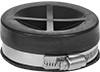
Seal unthreaded pipe ends with these plugs. They come with a band that clamps over the outside wall of your pipe and tightens with a screwdriver.