We will reply to your message within an hour.
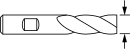
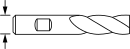
Use these end mills for short runs and general purpose milling in most material, such as aluminum, brass, bronze, iron, and steel.
Serrations along the cutting edge act as chip breakers, so these end mills can remove large amounts of material at high speeds.
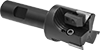
Use these tools with low-horsepower, manual milling machines. They have clamps for holding inserts that do not have a mounting hole. Replaceable carbide-insert end mills reduce waste and cost in high-volume jobs—when the cutting edges dull, replace the carbide inserts instead of the entire end mill.
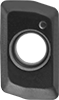
Pair carbide inserts with a holder to create end mills that reduce waste and cost in high-volume jobs. When the cutting edges dull, replace the inserts instead of the entire tool.
Pair these carbide inserts with a holder to create end mills that reduce waste and cost in high-volume jobs. When all the cutting edges dull, replace the inserts instead of the entire tool.
Serrations along the cutting edge act as chip breakers, so these end mills can remove large amounts of material at high speeds without sacrificing tool life.
Mill an angled edge to the entire outside diameter of pipe, tubes, and rods in a single pass with more speed and precision than a handheld scraper. These end mills deburr pipe and tube for butt welds and shape rods for sliding into housings and holes.
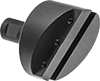
Shave shallow layers of material off your workpiece to create a smooth even finish. These fly cutters hold a lathe tool and run on your milling machine.
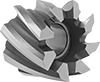
With larger diameters than end mills, these cutters remove greater amounts of material to create a smooth, flat channel in the face of a plate, bar, or other wide workpiece.
Serrations along the cutting edge act as chip breakers, so these cutters can remove large amounts of material at high speeds without sacrificing tool life.
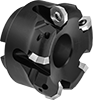
Combine a cutter with carbide inserts to create a milling cutter, also known as indexable milling cutters.
Create your own versatile milling cutters. These kits include a cutter body, inserts, wrenches, and screws.
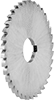
These general purpose saws are good for cutoff, slitting, and slotting applications in a wide range of materials, including aluminum, iron, and steel.
Made of solid carbide, these saws are harder, stronger, and more wear resistant than high-speed steel for the longest life and best finish on hard material. Use them for cutoff, slitting, and slotting applications.
Also known as jeweler's slotting saws and metal slitting saws, these saws are good for use on wire, tubing, extrusions, and other very thin material that requires delicate cuts.
Designed for milling the surfaces of plates and bars, these cutters consist of multiple carbide inserts and a holder. They help you reduce waste and cost in high-volume jobs—when the cutting edges dull, replace the inserts instead of the entire tool.
Pair these carbide inserts with insert holders to mill the surface of plates and bars.