

Clear All
Length Length | Show |
|---|
|
Length Length | Hide |
|---|


Connection Type Connection Type |
|---|
 | Ethernet |
Ethernet Connection Type Ethernet Connection Type |
|---|
| RJ45 |
Shielding Shielding |
|---|
 | Unshielded |
 | Shielded |
End Shape End Shape |
|---|
 | Straight |
End Type End Type |
|---|
 | Plug |

Application Application |
|---|
|
Gender Gender |
|---|
 | Male |
DFARS (Defense Acquisition Regulations Supplement) DFARS (Defense AcquisitionRegulations Supplement)  |
|---|
RoHS (Restriction of Hazardous Substances) RoHS (Restriction ofHazardous Substances) |
|---|
|
Maximum Temperature Maximum Temperature |
|---|
|
Minimum Temperature Minimum Temperature |
|---|
|
Flexibility Flexibility |
|---|
 | Flexible |
REACH (Registration, Evaluation, Authorization and Restriction of Chemicals) REACH (Registration,Evaluation, Authorization and Restriction of Chemicals) |
|---|
|
Shield Type Shield Type |
|---|
 | Foil |
Ethernet Cords
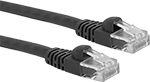
These Ethernet cords are backward compatible, so they work in networks that meet the same or a lower category. They send data between computers, printers, servers, and switches.
Shielded Ethernet Cords
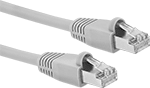
The shielding on these cords blocks signal interference from nearby equipment and devices. They send data between computers, printers, servers, and switches. For faster data transmission speeds, choose a cord with a higher ethernet cable category. They’re backward compatible, so they work in networks that meet the same or a lower category.
 For technical drawings and 3-D models, click on a part number.
RJ45 Plug × RJ45 Plug
Plug × Plug