We will reply to your message in the morning.
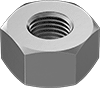
These nuts are suitable for fastening most machinery and equipment.
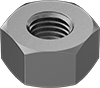
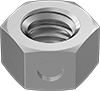
These nuts tighten when turned to the left; once fastened, they resist loosening from counterclockwise motion.
These nuts are about 25% stronger than medium-strength steel nuts.
Tighten these nuts by turning them to the left; once fastened, they resist loosening from counterclockwise motion.
About half the strength of medium-strength steel nuts, these nuts are for light duty fastening applications.
These nuts are about 20% stronger than high strength steel nuts and are often used in heavy machinery.
These nuts have good chemical resistance and may be mildly magnetic.
These nuts have excellent chemical resistance and can be used in saltwater environments.
Fiberglass nuts are stronger than nylon 6/6 nuts. They resist acids, solvents, salt water, and oil.
Made from Grade 5 steel, these inch-sized nuts are suitable for most fastening applications.
These nuts tighten when turned to the left; once fastened, they resist loosening from counterclockwise motion. They’re Grade 5 steel, so you can used these inch-sized nuts for most fastening applications.
These nuts are about 25% stronger than medium-strength steel thin hex nuts. Available in inch thread sizes.
These nuts should be used for light duty fastening applications, such as securing access panels.
These nuts tighten when turned to the left; once fastened, they resist loosening from counterclockwise motion. Made of Grade 2 and Class 04 steel, these nuts can be used for fastening panels and other light duty fastening applications.
With threads that tighten to the left and made of 316 stainless steel, these nuts won’t loosen from counterclockwise motion in saltwater and corrosive environments. They’re half the height of standard hex nuts, so they fit where there’s low clearance.
These nuts are corrosion resistant in wet environments, electrically conductive, and nonmagnetic.
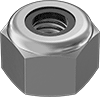
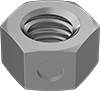
These nuts tighten to the left and won’t loosen from counterclockwise motion.
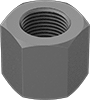
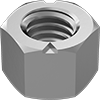
Taller than standard hex nuts, these nuts provide a larger gripping area for installation with a wrench.
These nuts have good chemical resistance.
These nuts are comparable in strength to Grade 9 bolts.
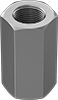
Made from Grade 8 steel, these nuts are about 25% stronger than medium-strength steel coupling nuts. Furnished in inch thread sizes.
Made from Grade 5 steel, these inch-sized coupling nuts are suitable for most applications.
About half the strength of medium-strength steel coupling nuts, these nuts are for light duty fastening applications.
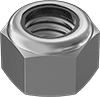
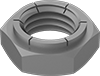
Made from Grade 5 steel, these inch-sized locknuts are suitable for fastening most machinery and equipment.
Includes inch thread sizes. These Grade 8 steel locknuts are 25% stronger than our medium-strength steel nylon-insert locknuts.
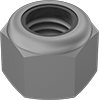
Made from low-strength steel, these locknuts should be used for light duty fastening applications, such as securing.access panels.
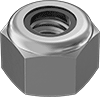
More corrosion resistant than 18-8 stainless steel locknuts, these locknuts have excellent resistance to chemicals and salt water.
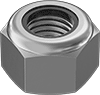
These locknuts have good chemical resistance.
These Grade 8 locknuts are about 25% stronger than medium-strength steel thin locknuts.
These locknuts are about half the height of standard nylon-insert locknuts. Use them in light duty low clearance applications or jam one against a hex nut to hold it in place.
Grade 5 locknuts are suitable for fastening most machinery and equipment when used in conjunction with a standard hex nut.
These locknuts have good chemical resistance and may be mildly magnetic.
About half the strength of medium-strength steel locknuts, these are for light duty fastening applications, such as securing access panels.
Also known as castle nuts, secure these nuts by inserting a cotter pin or safety wire through the slots and a drilled hole in your bolt for mild loosening resistance.
These Grade 8 locknuts are about three times stronger than low-strength steel distorted-thread locknuts.
Use these locknuts for light duty fastening applications, such as securing access panels.
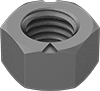
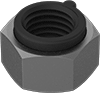
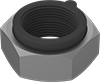
These locknuts have an irregularly shaped thread at the top of the nut that grips the bolt for a stronger hold than nylon-insert locknuts.
Comparable in strength to Grade 8 bolts, these locknuts are about 25% stronger than medium-strength steel locknuts.
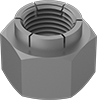
Threads at the top of these locknuts expand to grip the bolt on all sides for a stronger hold than distorted thread locknuts.
When installed, the steel insert grips the threads and lifts away from the nut body, isolating the insert from the nut's load to resist spinoff caused by vibration.
Known for their strength, these steel locknuts are cadmium plated to resist corrosion in wet environments.
About two-thirds the height of standard steel-insert locknuts, use these locknuts in low-clearance applications or jam one against a hex nut to hold it in place.
About half the strength of medium-strength steel coupling nuts, these metric nuts are for light duty fastening applications.
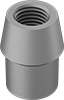
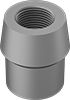
Use these tube-end weld nuts with left-hand threaded fasteners.
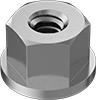
More corrosion resistant than 18-8 stainless steel flange nuts, these nuts have excellent resistance to chemicals and salt water.
Made from 18-8 stainless steel, these flange nuts have good chemical resistance.
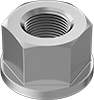
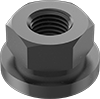
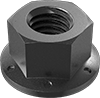
Made from Grade 8 steel, these nuts are about 25% stronger than medium-strength steel flange nuts.
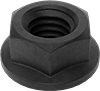
About half the strength of medium-strength steel flange nuts, use these nuts in light duty fastening applications, such as securing access panels.
These flange locknuts are comparable in strength to Grade 8 bolts.
Stronger than stainless steel, these nuts are comparable in strength to Grade 9 bolts.
These cap nuts have good chemical resistance and may be mildly magnetic.
These cap nuts have excellent resistance to chemicals and salt water.
About half the strength of medium-strength steel cap nuts, use them in light duty fastening applications, such as securing access panels.
Made from Grade 8 steel, these screws can be used in high-stress applications, such as valves, pumps, motors, and automotive suspension systems. They are at least 25% stronger than medium-strength steel screws.
Twice as strong as low-strength steel screws, these screws are suitable for fastening most machinery and equipment.
Use these general purpose 18-8 stainless steel screws for a variety of fastening applications. They have good chemical resistance.
The standard for high-strength fastening.
Made from alloy steel, these inch size set screws have a thin edge that digs into hard surfaces for a secure hold.
Also known as jam set screws, these lock other screws in place, hold pins, and adjust spring tension. A black-oxide finish provides corrosion resistance in dry environments.
Use a screwdriver to install these receptacles in a threaded hole.
Comparable to Grade 8 steel, these threaded rods have a tensile strength of 150,000 psi, making them about 25% stronger than medium-strength steel rods.
About half the strength of medium-strength steel threaded rods, use these for light duty hanging, mounting, and fastening.
These Grade B7 threaded rods meet the pressure and temperature requirements of ASTM A193 and are often used to secure pressure tanks, valves, and flanges.
Tighten these threaded rods by turning them to the left; once fastened, they resist loosening from counterclockwise motion.
18-8 stainless steel threaded rods have good chemical resistance.
Grade B8 threaded rods meet the pressure and temperature requirements of ASTM A193 and are often used to secure pressure tanks, valves, and flanges. They have good chemical resistance.
A black-phosphate finish provides mild corrosion resistance.
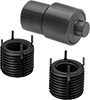
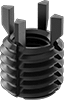
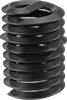
These inserts come with an installation tool. Drive the keys into the surrounding material for a more secure hold than thread-locking inserts.
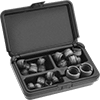
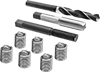
These assortments include various sizes of thread-locking inserts.
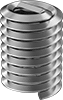
A distorted thread grips the screw to resist loosening.
Inserts come with a through-hole tap and installation tool.
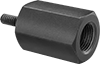
Use adapters on the ends of forcing screws and face-grip puller legs when pulling shafts, bearing caps, and pinions.
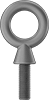
Also known as machinery eyebolts.