We will reply to your message within two hours.
Made from Grade 8 steel, these screws can be used in high-stress applications, such as valves, pumps, motors, and automotive suspension systems. They are at least 25% stronger than medium-strength steel screws.
Twice as strong as low-strength steel screws, these screws are suitable for fastening most machinery and equipment.
About half as strong as medium-strength steel screws, these screws can be used for light duty fastening applications, such as securing access panels.
Use these general purpose 18-8 stainless steel screws for a variety of fastening applications. They have good chemical resistance.
More corrosion resistant than 18-8 stainless steel screws, these 316 stainless steel screws have excellent resistance to chemicals and salt water.
Use these kits to connect standard-size stainless steel pipe flanges for ANSI Class 150 or 300.
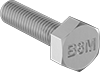
Made from 316 stainless steel, these Grade B8M screws are more corrosion resistant than 18-8 stainless steel screws and have excellent resistance to chemicals and salt water. Screws meet ASTM A193 regulations, so they can be used in high-pressure and high-temperature applications. Also known as pressure bolts.
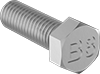
These Grade B8 screws are made from 18-8 stainless steel and have good chemical resistance. Also known as pressure bolts, they meet the high-pressure and high-temperature regulations of ASTM A193 and are used to secure pressure tanks, valves, and flanges.
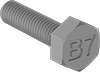
These Grade B7 steel screws are nearly twice as strong as our stainless steel screws for high-pressure applications. Also known as pressure bolts, they meet the high-pressure, high-temperature regulations of ASTM A193 and are used to secure pressure tanks, valves, and flanges.
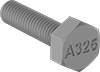
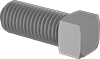
The most common heavy hex head screw, these steel screws meet ASTM A325 regulations for structural joints, such as mating I-beams and scaffolding.
The standard for high-strength fastening.
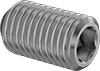
Made from alloy steel, these inch size set screws have a thin edge that digs into hard surfaces for a secure hold.
Made from 18-8 stainless steel, these set screws have good chemical resistance.
Use these steel set screws for light duty holding.
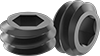
Also known as jam set screws, these lock other screws in place, hold pins, and adjust spring tension. A black-oxide finish provides corrosion resistance in dry environments.
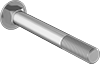
Twice as strong as low-strength steel bolts, these bolts are suitable for fastening most machinery and equipment. Carriage bolts have a smooth, rounded head for a finished look. The square neck keeps these bolts from turning when tightening a nut.
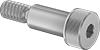
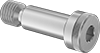
More corrosion resistant than 18-8 stainless steel shoulder screws, these have excellent resistance to chemicals and salt water. These screws have inch thread sizes.
Made from 18-8 stainless steel, these inch-sized shoulder screws have good chemical resistance.
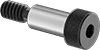
Comparable in strength to Grade 8 steel. These screws have inch thread sizes.
Also known as reverse-key plow screws and bucket-tooth bolts, these bolts have a locking key that keeps them from turning when tightening a nut. Often used on heavy equipment, such as plows, they have a head that's angled underneath to sit flush within countersunk holes.
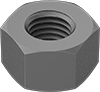
These nuts are about 25% stronger than medium-strength steel nuts.
Tighten these nuts by turning them to the left; once fastened, they resist loosening from counterclockwise motion.
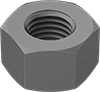
These nuts are suitable for fastening most machinery and equipment.
These nuts are about 20% stronger than high strength steel nuts and are often used in heavy machinery.
These nuts tighten when turned to the left; once fastened, they resist loosening from counterclockwise motion.
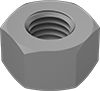
About half the strength of medium-strength steel nuts, these nuts are for light duty fastening applications.
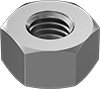
These nuts have good chemical resistance and may be mildly magnetic.
These nuts have excellent chemical resistance and can be used in saltwater environments.
Made from nylon 6/6, these nuts resist oil, grease, and solvents (except mineral acids).
Fiberglass nuts are stronger than nylon 6/6 nuts. They resist acids, solvents, salt water, and oil.
Commonly used in valves, pumps, and shafts, these 400 nickel nuts resist salt water and caustic chemicals.
These nuts are resistant to salt water, electrically conductive, and nonmagnetic.
One-third the weight of steel, these aluminum nuts are corrosion resistant in wet environments and nonmagnetic.
These nuts are corrosion resistant in wet environments, electrically conductive, and nonmagnetic.
More corrosion resistant than 18-8 stainless steel nuts, these nuts have excellent resistance to chemicals and salt water.
These nuts have good chemical resistance.
Able to maintain their strength in high-pressure and high temperature environments, these nuts are used with ASTM A193 bolts to fasten pressure tanks, valves, and flanges.
These nuts are comparable in strength to Grade 9 bolts.
About half the strength of medium-strength steel extra-wide hex nuts, use these nuts for light duty fastening applications, such as securing access panels.
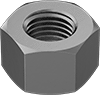
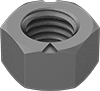
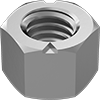
Also kown as heavy hex nuts, these nuts are about 10% wider and taller than standard hex nuts to distribute load over a large area.
More corrosion resistant than 18-8 stainless steel nuts, these nuts can be used in saltwater environments.
Bronze nuts are stronger and more resistant to salt water than brass nuts.
Brass nuts are resistant to corrosion in wet environments and electrically conductive.
These nuts tighten when turned to the left; once fastened, they resist loosening from counterclockwise motion. They’re Grade 5 steel, so you can used these inch-sized nuts for most fastening applications.
These nuts are about 25% stronger than medium-strength steel thin hex nuts. Available in inch thread sizes.
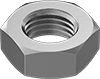
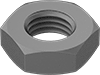
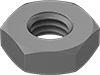
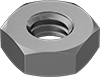
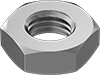
These nuts should be used for light duty fastening applications, such as securing access panels.
Made from Grade 5 steel, these inch-sized nuts are suitable for most fastening applications.
These nuts are often used in conjunction with an extra-wide hex nut to fasten Grade 9 bolts in heavy machinery, such as earth-moving equipment.
Use these nuts for light duty fastening applications, such as securing access panels.
Stainless steel nuts have excellent corrosion resistance in most environments.
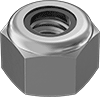
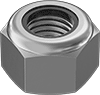
Includes inch thread sizes. These Grade 8 steel locknuts are 25% stronger than our medium-strength steel nylon-insert locknuts.
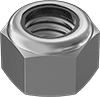
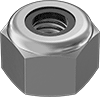
Made from Grade 5 steel, these inch-sized locknuts are suitable for fastening most machinery and equipment.
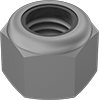
Made from low-strength steel, these locknuts should be used for light duty fastening applications, such as securing.access panels.
More corrosion resistant than 18-8 stainless steel locknuts, these locknuts have excellent resistance to chemicals and salt water.
These locknuts have good chemical resistance.
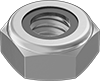
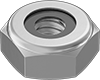
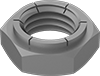
These locknuts are about half the height of standard nylon-insert locknuts. Use them in light duty low clearance applications or jam one against a hex nut to hold it in place.
These locknuts have good chemical resistance and may be mildly magnetic.
Known for their strength, these locknuts are zinc-plated to resist corrosion in wet environments.
These locknuts are suitable for fastening most machinery and equipment.
High-strength steel locknuts are about 25% stronger than medium-strength steel locknuts.
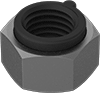
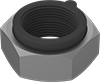
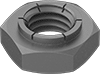
When installed, the steel insert grips the threads and lifts away from the nut body, isolating the insert from the nut's load to resist spinoff caused by vibration.
About two-thirds the height of standard steel-insert locknuts, use these locknuts in low-clearance applications or jam one against a hex nut to hold it in place.
Comparable in strength to Grade 8 bolts, these locknuts are about 25% stronger than medium-strength steel locknuts.
These locknuts have an irregularly shaped thread at the top of the nut that grips the bolt for a stronger hold than nylon-insert locknuts.
These Grade 8 locknuts are about three times stronger than low-strength steel distorted-thread locknuts.
Threads at the top of these locknuts expand to grip the bolt on all sides for a stronger hold than distorted thread locknuts.
Known for their strength, these steel locknuts are cadmium plated to resist corrosion in wet environments.
About half the height and 10% wider than standard flex-top locknuts, use these locknuts in low-clearance applications or jam one against an extra-wide hex nut to hold it in place.
Stainless steel locknuts have excellent corrosion resistance in most environments.
About half the strength of medium-strength steel locknuts, these are for light duty fastening applications, such as securing access panels.
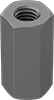
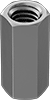
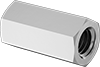
Comparable in strength to Grade 9 bolts, these coupling nuts are about 20% stronger than high-strength steel coupling nuts. Available in inch thread sizes.
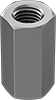
Made from Grade 5 steel, these inch-sized coupling nuts are suitable for most applications.
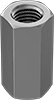
Made from Grade 8 steel, these nuts are about 25% stronger than medium-strength steel coupling nuts. Furnished in inch thread sizes.
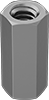
About half the strength of medium-strength steel coupling nuts, these nuts are for light duty fastening applications.
The left-hand threads on these coupling nuts resists loosening from counterclockwise vibration. Use in light duty applications.
Brass coupling nuts are corrosion resistant in wet environments and electrically conductive.
More corrosion resistant than 18-8 stainless steel coupling nuts, these nuts have excellent resistance to chemicals and salt water.
One-third the weight of steel, aluminum coupling nuts resist corrosion in wet environments.
These coupling nuts have good chemical resistance.
Known for their strength, steel coupling nuts are available with a corrosion-resistant finish.
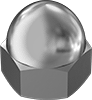
About half the strength of medium-strength steel cap nuts, use them in light duty fastening applications, such as securing access panels.
These nuts are about 25% stronger than medium-strength steel cap nuts.
These Grade 5 cap nuts are suitable for fastening most machinery and equipment.
These cap nuts have excellent resistance to chemicals and salt water.
These cap nuts have good chemical resistance and may be mildly magnetic.
Known for their strength, these steel cap nuts have a black-oxide finish to resist corrosion in dry environments.
Stainless steel cap nuts have excellent corrosion resistance in most environments.
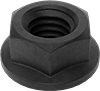
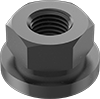
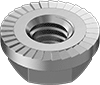
Made from Grade 8 steel, these nuts are about 25% stronger than medium-strength steel flange nuts.
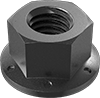
About half the strength of medium-strength steel flange nuts, use these nuts in light duty fastening applications, such as securing access panels.
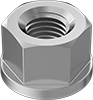
More corrosion resistant than 18-8 stainless steel flange nuts, these nuts have excellent resistance to chemicals and salt water.
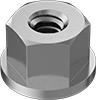
Made from 18-8 stainless steel, these flange nuts have good chemical resistance.
These flange locknuts are comparable in strength to Grade 8 bolts.
About half the strength of medium-strength steel flange locknuts, these are for light duty fastening applications, such as securing access panels.
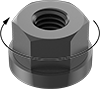
The nut head rotates while the flange remains stationary to prevent scratching the material surface as you tighten the nut.
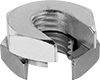
Attach these slip-on nuts at any point on a threaded rod for quick installation.
Stronger than stainless steel, these nuts are comparable in strength to Grade 9 bolts.
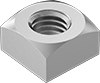
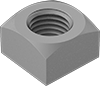
These Grade 5 square nuts are suitable for fastening most machinery and equipment.
About half the strength of medium-strength steel square nuts, use these nuts in light duty fastening applications, such as securing access panels.
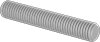
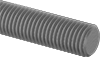
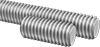
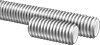
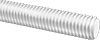
These Grade B7 threaded rods meet the pressure and temperature requirements of ASTM A193 and are often used to secure pressure tanks, valves, and flanges.
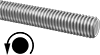
Tighten these threaded rods by turning them to the left; once fastened, they resist loosening from counterclockwise motion.
Grade B16 threaded rods maintain their strength at higher temperatures than Grade B7 threaded rods. They meet the pressure and temperature requirements of ASTM A193 and are often used to secure pressure tanks, valves, and flanges.
Comparable to Grade 8 steel, these threaded rods have a tensile strength of 150,000 psi, making them about 25% stronger than medium-strength steel rods.
Tighten these threaded rods by turning them to the left; once fastened, they resist loosening from counterclockwise motion. About half the strength of medium-strength steel threaded rods, use them for light duty hanging, mounting, and fastening.
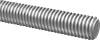
About half the strength of medium-strength steel threaded rods, use these for light duty hanging, mounting, and fastening.
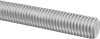
18-8 stainless steel threaded rods have good chemical resistance.
Grade B8 threaded rods meet the pressure and temperature requirements of ASTM A193 and are often used to secure pressure tanks, valves, and flanges. They have good chemical resistance.
Stronger and more wear resistant than 18-8 stainless steel, these threaded rods are mildly chemical resistant. They meet the pressure and temperature requirements of ASTM A193 and are often used to secure pressure tanks, valves, and flanges.
More corrosion resistant than 18-8 and 410 stainless steel threaded rods, these 316 stainless steel rods have excellent resistance to chemicals and salt water.
Grade B8M threaded rods meet the pressure and temperature requirements of ASTM A193 and are often used to secure pressure tanks, valves, and flanges.
Brass threaded rods are corrosion resistant in wet environments, electrically conductive, and nonmagnetic.
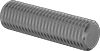
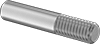
Screw these studs into a tapped hole and use them as a pivot point, hinge, shaft, or locator pin.
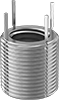
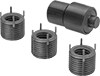
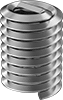
These inserts are made to stringent military specifications.
Made of 18-8 stainless steel, these inserts have good corrosion resistance.
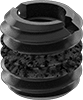
A black-phosphate finish provides mild corrosion resistance.
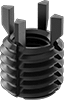
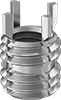
The strongest key-locking inserts we offer, these inserts are made to stringent military specifications.
These inserts come with an installation tool. Drive the keys into the surrounding material for a more secure hold than thread-locking inserts.
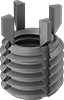
Forming the strongest hold of any of our threaded inserts, these inserts have a distorted internal thread to lock screws into place and keys that drive into surrounding material to prevent slipping and rotating.
A distorted thread grips the screw to resist loosening.
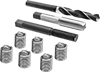
Inserts come with a through-hole tap and installation tool.
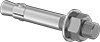
These steel anchors are available with corrosion-resistant finishes.
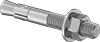
These 18-8 stainless steel anchors have good chemical resistance.
More corrosion resistant than 18-8 stainless steel anchors, these 316 stainless steel anchors have excellent resistance to chemicals and salt water.
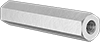
Connect two differently sized male-threaded parts, such as threaded rods, and tighten with a standard wrench.
Often called sleeve nuts, these thread adapters fasten parts with right-hand threads to parts with left-hand threads.
Secure setup clamps and fixtures to your machine table, or assemble heavy machines, such as engine mounts.
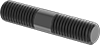
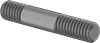
Also known as tap-end and fixture studs, these rods have friction-fit threads on one end to resist loosening and standard threads on the other side for attaching a nut.
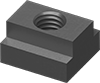
Designed to slide into T-slot tracks on machine tool tables, use these nuts to secure clamps and workpieces.
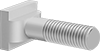
For quicker setups than a separate T-slot nut and stud, slide these bolts into T-slot tracks on machine tool tables.
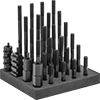
For mounting items to your machine table, these kits contain the full system of necessary components.
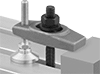
Instead of a step block, support these clamps using a screw, leveling mount, or any other threaded object.
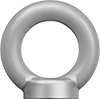
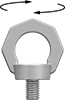
Create your own lifting eye by adding an eye nut to a stud or bolt.

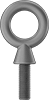
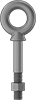
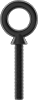
Also known as machinery eyebolts.
Also known as nut eyebolts, these are designed for through-hole applications.
Route wire and cable through the smooth eye without snagging.
Unlike conventional eyebolts, you can rotate the eye 360° to match the angle of your load.
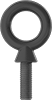
The matte black-oxide finish won't reflect light, allowing the eyebolts to blend into the background.

These eyebolts retain their strength in temperatures as low as -40° F.
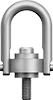
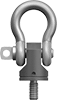
Designed for angular lifting, hoist rings resist stresses that would bend or break an eyebolt. They have a lifting ring that pivots 180° front to back to compensate for roll and sway when lifting heavy or unbalanced loads.

Remove the shackle after lifting while keeping the base installed for future use.
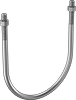
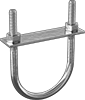
Mount these general purpose U-bolts into an existing bracket, or combine with a mounting plate for a secure hold at the mounting surface.
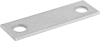
A mounting plate provides a more secure hold at the mounting surface.
Add a mounting plate to your U-bolt for a more secure hold at the mounting surface.
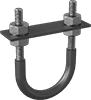
A durable rubber cushion and mounting plate prevent corrosion and wear caused by metal-to-metal contact. The mounting plate is removable, so the U-bolts can be installed onto an existing line without needing to dissemble it.
Tighten these jam nuts against the turnbuckle body to prevent the fitting from loosening.
Also known as insert nuts, these convert slotted holes to threaded round holes and keep them centered in the channel.