
We will reply to your message within two hours.
The standard for high-strength fastening.
Choose these screws for their adherence to strict military standards for material and construction.
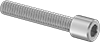
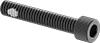
A Torx-Plus drive has more points of contact than a hex drive, allowing you to tighten these screws with less slippage or damage to the recess.
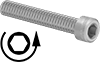
Tighten these screws by turning them to the left; once fastened, they prevent counterclockwise-moving parts from loosening.
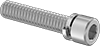
Use these general purpose 18-8 stainless steel screws for a variety of fastening applications. They have good chemical resistance.
Choose these screws for their adherence to strict military standards for material and construction. Screws are 18-8 stainless steel for good chemical resistance.
Tighten these screws by turning them to the left; once fastened, they prevent counterclockwise-moving parts from loosening. Made from 18-8 stainless steel, these screws have good chemical resistance.
Cleaned and double bagged in an ISO Class 5 (Fed. Std. Class 100) clean room, these screws are ready to use on chambers and components in high-vacuum systems.
More corrosion resistant than 18-8 stainless steel screws, these 316 stainless steel screws have excellent resistance to chemicals and salt water.
Often used to fasten parts in engines and turbines, these are our strongest stainless steel screws. They are comparable in strength to alloy steel with the corrosion resistance of 18-8 stainless steel.
These screws are hardened to be 40% stronger than standard 316 stainless steel screws, yet they still have excellent corrosion resistance. Use them in chemical and marine applications.
Plastic screws are chemical and oil resistant, nonconductive, and lightweight.
Aluminum screws are one-third the weight of steel and have good corrosion resistance.
Brass screws are electrically conductive, nonmagnetic, and have good corrosion resistance.
Our most corrosion-resistant metal screws, titanium screws withstand salt water, acids, and chemicals. They have a high strength-to-weight ratio and are about 40% lighter than steel screws.
More corrosion resistant than stainless steel screws, nickel alloy screws have excellent resistance to salt water and some acids.
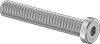
Nearly as strong as steel, these stainless steel screws won’t rust in outdoor, washdown, and other corrosive environments. With half the height of a standard socket head, these low-profile screws fit in tight spaces.
More corrosion resistant than 18-8 stainless steel screws, these 316 stainless steel screws have excellent resistance to chemicals and salt water. Use these low-profile screws where space is limited.
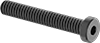
Made of alloy steel, these low-profile screws are nearly twice as strong as their stainless steel counterparts. With half the height of a standard socket head, these low-profile screws fit in tight spaces.
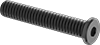
Made from alloy steel, these screws are nearly twice as strong as stainless steel low-profile screws. With a head height one-third the size of a standard socket head, they fit in the tightest spaces.
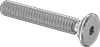
More corrosion resistant than 18-8 stainless steel screws, these 316 stainless steel screws have excellent resistance to chemicals and salt water. Their ultra-low-profile lets them fit in the tightest spaces.
With a head one and a half times taller than a standard socket head, these screws are easier to install in deep counterbored holes and other hard-to-reach places.
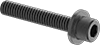
These general purpose flanged screws distribute pressure where the screw meets the surface, eliminating the need for a washer.
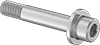
For use where sideways forces are a concern, these screws have a precisely measured unthreaded portion (grip) for a strong hold. Their flanged head distributes pressure where the screw meets the surface, so you don't need a washer.
These screws have good chemical resistance. A thread locker bonded to the threads prevents loosening from vibration.
More corrosion resistant than 18-8 stainless steel screws, these screws have excellent resistance to chemicals and salt water. They have a thread locker to resist vibration.
With a tensile strength of 170,000 psi, these alloy steel screws are among the strongest we carry. They are stronger than Grade 8 steel screws and are nearly two and a half times stronger than stainless steel thread-locking screws. They have a thread locker to prevent loosening from vibration.
With a tensile strength of 170,000 psi, these alloy steel screws are among the strongest we carry. They are stronger than Grade 8 steel screws and are more than twice as strong as stainless steel wire-lockable screws. These resist vibration better than any other socket head screw.
Stainless steel screws have excellent corrosion resistance in most environments. Wire these screws together for more vibration resistance than other types of socket head screws.
Stainless steel screws have excellent corrosion resistance in most environments. They have a split lock washer to create tension and resist loosening from vibration.
With a tensile strength of 180,000 psi, these alloy steel screws are among the strongest we carry. They are stronger than Grade 8 steel screws and more than two and a half times stronger than stainless steel screws with split lock washer. The split lock washer helps to resist vibration.
Drilled through the head and shaft, these screws vent fluid and gases trapped below the screw, making them good for vacuum applications.
Fasten these screws inside a high-vacuum system without bringing in contaminants.
Seal out contaminants and prevent leaks—a rubber O-ring under the head prevents leaks and seals out contaminants.
A freely rotating washer distributes pressure over a wider area than a flange, preventing damage to your material's surface.
The nylon patch bonded to the threads of these socket head screws adds friction to keep vibration from loosening them, while their O-ring prevents leaks and seals out contaminants.
The nonmarring brass tip is electrically conductive and harder than nylon, but soft enough to conform to most surfaces and reduce damage from metal-on-metal contact.
Nonconductive and softer than brass, the nylon tip reduces vibration and eliminates damage from metal touching metal.
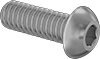
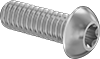
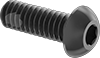
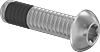
18-8 stainless steel button head screws have good chemical resistance and may be mildly magnetic.
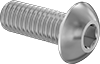
More corrosion resistant than 18-8 stainless steel screws, these button head screws have excellent resistance to chemicals and salt water. They may be mildly magnetic.
Brass button head screws are corrosion resistant in wet environments, nonmagnetic, and electrically conductive.
Known for their high strength-to-weight ratio, these titanium screws are as strong as alloy steel and about 40% lighter. They stand up to salt water, acids, and chemicals.
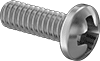
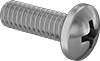
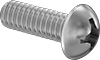
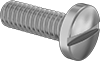
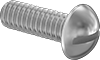
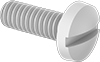
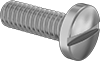
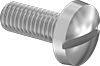
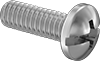
18-8 stainless steel pan head screws have good chemical resistance and may be mildly magnetic.
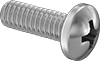
More corrosion resistant than 18-8 stainless steel screws, these pan head screws have excellent resistance to chemicals and salt water. They may be mildly magnetic.
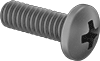
These steel pan head screws are coated for corrosion resistance.
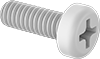
Nylon pan head screws are chemical and oil resistant, nonconductive, and lightweight. Exposure to moisture may cause them to expand.
Reliable in harsh environments up to 500° F, PEEK screws withstand acids, bases, and salt solutions. They are chemical and oil resistant, nonconductive, and lightweight.
Polycarbonate screws resist breaking in high-impact applications. All are chemical and oil resistant, nonconductive, and lightweight.
Brass pan head screws are corrosion resistant in wet environments, nonmagnetic, and electrically conductive.
Our most corrosion-resistant screws, these titanium pan head screws withstand salt water, acids, and chemicals. They have a high strength-to-weight ratio.
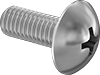
These 18-8 stainless steel screws have good chemical resistance and may be mildly magnetic. The extra-wide truss head distributes holding pressure to reduce the likelihood of crushing thin material.
More corrosion resistant than 18-8 stainless steel screws, these screws have excellent resistance to chemicals and salt water. The extra-wide truss head distributes holding pressure to reduce the likelihood of crushing thin material. Screws may be mildly magnetic.
A zinc plating provides mild corrosion resistance.
Stainless steel screws have excellent corrosion resistance in most environments.
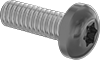
Taller than cheese head screws, these have a deep drive to maximize driving power and a narrow diameter to fit in tight spaces.
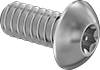
Made from 18-8 stainless steel, these screws have good chemical resistance and may be mildly magnetic. Torx and Torx-Plus drives have more points of contact than other drives, allowing you to tighten the screw without damaging the recess.
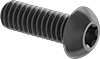
Made from alloy steel, these screws are three times stronger than standard steel button head Torx screws. A Torx-Plus drive has more points of contact than other drives, allowing you to tighten the screw without damaging the recess.
A286 stainless steel screws have comparable strength to alloy steel with the corrosion and chemical resistance of 18-8 stainless steel. They have a Torx drive that has more points of contact than other drives, allowing you to tighten the screw without damaging the recess.
These screws have a Torx or Torx-Plus drive for more points of contact than other drives, allowing you to tighten the screw without damaging the recess.
Create a decorative appearance on your finished product—the head of these screws is painted.
Nylon screws are chemical and oil resistant, nonconductive, and lightweight. Exposure to moisture may cause them to expand.
PTFE screws withstand harsh chemicals and temperatures from -100° F to 500° F. They are nonconductive, lightweight, and resist wear due to their slippery surface.
These pan head screws are zinc plated for corrosion resistance in wet environments.
Made from brass, these screws are corrosion resistant in wet environments, nonmagnetic, and electrically conductive.
One-third the weight of steel, aluminum screws resist corrosion in wet environments.
These screws have good chemical resistance.
More corrosion resistant than 18-8 stainless steel screws, these screws have excellent resistance to chemicals and salt water.
PTFE screws withstand harsh chemicals and temperatures from -100° F to 500° F.
Plastic screws are ?chemical and oil resistant, nonconductive, and lightweight.
Brass screws are corrosion resistant in wet environments, nonmagnetic, and electrically conductive.
Made from nylon, these screws are chemical and oil resistant, nonconductive, and lightweight.
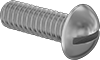
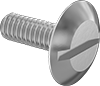
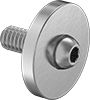
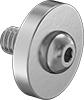
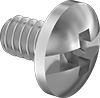
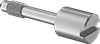
When head height is important, these screws fit into spaces where other wide head screws won't fit. Also known as shutter screws, their ultra-wide truss head distributes the load over a large area for excellent holding pressure.
Made from stainless steel, these screws are chemical resistant and may be mildly magnetic.
These screws have a tall, domed head that provides a finished appearance. They're zinc plated to resist corrosion in wet environments.
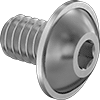
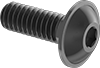
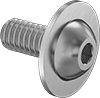
18-8 stainless steel screws have good chemical resistance and may be mildly magnetic. The flange distributes pressure across a wide surface, eliminating the need for a separate washer.
More corrosion resistant than 18-8 stainless steel screws, these screws have excellent resistance to chemicals and salt water. They have a flange that distributes pressure across a wide surface, eliminating the need for a separate washer. Screws may be mildly magnetic.
Made from alloy steel, these screws are nearly twice as strong as stainless steel button head screws. They have a flange that distributes pressure across a wide surface, eliminating the need for a separate washer.
These aluminum screws are lightweight and resist corrosion in wet environments. They have a flange that is wider and thicker than our other flanged screws, so they distribute pressure the best.
Made from 18-8 stainless steel, these screws have good chemical resistance and may be mildly magnetic. The flange is wider and thicker than our other flanged screws, so they distribute pressure the best.
Comparable in diameter to a washer, the flange on these screws distributes pressure better than standard flanged screws. Made from 316 stainless steel, they have excellent resistance to chemicals and salt water. Screws may be mildly magnetic.
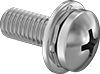
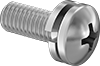
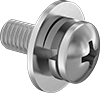
Made from stainless steel, these screws have good chemical resistance and may be mildly magnetic. All have a washer with sharp external teeth that dig into surfaces for maximum holding power and vibration resistance. Also known as Sems screws, the washer rotates freely but is permanently attached.
The washer on these screws has sharp external teeth that dig into surfaces for maximum holding power and vibration resistance. Also known as Sems screws, the washer rotates freely but is permanently attached.
Sharp internal teeth dig into surfaces to resist large amounts of vibration, while the smooth outside edge provides a finished look. Also known as Sems screws, the washer rotates freely but is permanently attached.
These stainless steel screws have good chemical resistance and may be mildly magnetic. The washer has sharp internal teeth that dig into surfaces to resist large amounts of vibration while the smooth outside edge provides a finished look. Also known as Sems screws, the washer rotates freely but is permanently attached.
Made from stainless steel, these screws have good chemical resistance and may be mildly magnetic. A curved washer protects delicate surfaces while providing constant tension. Also known as Square Cone Sems screws, the washer rotates freely but is permanently attached.
When compressed, the split lock washer flattens to add tension and prevent loosening from small amounts of vibration. Also known as Sems screws, the washer rotates freely but is permanently attached.
The flat washer distributes holding pressure and protects delicate surfaces from damage while the split lock washer adds tension to prevent loosening from small amounts of vibration.
Made from 18-8 stainless steel, these screws have good chemical resistance and may be mildly magnetic. A nylon patch bonded to the threads adds friction to prevent loosening from vibration.
Made from alloy steel, these screws are nearly twice as strong as stainless steel button head screws.
A nylon patch bonded to the threads adds friction to prevent loosening from vibration. Made from 18-8 stainless steel, these screws have good chemical resistance and may be mildly magnetic.
The epoxy adhesive on the threads provides twice the holding power of standard thread-locking screws, but requires time to harden.
Wire these screws together through the hole in the head for better vibration resistance than any other rounded head screw.
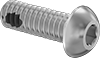
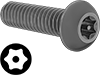
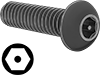
These 18-8 stainless steel button head screws have good chemical resistance and may be mildly magnetic. The tamper-resistant Torx drive (also known as a pin-in Torx drive) makes them difficult to remove without special tools.
To prevent unwanted removal, these screws have a tamper-resistant Torx drive—also known as a pin-in Torx drive—that makes them difficult to unscrew without special tools. An O-ring under the head blocks leaks and seals out dust and dirt.
Made from alloy steel, these screws are nearly twice as strong as stainless steel button head screws. Their tamper-resistant Torx drive (also known as a pin-in Torx drive) makes them difficult to remove without special tools.
The extra-wide head distributes holding pressure to reduce the likelihood of crushing thin materials.
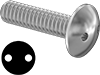
A tamper-resistant drilled spanner drive makes these screws difficult to remove without special tools. They're 18-8 stainless steel for good chemical resistance and may be mildly magnetic.
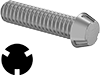
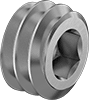
Difficult to remove without special tools, these screws have three grooves.
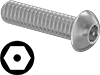
These 18-8 stainless steel button head screws have good chemical resistance and may be mildly magnetic. The tamper-resistant hex drive (also known as a pin-in hex drive) makes them difficult to remove without special tools.
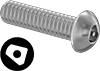
These button head screws have a unique drive that is sold only by McMaster-Carr, making them difficult to remove without a special driver bit. Made from 18-8 stainless steel, they have good chemical resistance and may be mildly magnetic.
A rubber O-ring prevents leaks and seals out contaminants. Made from 18-8 stainless steel, these screws have good chemical resistance and may be mildly magnetic.
A nylon patch bonded to the threads adds friction to resist loosening from vibration.
These screws are drilled through the shaft to vent fluids and gases trapped under the screw. Made from 18-8 stainless steel, they have good chemical resistance and may be mildly magnetic.
Tighten these screws by turning them to the left; once fastened, they prevent loosening from counterclockwise motion. Made from 18-8 stainless steel, these screws have good chemical resistance and may be mildly magnetic.
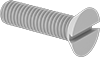
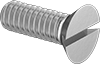
These 18-8 stainless steel screws have good chemical resistance and may be mildly magnetic.
More corrosion resistant than 18-8 stainless steel screws, these screws have excellent resistance to chemicals and salt water. They may be mildly magnetic.
These screws have good chemical resistance and may be mildly magnetic.
These steel screws have a zinc plating for mild corrosion resistance.
Our most corrosion resistant screws, titanium screws withstand salt water, acids, and chemicals.
Aluminum screws are lightweight and have good corrosion resistance.
These screws have a decorative, domed head that sits above the surface when installed.
Lower strength than alloy steel, use these screws for light duty fastening.
Made from alloy steel, these screws are twice as strong as standard steel Torx flat head screws.
A286 stainless steel screws have comparable strength to alloy steel with the corrosion resistance of 18-8 stainless steel.
These screws are chemical and oil resistant, nonconductive, and lightweight. Exposure to moisture may cause them to expand.
These screws are more reliable in high-stress, high-temperature environments than other plastic screws. They withstand water, steam, and temperatures up to 500° F.
PTFE screws are more chemical resistant than other plastic screws and withstand temperatures from -100° F to 500° F.
Polycarbonate screws resist breaking in high impact applications better than other plastic screws. All are chemical and oil resistant, nonconductive, and lightweight.
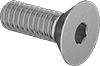
Made of 18-8 stainless steel, these screws have good chemical resistance and may be mildly magnetic.
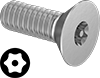
With a tamper-resistant Torx or Torx Plus drive (also known as a pin-in Torx or Torx Plus drive), these screws are difficult to remove without special tools.
Prevent unwanted removal, leaks, and contamination with these sealing Torx screws.
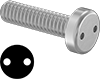
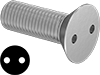
These screws have a tamper-resistant drilled spanner drive, which makes them difficult to remove without special tools.
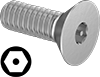
A tamper-resistant hex drive (also known as pin-in hex drive) makes these screws difficult to remove without special tools.
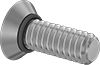
With an O-ring under the head, these screws prevent leaks and seal out contaminants.
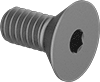
Made from alloy steel, these screws are nearly twice as strong as stainless steel flat head screws.
A nylon patch bonded to the threads adds friction to prevent loosening from vibration. Made of 18-8 stainless steel, these screws have good chemical resistance and may be mildly magnetic.
These screws are drilled through the shaft to vent fluids and gases trapped under the screw.
Tighten these screws by turning them to the left; once fastened, they prevent loosening from counterclockwise motion.
Made from Grade 8 steel, these screws can be used in high-stress applications, such as valves, pumps, motors, and automotive suspension systems. They are at least 25% stronger than medium-strength steel screws.
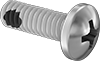
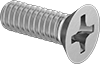
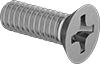
When clearance for a wrench is limited, these screws have a Phillips drive so you can install them with a screwdriver. They are used for high-strength fastening.
About half as strong as medium-strength steel screws, these screws can be used for light duty fastening applications, such as securing access panels.
Ceramic screws won't melt, rust, seize, or become brittle—even at extreme temperatures. They are nonconductive and highly resistant to corrosive gases.
Install these screws with a wrench or a screwdriver. Made from stainless steel, they have good corrosion resistance. A flange under the head means a separate washer is not necessary.
Made from Grade 5 steel, these screws are suitable for fastening most machinery and equipment. Serrations under the flange provide mild vibration resistance.
Made from 18-8 stainless steel, these screws have good chemical resistance. Their flange is serrated to help prevent loosening from vibration.
Also known as Sems screws, these screws have a permanently attached but freely rotating tooth lock washer that bites into the mating surface for vibration resistance.
An O-ring under the head prevents leaks and seals out contaminants.
Stainless steel binding barrels and screws have excellent corrosion resistance in most environments.
One-third the weight of steel, aluminum binding barrels and screws resist corrosion in wet environments.
Brass binding barrels and screws are corrosion resistant in wet environments and electrically conductive.
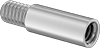
Add length to a binding barrel.
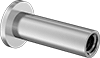
An unthreaded barrel allows quick assembly with a press or a hammer.
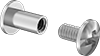
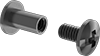
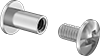
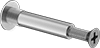
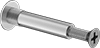
These include a barrel and a screw.
Use these barrels with a screw you already have or pair with a different type of screw to create a custom fastener. Made from 18-8 stainless steel, they are chemical resistant.
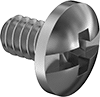
Pair these screws with a barrel you already have or couple with a different barrel to create a custom fastener. Made from 18-8 stainless steel, they are chemical resistant.
These include a barrel and a screw with an extra-wide (truss) head. Made from 316 stainless steel, they have excellent chemical resistance and can be used in saltwater environments.
Use these barrels with a screw you already have or pair with a different type of screw to create a custom fastener. Made from 316 stainless steel, they have excellent chemical resistance and can be used in saltwater environments.
Use these barrels with a screw you already have or pair with a different type of screw to create a custom fastener. They're zinc plated to resist corrosion in wet environments.
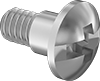
Designed with a shoulder for the strength to handle side and shear loads.
Shorter than shoulder screws for use in thin material.
More corrosion resistant than 18-8 stainless steel binding barrels and screws, these have excellent resistance to chemicals and salt water.
These binding barrels and screws have good chemical resistance.
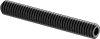
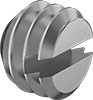
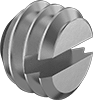
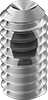
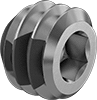
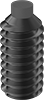
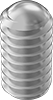
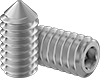
Made from alloy steel, these inch size set screws have a thin edge that digs into hard surfaces for a secure hold.
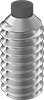
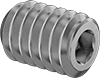
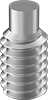
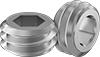
Made from 18-8 stainless steel, these set screws have good chemical resistance.
Choose these set screws for their adherence to strict military standards for material and construction.
Made from 316 stainless steel, these set screws have excellent chemical resistance and can be used in saltwater environments.
Brass set screws are corrosion resistant in wet environments, nonmagnetic, and electrically conductive.
These set screws have good chemical resistance.
More corrosion resistant than 18-8 stainless steel set screws, these have excellent resistance to chemicals and salt water.
These 18-8 stainless steel set screws are chemical resistant. They have a nylon locking patch that grips threads to resist loosening.
These alloy steel set screws have a thin edge that digs into hard surfaces for a secure hold. A nylon locking element grips threads to resist loosening.
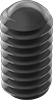
Made from black-oxide alloy steel, these set screws resist corrosion in dry environments. They dig into hard surfaces for a secure hold and have serrations on the cup edge that grip the material surface to resist loosening.
Made from 18-8 stainless steel, these set screws are chemical resistant. They have serrations on the cup edge that grip the material surface to resist loosening.
These inch size set screws are vented to allow fluid and gas to pass through.
Made from 18-8 stainless steel, these set screws are chemical resistant. The tip makes good contact on flat surfaces and allows you to make frequent adjustments with minimal surface damage.
Made from 316 stainless steel, these set screws have excellent chemical resistance and can be used in saltwater environments. The tip makes good contact on flat surfaces and allows you to make frequent adjustments with minimal surface damage.
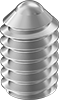
The tip makes good contact on flat surfaces and allows you to make frequent adjustments with minimal surface damage.
These nylon set screws are chemical resistant, lightweight, and nonconductive. The tip makes good contact on flat surfaces and allows you to make frequent adjustments with minimal surface damage.
Made from nylon, these set screws are lightweight, resist chemicals, and won’t carry an electric current.
A nylon locking patch grips threads to resist loosening.
These chemical-resistant 18-8 stainless steel screws have an extra-soft nylon tip, which minimizes the damage that can occur from metal-on-metal contact. Use them on soft surfaces such as aluminum.
These alloy steel set screws have an extra-soft nylon tip, which minimizes the damage that can occur from metal-on-metal contact. Use them set screws on soft surfaces such as aluminum.
With a tip that's harder than nylon and silver, these alloy steel set screws provide a secure hold on hard surfaces. The body has a black-oxide finish to resist corrosion in dry environments.
These set screws have a tip that is harder than nylon and silver to provide a secure hold on hard surfaces. The body is 18-8 stainless steel for good chemical resistance.
These set screws have a softer tip than brass-tip set screws to minimize surface damage. Use them on hard surfaces.
Made of alloy steel, these set screws are often used in U-shaped and V-shaped grooves and on other sloped or angled surfaces. The oval tip allows for frequent adjustments with minimal surface damage.
These 18-8 stainless steel set screws have good chemical resistance. Also known as half dog-point set screws, they have a protruding tip that locks within a mating hole or slot to keep parts aligned.
Also known as half dog-point set screws, these set screws have a protruding tip that locks within a mating hole or slot to keep parts aligned.
Also known as full dog-point set screws, the tip is twice as long as the tip on other extended-tip set screws for greater engagement in deep mating holes.
Stainless steel set screws have excellent corrosion resistance in most environments.
These 18-8 stainless steel set screws are chemical resistant. A pointed tip wedges into the contact surface for a secure hold on soft materials such as brass.
These alloy steel set screws have a pointed tip that wedges into the contact surface for a secure hold on soft materials such as brass.
Also known as jam set screws, these lock other screws in place, hold pins, and adjust spring tension. A black-oxide finish provides corrosion resistance in dry environments.
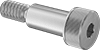
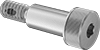
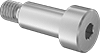
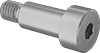
Made from 18-8 stainless steel, these inch-sized shoulder screws have good chemical resistance.
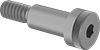
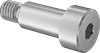
More corrosion resistant than 18-8 stainless steel shoulder screws, these have excellent resistance to chemicals and salt water. These screws have inch thread sizes.
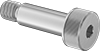
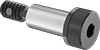
Shoulder screws made of 17-4 PH stainless steel are nearly twice as strong as 18-8 stainless steel and have the same corrosion resistance. These screws have inch thread sizes.
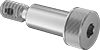
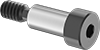
Comparable in strength to Grade 8 steel. These screws have inch thread sizes.
One-third the weight of steel, aluminum shoulder screws are lightweight and have good corrosion resistance.
Titanium shoulder screws have a high strength-to-weight ratio and are more resistant to acids and salt water than nickel shoulder screws.
Nickel alloy shoulder screws are more resistant to acids and salt water than stainless steel shoulder screws.
These shoulder screws have good chemical resistance.
More corrosion resistant than 18-8 stainless steel shoulder screws, these have excellent resistance to chemicals and salt water.
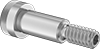
Screw these shoulders onto a stud.
A locking element on the threads adds friction to resist loosening. Comparable to Grade 8 steel, these alloy steel shoulder screws are the strongest we offer.
With a hex socket at the tip as well as the head, you can fasten these shoulder screws from the tip when the head cannot be reached.
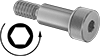
Tighten these shoulder screws by turning them to the left; once fastened, they resist loosening from counterclockwise motion.
These shoulder screws come with a traceable lot number and material test report.
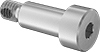
Install and remove these shoulder screws by hand or with a hex key.
Made of 416 stainless steel, these shoulder screws are almost twice as strong as 18-8 stainless steel and have the same corrosion resistance.
Comparable to Grade 8 steel, these screws are the strongest precision shoulder screws we offer.
Without a head to get in the way, these screws fit in tight spaces where standard shoulder screws cannot. Either thread them in a countersunk hole for a flush mount, or install them with the shoulder sticking out to use them as pins or dowels for aligning and locating components.
Brass shoulder screws are electrically conductive, nonmagnetic, and have good corrosion resistance.
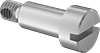
These screws have a head height about one-third the head height of a standard shoulder screw. Use them in low-clearance applications such as inside machines.
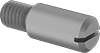
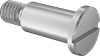
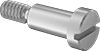
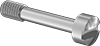
These slotted screws have a head height about one-third the head height of a standard shoulder screw. Use them in low-clearance applications such as inside machines.
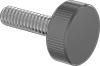
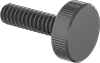
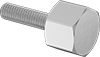
Stainless steel thumb screws have excellent corrosion resistance in most environments.
Brass thumb screws are corrosion resistant in wet environments and electrically conductive.
Aluminum thumb screws are lightweight and resist corrosion in wet environments.
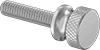
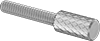
Made from 18-8 stainless steel, these thumb screws are chemical resistant. They have a thin, knurled head for use in low-clearance applications.
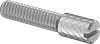
These slotted thumb screws have a thin, knurled head for use in low-clearance applications. Made of 18-8 stainless steel, they are chemical resistant.
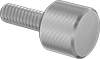
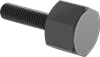
A raised head makes these thumb screws easy to grip. They have a black-oxide finish to resist corrosion in dry environments.
Made from 18-8 stainless steel, these thumb screws are chemical resistant. They have a raised head that makes them easy to grip.
Use these slim thumb screws in tight spaces.
These slotted thumb screws are slim to fit in tight spaces.
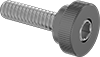
Tighten these thumb screws by hand or with a hex key for more torque.
A knurled head allows for slip-resistant controlled adjustment.
A flange provides a bearing surface to hold parts under the head.
A raised head makes these thumb screws easy to grip. Made from nylon, they're chemical resistant, nonconductive, and lightweight.
Stronger than standard nylon, these thumb screws are chemical resistant, nonconductive, and lightweight. They have a raised head that makes them easy to grip.
These nylon thumb screws are chemical resistant, nonconductive, and lightweight.
A thin head allows these thumb screws to be used in low-clearance applications.
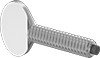
Wings provide more leverage than spade-head thumb screws for greater torque while tightening. A zinc plating provides corrosion resistance in wet environments.
A soft nylon tip conforms to textured surfaces and minimizes damage when holding items in place.
These steel thumb screws have a black-oxide finish to resist corrosion in dry environments.
These steel screws are zinc plated to resist corrosion in wet environments.
Made from 410 stainless steel, these screws are strong, wear resistant, and mildly chemical resistant.
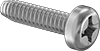
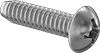
These steel screws cut threads in drilled holes as they’re turned, so they require less driving torque and cause less stress on your material than thread forming screws.
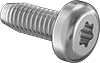
A Torx drive has more points of contact than a Phillips drive, allowing you to apply extra force with less slippage or damage to the recess.
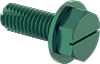
The green color identifies these as grounding screws. They have a flange that provides a wide flat surface for making solid electrical connections.
A wide cutting slot provides excellent chip clearing and low driving torque in soft metal.
Also known as Swageform screws, threads at the tip are designed to grab material for a fast start with low torque in a wide range of materials.
These screws have a hex head for a secure grip with a wrench.
The triangular shank presses tightly as it forms threads, so screws resist loosening in soft metals such as brass, aluminum, and copper.
Also known as Fastite screws, these offer more thread engagement in 0.028" to 0.063" thick sheets to prevent overtightening and damaging threads.
These screws mount flush against the outer panel's surface for low-clearance applications.
Install in soft material such as aluminum and low-carbon steel at least 0.036" thick with an arbor press or similar pressure tool.
Snap these screws into panels up to 0.125" thick—no tools are required for installation.
The base flares out during installation, creating a backside flange in hard materials and near edges in panels up to 0.312" thick. Install with a flare-in installation tool and an arbor press.
Install these socket head screws through a hole and thread on a retainer to keep secure—no special tools are required.
Install these thumb-screw-head screws through a hole and thread on a retainer to keep secure—no special tools are required.
Install these rounded head screws through a hole and thread on a retainer to keep secure—no special tools are required.
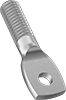
You can use these versatile hangers in a threaded hole (as you would a screw), or secure them with a nut (as you would a bolt).
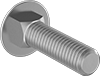
These bolts have good chemical resistance. Carriage bolts have a smooth, rounded head for a finished look. The square neck keeps these bolts from turning when tightening a nut.
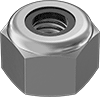
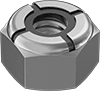
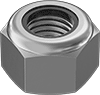
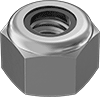
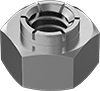
These locknuts have good chemical resistance.
Choose these locknuts for their adherence to strict military standards for material and construction.
More corrosion resistant than 18-8 stainless steel locknuts, these locknuts have excellent resistance to chemicals and salt water.
Made from low-strength steel, these locknuts should be used for light duty fastening applications, such as securing.access panels.
Choose these locknuts for their adherence to strict military standards for material and construction. They’re low-strength steel, so they should be used for fastening panels and other light duty fastening applications.
One-third the weight of steel, aluminum locknuts resist corrosion in wet environments.
Titanium locknuts have a high strength-to-weight ratio and are resistant to acids and salt water.
Brass locknuts are corrosion resistant in wet environments and electrically conductive.
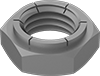
These locknuts are about half the height of standard nylon-insert locknuts. Use them in light duty low clearance applications or jam one against a hex nut to hold it in place.
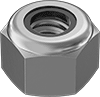
These locknuts have good chemical resistance and may be mildly magnetic.
These stainless steel locknuts have good chemical resistance and may be mildly magnetic.
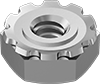
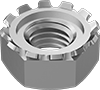
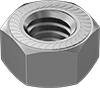
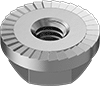
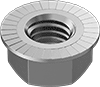
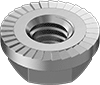
Also known as Keps and K Lock nuts, these locknuts have a free-spinning tooth lock washer that grips the material surface instead of threads for easy installation and mild vibration resistance.
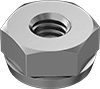
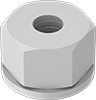
These locknuts have a curved washer that acts as a spring for easy installation and mild vibration resistance. The smooth rim makes them less likely to scratch materials when tightened than locknuts with a tooth lock washer.
More corrosion resistant than 18-8 stainless steel locknuts, these have excellent resistance to chemicals and salt water.
About half the strength of medium-strength steel locknuts, these are for light duty fastening applications, such as securing access panels.
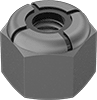
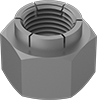
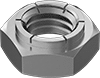
Threads at the top of these locknuts expand to grip the bolt on all sides for a stronger hold than distorted thread locknuts.
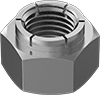
Made from 18-8 stainless steel, these flex top locknuts have good chemical resistance and may be mildly magnetic.
Known for their strength, these steel locknuts are cadmium plated to resist corrosion in wet environments.
Stainless steel locknuts have excellent corrosion resistance in most environments.
These locknuts have serrations that grip the material surface instead of the threads for easy installation and mild vibration resistance.
About half the strength of medium-strength steel nuts, these nuts are for light duty fastening applications.
Choose these nuts for their adherence to strict military standards for material and construction.
These nuts tighten when turned to the left; once fastened, they resist loosening from counterclockwise motion.
These nuts have good chemical resistance and may be mildly magnetic.
These nuts have excellent chemical resistance and can be used in saltwater environments.
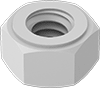
Made from nylon 6/6, these nuts resist oil, grease, and solvents (except mineral acids).
Fiberglass nuts are stronger than nylon 6/6 nuts. They resist acids, solvents, salt water, and oil.
PEEK nuts are often used as an alternative to metal hex nuts. They withstand temperatures up to 550° F and resist acids, bases, and salt solutions.
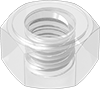
Polypropylene nuts resist organic solvents and degreasing agents.
Glass-filled nylon nuts are stronger than nylon 6/6 nuts. They resist oil, grease, and solvents (except mineral acids).
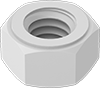
Polycarbonate nuts stand up to oil, grease, and detergents.
PTFE nuts withstand temperatures up to 500° F. They resist oil, grease, detergents, and most mineral acids. They're the lowest friction plastic nuts we offer, so they thread on smoothly.
One-third the weight of steel, these aluminum nuts are corrosion resistant in wet environments and nonmagnetic.
These nuts are resistant to salt water, electrically conductive, and nonmagnetic.
These nuts are corrosion resistant in wet environments, electrically conductive, and nonmagnetic.
Ceramic nuts won't melt, seize, or become brittle—even at temperatures up to 3000° F.
These nuts have a high strength-to-weight ratio and resist acids and salt water.
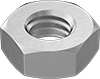
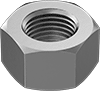
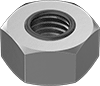
These 18-8 stainless steel nuts have good chemical resistance and may be mildly magnetic.
More corrosion resistant than 18-8 stainless steel nuts, these nuts have excellent resistance to chemicals and salt water.
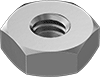
Also known as small-pattern hex nuts, these are about 20% narrower than standard hex nuts for use in tight spaces where standard hex nuts won't fit.
Brass nuts are resistant to corrosion in wet environments and electrically conductive.
These nuts tighten when turned to the left; once fastened, they resist loosening from counterclockwise motion. Made of Grade 2 and Class 04 steel, these nuts can be used for fastening panels and other light duty fastening applications.
With threads that tighten to the left and made of 316 stainless steel, these nuts won’t loosen from counterclockwise motion in saltwater and corrosive environments. They’re half the height of standard hex nuts, so they fit where there’s low clearance.
These nuts tighten to the left and won’t loosen from counterclockwise motion.
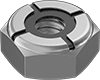
These press-fit nuts have a nylon insert that grips threads to resist loosening.
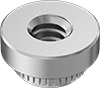
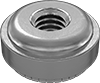
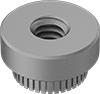
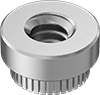
Also known as clinch style captive nuts, press these nuts into a drilled or punched hole with an arbor press or similar pressure tool.
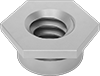
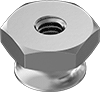
A flat hex head sits flush against the material surface for use in low-clearance applications.
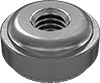
Stainless steel press-fit nuts have excellent corrosion resistance in most environments.
These press-fit nuts have a zinc plating for corrosion resistance in wet environments.
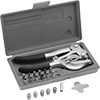
These tools include everything you need to install press-fit nuts by hand.
These press-fit nuts are tin plated to resist corrosion from chemicals and salt water.
Also known as broach style captive nuts, these nuts have good chemical resistance and may be mildly magnetic.
Stainless steel adhesive-mount nuts have excellent corrosion resistance in most environments.
These adhesive-mount nuts have a zinc plating for corrosion resistance in wet environments.
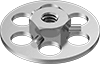
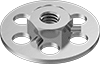
These nuts have three mounting holes to accept screws and rivets for use with thin materials.
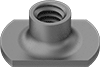
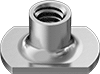
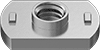
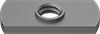
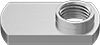
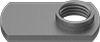
These nuts can be used in channels and tight spaces where round-base weld nuts won't fit.
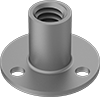
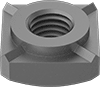
Weld these nuts to stainless steel surfaces.
Projections on the base concentrate the weld and provide room for heat to dissipate.
A smooth base provides more contact with the mating surface than weld nuts with projections.
Weld these nuts to uncoated steel surfaces.
Weld these nuts to flat and uneven uncoated steel surfaces for a strong permanent hold.
Square weld nuts have more weld points than hex weld nuts for a stronger hold. Use them on flat surfaces.
Threads float inside the retainer so you can install a bolt at a slight angle to align with off center parts.
Create threads in hard-to-work areas—where you can’t reach the back of a workpiece, or material is too thin to be tapped.
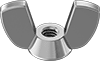
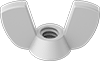
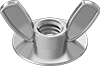
These wing nuts have good chemical resistance and may be mildly magnetic.
These wing nuts have excellent chemical resistance and can be used in saltwater environments.
Wings provide more leverage for greater torque while tightening than knurled-head thumb nuts.
Zinc alloy wing nuts are corrosion resistant in wet environments.
Brass wing nuts are corrosion resistant in wet environments and electrically conductive.
These nylon 6/6 wing nuts are chemical resistant, nonconductive, and lightweight.
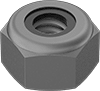
A nylon insert grips threads to resist loosening.
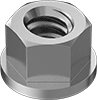
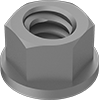
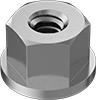
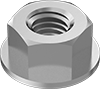
The flange distributes the load over a large area and reduces stress where the nut meets the material surface.
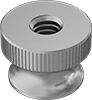
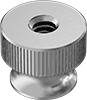
These thumb nuts are corrosion resistant in wet environments, electrically conductive, and nonmagnetic. The flange distributes pressure over a large area to reduce stress on your part.
These thumb nuts have good chemical resistance. The flange distributes pressure over a large area to reduce stress on your part.
More corrosion resistant than 18-8 stainless steel thumb nuts, these have excellent resistance to chemicals and salt water.
These thumb nuts have an aluminum insert to withstand more torque than plastic thumb nuts during installation.
These nylon thumb nuts are chemical resistant, nonconductive, and lightweight.
These thumb nuts have good chemical resistance and may be mildly magnetic.
Tighten these thumb nuts with a wrench for more torque while fastening.
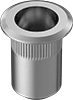
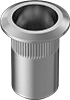
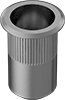
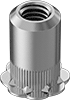
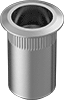
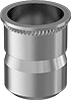
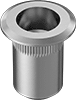
These aluminum rivet nuts are one-third the weight of steel rivet nuts and have mild corrosion resistance.
The most corrosion resistant twist-resistant rivet nuts we offer, these stand up to chemicals.
About twice as strong as aluminum rivet nuts, these steel rivet nuts are zinc plated for mild corrosion resistance.
Wedges under the flange lock the nut in place in soft materials such as brass and aluminum.
About twice as strong as aluminum rivet nuts, these rivet nuts are zinc plated for mild corrosion resistance.
A nonconductive rubber coating insulates the nut from electricity, seals out moisture, and damps vibration.
Threads float inside the nut so you can install a screw at a slight angle to align with off-center parts. They’re also known as Riv-Float nuts.
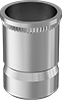
About twice as strong as aluminum rivet nuts, these low-profile rivet nuts have a cadmium or tin-zinc plating for corrosion resistance.
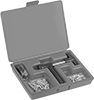
These kits include one size of low-profile rivet nuts.
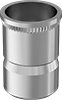
These low-profile rivet nuts are one-third the weight of steel and have mild corrosion resistance.
The most corrosion resistant low-profile rivet nuts we offer, these stand up to chemicals.
The thread area is enclosed, which prevents leakage past the threads from either side of your application.
A PVC foam seal under the flange keeps liquids and gasses from leaking between the nut and the surrounding material.
Grade F nuts are comparable in strength to Grade 5 bolts.
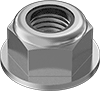
Made from 18-8 stainless steel, these flange locknuts have good chemical resistance and may be mildly magnetic
These flange locknuts have excellent resistance to chemicals and salt water.
About half the strength of medium-strength steel flange locknuts, these are for light duty fastening applications, such as securing access panels.
These nylon flange locknuts form threads as they're tightened to resist vibration.
These flange locknuts have excellent resistance to chemicals and salt water. They have an irregularly shaped thread that grips the bolt for a stronger hold than nylon-insert flange locknuts.
Choose these flange locknuts for their adherence to strict military standards for material and construction.
Made from 18-8 stainless steel, these flange nuts have good chemical resistance.
More corrosion resistant than 18-8 stainless steel flange nuts, these nuts have excellent resistance to chemicals and salt water.
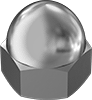
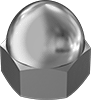
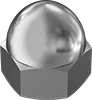
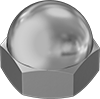
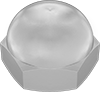
These cap nuts have good chemical resistance and may be mildly magnetic.
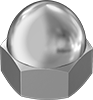
These cap nuts have excellent resistance to chemicals and salt water.
About half the strength of medium-strength steel cap nuts, use them in light duty fastening applications, such as securing access panels.
Brass cap nuts are corrosion resistant in wet environments and electrically conductive.
These nylon 6/6 cap nuts are chemical resistant, nonconductive, and lightweight.
Low-profile cap nuts are about 20% shorter than standard cap nuts for use in low-profile applications.
An irregularly shaped thread grips the bolt for a stronger hold than nylon-insert cap locknuts.
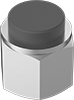
The nylon cap covers and grips the threads to resist loosening.
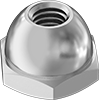
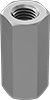
The dome is open so these cap nuts can be used on bolts of any length.
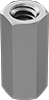
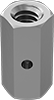
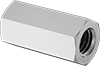
These coupling nuts have good chemical resistance.
More corrosion resistant than 18-8 stainless steel coupling nuts, these nuts have excellent resistance to chemicals and salt water.
Brass coupling nuts are corrosion resistant in wet environments and electrically conductive.
About half the strength of medium-strength steel coupling nuts, these nuts are for light duty fastening applications.
Made from Grade 5 steel, these inch-sized coupling nuts are suitable for most applications.
Plastic coupling nuts are chemical resistant, nonconductive, and lightweight.
One-third the weight of steel, aluminum coupling nuts resist corrosion in wet environments.
A smooth rounded body provides a finished look.
Stainless steel coupling nuts have excellent corrosion resistance in most environments.
Use the sight hole to check for proper thread engagement.
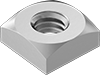
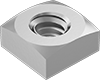
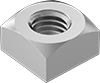
These square nuts have good chemical resistance and may be mildly magnetic.
More corrosion resistant than 18-8 stainless steel square nuts, these nuts have excellent resistance to chemicals and salt water.
About half the strength of medium-strength steel square nuts, use these nuts in light duty fastening applications, such as securing access panels.
Brass square nuts are corrosion resistant in wet environments and electrically conductive.
Also known as U-style clip on nuts, these nuts have a barrel with multiple threads for secure thread engagement.
Use these light-duty clip-on nuts in low-clearance applications.
The S-style design provides more strength than other no-slip clip-on nuts.
Stronger than stainless steel, these nuts are comparable in strength to Grade 9 bolts.
Stainless steel nuts have excellent corrosion resistance in most environments.
Stainless steel sealing nuts have excellent corrosion resistance in most environments.
These nickel-plated brass sealing nuts have good resistance to chemicals and salt water.
Snap these nuts into square holes in thin materials.
A flange distributes the load over a large area and reduces stress where the nut meets the material surface.
Also known as flat-style speed nuts, these have large sides, so they're easy to push over threads by hand.
The tapered shape makes it easier to guide these inserts into a hole during installation. Use a drill bit to create a straight hole, then taper the top half.
Assortments include various sizes of inserts, a soldering iron, a ceramic insulation tube, and installation tips.
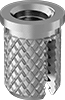
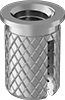
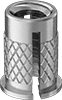
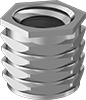
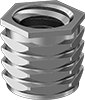
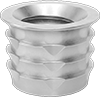
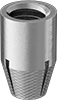
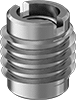
Install these inserts into plastic parts to create a secure base for fasteners.
With the male threaded end on these inserts, mount components directly to plastic parts.
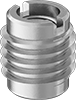
These 18-8 stainless steel inserts have better corrosion resistance than brass inserts and may be mildly magnetic.
Made from brass, these inserts are electrically conductive, nonmagnetic, and have good corrosion resistance.
These aluminum inserts are 70% lighter than brass inserts, electrically conductive, and nonmagnetic. They have good corrosion resistance, which is comparable to brass but not as good as stainless steel.
Made from brass, these inserts are nonmagnetic, corrosion resistant, and electrically conductive.
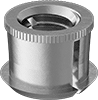
The flange keeps these inserts from pulling through a hole. Press them in from the underside of material, and install a screw from the top of material.
These 18-8 stainless steel inserts have better corrosion resistance than aluminum inserts and may be mildly magnetic.
70% lighter than stainless steel, these aluminum inserts are mildly corrosion resistant and nonmagnetic.
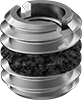
The barbed sides keep these securely in place even before a screw is installed.
Push down on the inside of these inserts with an installation tool and they expand to hold firm in surrounding material.
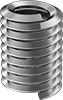
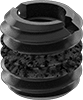
Also known as Trisert inserts, these cut threads into plastic and have better holding power than press-fit inserts.
The flange keeps these inserts from being pulled through a hole and provides a load bearing surface.
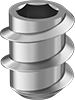
Large threads cut into softwood such as particleboard for a strong hold.
Assortments include various sizes of tapping inserts for softwood.
These 18-8 stainless steel inserts have excellent resistance to chemicals and may be mildly magnetic.
Assortments include various sizes of tapping inserts for hardwood.
Made from brass, these inserts are nonmagnetic, mildly corrosion resistant, and electrically conductive.
Steel inserts have high strength for durability.
These 18-8 stainless steel tee nut inserts have better corrosion resistance than zinc-plated steel tee nut inserts.
The most corrosion resistant tee nut inserts we offer, these inserts stand up to chemicals and salt water.
Ridges on the barrel of these inserts make them less likely to split hardwood than inserts with prongs. They're often used in wood that has been cut across the growth rings.
Fewer prongs than other tee nut inserts reduce the risk of splitting hardwood—these inserts have three short prongs.
Knurls hold these inserts in hardwoods such as oak, maple, and walnut to prevent twisting.
A closed end seals out elements and protects the threads on these inserts from debris.
Mount these inserts flush or below the material's surface.
An open end allows long screws and bolts to pass through the insert.
Made of Nitronic 60 stainless steel, these inserts prevent the screw from binding or sticking without any coating or lubricant that could contaminate particle-free environments.
A distorted thread grips the screw to resist loosening.
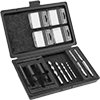
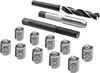
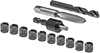
Assortments include various sizes of helical inserts and a tap, a drill bit, and an installation tool for each thread size.
Inserts come with a through-hole tap and installation tool.
A dry film keeps the screw from sticking or binding in these inserts during installation.
Without a prong to break off and retrieve, these inserts are often used where debris could cause damage.
These inserts are made to stringent military specifications.
Made of 18-8 stainless steel, these inserts have good corrosion resistance.
The strongest key-locking inserts we offer, these inserts are made to stringent military specifications.
A black-phosphate finish provides mild corrosion resistance.
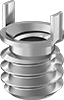
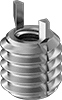
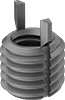
These inserts come with an installation tool. Drive the keys into the surrounding material for a more secure hold than thread-locking inserts.
Forming the strongest hold of any of our threaded inserts, these inserts have a distorted internal thread to lock screws into place and keys that drive into surrounding material to prevent slipping and rotating.
Made of 18-8 stainless steel, these inserts have better corrosion resistance than black-phosphate steel.
These inserts are the most corrosion-resistant thread-locking inserts we offer.
A closed-end tap, drill bit, and installation bit are included with these inserts.
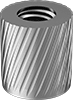
The knurled body holds these inserts in place in aluminum and other soft metals. Use an arbor press to install them in untapped holes.
These inserts cut their own threads in soft metals such as aluminum, so there's no need to tap the hole. Also known as Tap-Lok inserts.
About half the strength of medium-strength steel threaded rods, use these for light duty hanging, mounting, and fastening.
Tighten these threaded rods by turning them to the left; once fastened, they resist loosening from counterclockwise motion. About half the strength of medium-strength steel threaded rods, use them for light duty hanging, mounting, and fastening.
Comparable to Grade 8 steel, these threaded rods have a tensile strength of 150,000 psi, making them about 25% stronger than medium-strength steel rods.
18-8 stainless steel threaded rods have good chemical resistance.
More corrosion resistant than 18-8 and 410 stainless steel threaded rods, these 316 stainless steel rods have excellent resistance to chemicals and salt water.
One-third the weight of steel, aluminum threaded rods resist corrosion in wet environments.
Titanium threaded rods have a high strength-to-weight ratio and are resistant to acids and salt water.
Made from nylon 6/6, these threaded rods resist oil, grease, and solvents. They’re nonconductive, making them good for use around sensitive electrical components.
Brass threaded rods are corrosion resistant in wet environments, electrically conductive, and nonmagnetic.
Screw these studs into a tapped hole and use them as a pivot point, hinge, shaft, or locator pin.
18-8 stainless steel studs have good chemical resistance.
These steel studs are zinc plated to resist corrosion in wet environments.
316 stainless steel studs have excellent resistance to chemicals and salt water.
These studs have good chemical resistance. Weld them to stainless steel surfaces.
Weld these studs to uncoated steel surfaces.
Pass these studs through a hole and weld them in place.
Add a stud to thin material when you only have access to one side.
These studs are also known as hanger bolts—use them to hang, mount, and fasten parts to wood structures.
Protect components from electrical charges.
Thread the male connection into a tapped hole and snap the other end into a panel for a secure hold that can be released for repairs and upgrades.
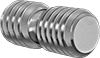
Change thread sizes or types, such as fine to coarse threads, on parts without changing gender.
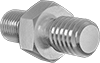
Change inch threads to metric with these adapters, or swap metric threads for inch. An external hex lets you tighten or loosen them with a wrench.
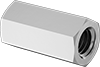
Need to join two female-threaded parts, such as coupling nuts, with dissimilar inch thread sizes? Attach them to these adapters and tighten the exterior hex nut for a secure connection.
One side inch, one side metric, and a hex in the middle—these handy fasteners connect two female-threaded parts, such as coupling nuts, adapting from inch threads to metric. Tighten with a standard wrench.
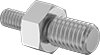
Connect two differently sized male-threaded parts, such as threaded rods, and tighten with a standard wrench.
Often called sleeve nuts, these thread adapters fasten parts with right-hand threads to parts with left-hand threads.
Adapt threaded rods from inch to metric. These adapters connect two male-threaded fasteners, so you can change the gender of a mating part or increase or decrease its thread size. The hex-shaped body fits into the head of a standard wrench.
Wing nuts provide a secure grip for tightening and loosening by hand.
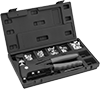
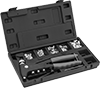
Use these rivet nuts for light duty fastening in low-clearance applications. Assortments include rivet nuts, mandrels, and an installation tool.
A ribbed-shaped body holds the nut in place so it won't move when tightening a screw. Assortments contain rivet nuts, mandrels, nosepieces, and a plier-style installation tool.
These rivet nuts have a smooth body and fit in smaller holes than twist-resistant rivet nuts. Assortments include rivet nuts, mandrels, nosepieces, and a plier-style installation tool.
Teeth bite into surfaces for easy installation and mild vibration resistance.
Cap nuts cover and protect threads while providing a finished appearance.
To remove these pins, thread a screw or tool into the tapped hole, then pull them out.
The flat side of these pins relieves trapped air, making them easier to insert in and remove from blind holes. To remove, thread a screw or tool into the tapped hole, then pull the pin out.
A spiral groove cut into these pins relieves trapped air but stays in 360° contact with the hole for a secure fit that's easy to insert in and remove from blind holes. To remove, thread a screw or tool into the tapped hole, then pull the pin out.
Threads on these pins stick out for easy removal from blind holes. Tighten the hex nut to draw the pin out.
The threaded stud installs in threaded holes.
Drive these tools with a hammer to expand anchors.
Also known as caulk-in anchors, these stay secure when there's not much material to hold.
Give open-ended standoffs a finished look and protect them from dirt and debris.
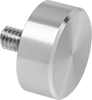
Mount these knobs into a threaded hole. They provide a secure grip to position, tighten, and hold fixtures, equipment, and machinery.
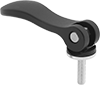
Use these standard cam handles for most clamping applications. Push down on the handle and the head applies pressure to quickly draw two parts together for fast adjustments.
Serrated grooves grip the lip of the channel.
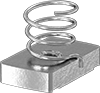
A spring plus serrated grooves that grip the lip of the channel provide a more secure hold than standard strut channel nuts.
Turn these tools by hand to install low-profile rivet nuts.
Install smooth body rivet nuts.
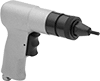
Use these tools to install most styles of rivet nuts. Use a wrench to hold the tool and a ratchet to tighten the nut.
Install all styles of rivet nuts more quickly than cordless rivet nut tools.
Smaller and lighter than cordless and hydraulic rivet nut tools, use these to install thin-walled bulbed, ribbed, sleeve, and smooth rivet nuts.
Use these tools to install smooth and ribbed body rivet nuts. An indicator allows you to ensure your rivet nut installs correctly.
Use two hands to maximize leverage when installing smooth body rivet nuts.
Generate enough force with the assistance of a self-contained hydraulic system to install blind rivets with one hand.
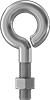
Also known as nut eyebolts, these are designed for through-hole applications.
Mount components to your enclosure without worrying about leaks—these kits seal out water from washdowns, rain, and snow when used with enclosures rated NEMA 4X.
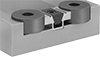
Machine these fixture clamps to match the contours of your workpieces for a stronger grip. Place the clamp between the two workpieces in a fixture and tighten the screw to extend the sides of the clamp, creating a secure hold against both workpieces.
Set one of these clamps between two workpieces in a fixture and tighten the screw to push the clamp's sides out for a secure hold.
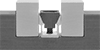
Install these clamps into a slot in your fixture to grip at the bottom of a workpiece edge, giving the cutting tool maximum access.
Hold a workpiece securely from the side with minimal contact, leaving more of the workpiece free for machining.
Secure a workpiece from the inside, leaving the outside clear for machining.
When it's time to replace the screws in a carbide insert holder, use the reference number on your holder to find the right size.
A black-oxide finish provides mild corrosion resistance.
These stainless steel anchor studs offer excellent corrosion resistance.