We will reply to your message in the morning.
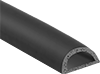
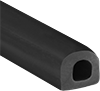
Made of EPDM foam rubber, these seals have hollow construction for more compressibility than solid seals.
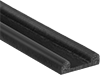
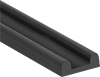
These seals are made of solid EPDM foam rubber.
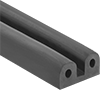
Hollow construction makes these seals more compressible than solid rubber seals. Made of EPDM rubber, they also resist salts.
These solid EPDM rubber seals also resist salts.
It’s the hollow construction that makes these seals more compressible than solid seals. Made of silicone foam rubber, they also resist water and salts.
Made of solid silicone foam rubber, these seals also resist water and salts.
The hollow construction on these seals provides better compressibility than solid rubber seals. Made of silicone rubber, they also resist water and salts.
Use these Viton® fluoroelastomer rubber seals with fuels and aggressive chemicals, such as petroleum oil, hydrofluoric acid, and propyl alcohol.
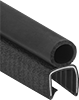
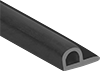
These seals have an EPDM foam rubber bulb.
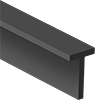
Push these T-seals into grooves and channels to block out moisture, dust, and debris.
Firmer and more durable than EPDM foam rubber seals, these seals are made of EPDM rubber. They also resist salts.
The flat edges on these square-profile seals provide more sealing surface than round-profile seals. They’re made of 98% silica to resist temperatures up to 2300° F.
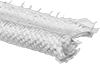
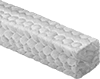
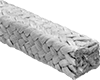
A tighter braid makes these fiberglass seals more durable than High-Temperature Ultra-Conformable Rope Edge Seals.
Able to withstand temperatures up to 1000° F, these seals have a fiberglass cover and core that resists most refrigerants, salts, and grease.
Made of EPDM foam, these sheets and strips have the best resistance to water, sunlight, and oxidation of all the foam we offer.
EPDM is blended with neoprene and SBR to create a general-purpose foam that offers good resistance to water and wear.
In addition to having good resistance to water, sunlight, and oxidation, these neoprene foam sheets and strips resist swelling when they come into contact with oil.
Because this natural rubber foam readily bounces back to shape after compression, it’s a good choice for repetitive sealing applications, such as on doors.
Even after exposure to sunlight, rain, and snow, these silicone foam strips remain flexible.
One layer of fiberglass fabric is sandwiched between layers of silicone foam giving these strips strength to handle high-stress applications, such as gasketing.
Made from a blend of Buna-N, neoprene, and vinyl, these foam strips have good resistance to oil.
Also known as Ethafoam.
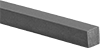
This square-profile cord stock has flat edges on all four sides, which creates a better seal than round profile in static applications, such as hose, pipe, and faucet connections.
This cord stock is softer and creates a better seal in low-pressure applications than standard Buna-N cord stock.
Use this cord stock to create O-rings for high-temperature applications up to 400° F.
This cord stock is softer and creates a better seal than standard silicone cord stock in low-pressure applications up to 400° F.
This soft cord stock creates a better seal in low-pressure applications that standard neoprene cord stock.
Use neoprene cord stock to make O-rings for applications that come into contact with water.
In addition to water and steam, this EPDM cord stock resists diluted salt solutions, ethanol, and isopropyl alcohol.
Because this expanded PTFE tape is thicker than other gasket tape, it fills the irregularities on rough-surfaces flanges when compressed for a tight seal.
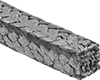
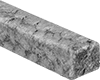
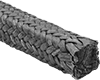
Built for high-speed pump and valve applications, these super-tough seals are made of expanded-graphite yarn with carbon-yarn corners.
Made of FDA-listed material for use with food and beverage, these PTFE seals are lubricated with mineral oil. Use them in pumps.
Also known as 100% GFO, these expanded PTFE seals contain graphite powder, which dissipates heat away from the shaft and allows pumps to run cool at high speeds.
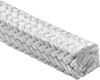
These seals are made of PTFE fiber without a lubricant, so they’re harder than other chemical-resistant packing seals to handle high-pressure valve applications.
These lubricated PTFE fiber seals stand up to most chemicals. Use them in pumps and valves.
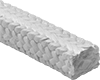
Aramid and PTFE fibers are blended for seals that resist chemicals and abrasion. Use these seals in pumps.
Offering excellent flexibility, these seals are made of expanded graphite yarn. Use them for steam applications in pumps and valves.
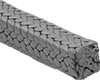
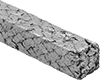
Made of graphite-impregnated carbon, these steam-resistant seals dissipate heat from the shaft to protect pumps and valves when operating at high speeds.
Use these graphite-impregnated graphite seals for steam applications in pumps and valves.
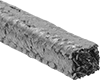
The Inconel-wire reinforcement in these expanded-graphite yarn seals ensures they keep their shape longer than the High-Flexibility Steam-Resistant Packing Seals. Use them for steam applications in valves.
Synthetic yarn that’s comparable in strength to aramid is combined with graphite for soft seals that dissipate heat away from the shaft to extend the life of pumps.
Our most compressible packing seals, these require less pressure than any other to make an effective seal. They’re made of lubricated PTFE-impregnated aramid fiber and are for use in pumps.
The most abrasion resistant of all our packing seals, these are made of PTFE-impregnated aramid fiber that has been saturated in a lubricant. They are for use in pumps.
Made of PTFE-impregnated synthetic fiber, these seals are for use in pumps.
These seals require lighter packing pressure than standard oil- and water-resistant packing seals, so they cause less friction and reduce shaft wear. They’re made of graphite-impregnated aramid fiber and are for use in pumps and valves.
Install between layers of packing seals to ensure lubricants are distributed evenly. These lubricating rings are also known as lantern rings.