


System of Measurement System of Measurement |
|---|
|
Width Width | Show |
|---|
|
Width Width | Hide |
|---|


Material Material |
|---|
|
Tolerance Rating Tolerance Rating |
|---|
|
Minimum Hardness Minimum Hardness |
|---|
|
REACH (Registration, Evaluation, Authorization and Restriction of Chemicals) REACH (Registration,Evaluation, Authorization and Restriction of Chemicals) |
|---|
|
RoHS (Restriction of Hazardous Substances) RoHS (Restriction ofHazardous Substances) |
|---|
|
DFARS (Defense Acquisition Regulations Supplement) DFARS (Defense AcquisitionRegulations Supplement)  |
|---|
For Machine Table T-Slot Width For Machine TableT-Slot Width |
|---|
|
Head Height Head Height |
|---|
|
Finish Finish |
|---|
|
End Height End Height |
|---|
|
For Mounting Screw Size For Mounting Screw Size |
|---|
Rate of Taper Rate of Taper |
|---|
|
Head Length Head Length |
|---|
|
Shape Shape |
|---|
|
Rounded Machine Keys
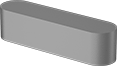
When installed, these keys fill oval keyways completely, reducing stress on the key and shaft. Using them in a closed keyway keeps them from sliding along the shaft axis. The rounded ends make it easy to slide gears, hubs, and other components into place. These are also known as feather keys. Machine keys are often the same material and as hard or harder than the shaft and other components with which they are used. To use a key as a sacrificial part, choose a softer key that will shear off when parts are exposed to excessive force, preventing damage to expensive equipment.
Steel keys offer good strength. Slightly smaller than the size listed in the table, undersized keys are the choice when you need a slightly looser fit or when you have an inconsistent keyway. Use them when parts need to be taken apart frequently, such as for maintenance or prototyping.
Metric keys conform to DIN 6885 standards.
 For technical drawings and 3-D models, click on a part number.
Tolerance | |||||||
|---|---|---|---|---|---|---|---|
| Lg. | Tolerance Rating | Ht. | Wd. | Specifications Met | Pkg. Qty. | Pkg. | |
1018-1045 Carbon Steel | |||||||
10mm × 16mm | |||||||
| 45mm | Undersized | -0.090mm to 0.000mm | -0.043mm to 0.000mm | DIN 6885 | 1 | 000000000 | 00000 |
| 50mm | Undersized | -0.090mm to 0.000mm | -0.043mm to 0.000mm | DIN 6885 | 1 | 000000000 | 0000 |
| 56mm | Undersized | -0.090mm to 0.000mm | -0.043mm to 0.000mm | DIN 6885 | 1 | 000000000 | 0000 |
| 70mm | Undersized | -0.090mm to 0.000mm | -0.043mm to 0.000mm | DIN 6885 | 1 | 000000000 | 0000 |
| 80mm | Undersized | -0.090mm to 0.000mm | -0.043mm to 0.000mm | DIN 6885 | 1 | 000000000 | 0000 |
| 100mm | Undersized | -0.090mm to 0.000mm | -0.043mm to 0.000mm | DIN 6885 | 1 | 000000000 | 0000 |
| 110mm | Undersized | -0.090mm to 0.000mm | -0.043mm to 0.000mm | DIN 6885 | 1 | 000000000 | 00000 |
Machine Keys
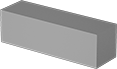
Steel keys offer good strength.
Slightly smaller than the size listed in the table, undersized keys are the choice when you need a slightly looser fit or when you have an inconsistent keyway. Use them when parts need to be taken apart frequently, such as for maintenance or prototyping.
For technical drawings and 3-D models, click on a part number.
Tolerance | ||||||||
|---|---|---|---|---|---|---|---|---|
| Lg. | Tolerance Rating | Ht. | Wd. | Minimum Hardness | Specifications Met | Pkg. Qty. | Pkg. | |
1008-1045 Carbon Steel | ||||||||
10mm × 16mm | ||||||||
| 45mm | Undersized | -0.090mm to 0.000mm | -0.043mm to 0.000mm | Not Rated | DIN 6885 | 5 | 000000000 | 000000 |
| 50mm | Undersized | -0.090mm to 0.000mm | -0.043mm to 0.000mm | Not Rated | DIN 6885 | 5 | 000000000 | 00000 |
| 63mm | Undersized | -0.090mm to 0.000mm | -0.043mm to 0.000mm | Not Rated | DIN 6885 | 5 | 000000000 | 00000 |
| 70mm | Undersized | -0.090mm to 0.000mm | -0.043mm to 0.000mm | Not Rated | DIN 6885 | 1 | 000000000 | 0000 |
| 80mm | Undersized | -0.090mm to 0.000mm | -0.043mm to 0.000mm | Not Rated | DIN 6885 | 1 | 000000000 | 0000 |
| 90mm | Undersized | -0.090mm to 0.000mm | -0.043mm to 0.000mm | Not Rated | DIN 6885 | 1 | 000000000 | 0000 |
| 100mm | Undersized | -0.090mm to 0.000mm | -0.043mm to 0.000mm | Not Rated | DIN 6885 | 1 | 000000000 | 0000 |
| 110mm | Undersized | -0.090mm to 0.000mm | -0.043mm to 0.000mm | Not Rated | DIN 6885 | 1 | 000000000 | 0000 |
Tapered Gib Keys
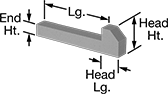
These keys have a tapered body that wedges in to the keyway for a more secure fit than standard machine keys. The gib head makes these keys easy to remove when parts need to be taken apart frequently, such as for maintenance or prototyping. Keys are tapered along their length. Use them to connect gears and other components with tapered keyways to shafts. Keys are made of steel.
The height of metric keys decreases by 1 mm for every 100 mm of length. They meet DIN 6887, an international standard for machine keys.
For technical drawings and 3-D models, click on a part number.
Tolerance | Head | ||||||||
|---|---|---|---|---|---|---|---|---|---|
| Lg. | Ht. | Wd. | Ht. | Lg. | End Ht. | Rate of Taper | Specifications Met | Each | |
1018-1045 Carbon Steel | |||||||||
10mm × 16mm | |||||||||
| 60mm | 0.000mm to 0.200mm | -0.043mm to 0.000mm | 16mm | 16mm | 9.500mm | 1 mm per 100 mm | DIN 6887 | 000000000 | 000000 |
Machine Key Stock

Cut this square or rectangular key stock to length to create a straight machine key. Straight keys are the most common type of key. Machine keys are often the same material and as hard or harder than the shaft and other components with which they are used. To use a key as a sacrificial part, choose a softer key that will shear off when parts are exposed to excessive force, preventing damage to expensive equipment.
Steel key stock is an economical choice with good strength. Zinc-plated steel key stock resists corrosion in wet environments.
Stainless steel key stock is more corrosion resistant than steel key stock. 18-8 stainless steel key stock offers a balance of strength and corrosion resistance. It may be mildly magnetic. 316 stainless steel key stock has the best corrosion resistance of our stainless steel key stock and may be mildly magnetic.
Slightly larger than the size listed in the table, oversized stock fits tightly in a keyway. Press it into place for use in high-torque applications or to replace a key in a worn keyway. Slightly smaller than the size listed in the table, undersized stock is the choice when you need a slightly looser fit or when you have an inconsistent keyway. Use it when parts need to be taken apart frequently, such as for maintenance or prototyping.
Key stock that meets DIN 6880 conforms to DIN standards for undersized keys.
For technical drawings and 3-D models, click on a part number.
Tolerance | |||||||
|---|---|---|---|---|---|---|---|
| Ht. × Wd. | Tolerance Rating | Ht. | Wd. | Minimum Hardness | Specifications Met | Each | |
305mm Lg. | |||||||
| 10mm × 16mm | Undersized | -0.090mm to 0.000mm | -0.043mm to 0.000mm | Rockwell B87 | DIN 6880 | 000000000 | 000000 |
| 16mm × 16mm | Undersized | -0.043mm to 0.000mm | -0.043mm to 0.000mm | Rockwell B87 | DIN 6880 | 000000000 | 00000 |
1,000mm Lg. | |||||||
| 10mm × 16mm | Undersized | -0.090mm to 0.000mm | -0.043mm to 0.000mm | Rockwell B87 | DIN 6880 | 000000000 | 00000 |
| 16mm × 16mm | Undersized | -0.043mm to 0.000mm | -0.043mm to 0.000mm | Rockwell B87 | DIN 6880 | 000000000 | 00000 |
Tolerance | |||||||
|---|---|---|---|---|---|---|---|
| Ht. × Wd. | Tolerance Rating | Ht. | Wd. | Minimum Hardness | Specifications Met | Each | |
305mm Lg. | |||||||
| 7mm × 16mm | Oversized | 0.000mm to 0.076mm | 0.000mm to 0.076mm | Rockwell B87 | DIN 6880 | 000000000 | 000000 |
| 10mm × 16mm | Oversized | 0.000mm to 0.076mm | 0.000mm to 0.076mm | Rockwell B87 | DIN 6880 | 000000000 | 00000 |
| 16mm × 16mm | Oversized | 0.000mm to 0.076mm | 0.000mm to 0.076mm | Rockwell B87 | DIN 6880 | 000000000 | 00000 |
Tolerance | |||||||
|---|---|---|---|---|---|---|---|
| Ht. × Wd. | Tolerance Rating | Ht. | Wd. | Minimum Hardness | Specifications Met | Each | |
305mm Lg. | |||||||
| 16mm × 16mm | Oversized | 0.000mm to 0.076mm | 0.000mm to 0.076mm | Rockwell B82 | DIN 178 | 000000000 | 000000 |
Tolerance | |||||||
|---|---|---|---|---|---|---|---|
| Ht. × Wd. | Tolerance Rating | Ht. | Wd. | Minimum Hardness | Specifications Met | Each | |
305mm Lg. | |||||||
| 10mm × 16mm | Undersized | -0.090mm to 0.000mm | -0.043mm to 0.000mm | Rockwell B86 | DIN 6880 | 000000000 | 000000 |
| 16mm × 16mm | Undersized | -0.043mm to 0.000mm | -0.043mm to 0.000mm | Rockwell B86 | DIN 6880 | 000000000 | 00000 |
1,000mm Lg. | |||||||
| 10mm × 16mm | Undersized | -0.090mm to 0.000mm | -0.043mm to 0.000mm | Rockwell B85 | DIN 6880 | 000000000 | 000000 |
Fixture Keys
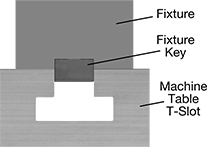
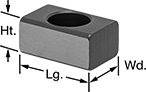
Sized to fit with precision in machine table T-slots, use these keys to locate fixtures and vises on your machine table. They mount to the underside of your fixture or vise with a socket head cap screw.
For technical drawings and 3-D models, click on a part number.
| For Machine Table T-Slot Wd., mm | Lg., mm | Wd., mm | Ht., mm | Wd. Tolerance, mm | For Mounting Screw Size | Mounting Fasteners Included | Material | Each | |
Rectangular | |||||||||
|---|---|---|---|---|---|---|---|---|---|
| 16 | 22 | 16 | 10 | -0.00011 to 0 | M6 | No | Steel | 0000000 | 000000 |