


Filter by

DFARS Specialty Metals
U.S.–Mexico–Canada Agreement (USMCA) Qualifying
For Printer Bed Temperature
RoHS

Export Control Classification Number (ECCN)
REACH
Structural Support 3D Printer Filaments
 |
Print structural support along with your part to prevent the part from losing its shape |
 |
 |
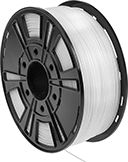
White |
When 3D printing a model with overhangs or hollow spaces, use these filaments to prevent the model from losing its shape. They support the structure during the printing and cooling process, then dissolve or snap away once the part is hardened. Use them in dual-extrusion fused filament fabrication (FFF) printers alongside your primary filament. Unlike parts with supports printed from a single filament, there’s no cutting, sanding, or polishing required.
Choose a filament that has similar printing requirements as your primary filament. You will want to choose a support filament that prints at a similar temperature as your primary filament and has the same requirements for a heated build chamber, so they cool at the same rate and won’t warp.
You should also consider how you will remove the structural support filament from your finished part.
HIPS—HIPS filaments are commonly used to support ABS and ASA parts and don’t need a heated build chamber.
Limonene Solvent Soluble—Soluble filaments are well suited to print parts with complex or fragile designs as they gently dissolve off your primary part, leaving a smooth finish. Limonene-solvent-soluble filaments do not require heating, but the solvent will need to be properly disposed of after use.
Spool | |||||||||||||||||||||||||||||||||||||||||||||||||||||||||||||||||||||||||||||||||||||||||||||||||||
|---|---|---|---|---|---|---|---|---|---|---|---|---|---|---|---|---|---|---|---|---|---|---|---|---|---|---|---|---|---|---|---|---|---|---|---|---|---|---|---|---|---|---|---|---|---|---|---|---|---|---|---|---|---|---|---|---|---|---|---|---|---|---|---|---|---|---|---|---|---|---|---|---|---|---|---|---|---|---|---|---|---|---|---|---|---|---|---|---|---|---|---|---|---|---|---|---|---|---|---|
Dia., mm | Printing Temp. | For Printer Bed Temp. | Hardness | Max. Exposure Temp. | For Min. Nozzle Opening Dia., mm | Dia., mm | Dp., mm | Material | Wt., g | For Use With | Each | ||||||||||||||||||||||||||||||||||||||||||||||||||||||||||||||||||||||||||||||||||||||||
HIPS—Limonene Solvent Soluble | |||||||||||||||||||||||||||||||||||||||||||||||||||||||||||||||||||||||||||||||||||||||||||||||||||
Opaque White | |||||||||||||||||||||||||||||||||||||||||||||||||||||||||||||||||||||||||||||||||||||||||||||||||||
| 1.75 | 220° to 235° C 428° to 455° F | 100° to 110° C 212° to 230° F | Not Rated | 89° C 192° F | 0.4 | 198 | 78 | Plastic | 1,000 | ABS ASA | 3664N36 | 000000 | |||||||||||||||||||||||||||||||||||||||||||||||||||||||||||||||||||||||||||||||||||||||
| 2.85 | 220° to 235° C 428° to 455° F | 100° to 110° C 212° to 230° F | Not Rated | 89° C 192° F | 0.4 | 198 | 78 | Plastic | 1,000 | ABS ASA | 3664N37 | 00000 | |||||||||||||||||||||||||||||||||||||||||||||||||||||||||||||||||||||||||||||||||||||||
