


Container Type Container Type |
|---|
 | Aerosol Can |  | Spray Bottle |
Environment Environment |
|---|
Trade Name Trade Name |
|---|
Manufacturer Manufacturer | Show |
|---|
|
Manufacturer Manufacturer | Hide |
|---|
For Use On For Use On |
|---|
Lubricant Type Lubricant Type |
|---|
|
Specifications Met Specifications Met |
|---|
Maximum Temperature Maximum Temperature |
|---|
|
Container Size Container Size |
|---|
|
|
RoHS (Restriction of Hazardous Substances) RoHS (Restriction ofHazardous Substances) |
|---|
|
Minimum Temperature Minimum Temperature |
|---|
|
DFARS (Defense Acquisition Regulations Supplement) DFARS (Defense AcquisitionRegulations Supplement) |
|---|
REACH (Registration, Evaluation, Authorization and Restriction of Chemicals) REACH (Registration,Evaluation, Authorization and Restriction of Chemicals) |
|---|
|
About Lubricants
More
Penetrating Lubricants
Cut through dirt, grease, and rust, loosen stuck fasteners, and protect tools and equipment with these thin, multipurpose lubricants.
Lubricants with silicone are clear, have excellent moisture resistance, and can be used on most rubber and plastic.
Lubricants cannot be sold to the listed regions due to import regulations, product labeling requirements, or regulatory limits on VOCs (volatile organic compounds).
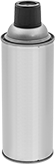

Sprayon LU 910 Food Grade Silicone withstands high temperatures. Sprayon LU 103 Rust Breaker quickly dissolves rust, leaving behind a light film that prevents corrosion.
Food Industry Penetrating Lubricants

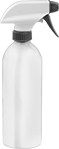
For use in food-processing and preparation areas, these thin, multipurpose lubricants are NSF registered H1 for incidental food contact. Use them to cut through dirt, grease, and rust, loosen stuck fasteners, and protect tools and equipment.
Lubricants with silicone are clear, have excellent water resistance, and can be used on rubber. Not for use on painted surfaces.
Container | Each | Package | ||||||||
|---|---|---|---|---|---|---|---|---|---|---|
| Size | Net Weight | Type | Additive | Temp. Range, °F | Specifications Met | Each | Pkg. Qty. | Pkg. | ||
Sprayon LU 210 Food Grade Dry Silicone | ||||||||||
| __ | 10 oz. | Aerosol Can | Silicone | -40° to 450° | NSF Registered H1 | 0000000 | 000000 | 12 | 0000000 | 0000000 |
| 14 fl. oz. | __ | Spray Bottle | Silicone | -40° to 450° | NSF Registered H1 | 0000000 | 00000 | 12 | 0000000 | 000000 |
Sprayon LU 700 Food Grade Machinery | ||||||||||
| __ | 10 oz. | Aerosol Can | __ | 20° to 450° | NSF Registered H1 | 0000000 | 00000 | 12 | 00000000 | 000000 |
High-Pressure Food Industry Penetrating Lubricants
Formulated to handle high loads and temperatures, these lubricants are NSF registered H1 for incidental food contact. Use them with chain and gears in food-processing and preparation areas and with hinges on ovens. They cut through dirt, grease, and rust, loosen stuck fasteners, and protect tools and equipment. Lubricants go on as a foam to cling to parts and resist dripping.
Dry-Film Lubricants
These lubricants go on wet for easy application. Once dry, they form a nonstick film that won't attract dust. Use them for general purpose lubricating in most applications.
Lubricants with graphite have good heat and wear resistance.
Sprayon LU 204 Dry Film Graphite has good corrosion resistance and is conductive.
Food Industry Dry-Film Lubricants
Use these NSF registered H1 lubricants in food-processing and preparation areas with a risk of incidental food contact. They form a nonstick film that won't attract contaminants, such as flour.
Lubricants with silicone can be used with plastic.
Container | ||||||
|---|---|---|---|---|---|---|
| Net Weight, oz. | Type | Additive | Temp. Range, °F | Specifications Met | Each | |
Sprayon LU 211 Food Grade Dry Silicone | ||||||
| 13 1/4 | Aerosol Can | Silicone | -40° to 450° | FDA Compliant 21 CFR 178.3570, NSF Registered H1 | 0000000 | 000000 |
Container | |||||||
|---|---|---|---|---|---|---|---|
| Net Weight, oz. | Type | Additive | Temp. Range, °F | Specifications Met | Pkg. Qty. | Pkg. | |
Sprayon LU 211 Food Grade Dry Silicone | |||||||
| 13 1/4 | Aerosol Can | Silicone | -40° to 450° | FDA Compliant 21 CFR 178.3570, NSF Registered H1 | 12 | 0000000 | 0000000 |
No-Residue Mold-Release Lubricants
Also known as paintable mold-release lubricants, these lubricants don’t leave a residue, so you can paint or finish the molded part without the need to clean it. Apply them to molds before casting so you can easily remove cast parts and prevent sticking, stretching, and tearing.
Lubricants with PTFE create a long-lasting film that withstands high temperatures. Lubricants with silicone have a small amount of silicone for lubricity, but still allow you to paint molded parts without cleaning first.
Heavy Duty No-Residue Mold-Release Lubricants
Use these lubricants to release large, intricate, or difficult-to-release parts. Also known as paintable mold-release lubricants, they don’t leave a residue, so you can paint or finish the molded part without the need to clean it. Apply them to molds before casting so you can easily remove cast parts and prevent sticking, stretching, and tearing.
Mold-Release Lubricants
Apply these lubricants to molds before casting so you can easily remove cast parts and prevent sticking, stretching, and tearing. They leave a residue, so they shouldn’t be used on parts that need to be painted.
Lubricants with silicone can be used with rubber and plastic. Sprayon MR 315 Urethane & Styrene Silicone Release Agent can be used with sensitive plastic, such as styrene and urethane.