We will reply to your message in the morning.
More
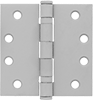
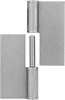
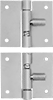
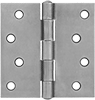
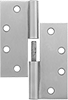
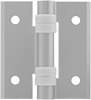
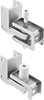
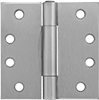
Mount the hinge leaves to the surface of the door and the frame. These hinges are easy to install because they don't require cutouts (mortises).
Hinge leaves fit into two cutouts (mortises) to mount flush with the door and frame.
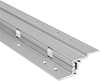
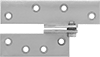
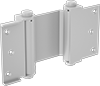
Open doors past their frame to make extra room for people and large items, such as carts, furniture, and wheelchairs, to pass through.
Turn a set screw to adjust the door up or down after it's hung.
Thick leaves and a large diameter pin make these hinges good for use with heavy doors.
Turn a set screw to adjust the door 1/8" up or down after it's hung.
These hinges are made of metal.
Also known as bullet hinges, these hinges are the right size for tight spaces and narrow frames.
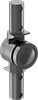
A grease fitting makes these hinges easy to lubricate.
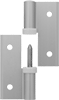
The hinge pin is permanently attached to the frame leaf so you can quickly lift the door off the hinge without removing the pin.
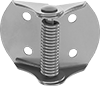
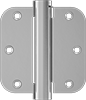
Springs in these hinges with holes automatically swing doors and gates closed behind you.
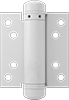
Springs in these hinges without holes automatically swing doors and gates closed behind you.
The springs in these hinges swing doors and gates fully open after a light push on the door.
After a light push on the door, springs in these hinges swing doors and gates fully open.
Use these hinges on lightweight screen and storm doors as well as small gates.
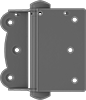
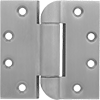
Only one cutout (mortise) is needed for these hinges—the offset design allows surface mounting the door leaf and mortise mounting the frame leaf.
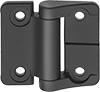
Tighten or loosen an adjustment screw to change the hinge resistance.
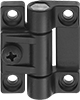
In addition to rotating 360°, these hinges tilt up and down.
These hinges allow 360° of motion.
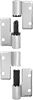
These hinges with holes are spring loaded—pull the handle to retract the pin and disconnect a door; release the handle and the pin snaps back.
These hinges without holes are spring loaded—pull the handle to retract the pin and disconnect a door; release the handle and the pin snaps back.
To make reconnecting doors easier than other pull release quick disconnect hinges, these have a keeper that holds the pin in a retracted position.
A keeper holds the pin in a retracted position to make reconnecting doors easier than other pull-release quick-disconnect hinges.
Remove the ring to pull out the pin.
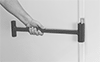
To retract the pin and disconnect a door, squeeze the hinge handles together. Release the handles and the pin snaps back.
Squeeze the hinge handles together to retract the pin and disconnect a door; release the handles and the pin snaps back.
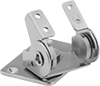
Lock these hinges open at any angle within their range of motion.
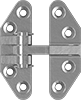
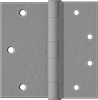
The mounting holes on these hinges form an industry-standard half-moon shape.
The mounting hole pattern does not follow an industry standard, which means you can work around worn mounting holes when replacing template hinges.
Bearings allow these hinges to open and close doors smoothly. The mounting holes form an industry-standard half-moon shape.
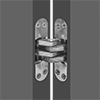
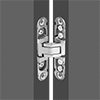
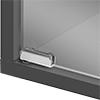
These hinges are completely hidden when the door is closed.
No need for oil or grease, these hinges are maintenance free. The mounting holes form an industry-standard half-moon shape.
A stud projects from the back of each hinge leaf to prevent the door from being forced open. The mounting holes form an industry-standard half-moon shape.
Only one cutout (mortise) is needed to mount these hinges—the offset design allows surface mounting the door leaf and mortise mounting the frame leaf.
Bearings allow these hinges to open and close doors smoothly.
One leaf mounts around the edge of the door for a secure hold, while the other mounts to the frame.
A snap-on cover protects these hinges from tampering and creates a finished appearance.
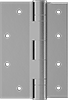
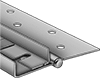
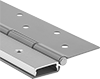
Longer than other entry door hinges, these piano-style hinges run the entire length of doors for strength and durability.
The mounting holes form an industry-standard half-moon shape.
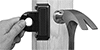
Create precise outlines for hinge mortises (cutouts). Position the cutter on a wood door or frame and hit it with a hammer to imprint the outline.
To reinforce loose or damaged hinges, mount one of these hinges to the top edge of the pull-side of the door.
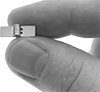
With leaf heights under 1/4", these tiny hinges are the smallest we offer.
Plastic bushings on these metal hinges prevent metal-to-metal contact that can release particles as hinges open and close.
The hinge leaves fit in cutouts (mortises) on the edge of a door.
Also known as gravity hinges, the weight of the door returns these hinges to a closed position without the help of springs.
Designed to wrap around the edge of the partition frame, these hinges provide a stronger hold than other toilet partition door hinges.
Choose these hinges for their adherence to strict military standards for material and construction.
Mounting slots allow door alignment adjustments during and after hinge installation.
The leaves of these hinges almost touch when the door is closed. They are often used in electrical enclosures for a tight seal.
When the door is closed, the distance between the leaves is larger than the pin diameter, creating an offset to accommodate a gasket or trim.
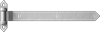
With large pin diameters for added strength, these hinges can hold heavier doors and gates than other strap hinges.
A spring in these hinges automatically swings doors and gates closed behind you.
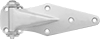
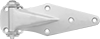
These hinges have wide hinge leaves that provide a large mounting surface to keep freezer and refrigerator doors from sagging.
The hinge pin attaches to the frame leaf so you can quickly lift the door off the hinge without removing the pin.
Wide hinge leaves provide a large mounting surface to keep trailer doors from sagging.
Spring tension pulls the door closed when it’s open less than 10° and keeps it closed without a catch or latch.
These hinges have a standard range of motion of 100° to 120°.
Eliminate slamming doors—push the door and these hinges slowly pull it closed.
With a 170° range of motion, these hinges are for doors that need to open wide.
Hinge leaves fit into two cutouts (mortises) to mount flush with door and frame edges.
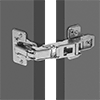
To ensure a good fit, these hinges have screws for horizontal, vertical, and depth adjustments after installation.
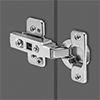
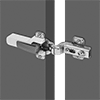
Easier to install than other mortise-mount concealed cabinet hinges, these fit in two drilled holes.
Easier to install than other concealed cabinet hinges, these do not require a cutout.
Instead of mounting to the side of a door, mount these hinges to the top and bottom to allow doors to open wide.
When the cabinet door is closed, a portion of the frame leaf is exposed and the entire door leaf is hidden
Surface-mount these hinges to the side of a cabinet.
Slip the hinge pins into 11/32" Dia. × 5/16" Dp. holes in a cabinet.
Push a button to adjust the hinge angle and release it to lock the position.
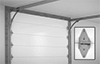
Designed to fit most overhead sectional doors, such as garage doors, these hinges are sized to industry standards.
Bend hinges to compensate for misaligned and sagging doors without removing the door.
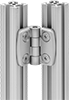
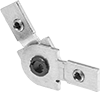
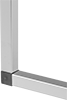
Use hinges to add doors, lids, and machine guards to T-slotted framing.
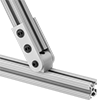
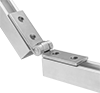
Pivots provide smooth motion at the junction between two T-slotted rails.
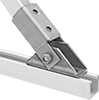
Provide smooth motion between two pieces of strut channel.
Position two strut channels at a 30° to 60° angle, then tighten the bolt to secure.
Build test fixtures, prototypes, and other small structures with this miniature version of T-slotted framing and fittings.
No need for fasteners—friction holds this framing together. Use press-fit framing and fittings to assemble carts, enclosures, and partitions.
Thick construction makes this framing strong and sturdy.
Fittings come in two pieces to wrap around rails, so you can quickly modify existing structures without disassembling. Use clamp-on framing and fittings to form temporary partitions, modular conveyors, and workstations.
Half the weight of steel, this aluminum framing resists corrosion in wet environments.
To provide corrosion resistance in wet environments, this framing is galvanized.
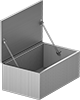
Keep environments free of contaminants—with plastic bushings, there's no metal-to-metal contact that can release particles as these supports open and close. Manually control these free-moving lid supports through their full range of motion. Raise the lid until the hold-open mechanism on the support is engaged; slightly lift it again to release the hold and close the lid.
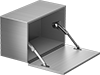
Manually control these standard free-moving lid supports through their full range of motion. Raise or lower the lid until the hold-open mechanism on the support is engaged; slightly lift it again to release the hold and close the lid.
Hold heavy lids open with these supports.
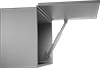
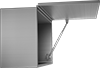
Also known as hatch springs, these supports are commonly used on hatches and other top-opening lids. Raise the lid to extend the spring, which props the lid open—an internal cable keeps the spring from overextending. Press the center of the spring to release the hold and close the lid.
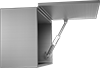
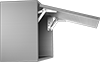
No separate hinges are required, these supports act as a hinge and lid support all in one. Springs provide lifting assistance to raise and hold lids open—slightly lift the lid to get it started and the support will do the rest. Manually shut the lids and the supports will hold them in the closed position.
Springs provide lifting assistance to raise and hold lids open—slightly lift the lid to get it started and the support will do the rest. Manually shut the lids and the supports will hold them in the closed position.
Commonly used on hood and trunk lids, these simple, three-piece rods telescope from 18 1/2" to 46 3/4" to prop lids open at a variety of angles.
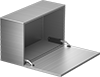
Requiring less space to mount and operate, these supports are often used on small cabinets and enclosures. They gradually slow your lid's motion to prevent it from slamming open. To open lids, lower them and the support will slowly and softly do the rest. Manually shut the lids and the supports will hold them in the closed position.
Gradually slow your lid's motion to prevent it from slamming open. To open lids, lower them and the support will slowly and softly do the rest. Manually shut the lids and the supports will hold them in the closed position.
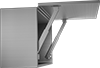
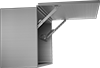
To eliminate slamming and smashed fingers, these supports automatically pull lids shut when they approach the closed position. Raise the lid until the hold-open mechanism on the support is engaged; slightly lift it again to release the hold and close the lid.
Providing constant resistance through the full range of motion, these supports hold lids open at any angle up to 70° or 90°.
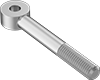
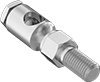
These rod end bolts are good for wet and corrosive environments—for maximum mounting flexibility, cut the fully threaded shaft to whatever length you need.
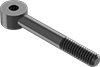
Good for general purpose applications where corrosion and high strength aren’t a concern, these rod end bolts are made of carbon steel.
These alloy steel rod end bolts have the highest tensile strength of any fully threaded rod end bolt we offer.
Pivot and hinge components in wet and corrosive environments with these stainless steel or brass rod end bolts.
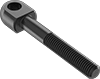
Create pivoting connections in applications that require high shear strength—the partially threaded shank of these rod end bolts withstands more side force than a fully threaded shank.
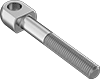
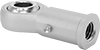
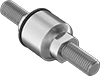
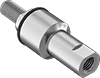
Also known as swing bolts and eyebolts, these internally threaded rod end bolts have no moving parts. They're designed to make pivoting or hinge movements in applications that don't need to compensate for misalignment.
These black-oxide steel rod end bolts are heat treated for added strength.
Made of stainless steel, these rod end bolts are stronger and more corrosion resistant than our standard flat-shoulder rod end bolts.
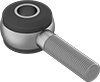
To reduce noise and vibration, these bolts have a rubber bushing—connect them to rods, pipes, tubes, and cable linkages that have female threading. They’re also known as isolated rod ends.
With a rubber bushing, these bolts reduce noise and vibration—attach them to rods, pipes, tubes, and cable linkages that have male threading. They’re commonly known as isolated rod ends.
Made of stainless steel, these rod end bolts are more corrosion resistant than steel rod end bolts.
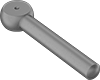
These alloy steel bolts have the highest tensile strength of any blank rod end bolt we offer.
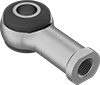
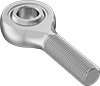
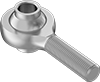
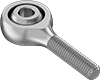
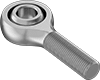
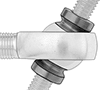
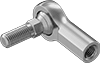
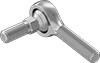
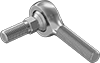
Also known as rod‐end bearings, ball joint rod ends have an eyelet and a ball that swivels to support angular misalignment.
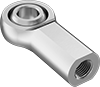
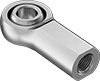
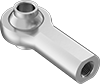
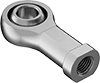
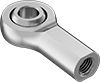
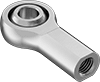
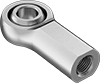
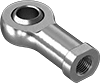
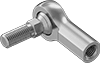
These internally threaded rod ends have an eyelet and a ball that swivels to support angular misalignment. Also known as rod-end bearings.
A carbon fiber-reinforced insert or PTFE liner reduces wear, handles shock loads, and eliminates the need for lubrication.
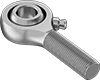
Connect your grease gun to the fitting to lubricate.
Connect your grease gun to the fitting to lubricate. Internal threads mate with rod end bolts, threaded rods, and other components with male threads.
An oil-embedded bronze insert slowly releases lubricant throughout the life of these internally threaded rod ends.
An oil-embedded bronze insert slowly releases lubricant throughout the life of the rod end.
An oil-embedded bronze insert slowly releases lubricant to the rod end. Connect your grease gun to the fitting to relubricate.
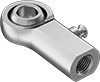
These internally threaded rod ends have an oil-embedded bronze insert that slowly releases lubricant over time. Connect your grease gun to the fitting to relubricate.
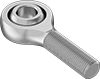
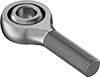
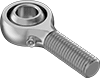
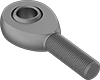
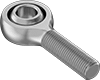
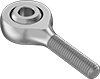
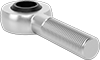
With at least 55° of ball swivel, these externally threaded rod ends accommodate greater misalignment than any other we offer.
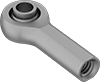
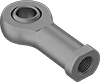
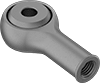
With at least 55° of ball swivel, these rod ends accommodate greater misalignment than any other internally threaded rod end we offer.
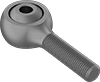
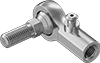
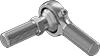
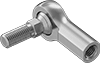
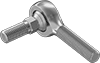
Made of cadmium-plated steel, these externally threaded rod ends generally handle higher loads than stainless steel, aluminum, and nylon rod ends.
Made of cadmium-plated steel, these internally threaded rod ends generally handle higher loads than stainless steel, aluminum, and nylon rod ends.
Made to extremely tight tolerances, these internally threaded rod ends are for applications that require positioning accuracy, such as accelerators and other types of control linkages.
Made to extremely tight tolerances, these externally threaded rod ends are for applications that require positioning accuracy, such as accelerators and other types of control linkages.
Made of stainless steel, these externally threaded rod ends provide excellent corrosion resistance.
Made of stainless steel, these internally threaded rod ends provide excellent corrosion resistance.
These anodized aluminum rod ends are lighter than stainless steel rod ends and have good corrosion resistance. Internal threads mate with rod end bolts, threaded rods, and other components with male threads.
These anodized aluminum rod ends are lighter than stainless steel rod ends and have good corrosion resistance.
These externally threaded steel rod ends handle loads that are at least 25% higher than other comparably sized rod ends.
These internally threaded steel rod ends handle loads that are at least 25% higher than other comparably sized rod ends.
These internally threaded rod ends have an innovative body design that keeps the ball from being pushed out when supporting thrust loads.
An innovative body design keeps the ball from being pushed out when supporting thrust loads.
Along with internal threads, these rod ends have a double row of precision ball bearings that allows high speeds and smooth operation.
A double row of precision ball bearings allows high speeds and smooth operation.
With a ball joint at the top of the shank, these rod ends pivot in the middle of the body instead of in the eyelet. Use them for linear push applications that require movement along the length of the connecting rod.
Decrease the ID of your rod end to allow approximately 60° of misalignment.
Without changing the ID, these inserts handle some misalignment on rod ends.
Made of zinc-plated steel or stainless steel, these clevis rod ends offer more corrosion resistance than standard steel clevis rod ends.
These steel rod ends are machined to SAE standards.
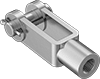
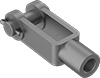
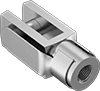
Make quick adjustments to these rod ends by inserting and releasing the clevis pins without the need to bend them into place.
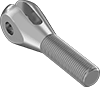
A male-threaded shank lets you build a linkage with a tapped tube or any female-threaded connection.
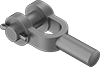
Thread or weld the unfinished shank of these rod ends to meet your specific linkage needs.
These linkages offer excellent wear resistance. They consist of internally threaded ball joint rod ends with a ball stud attached to simplify mounting.
Able to stand up to frequent use, these linkages offer excellent wear resistance. They consist of ball joint rod ends with a ball stud attached to simplify mounting.
These internally threaded linkages have a slippery PTFE liner that reduces wear and eliminates the need for lubrication.
A slippery PTFE liner reduces wear and eliminates the need for lubrication.
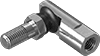
Along with excellent wear resistance, these linkages have a grease fitting for easy lubrication. An internally threaded rod end connects to threaded rods, studs, and other parts with male threads.
Along with excellent wear resistance, these linkages have a grease fitting for easy lubrication.
These internally threaded linkages have an oil-embedded bronze insert that slowly releases lubricant throughout the life of the joint.
An oil-embedded bronze insert slowly releases lubricant throughout the life of the joint.
Made of stainless steel, these ball joint linkages offer more corrosion resistance than steel and zinc ball joint linkages.
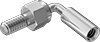
Use these bent linkages for light duty applications.
Made of stainless steel, these ball joint linkages offer more corrosion resistance than steel ball joint linkages.
These ball joint linkages are made of steel.
Use these externally threaded linkages to create inline pivoting connections.
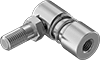
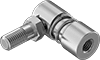
Use these linkages to create inline pivoting connections. They have internal threads on one end and external threads on the other.
Stronger than plastic models, these stainless steel swivel joints are also more corrosion resistant than steel joints.
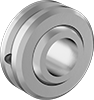
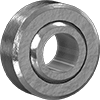
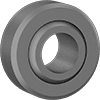
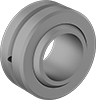
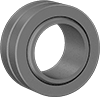
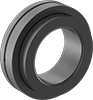
Also known as spherical bearings, swivel joints support angular misalignment. Press them into a hole or housing where a ball joint rod end won’t fit.
Specially designed lubrication channels and integral seals allow these joints to last up to three times longer than other swivel joints.
A unique design allows these joints to support heavy one-direction thrust loads as well as combined radial/thrust loads.
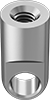
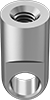
Attach these nuts to rods, pipes, and tubes to make pivoting and hinge movements where misalignment is not a concern.
Made of stainless steel for excellent corrosion resistance, these nuts make pivoting and hinge movements where misalignment is not a concern.
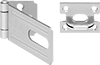
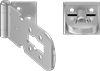
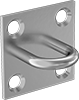
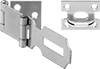
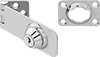
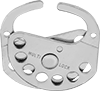
Turn the padlock eye to fasten these hasps without a padlock.
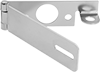
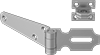
Install these hasps over a cam lock and secure them with a padlock to increase security on cabinets and chests.
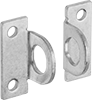
Mount these padlockable eyes to the front of a door and door frame.
Mount these padlockable eyes on the inside edge of a door and door frame.
Mount these hasps around complex curves, angles, and corners that other corner hasps can't reach.
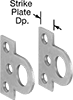
Designed for use with cut-resistant padlocks, these hasps have a padlock shackle protector on the strike plate for added cut and pry resistance.
Choose this hasp if you need several hasps that open with the same key.
Choose these hasps if you need hasps that each open with a different key.
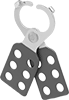
Lockouts come in different colors for easy identification and to help meet OSHA standards. The label is permanently attached to record employee name and department.
With a smaller overall length, these lockout hasps fit in tighter spaces than other lockout hasps yet still hold a similar number of locks.
Like two lockout hasps in one, there's a jaw at each end with different clearances for added versatility.
Lock out a single energy control on machinery and electrical equipment so it can't be used.
Same as our other low-profile lockout hasps, but with an attached label to record employee name and department.
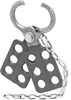
These have a chain to attach to equipment so they won't get lost.
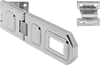
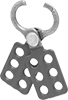
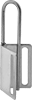
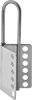
The fold-over closing design hinders prying, while a slot instead of holes makes it easy to install multiple padlocks.
The fold-over closing design hinders prying.
The overlapping hasp interlocks when closed for added security.
In addition to an overlapping hasp that interlocks when closed, lockouts have a chain that attaches to equipment so they won't get lost.
Isolate air-powered equipment from a compressed air source.
In addition to a hasp that interlocks when closed, lockout has an adapter to lock out a valve and a chain that attaches to equipment so it won't get lost.
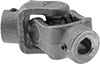
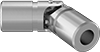
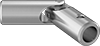
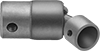
These U-joints are made of steel or zinc.
Made of stainless steel, these U-joints offer excellent corrosion resistance.
Made of stainless steel, these U-joints offer excellent corrosion resistance. They also meet MIL-U-20625A Class A.
These steel U-joints meet MIL-U-20625A Class A and have hardened yoke ears for added strength and durability.
These U-joints are made of steel.
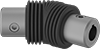
These U-joints are made of steel or plastic.
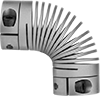
Keep shafts moving in sync with these U-joints—a flexible spring at the center stabilizes input and output speed and reduces vibration.
These U-joints handle at least 11,000 in.-lbs. of torque.
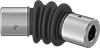
Connect misaligned shafts in sanitary environments such as food, cosmetic, and pharmaceutical plants.
These joints are made of steel.
Stainless steel hubs allow these U-joints to handle harsh environments.
A set of gears transmit rotary motion at angles up to 136°—the widest angle of all our U-joints. They are for hand-powered, low-speed applications.
Stainless steel U-joints are more corrosion resistant than steel U-joints.
Adjust the length of these U-joints between 2 3/4" to 3" to fit your application.
Joints have a fixed 2 1/2" overall length.
Customize the bore size of these joints to fit your shaft. Each end has a small centered starter hole that makes drilling easy.
These pin-and-block style U-joints work at lower speeds but transmit greater torque than needle-bearing joints.
Add legs to these brackets and mount to a tabletop to create a folding table.
A spring-loaded socket locks your gas spring to the ball stud—squeeze the ends together to attach and to release.
Thread these ball socket end fittings onto gas springs. They rotate in any direction on a ball stud to compensate for misalignment.
Made from stainless steel for excellent corrosion resistance in damp environments.
These end fittings snap right on a ball stud—an integral retaining clip grips the ball stud for secure attachment until you apply enough force to pop it off.
Thread these eyelet end fittings onto gas springs.
Suitable for use near sensitive electronic applications, these eyelet end fittings are aluminum, which is nonmagnetic.
Add a secondary panel that swings to mount more components in your enclosure.
Pivot the head to access fasteners from an angle.