We will reply to your message within an hour.
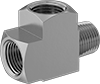
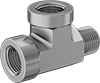
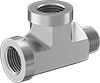
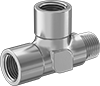
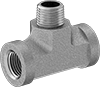
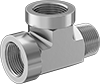
Not only do these brass fittings have the strength to handle high-pressure applications, the male threads have a sealant applied for extra protection against leaks.
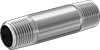
Typically used with high-pressure brass and bronze threaded pipe fittings.
These brass fittings have the strength to handle high-pressure applications.
Use these heavy-duty brass fittings for high-pressure drinking water applications.
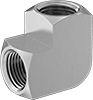
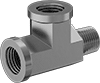
The plating on these brass fittings creates a shiny finish and provides extra protection in corrosive environments. Fittings have the strength to handle high-pressure applications.
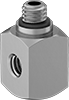
When space in your pipe line is limited, choose these miniature fittings that are one inch or less in length.
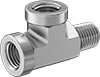
Also known as instrumentation fittings, these have the most precise threads and the tightest tolerances of all the brass pipe fittings we offer.
Extreme pressures are no problem for these heavy-duty brass fittings.
Use these fittings in low-pressure flow applications. They have good corrosion resistance.
Less than an inch in length, these miniature fittings work well in low-pressure pipe lines that are tight on space.
These fittings are made to tighter tolerances than other stainless steel pipe fittings. They are also known as instrumentation fittings.
Use these fittings in extreme-pressure conditions up to 15,000 psi.
Use these heavy duty, corrosion-resistant fittings in high-pressure flow applications.
These fittings are strong enough to handle extreme pressures, yet small enough to fit into cramped spaces.
Made to tighter tolerances than other steel pipe fittings, these are also known as instrumentation fittings.
Use these fittings for low-pressure applications in noncorrosive environments.
To prevent leaks in low-pressure lines, the male threads on these fittings have an acrylic sealant already applied for extra protection.
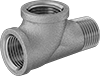
The galvanized finish on these fittings provides fair corrosion resistance. Fittings are for use in low-pressure applications.
Also known as instrumentation fittings, these are made to tighter tolerances than standard compression fittings. They are compatible with Parker CPI fittings.
Create a strong connection without heating, flaring, or soldering.
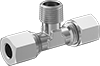
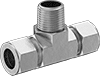
With a nickel-plated finish, these compression fittings resist corrosion better than plain brass fittings.
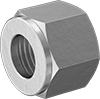
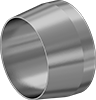
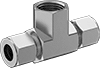
A nut with two sleeves (ferrules) gives these fittings extra gripping power. The sleeves bite into tubing as you tighten the nut, creating a strong seal.
No sleeve is required to assemble these fittings, which makes for a faster, more convenient installation compared to 37° flared fittings. They are also known as refrigeration and SAE fittings.
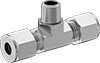
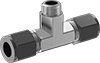
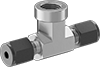
Use these fittings at pressures up to 9,700 psi. Also known as instrumentation fittings, they are made to tight tolerances for use in high-precision applications. They are compatible with Swagelok®, Let-Lok, and Parker A-Lok fittings.
For applications that require an extra level of cleanliness, these fittings are individually bagged to prevent contamination.
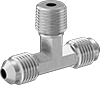
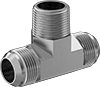
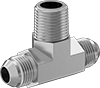
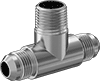
Also known as JIC (Joint Industrial Council) fittings, these provide a tight metal-to-metal seal on stainless steel tubing that is flared to 37°.
Individually bagged to prevent contamination, these fittings are suitable for applications that require a high level of cleanliness.
The threads on the tube end of these fittings are Class 3A or 3B and adhere to tighter tolerances than other 37° flared fittings.
A single sleeve (ferrule) bites into tubing as you tighten the nut, creating a strong seal. The nut and sleeve are included.
These fittings have two sleeves for extra gripping power. They bite into steel tubing as you tighten the nut to form a strong seal.
Also known as JIC (Joint Industrial Council) fittings, these provide a tight metal-to-metal seal on steel tubing that is flared to 37°.
A single sleeve (ferrule) bites into tubing as you tighten the nut, creating a strong seal.
Also known as JIC (Joint Industrial Council) fittings, these provide a tight seal on tubing that is flared to 37°.
Made of nickel-plated brass, these fittings have better corrosion resistance than unplated brass fittings.
Made of brass, these fittings have good corrosion resistance.
Connect air brake lines with fittings that won’t crack in sub-zero temperatures. They meet Department of Transportation FMVSS 571 safety standards, so they’re often used in commercial trucks and trailers.
An all-metal body and built-in tube support or dual seals allow these fittings to handle the highest pressure ratings of all our push-to-connect tube fittings.
Withstanding up to 300° F, these fittings have the highest temperature rating of all our brass push-to-connect tube fittings for air and water.
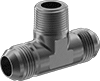
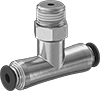
A single sleeve (ferrule) compresses the tubing as you tighten the nut on these fittings, creating a strong seal. They are brass for good corrosion resistance.
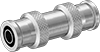
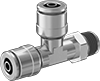
A built-in tube support slips inside the tubing to prevent collapsing and provides a sturdy connection for an extra-tight seal.
These fittings include a nut with a built-in sleeve (ferrule), so there’s no need to remove the nut for assembly.
Made of brass, these fittings resist corrosion from water and are more durable than plastic and aluminum fittings.
The nickel plating on these fittings provides better corrosion resistance than unplated brass fittings.