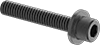
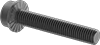
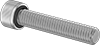
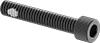
We will reply to your message within two hours.
The standard for high-strength fastening.
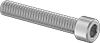
Tighten these screws by turning them to the left; once fastened, they prevent counterclockwise-moving parts from loosening.
Use these general purpose 18-8 stainless steel screws for a variety of fastening applications. They have good chemical resistance.
Cleaned and double bagged in an ISO Class 5 (Fed. Std. Class 100) clean room, these screws are ready to use on chambers and components in high-vacuum systems.
More corrosion resistant than 18-8 stainless steel screws, these 316 stainless steel screws have excellent resistance to chemicals and salt water.
Often used to fasten parts in engines and turbines, these are our strongest stainless steel screws. They are comparable in strength to alloy steel with the corrosion resistance of 18-8 stainless steel.
These screws are hardened to be 40% stronger than standard 316 stainless steel screws, yet they still have excellent corrosion resistance. Use them in chemical and marine applications.
Plastic screws are chemical and oil resistant, nonconductive, and lightweight.
Aluminum screws are one-third the weight of steel and have good corrosion resistance.
Brass screws are electrically conductive, nonmagnetic, and have good corrosion resistance.
Our most corrosion-resistant metal screws, titanium screws withstand salt water, acids, and chemicals. They have a high strength-to-weight ratio and are about 40% lighter than steel screws.
More corrosion resistant than stainless steel screws, nickel alloy screws have excellent resistance to salt water and some acids.
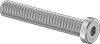
Nearly as strong as steel, these stainless steel screws won’t rust in outdoor, washdown, and other corrosive environments. With half the height of a standard socket head, these low-profile screws fit in tight spaces.
More corrosion resistant than 18-8 stainless steel screws, these 316 stainless steel screws have excellent resistance to chemicals and salt water. Use these low-profile screws where space is limited.
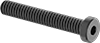
Made of alloy steel, these low-profile screws are nearly twice as strong as their stainless steel counterparts. With half the height of a standard socket head, these low-profile screws fit in tight spaces.
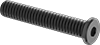
Made from alloy steel, these screws are nearly twice as strong as stainless steel low-profile screws. With a head height one-third the size of a standard socket head, they fit in the tightest spaces.
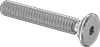
More corrosion resistant than 18-8 stainless steel screws, these 316 stainless steel screws have excellent resistance to chemicals and salt water. Their ultra-low-profile lets them fit in the tightest spaces.
These general purpose flanged screws distribute pressure where the screw meets the surface, eliminating the need for a washer.
Serrations under the head grip the material's surface for mild vibration resistance. The flange distributes pressure across the material's surface, eliminating the need for a washer.
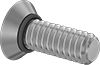
Seal out contaminants and prevent leaks—a rubber O-ring under the head prevents leaks and seals out contaminants.
These screws have good chemical resistance. A thread locker bonded to the threads prevents loosening from vibration.
With a tensile strength of 170,000 psi, these alloy steel screws are among the strongest we carry. They are stronger than Grade 8 steel screws and are nearly two and a half times stronger than stainless steel thread-locking screws. They have a thread locker to prevent loosening from vibration.
Drilled through the head and shaft, these screws vent fluid and gases trapped below the screw, making them good for vacuum applications.
Fasten these screws inside a high-vacuum system without bringing in contaminants.
The nylon patch bonded to the threads of these socket head screws adds friction to keep vibration from loosening them, while their O-ring prevents leaks and seals out contaminants.
A freely rotating washer distributes pressure over a wider area than a flange, preventing damage to your material's surface.
316 stainless steel screws resist corrosion from chemicals and salt water better than 18-8 stainless steel screws. They may be mildly magnetic.
Closely spaced threads on these screws fit in holes with a fine pitch. They're not compatible with standard metric threads.
These metric alloy steel screws are nearly twice as strong as stainless steel button head screws.
Made from brass, these metric button head screws are corrosion resistant in wet environments, nonmagnetic, and electrically conductive.
As strong as alloy steel and about 40% lighter, these metric titanium screws are known for their high strength-to-weight ratio. They stand up to salt water, acids, and chemicals.
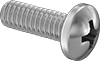
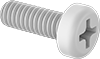
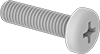
Made from 18-8 stainless steel, these metric pan head screws have good chemical resistance and may be mildly magnetic.
These metric 316 stainless steel screws resist corrosion from chemicals and salt water better than 18-8 stainless steel screws. They may be mildly magnetic.
Made to Japanese Industrial Standards, these screws have narrower and shorter heads than standard Phillips pan head screws.
A zinc plating makes these metric pan head screws corrosion resistant in wet environments.
Made from nylon, these metric pan head screws are chemical and oil resistant, nonconductive, and lightweight. Exposure to moisture may cause them to expand.
These metric PEEK screws are reliable in harsh environments up to 500° F and withstand acids, bases, and salt solutions. All are chemical and oil resistant, nonconductive, and lightweight.
Made from polycarbonate, these metric pan head screws resist breaking in high-impact applications. They are chemical and oil resistant, nonconductive, and lightweight.
Made from brass, these metric pan head screws are corrosion resistant in wet environments, nonmagnetic, and electrically conductive.
The most corrosion-resistant pan head screws we offer, these metric titanium screws withstand salt water, acids, and chemicals. They have a high strength-to-weight ratio.
Made from 18-8 stainless steel, these metric screws have good chemical resistance and may be mildly magnetic. The extra-wide truss head distributes holding pressure to reduce the likelihood of crushing thin material.
These metric 316 stainless steel screws resist corrosion from chemicals and salt water better than 18-8 stainless steel screws. The extra-wide truss head distributes holding pressure to reduce the likelihood of crushing thin material. Screws may be mildly magnetic.
A narrow head allows these screws to fit in tight spaces and a deep drive lets you maximize driving power.
18-8 stainless steel screws have good chemical resistance and may be mildly magnetic. A Torx drive has more points of contact than other drives, allowing you to tighten the screw without damaging the recess.
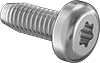
The Torx or Torx-Plus drive on these metric screws have more points of contact than other drives, allowing you to tighten them without damaging the recess.
Made from A286 stainless steel, these metric screws provide the strength of alloy steel and the corrosion and chemical resistance of 18-8 stainless steel. They have a Torx drive that has more points of contact than other drives, allowing you to tighten the screw without damaging the recess.
These metric 18-8 stainless steel screws have good chemical resistance and may be mildly magnetic. Torx drives have more points of contact than other drives, allowing you to tighten the screw without damaging the recess.
These metric screws have a Torx drive for more points of contact than other drives, allowing you to tighten the screw without damaging the recess.
Add a decorative look when fastening parts—these metric screws have a painted head.
More corrosion resistant than steel, and almost as strong, these 18-8 stainless steel screws have a narrower head than pan head screws to fit into tight spaces. They’re often used in electrical panels and next to flanges and raised surfaces in humid, damp, and washdown environments, but will corrode if exposed to salt water or chemicals.
More corrosion resistant than 18-8 stainless steel screws, these screws have excellent resistance to chemicals and salt water.
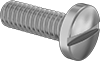
With a narrower head than pan head screws, these cheese head screws fit in tight spaces, such as in electrical panels and next to flanges and raised surfaces.
Made from nylon, these screws are chemical and oil resistant, nonconductive, and lightweight.
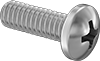
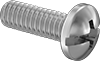
Good for use outdoors and in washdown environments, these metric 18-8 stainless steel screws are more corrosion resistant than steel and nearly as strong. Their pan-shaped head sits nearly flat on the fastened surface, so there’s no need to countersink a hole.
These metric 316 stainless steel pan head screws resist corrosion from chemicals and salt water better than 18-8 stainless steel screws. They may be mildly magnetic.
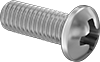
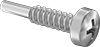
Install these metric pan head screws for a low-profile, finished look—no countersink required.
Made from nylon, these metric screws are chemical and oil resistant, nonconductive, and lightweight. Exposure to moisture may cause them to expand.
These metric PTFE screws withstand harsh chemicals and temperatures from -100° F to 500° F. They are nonconductive, lightweight, and resist wear due to their slippery surface.
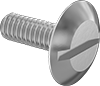
Fit these metric screws into spaces where head height is important and other wide head screws won't fit. Also known as shutter screws, they have an ultra-wide truss head to distribute the load over a large area for excellent holding pressure.
Designed for use in food, pharmaceutical, and other sanitary environments, these screws have an extra-wide truss head that distributes holding pressure to reduce the likelihood of crushing thin materials.
These metric 18-8 stainless steel screws have good chemical resistance and may be mildly magnetic.
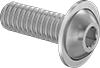
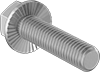
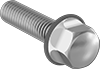
Made from 18-8 stainless steel, these metric screws have good chemical resistance and may be mildly magnetic. They have a flange that distributes pressure across a wide surface, eliminating the need for a separate washer.
These metric 316 stainless steel screws resist corrosion from chemicals and salt water better than 18-8 stainless steel screws. They have a flange that distributes pressure across a wide surface, eliminating the need for a separate washer. Screws may be mildly magnetic.
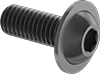
These metric alloy steel screws are nearly twice as strong as stainless steel button head screws. They have a flange that distributes pressure across a wide surface, eliminating the need for a separate washer.
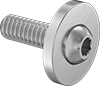
With a flange comparable in size to a washer, these metric screws distribute pressure better than standard flanged screws. Made from 316 stainless steel, they have excellent resistance to chemicals and salt water. Screws may be mildly magnetic.
Made from aluminum, these metric screws are lightweight and resist corrosion in wet environments. The flange is wider and thicker than our other flanged screws, so they distribute pressure the best.
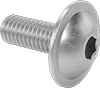
These metric 18-8 stainless steel screws have good chemical resistance and may be mildly magnetic. The flange is wider and thicker than our other flanged screws, so they distribute pressure the best.
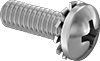
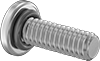
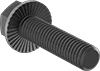
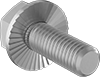
These metric stainless steel screws have good chemical resistance and may be mildly magnetic. All have a washer with sharp external teeth that dig into surfaces for maximum holding power and vibration resistance. Also known as Sems screws, the washer rotates freely but is permanently attached.
These metric screws have a washer with sharp external teeth that dig into surfaces for maximum holding power and vibration resistance. Also known as Sems screws, the washer rotates freely but is permanently attached.
Made from stainless steel, these metric screws have good chemical resistance and may be mildly magnetic. The washer has sharp internal teeth that dig into surfaces to resist large amounts of vibration while the smooth outside edge provides a finished look. Also known as Sems screws, the washer rotates freely but is permanently attached.
These metric screws have a washer with sharp internal teeth that dig into surfaces to resist large amounts of vibration. The smooth outside edge of the washer provides a finished look. Also known as Sems screws, the washer rotates freely but is permanently attached.
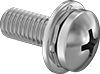
These metric stainless steel screws have good chemical resistance and may be mildly magnetic. A curved washer protects delicate surfaces while providing constant tension. Also known as Square Cone Sems screws, the washer rotates freely but is permanently attached.
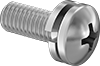
As you tighten these metric screws, the split lock washer flattens to add tension and prevent loosening from small amounts of vibration. Also known as Sems screws, the washer rotates freely but is permanently attached.
These metric screws have a nylon patch bonded to the threads that adds friction to prevent loosening from vibration. Made from 18-8 stainless steel, they have good chemical resistance and may be mildly magnetic.
These metric 18-8 stainless steel screws have good chemical resistance and may be mildly magnetic. A nylon patch bonded to the threads adds friction to prevent loosening from vibration.
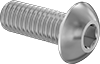
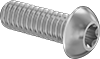
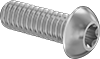
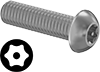
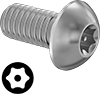
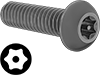
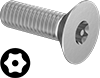
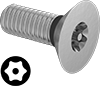
Made from 18-8 stainless steel, these metric button head screws have good chemical resistance and may be mildly magnetic. The tamper-resistant Torx drive (also known as a pin-in Torx drive) makes them difficult to remove without special tools.
To prevent unwanted removal, these metric screws have a tamper-resistant Torx drive—also known as a pin-in Torx drive—that makes them difficult to unscrew without special tools. An O-ring under the head blocks leaks and seals out dust and dirt.
Nearly twice as strong as stainless steel button head screws, these metric screws are made from alloy steel. Their tamper-resistant Torx drive (also known as a pin-in Torx drive) makes them difficult to remove without special tools.
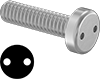
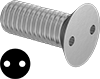
These metric screws have a drilled spanner drive, making them difficult to remove without special tools. Made from 18-8 stainless steel, they have good chemical resistance and may be mildly magnetic.
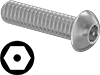
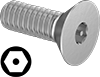
Made from 18-8 stainless steel, these metric button head screws have good chemical resistance and may be mildly magnetic. The tamper-resistant hex drive (also known as a pin-in hex drive) makes them difficult to remove without special tools.
These metric screws have a silicone O-ring that prevents leaks and seals out contaminants. Made from 18-8 stainless steel, they have good chemical resistance and may be mildly magnetic.
To vent fluid and gas trapped under the screw, these metric screws are drilled through the shaft. Made from 18-8 stainless steel, they have good chemical resistance and may be mildly magnetic.
Turn these metric screws to the left to tighten; once fastened, they prevent loosening from counterclockwise motion. Made from 18-8 stainless steel, they have good chemical resistance and may be mildly magnetic.
Choose these metric screws for fastening most machinery and equipment. They are twice as strong as low-strength steel screws.
These metric screws help prevent counterclockwise-moving parts from loosening. Use them for medium-strength fastening.
These screws are made to Japanese Industrial Standards. They are suitable for fastening most machinery and equipment.
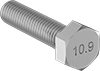
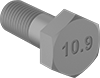
Choose these metric screws for high-strength fastening. Often used in high-stress applications, such as valves, pumps, motors, and automotive suspension systems, these screws are at least 25% stronger than medium-strength steel screws.
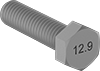
Choose these metric screws for heavy duty stamping applications as well as earth-moving machinery such as bulldozers and excavators. These screws are 10% stronger than our high-strength metric steel screws.
Choose these screws for their excellent corrosion resistance—comparable to 316 stainless steel—and the strength of steel. Use them for high-strength fastening in chemical and marine applications.
Our most corrosion-resistant metal screws, titanium screws withstand salt water, acids, and chemicals. They have a high strength-to-weight ratio—stronger than medium-strength steel screws and about 40% lighter.
Designed for construction and exterior building applications, these metric screws are often used to join I-beams and scaffolding. Their partial threading leaves an unthreaded portion that is strong enough to stand up to the sideways forces of joints.
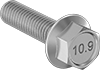
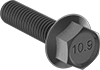
Made to Japanese Industrial Standards, these Class 10.9 steel screws can be used in high-stress applications, such as valves, pumps, motors, and automotive suspension systems. They are at least 25% stronger than medium-strength steel screws. The flange eliminates the need for a washer.
These metric screws are at least 25% stronger than medium-strength steel screws. Use them in high-stress applications, such as valves, pumps, motors, and automotive suspension systems. The flange distributes pressure where the screw meets the surface, so there's no need for a washer.
Choose these metric screws for fastening most machinery and equipment. With a flange distributing pressure where the screw meets the surface, there is no need for a separate washer.
Made from 18-8 stainless steel, these screws have good chemical resistance. A flange under the head distributes pressure over the surface, eliminating the need for a washer.
Choose these metric screws for high-stress applications, such as valves, pumps, motors, and automotive suspension systems. They are about 10% stronger than medium-strength steel screws. Their serrated flange helps to resist vibration.
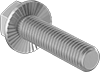
These metric screws are suitable for fastening most machinery and equipment. They have a serrated flange that helps prevent loosening from vibration.
Made from 18-8 stainless steel, these screws have good chemical resistance. Their flange is serrated to help prevent loosening from vibration.
More corrosion resistant than 18-8 stainless steel screws, these 316 stainless steel screws have excellent resistance to chemicals and salt water. A serrated flange provides mild vibration resistance.
Bolt down equipment in food processing or sanitary areas while sealing out contaminants.
A high-strength alternative to blind rivets, use these screws when only one side of the material is accessible.
An O-ring under the head prevents leaks and seals out contaminants.
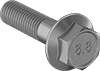
These Class 8.8 steel screws are suitable for fastening most machinery and equipment. They are over 50% stronger than stainless steel thread-locking screws. For vibration resistance, they have a thread locker bonded to the threads.
More corrosion resistant than 18-8 stainless steel screws, these metric screws have excellent resistance to chemicals and salt water. They may be mildly magnetic.
These metric brass screws are electrically conductive, nonmagnetic, and have good corrosion resistance.
These metric screws have good chemical resistance and may be mildly magnetic.
More corrosion resistant than 18-8 stainless steel screws, these metric screws have excellent resistance to chemicals and salt water.
These screws meet Japanese Industrial Standards.
A zinc plating on these metric steel screws provides mild corrosion resistance.
Our most corrosion resistant screws, these metric titanium screws withstand salt water, acids, and chemicals.
These metric screws have a decorative, domed head that sits above the surface when installed.
These metric alloy-steel screws are twice as strong as standard steel Torx flat head screws.
These metric A286 stainless steel screws have comparable strength to alloy steel with the corrosion resistance of 18-8 stainless steel.
These metric screws are chemical and oil resistant, nonconductive, and lightweight. Exposure to moisture may cause them to expand.
These metric polycarbonate screws resist breaking in high-impact applications better than other plastic screws. All are chemical and oil resistant, nonconductive, and lightweight.
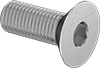
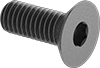
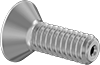
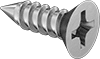
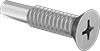
Angled under the head, these metric screws fit in countersunk holes and sit flush with the surface of your part.
With a tamper-resistant Torx drive (also known as a pin-in Torx drive), these metric screws are difficult to remove without special tools.
With an O-ring under the head, these metric screws seal out leaks and contaminants while also preventing unwanted removal.
With a tamper-resistant hex drive (also known as a pin-in hex drive), these metric screws are difficult to remove without special tools.
These metric screws have a tamper-resistant drilled spanner drive, making them difficult to remove without special tools.
To prevent leaks and seal out contaminants, these metric screws have an O-ring under the head.
A nylon patch bonded to the threads of these metric screws adds friction to prevent loosening from vibration. Made of 18-8 stainless steel, they have good chemical resistance and may be mildly magnetic.
To vent fluids and gases trapped under the screw, these metric screws are drilled through the shaft.
Tighten these metric screws by turning them to the left; once fastened, they prevent loosening from counterclockwise motion.
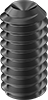
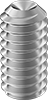
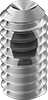
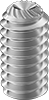
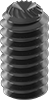
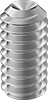
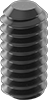
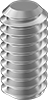
These alloy steel set screws have a thin edge that digs into hard surfaces for a secure hold. They're available in metric sizes.
These metric set screws have good chemical resistance.
These metric 316 stainless steel set screws have excellent chemical resistance and can be used in saltwater environments.
Made from alloy steel, these metric set screws have a thin edge that digs into hard surfaces for a secure hold. They have a nylon locking patch that grips threads to resist loosening.
Made from 18-8 stainless steel, these metric set screws are chemical resistant. They have a nylon locking patch that grips threads to resist loosening.
These metric 18-8 stainless steel set screws are chemical resistant. They have serrations on the cup edge that grip the material surface to resist loosening.
These metric alloy steel set screws dig into hard surfaces for a secure hold. They have serrations on the cup edge that grip the material surface to resist loosening.
These metric set screws are vented to allow fluid and gas to pass through.
These metric set screws have a tip that makes good contact on flat surfaces and allows you to make frequent adjustments with minimal surface damage.
These metric 18-8 stainless steel set screws are chemical resistant. The tip makes good contact on flat surfaces and allows you to make frequent adjustments with minimal surface damage.
These metric 316 stainless steel set screws have excellent chemical resistance and can be used in saltwater environments. The tip makes good contact on flat surfaces and allows you to make frequent adjustments with minimal surface damage.
Secure gears, pulleys, and other objects that require frequent adjustments, even in wet environments.
Secure objects to flat surfaces in washdown and corrosive environments.
Strong and durable, these alloy steel set screws hold objects tightly against flat surfaces.
Often used to secure gears and pulleys to shafts, these metric nylon set screws are lightweight and won’t carry an electrical current.
Made of chemical-resistant 18-8 stainless steel, these metric screws have an extra-soft nylon tip that reduces the noise, vibration, and damage that can occur from metal-on-metal contact. Use them on soft surfaces such as aluminum.
Available in metric sizes, these alloy steel set screws have an extra-soft nylon tip that minimizes the damage that can occur from metal-on-metal contact. Use them on soft surfaces such as aluminum.
These metric set screws have a brass tip, which is harder than nylon and silver, for a secure hold on hard surfaces. The body has a black-oxide finish to resist corrosion in dry environments.
Available in metric sizes, these screws have a tip that is harder than nylon and silver to provide a secure hold on hard surfaces. The body is 18-8 stainless steel for good chemical resistance.
These metric set screws have a protruding tip that locks within a mating hole or slot to keep parts aligned. They're also known as dog-point set screws.
Also known as dog-point set screws, these metric set screws have a protruding tip that locks within a mating hole or slot to keep parts aligned. Made of 18-8 stainless steel, they have good chemical resistance.
Turn these metric screws by hand using the hex head, or tighten them with a wrench for extra torque. With an extended tip that locks into a mating hole or slot—sometimes known as a dog point—they are often used to align and secure parts such as gears and pulley wheels.
These metric screws have a square head, so you can turn them by hand or use a wrench for more torque. Also known as half dog-point set screws, they have a protruding tip that locks within a mating hole or slot to keep parts aligned.
These metric set screws have a rolling ball that swivels 360° to minimize surface damage and allow for slight adjustments without loosening the screw.
Fine threads give you precise control.
Made from alloy steel, these metric set screws have a pointed tip that wedges into the contact surface for a secure hold on soft materials such as brass.
These metric 18-8 stainless steel set screws are chemical resistant. A pointed tip wedges into the contact surface for a secure hold on soft materials such as brass.
A low-profile flat-faced ball tip allows these metric set screw to be used in low-clearance applications.
Comparable to Class 12.9 steel.
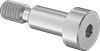
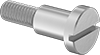
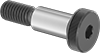
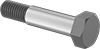
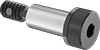
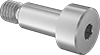
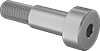
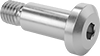
Use these screws in thin materials; they have a shorter threaded portion than our standard shoulder screws. They’re comparable in strength to Grade 8 steel.
The metric-sized threads on these screws are the same diameter as the shoulder. Comparable in strength to Class 12.9 steel.
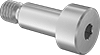
These screws have metric thread sizes. They are 18-8 stainless steel for good chemical resistance.
With inch-sized threads the same diameter as the shoulder, these screws can handle heavy loads. They’re 18-8 stainless steel for good chemical resistance.
For metric thread sizes with excellent resistance to chemicals and salt water, choose these 316 stainless steel shoulder screws.
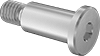
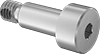
With a reduced head size and an unthreaded shoulder, use these screws as a shaft or dowel pin for small rotating parts in low-clearance applications.
These metric screws have a head height that's about two-thirds the head height of a standard shoulder screw. Use them in low-clearance applications such as inside machines.
Also known as wheel and axle bolts, these metric screws have an unthreaded shoulder that acts as a shaft, so material attached to the threaded end can rotate.
Available in metric sizes, these screws have a locking element on the threads that adds friction to resist loosening. Comparable to Grade 8 steel, they are the strongest screws we offer.
With a shoulder that’s twice as precise as standard shoulder screws, these metric shoulder screws act as a shaft or axle for bearings and other moving parts in applications that require smooth and accurate movement, such as measuring and lab equipment. Made of 18-8 stainless steel, they’re nearly as strong as steel but won’t rust in outdoor or washdown environments.
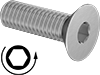
Install and remove these metric shoulder screws by hand or with a hex key.
These metric 316 stainless steel shoulder screws are more corrosion resistant than 18-8 stainless steel shoulder screws. They also have excellent resistance to chemicals and salt water.
Without a head to get in the way, these screws fit in tight spaces where standard shoulder screws cannot. Either thread them in a countersunk hole for a flush mount, or install them with the shoulder sticking out to use them as pins or dowels for aligning and locating components.
Offered in metric sizes, these brass shoulder screws are electrically conductive, nonmagnetic, and have good corrosion resistance.
These screws have a head height about one-third the head height of a standard shoulder screw. Use them in low-clearance applications such as inside machines.
These 18-8 stainless steel screws have good chemical resistance.
18-8 stainless steel screws have good chemical resistance.
These steel screws have a black-oxide or zinc-plated finish to resist corrosion.
These steel screws are beveled under the head for use in countersunk holes.
These steel screws are zinc plated to resist corrosion in wet environments.
These metric screws have a triangular shank that presses tightly as it forms threads, so screws resist loosening in soft metals such as brass, aluminum, and copper.
Also known as Fastite screws, these offer more thread engagement in 0.028" to 0.063" thick sheets to prevent overtightening and damaging threads.
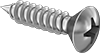
For a finished appearance that reduces the chance of snags on other material, these screws fit snugly in countersunk holes and have a domed head.
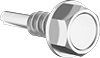
Cutting their own pilot hole and threads as you fasten them into material, these metric screws have a drilling tip.
With a drilling tip, these metric screws cut their own pilot hole and threads as you fasten them into material.
Drill a pilot hole, cut threads, and fasten in one motion with these metric-threaded screws. Made of steel, they’re strong and wear resistant.
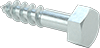
Drive the pointed tip of these screws into soft material, such as wood and drywall. They are also known as lag bolts.
Stainless steel thumb screws have excellent corrosion resistance in most environments.
Aluminum thumb screws are lightweight and resist corrosion in wet environments.
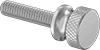
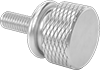
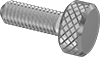
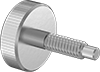
These metric thumb screws are made of chemical-resistant 18-8 stainless steel. They have a thin, knurled head for use in low-clearance applications.
These metric thumb screws have a thin, knurled head for use in low-clearance applications. They have a black-oxide finish to resist corrosion in dry environments.
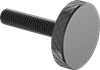
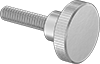
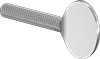
These metric thumb screws are made of chemical-resistant 18-8 stainless steel. They have a raised head that makes them easy to grip.
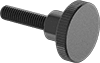
These metric thumb screws have a raised head that makes them easy to grip. A black-oxide finish provides corrosion resistance in dry environments.
With a slim profile, these metric thumb screws fit in tight spaces.
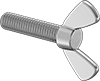
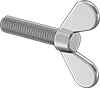
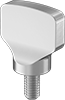
These metric thumb screws have wings that provide more leverage than spade-head thumb screws for greater torque while tightening. A zinc plating provides corrosion resistance in wet environments.
These metric thumb screws have a knurled head for a slip-resistant controlled adjustment.
These metric thumb screws have a large head that allows you to grip them with your entire hand for greater torque while tightening than standard knurled plastic-head thumb screws.
These metric thumb screws have arms that provide a flat surface to push your fingers against.
These metric thumb screws are made of chemical-resistant 18-8 stainless steel. Also known as dog- and pilot-point thumb screws, insert the point into a drilled hole or slot to hold items in place.
Fasten material by hand, so tools don’t scratch or contaminate parts you frequently adjust in food-processing or pharmaceutical plants.
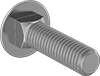
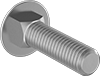
Choose these metric bolts for fastening most machinery and equipment. They are twice as strong as low-strength steel bolts. Carriage bolts have a smooth, rounded head for a finished look. The square neck keeps these bolts from turning when tightening a nut.
These bolts have good chemical resistance. Carriage bolts have a smooth, rounded head for a finished look. The square neck keeps these bolts from turning when tightening a nut.
More corrosion resistant than 18-8 stainless steel bolts, these bolts have excellent resistance to chemicals and salt water. Carriage bolts have a smooth, rounded head for a finished look. The square neck keeps these bolts from turning when tightening a nut.
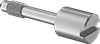
Install these socket head screws through a hole and thread on a retainer to keep secure—no special tools are required.
Install these thumb-screw-head screws through a hole and thread on a retainer to keep secure—no special tools are required.
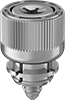
Snap these screws into panels up to 0.125" thick—no tools are required for installation.
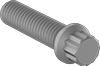
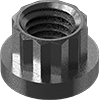
Good for high-strength fastening, these screws are made from alloy steel comparable in strength to Grade 9 steel. The head makes 12 points of contact with a wrench to handle more torque than a socket head or hex head screw.
Use these barrels with a screw you already have or pair with a different type of screw to create a custom fastener. Made from 316 stainless steel, they have excellent chemical resistance and can be used in saltwater environments.
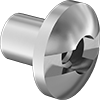
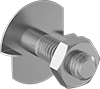
Use these hex drive screws and binding barrels as a low-profile alternative to standard nut and bolt combinations.
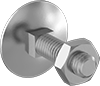
About half the strength of medium-strength bolts, these Grade 2 bolts are for light duty fastening. These bolts are commonly used in tight spaces with moving parts, such as grain elevators and other belting systems, because the smooth, low-profile head provides a flush fit when installed. The square neck keeps these bolts from turning when tightening a nut.
Made from stainless steel, these chemical-resistant bolts have a square neck that keeps them from turning when tightening a nut. They're commonly used in tight spaces with moving parts, such as grain elevators and other belting systems, because the smooth, low-profile head provides a flush fit when installed.
Sharp teeth bite into the surface of wood, rubber belting, and other soft materials to keep the bolt from turning when tightening a nut. These bolts are commonly used in tight spaces with moving parts, such as grain elevators and other belting systems, because the smooth, low-profile head provides a flush fit when installed.
Class 8 nuts are comparable in strength to Class 8.8 bolts and are suitable for fastening most machinery and equipment.
These metric nuts meet JIS (Japanese Industrial Standard) B 1181.
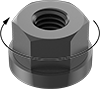
These metric nuts tighten when turned to the left; once fastened, they resist loosening from counterclockwise motion.
Closely spaced metric threads prevent these nuts from loosening due to vibration. About 25% stronger than medium-strength steel nuts, these nuts are comparable in strength to Class 10.9 bolts.
About 25% stronger than medium-strength steel nuts, these nuts are comparable in strength to class 10.9 bolts.
About half the strength of medium-strength steel nuts, these metric nuts are for light duty fastening applications.
These metric nuts are about 20% stronger than high strength steel nuts and are often used in heavy machinery.
These nuts have good chemical resistance and may be mildly magnetic. Metric 18-8 stainless steel is also known as A2 stainless steel.
These metric nuts meet JIS (Japanese industrial Standard) B 1181.
Tighten these nuts by turning them to the left; once fastened, they resist loosening from counterclockwise motion.
These metric nuts have good chemical resistance and may be mildly magnetic.
Comparable in strength to Grade 5 steel and as resistant to chemicals and salt water as 316 stainless steel.
These metric nuts resist oil, grease, and solvents (except mineral acids).
PEEK nuts are often used as an alternative to metal hex nuts. They withstand temperatures up to 550° F and resist acids, bases, and salt solutions.
Polycarbonate nuts stand up to oil, grease, and detergents.
Glass-filled nylon nuts are stronger than nylon 6/6 nuts. They resist oil, grease, and solvents (except mineral acids).
Stronger than PTFE nuts and resistant to solvents, bases, and acids—including hydrochloric and nitric acid—these PVDF nuts are often used in chemical processing equipment.
Polypropylene nuts resist organic solvents and degreasing agents.
PTFE nuts withstand temperatures up to 500° F. They resist oil, grease, detergents, and most mineral acids. They're the lowest friction plastic nuts we offer, so they thread on smoothly.
These metric nuts are corrosion resistant in wet environments, electrically conductive, and nonmagnetic.
These brass nuts resist rusting from water and have closely spaced threads to prevent loosening from vibration.
One-third the weight of steel, these metric aluminum nuts are corrosion resistant in wet environments and nonmagnetic.
These metric nuts have a high strength-to-weight ratio and resist acids and salt water.
These metric nuts are resistant to salt water, electrically conductive, and nonmagnetic.
Made with fine-pitch threads, vibration is less likely to loosen these metric nuts than those with coarse-pitch threads since the threads sit closer together. Also called jam nuts, they are roughly half the height of standard hex nuts, so they’re good for applications with low clearance.
Useful in low-clearance applications, these metric nuts are roughly half the height of standard hex nuts, but aren’t as strong. All are 18-8 stainless steel, which is nearly as strong as steel but won’t rust in outdoor, washdown, and other corrosive environments.
These nuts tighten when turned to the left; once fastened, they resist loosening from counterclockwise motion.
These metric nuts are made of 316 stainless steel and half as tall as regular hex nuts—use them around chemicals and salt water when space is limited.
With threads that tighten to the left and made of 316 stainless steel, these nuts won’t loosen from counterclockwise motion in saltwater and corrosive environments. They’re half the height of standard hex nuts, so they fit where there’s low clearance.
These nuts should be used for light duty fastening applications, such as securing access panels.
These nuts tighten when turned to the left; once fastened, they resist loosening from counterclockwise motion. Made of Grade 2 and Class 04 steel, these nuts can be used for fastening panels and other light duty fastening applications.
These nuts are half the height of standard hex nuts, and have closely spaced threads to prevent loosening from vibration. Half as strong as medium-strength steel nuts, they are often used for light-duty applications, such as fastening signs in place.
Half as thick as regular hex nuts, these nuts fit into spaces with low height clearances. They are about half as strong as medium-strength steel, and are often used for light duty applications, such as securing access panels.
Made from brass, these metric nuts are corrosion resistant in wet environments, electrically conductive, and nonmagnetic. About half the height of standard hex nuts, they are useful in low-clearance applications but have less tensile strength.
These nuts tighten to the left and won’t loosen from counterclockwise motion.
Comparable in strength to Class 12.9 bolts.
These Class 10 nuts are about 25% stronger than medium-strength steel extra-wide hex nuts.
Taller than standard hex nuts, these metric nuts provide a larger gripping area for installation with a wrench.
More corrosion resistant than 18-8 stainless steel nuts, these nuts have excellent resistance to chemicals and salt water.
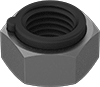
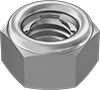
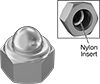
A nylon insert keeps metric bolt threads from coming loose due to vibration, wear, and temperature swings. About 25% stronger than medium-strength steel locknuts, these nuts are made of high-strength, Class 10 steel.
Closely spaced metric threads prevent loosening from vibration. These Class 10 steel locknuts are 25% stronger than our medium-strength steel nylon-insert locknuts.
Made from medium-strength steel with a nylon insert, these Class 8 metric locknuts are strong enough to use on most machinery and equipment that’s prone to vibration and temperature changes.
Get a grip on metric bolts exposed to vibration, wear, and changes in temperature. These metric locknuts have a nylon insert that holds onto bolts without damaging their threads.
Made from low-strength steel, these locknuts should be used for light duty fastening applications, such as securing.access panels.
These metric locknuts have good chemical resistance.
More corrosion resistant than 18-8 stainless steel locknuts, these metric locknuts have excellent resistance to chemicals and salt water.
With a shorter hex height than standard DIN 985 locknuts, these nylon-insert locknuts meet international ISO 10511 dimensional standards and are easy to install in tight spaces.
These metric locknuts have an irregularly shaped thread at the top of the nut that grips the bolt for a stronger hold than nylon-insert locknuts.
Comparable in strength to Grade 8 bolts, these locknuts are about 25% stronger than medium-strength steel locknuts.
These locknuts have good chemical resistance.
Strong enough for use with most machinery and equipment, these Class 8 metric locknuts have an irregularly shaped thread in the middle of the nut that grips bolts tighter than nylon-insert locknuts.
These metric stainless steel locknuts have good chemical resistance and may be mildly magnetic.
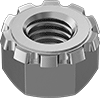
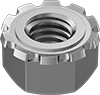
These metric locknuts have a free-spinning tooth lock washer that grips the material surface instead of threads for easy installation and mild vibration resistance.
A conical washer acts as a spring to add tension between the nut and the material surface for easy installation and mild vibration resistance. These metric locknuts have a smooth rim to resist scratching materials when tightened.
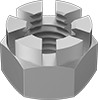
Secure these metric nuts by inserting a cotter pin or safety wire through the slots and a drilled hole in your bolt for mild loosening resistance. Often referred to as castle nuts.
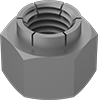
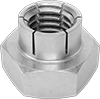
Threads at the top of these metric locknuts expand to grip the bolt on all sides for a stronger hold than distorted-thread locknuts.
Made from stainless steel, these metric flex-top locknuts resist chemicals and may be mildly magnetic.
The metric steel insert grips the threads and lifts away from the nut body when installed, isolating the insert from the nut's load to resist spinoff caused by vibration.
For a secure hold where chemicals are a concern, these stainless steel locknuts have a spring that creates tension when tightened. Also known as Fuji locknuts.
These locknuts, also known as Fuji locknuts, maintain their holding power with reuse longer than nylon-insert locknuts. They have a spring ring that creates tension as you tighten the nut, keeping them in place.
These flange nuts have a black-oxide finish for mild corrosion resistance in dry environments.
Stainless steel nuts have excellent corrosion resistance in most environments.
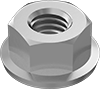
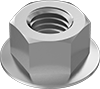
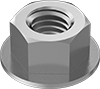
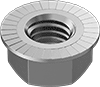
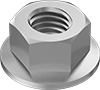
Also known as collar nuts, these metric nuts have a flange that distributes pressure across the surface, so you don't need a washer. Made of high-strength Class 10 steel, they’re about 25% stronger than medium-strength steel flange nuts.
These metric nuts meet JIS (Japanese Industrial Standard) B 1190.
No need for a washer—these metric medium-strength steel nuts have a flange that distributes pressure across its surface the way a washer does. Made of medium-strength, Class 8 steel, they’re suitable for fastening most machinery and equipment.
Made to Japanese Industrial Standards, these nuts fasten most Japanese machinery and equipment without a washer.
About half the strength of medium-strength steel flange nuts, use these metric nuts in light duty fastening applications, such as securing access panels.
Skip the washer—these metric stainless steel nuts have a flange that does the same job, spreading pressure across its surface for a strong hold.
More corrosion resistant than 18-8 stainless steel flange nuts, these nuts have excellent resistance to chemicals and salt water.
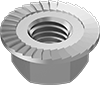
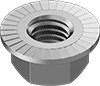
Strong enough for use in most machinery and equipment, these medium-strength metric nuts have serrations on the underside of the flange. The serrations prevent the nuts from loosening in applications with mild vibration.
They're about 25% stronger than medium-strength steel flange locknuts and comparable in strength to Class 10.9 bolts.
Metric 18-8 stainless steel is also known as A2 stainless steel. These flange locknuts have good chemical resistance and may be mildly magnetic.
Metric 316 stainless steel is also known as A4 stainless steel. These flange locknuts have excellent resistance to chemicals and salt water.
Grip metric bolts more securely than nylon-insert flange locknuts—the irregularly shaped threads on these locknuts hold extra tight. They resist vibration and sudden shocks, even after multiple uses.
The nut head rotates while the flange remains stationary to prevent scratching the material surface as you tighten the nut.
For light duty applications, choose these metric-sized coupling nuts.
Choose these locknuts to fasten standard metric threads. They’re Class 8 steel, so they can be used in most fastening applications.
These metric-sized coupling nuts are Class 10 steel, so they’re about 25% stronger than medium-strength steel coupling nuts.
These metric coupling nuts have good chemical resistance.
More corrosion resistant than 18-8 stainless steel coupling nuts, these metric nuts have excellent resistance to chemicals and salt water.
Plastic coupling nuts are chemical resistant, nonconductive, and lightweight.
One-third the weight of steel, aluminum coupling nuts resist corrosion in wet environments.
Brass coupling nuts are corrosion resistant in wet environments and electrically conductive.
Stainless steel coupling nuts have excellent corrosion resistance in most environments.
Known for their strength, steel coupling nuts are available with a corrosion-resistant finish.
A smooth rounded body provides a finished look.
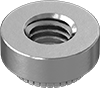
Press these metric nuts into a drilled or punched hole with an arbor press or similar pressure tool.
A flat hex head sits flush against the material surface for use in low-clearance applications.
These press-fit nuts have a nylon insert that grips threads to resist loosening.
Stainless steel press-fit nuts have excellent corrosion resistance in most environments.
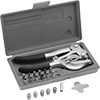
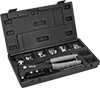
These tools include everything you need to install press-fit nuts by hand.
Also known as broach style captive nuts, these metric nuts have good chemical resistance and may be mildly magnetic.
These press-fit nuts are tin plated to resist corrosion from chemicals and salt water.
These steel panel nuts are zinc plated for corrosion resistance.
Weld these metric nuts to flat and uneven uncoated steel surfaces for a strong permanent hold.
You can weld these metric nuts to flat and uneven uncoated stainless steel surfaces for a strong permanent hold.
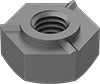
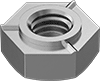
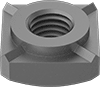
Square weld nuts have more weld points than hex weld nuts for a stronger hold. Use them on flat surfaces.
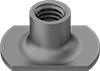
Use these metric nuts in channels and tight spaces where round-base weld nuts won't fit.
A smooth base provides more contact with the mating surface than weld nuts with projections.
Projections on the base concentrate the weld and provide room for heat to dissipate.
Weld these nuts to uncoated steel surfaces.
Weld these nuts to stainless steel surfaces.
A smooth base on these metric nuts provides more contact with the mating surface than weld nuts with projections
Threads float inside the retainer of these metric nuts so you can install a bolt at a slight angle to align with off center parts.
Stainless steel adhesive-mount nuts have excellent corrosion resistance in most environments.
These adhesive-mount nuts have a zinc plating for corrosion resistance in wet environments.
These metric thumb nuts have good chemical resistance. The flange distributes pressure over a large area to reduce stress on your part.
These metric thumb nuts are corrosion resistant in wet environments, electrically conductive, and nonmagnetic. The flange distributes pressure over a large area to reduce stress on your part.
Made from 18-8 stainless steel, these metric thumb nuts have good chemical resistance and may be mildly magnetic.
These thumb nuts have an aluminum insert to withstand more torque than plastic thumb nuts during installation.
Use these thumb nuts in low-clearance applications or jam one against another nut to hold it in place.
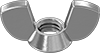
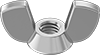
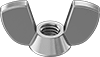
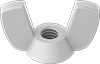
These metric wing nuts provide more leverage for greater torque while tightening than knurled-head thumb nuts.
Made from 18-8 stainless steel, these metric nuts have good chemical resistance and may be mildly magnetic.
Made from 316 stainless steel, these metric wing nuts have excellent chemical resistance and can be used in saltwater environments.
Made from nylon 6/6, these metric wing nuts are chemical resistant, nonconductive, and lightweight.
Cover and protect threads in sanitary environments, such as food-processing or pharmaceutical plants.
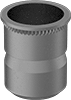
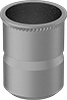
About twice as strong as aluminum rivet nuts, these steel rivet nuts are zinc plated for mild corrosion resistance.
These aluminum rivet nuts are one-third the weight of steel rivet nuts and have mild corrosion resistance.
The most corrosion resistant twist-resistant rivet nuts we offer, these stand up to chemicals.
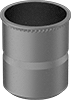
A hex-shaped body provides the highest twist resistance of any rivet nut.
A nonconductive rubber coating insulates the nut from electricity, seals out moisture, and damps vibration.
Once installed these rivet nuts have a large back flange that distributes the load across a broad area for a strong hold in plastic and composites.
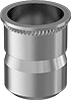
About twice as strong as aluminum rivet nuts, these low-profile rivet nuts have a cadmium or tin-zinc plating for corrosion resistance.
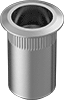
These low-profile rivet nuts are one-third the weight of steel and have mild corrosion resistance.
The most corrosion resistant low-profile rivet nuts we offer, these stand up to chemicals.
Threads float inside the nut so you can install a screw at a slight angle to align with off-center parts. They’re also known as Riv-Float nuts.
These rivet nuts are mildly corrosion resistant.
A PVC foam seal under the flange keeps liquids and gasses from leaking between the nut and the surrounding material.
The thread area is enclosed, which prevents leakage past the threads from either side of your application.
These metric nuts have a barrel with multiple threads for secure thread engagement. Also known as U-style clip-on nuts.
Slide these nuts on the edge of a panel and position them by hand. Also known as G-style clip-on nuts.
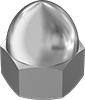
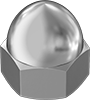
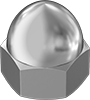
These metric cap nuts have good chemical resistance and may be mildly magnetic.
These metric cap nuts have excellent resistance to chemicals and salt water.
These metric nuts are about half the strength of medium-strength steel cap nuts. Use them in light duty fastening applications, such as securing access panels.
Comparable in strength to Class 10.9 bolts, these nuts are about 25% stronger than medium-strength steel cap nuts.
These metric nylon 6/6 cap nuts are chemical resistant, nonconductive, and lightweight.
Certified by EHEDG (European Hygienic Engineering and Design Group) to meet sanitary design standards, these cap nuts fit into tight spaces to cover and seal exposed threads in your food processing facility.
A nylon insert on these metric nuts prevents vibration from loosening them, and a domed head protects the threads at the end of the bolt from damage and debris.
Stronger than stainless steel, these nuts are comparable in strength to Grade 9 bolts.
Two-thirds the height of typical square nuts and made of stainless steel, these metric nuts are designed for use in low-clearance applications in humid, damp, and washdown environments.
Made from 18-8 stainless steel, these metric square nuts have good chemical resistance and may be mildly magnetic.
About half the strength of medium-strength steel square nuts, use these metric nuts in light duty fastening applications, such as securing access panels.
About half the strength and two-thirds the height of medium-strength steel square nuts, use these metric nuts in light duty, low-clearance applications.
Unlike metal nuts, these metric carbon fiber square nuts won’t warp at extreme temperatures, making them ideal for heat treating and furnace fixtures.
Tri-groove nuts are narrower than sloped and drilled spanner nuts to fit in tight spaces. Install with a tri-groove socket bit and either a drive handle or an open-end wrench.
The most tamper-resistant nuts we offer, these have a hex head that breaks away upon tightening, leaving a non-removable cone. Install with a standard wrench.
Difficult to grasp with standard hand tools, these metric nuts have sloped sides to reduce the risk of unwanted removal.
A wide base and large bearing surface make these nuts good for securing large objects. Install with a spanner driver.
These metric push nuts can be used as a standalone for light-duty applications or as a jam nut.
With a slim, round profile and a slotted drive, these metric nuts work in tight spots where there's no room for a wrench to turn. Instead, tighten them from the center of the nut with a slotted screwdriver.
Stainless steel snap-in nuts have excellent corrosion resistance in most environments.
Snap these nuts into square holes in thin materials.
Attach these metric slip-on nuts at any point on a threaded rod for quick installation.
Use these metric washers to evenly distribute the load under bolt or screw heads and nuts when fastening. They can also act as spacers.
Compared to our general purpose washers, these have exaggerated diameters and/or thicknesses. Use them to cover oversized holes, hold heavy fastening loads, or as spacers and levelers.
Also known as Type B washers, these distribute your fastener's load over a larger surface area than other washers to minimize damage to soft materials.
These thick washers are designed to support structural screws, studs, and nuts.
When you’ve applied the correct tension, these washers release an orange dye as a visual indicator.
These metric washers surpass most other plastic washers when it comes to withstanding chemicals, oil, and grease.
Low moisture absorption and good heat resistance make these metric washers suitable for wet and harsh environments.
These metric washers can withstand temperatures up to 450° or 500° F without degrading.
These metric washers hold up in blistering temperatures up to 3000° F.
A specially shaped ID grips your screw shank tightly.
Also known as shoulder washers.
The extra-tall sleeve extends into holes to provide more protection than other rolled-collar washers.
Flat and oval head screws sit flush within these metric washers for a neat, finished appearance.
Plastic washers are good electrical insulators.
Reinforce holes in soft material to keep them from collapsing around screws.
Square washers fit into slots and channels and have flat sides to keep them from rotating.
With greater diameters and/or thicknesses than general purpose washers, these washers cover oversized holes or act as spacers and levelers. Clipped to fit where standard washers can’t, they won’t rotate when you position the flat edge against a flat surface.
Clipped to fit where standard washers can't, these won't rotate when you position the flat edge against a flat surface.
Designed for use with bearing nuts, these lock washers have a conical shape that presses like a spring against bearings, bushings, gears, and pulleys to hold them in place on your threaded shaft or spindle.
These washers have smaller outside diameters than standard spring lock washers to fit neatly under socket head cap screws.
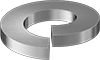
The arched shape of these washers presses up against a bolt and down against a nut to prevent loosening from wear, vibration, or temperature changes.
Also known as conical washers, these have a slightly cupped shape that gives them spring-like flexibility to grip tighter than split and tooth lock washers.
Designed for use with plastic screws, these acetal washers are good electrical insulators. They are excellent for use under water and in rotating assemblies.
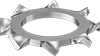
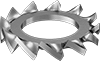
Teeth on the outside edge of these metric washers bite into the screw head and joint for a tight grip.
The teeth on these washers bite further into the screw head and joint than standard external-tooth washers to provide a stronger hold.
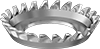
To keep 90° countersunk screws from loosening in vibration applications, the teeth on these washers bite further into the screw head and joint than standard external-tooth lock washers for a more secure hold.
Internal teeth dig into the screw head while the smooth outside edge won't snag objects. Use with metric fasteners that have small heads, such as fillister and cheese head screws.
The combination of internal and external teeth boosts gripping power to maintain a tight hold and provide more vibration resistance than other tooth lock washers. Use with fasteners that have heads large enough to make contact with the external teeth, such as pan, button, and binding head screws.
Comparable to NORD-LOCK® and Sherex TEC Series washers, these two-piece washers provide more locking power than split, tooth, and spring lock washers. Wedges on the inside lock the two pieces together, and serrations on the exterior grip surfaces to resist loosening from high vibration and shifting.
Bend the tab of these metric lock washers against the flats of a hex nut or bolt head to prevent the fastener and washer from turning and loosening due to vibration, wear, or changes in temperature.
Sunlight, ozone, and water won’t affect these washers.
These washers surpass other rubber washers when it comes to withstanding oil, grease, and fuel.
These washers withstand harsh chemicals such as acetic acid and isopropyl alcohol.
Also known as crush washers, these compress when tightened to form a tighter, more durable seal than rubber washers. They are commonly used to seal fluids such as oil and fuel.
Able to withstand pressure greater than 7,000 psi, these one-piece bonded washers create the tightest seals.
These washers are rated to withstand pressure up to 100 psi.
These curved, flexible washers act like springs to compensate for tolerance variations and uneven surfaces.
With three points of surface contact, these washers provide more stability than single-wave washers.
These leather washers are nonmarring.
These metric Grade B7 fine-threaded rods meet the pressure and temperature requirements of ASTM A193 and are often used to secure pressure tanks, valves, and flanges.
These metric Grade B7 threaded rods meet the pressure and temperature requirements of ASTM A193 and are often used to secure pressure tanks, valves, and flanges.
An economical alternative to Grade B7 and Grade B16 threaded rods, these metric Class 8.8 rods are suitable for fastening most machinery and equipment.
About half the strength of medium-strength steel threaded rods, use these metric fine-thread rods for light duty hanging, mounting, and fastening.
These metric threaded rods are about half the strength of medium-strength steel threaded rods for light duty hanging, mounting, and fastening.
These metric threaded rods tighten when turned to the left; once fastened, they resist loosening from counterclockwise motion. About half the strength of medium-strength steel threaded rods, use them for light duty hanging, mounting, and fastening.
These Class 10.9 steel threaded rods are about 25% stronger than medium-strength steel rods.
Class 12.9 rods are about 20% stronger than Class 10.9 threaded rods and are for use in heavy machinery.
Available in metric sizes, these 18-8 stainless steel threaded rods have good chemical resistance.
These metric 316 stainless steel threaded rods are more corrosion resistant than 18-8 and 410 stainless steel threaded rods and have excellent resistance to chemicals and salt water.
These metric threaded rods are made from nylon 6/6 and resist oil, grease, and solvents. They’re nonconductive, making them good for use around sensitive electrical components.
Fiberglass threaded rods are stronger than nylon threaded rods. They resist acids, solvents, salt water, and oil.
Unlike metal rods, these metric threaded rods will not warp at extreme temperatures, making them ideal for heat treating and furnace fixtures.
These metric brass threaded rods are corrosion resistant in wet environments, electrically conductive, and nonmagnetic.
Screw the threaded end of these metric studs into a tapped hole and use the unthreaded end as a pivot point, hinge, shaft, or locator pin.
These steel studs are zinc plated to resist corrosion in wet environments.
18-8 stainless steel studs have good chemical resistance.
316 stainless steel studs have excellent resistance to chemicals and salt water.
These metric 316 stainless steel studs have excellent resistance to chemicals and salt water. Also known as hanger bolts, use them to hang, mount, and fasten parts to wood structures.
Pass these studs through a hole and weld them in place.
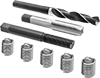
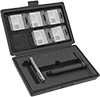
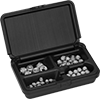
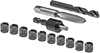
Assortments include various sizes of inserts, a soldering iron, a ceramic insulation tube, and installation tips.
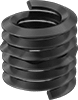
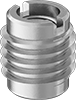
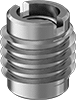
The tapered shape makes it easier to guide these inserts into a hole during installation. Use a drill bit to create a straight hole, then taper the top half.
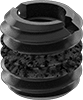
Install these inserts into plastic parts to create a secure base for fasteners.
With the male threaded end on these inserts, mount components directly to plastic parts.
Made from brass, these inserts are electrically conductive, nonmagnetic, and have good corrosion resistance.
These 18-8 stainless steel inserts have better corrosion resistance than brass inserts and may be mildly magnetic.
These aluminum inserts are 70% lighter than brass inserts, electrically conductive, and nonmagnetic. They have good corrosion resistance, which is comparable to brass but not as good as stainless steel.
Made from brass, these inserts are nonmagnetic, corrosion resistant, and electrically conductive.
The flange keeps these inserts from pulling through a hole. Press them in from the underside of material, and install a screw from the top of material.
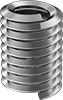
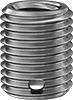
Use these inserts to install fine-thread screws in existing holes.
These 18-8 stainless steel inserts have better corrosion resistance than aluminum inserts and may be mildly magnetic.
70% lighter than stainless steel, these aluminum inserts are mildly corrosion resistant and nonmagnetic.
The barbed sides keep these securely in place even before a screw is installed.
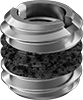
Also known as Trisert inserts, these cut threads into plastic and have better holding power than press-fit inserts.
A dry film keeps the screw from sticking or binding in these inserts during installation.
Made of Nitronic 60 stainless steel, these inserts prevent the screw from binding or sticking without any coating or lubricant that could contaminate particle-free environments.
Eliminating the need for primer, these inserts are coated to resist corrosion when installed in different materials.
Made of nickel alloy, these inserts are more resistant to acids and salt water than stainless steel inserts.
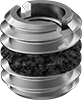
A distorted thread grips the screw to resist loosening.
Inserts come with a through-hole tap and installation tool.
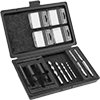
Assortments include various sizes of helical inserts and a tap, a drill bit, and an installation tool for each thread size.
Kits include helical inserts, a tap, and an installation tool.
These kits have short-, normal-, and long-reach inserts, an installation tool, and a tap.
Without a prong to break off and retrieve, these inserts are often used where debris could cause damage.
Made of 18-8 stainless steel, these inserts have good corrosion resistance.
A black-phosphate finish provides mild corrosion resistance.
The strongest key-locking inserts we offer, these inserts are made to stringent military specifications.
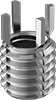
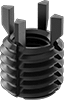
These inserts come with an installation tool. Drive the keys into the surrounding material for a more secure hold than thread-locking inserts.
Forming the strongest hold of any of our threaded inserts, these inserts have a distorted internal thread to lock screws into place and keys that drive into surrounding material to prevent slipping and rotating.
Made of 18-8 stainless steel, these inserts have better corrosion resistance than black-phosphate steel.
These inserts are the most corrosion-resistant thread-locking inserts we offer.
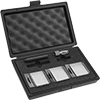
These assortments include various sizes of thread-locking inserts.
A closed-end tap, drill bit, and installation bit are included with these inserts.
These inserts cut their own threads in soft metals such as aluminum, so there's no need to tap the hole. Also known as Tap-Lok inserts.
Made from brass, these inserts are nonmagnetic, mildly corrosion resistant, and electrically conductive.
These 18-8 stainless steel inserts have excellent resistance to chemicals and may be mildly magnetic.
The flange keeps these inserts from being pulled through a hole and provides a load bearing surface.
Large threads cut into softwood such as particleboard for a strong hold.
Steel inserts have high strength for durability.
These 18-8 stainless steel tee nut inserts have better corrosion resistance than zinc-plated steel tee nut inserts.
The most corrosion resistant tee nut inserts we offer, these inserts stand up to chemicals and salt water.
Press these inserts into a drilled hole and the flexible metal teeth anchor them in the material. Use them with carbon fiber, fiberglass, and garolite.
A wide flange distributes the load over a large area. Hammer these inserts into a drilled hole.
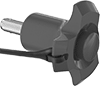
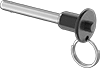
Attach these pins to a machine cover or access panel, then clip them in to receptacles installed in the enclosure for quick access. Pins lock in place until you release them.
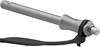
The shaft on these pins retracts into the head to hold thin sheets of material together. Pins lock in place until you push the button to release the spring-loaded retaining balls.
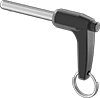
When there isn't enough room for a T-handle, an L-handle saves space but is still easy to grip. For a more secure hold than standard quick-release pins, these pins lock in place until you push the button to release the spring-loaded retaining balls.
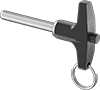
For a more secure hold than standard quick-release pins, these pins lock in place until you push the button to release the spring-loaded retaining balls.
For the tightest spaces, these narrow-grip pins have the smallest heads of any of our locking quick-release pins. They lock in place until you push the button to release the spring-loaded retaining balls.
The extra height and smaller width of the grip make the button more accessible in tight spaces. For a more secure hold than standard quick-release pins, these pins lock in place until you push the button to release the spring-loaded retaining balls.
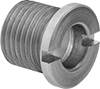
Use a screwdriver to install these receptacles in a threaded hole.
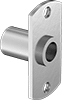
When you can't drill a through hole, use one of these flanged receptacles to provide a permanent, blind hole for a quick-release pin.
Use these retaining caps to secure the ends of quick-release pins in holes that are oversized or out of round.
A high-profile knob is easy to grip, but fits in small spaces. A spring-loaded, nonlocking retaining ball pops out when the pin is pushed through a hole, and retracts when the pin is pulled out.
The smooth ring handle on these pins won't catch on parts. A spring-loaded, nonlocking retaining ball pops out when the pin is pushed through a hole, and retracts when the pin is pulled out.
These pins have a low-profile head, so they won't get knocked out of place. A spring-loaded, nonlocking retaining ball pops out when the pin is pushed through a hole, and retracts when the pin is pulled out.
Two spring-loaded balls give these pins more holding power than quick-release pins with only one retaining ball. The balls pop out when the pin is pushed into a hole, and retract when the pin is pulled out.
A strong magnet in the head holds these pins in place on steel and other ferrous metals. Use them for light duty applications and blind holes.
Use these metal dowel pins as pivots, hinges, shafts, jigs, and fixtures to locate or hold parts.
Slip these pins in and out during maintenance or prototyping—they’re undersized to make alignment easier.
To remove these pins, thread a screw or tool into the tapped hole, then pull them out.
The flat side of these pins relieves trapped air, making them easier to insert in and remove from blind holes. To remove, thread a screw or tool into the tapped hole, then pull the pin out.
Join two pieces of wood with these dowel pins. When glued, they expand for a tight fit.
Pass wires and other components through these hollow pins.
These pins make good hinges or pivots. The grooved half locks pins in position, while the smooth half can act as a pivot. Also known as type H pins.
Center-groove pins are often used in place of clevis pins or to create T-handles. The grooved center locks pins in position, while the smooth ends act as a pivot. Also known as type E pins.
Grooves run the full length of these pins for a firm hold that won't spin. Use them in place of standard dowel, spring, and taper pins to fasten parts. Also known as type A pins.
Also known as roll, tension, split, and expansion pins, these pins have a slot along one side that you squeeze closed to install them into unthreaded holes.
These spiral pins remain flexible after installation, so they absorb shock and vibration better than slotted spring pins. They work well in holes that are out of round.
For tough jobs, these spiral pins are 30% stronger than our standard coiled spring pins. They remain flexible after installation to absorb shock and vibration, and work well in holes that are out of round.
Slide a retaining ring into the groove for a secure hold that takes up less space than a cotter pin.
Install or remove these pins from either side. Slide a retaining ring into the groove for a secure hold that takes up less space than a cotter pin.
The low-profile head on these pins holds them in place on one side.
These pins combine the locking capabilities of a clevis pin with the precision diameter of a dowel pin for a tight fit.
A swivel handle makes these pins easy to install and remove, while the toggle locks them in place. Flip the toggle to release the pin.
Also known as split pins, these have one prong slightly longer than the other so they’re easy to open. Bend prongs outward to secure.
Also known as hitch pin clips and R-clips, these pins are easy to install and remove.
A coil makes a stronger grip than standard hairpin cotter pins to prevent accidental release.
To remove these pins, hit the small end with a punch to drive the pin out.
Threads on these pins stick out for easy removal from blind holes. Tighten the hex nut to draw the pin out.
Push parts out of molds with these hardened pins. Also known as knockout and forged pins.
These pins have a flat head to fit into a counterbored hole.
Position, pivot, and align components. Also known as pilot pins and PEM® TP4, TPS, and MPP pins.
Mount components onto food processing lines, walls, and sanitary equipment while leaving space to clean in between.
Made of aluminum, these spacers are lightweight and mildly corrosion resistant.
18-8 stainless steel spacers have good corrosion resistance.
Brass makes these spacers electrically conductive and the zinc-plated finish adds corrosion resistance.
These spacers have excellent corrosion resistance and are passivated for enhanced protection.
These spacers have excellent wear and abrasion resistance. Exposure to moisture may cause them to expand.
Almost nonabsorbent, these unthreaded LDPE and HDPE spacers won't swell when exposed to water.
An economical alternative to standard unthreaded spacers.
These standoffs are designed to fit in the limited space of compact electronics such as laptops and hand-held devices.
The ends of these removable supports snap in and compress between panels to reduce vibration of miniature cooling fans in compact electronics.
Stick these supports to surfaces where you don't want to drill a hole. The snap-in end can be released for repairs and upgrades.
Connect male- and female-threaded parts of different thread types and sizes, while allowing air, liquids, wire, or other thin materials to pass through.
Change inch threads to metric with these adapters, or swap metric threads for inch. An external hex lets you tighten or loosen them with a wrench.
In addition to joining male- and female-threaded parts, these adapters can increase or decrease metric thread sizes and change the thread pitch.
Join two female-threaded parts of various thread types and sizes, while allowing air, liquids, wire, or other thin materials to pass through.
One side inch, one side metric, and a hex in the middle—these handy fasteners connect two female-threaded parts, such as coupling nuts, adapting from inch threads to metric. Tighten with a standard wrench.
Twist these adapters onto female metric threads to change pitch or switch thread sizes.
Adapt threaded rods from inch to metric. These adapters connect two male-threaded fasteners, so you can change the gender of a mating part or increase or decrease its thread size. The hex-shaped body fits into the head of a standard wrench.
Increase or decrease metric thread size from one male-threaded part to another. Commonly used to connect two differently sized threaded rods, they have a hex-shaped body, so you can tighten them with a standard wrench.
Often called sleeve nuts, these thread adapters fasten parts with right-hand threads to parts with left-hand threads.
These assortments include hex head screws and hex nuts.
These assortments include button head screws.
These assortments include pan head screws.
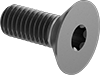
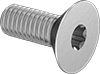
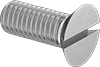
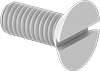
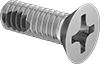
Flat head screws are angled under the head to fit flush within countersunk holes.
Set screws exert pressure at the tip to hold objects in place.
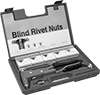
A ribbed-shaped body holds the nut in place so it won't move when tightening a screw. Assortments contain rivet nuts, mandrels, nosepieces, and a plier-style installation tool.
These rivet nuts have a smooth body and fit in smaller holes than twist-resistant rivet nuts. Assortments include rivet nuts, mandrels, nosepieces, and a plier-style installation tool.
Use these rivet nuts for light duty fastening in low-clearance applications. Assortments include rivet nuts, mandrels, and an installation tool.
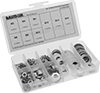
As a screw is tightened, these washers flatten to add tension to the joint and prevent loosening from small amounts of vibration.
These assortments include pliers to install external and internal rings.
Also known as E-Style and C-style rings, slide these into the groove from the side of the shaft. They provide a wider shoulder than other external retaining rings for a larger retaining surface.
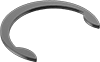
Pull these rings open with retaining ring pliers, pass over the end of a shaft, and release to spring into a groove.
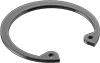
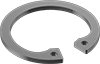
Pull ring ends together with retaining ring pliers and place into the bore of a shaft or housing.
Dowel pins are commonly used as pivots, hinges, shafts, jigs, and fixtures to locate or hold parts. They're slightly oversized for a tight fit.
Slotted spring pins are also known as roll, tension, split, and expansion pins. Because the slot is pressed closed when the pins are inserted, they don't flex after installation.
Also known as split pins, these have one prong slightly longer than the other so they’re easy to open.
Coiled spring pins are flexible after installation, so they absorb shock and vibration better than slotted spring pins. They also have higher dynamic load capacities and accommodate wider hole tolerances.
Open these rings, pass them over the end of a shaft, and release to spring into the groove.
Thicker than standard external retaining rings, these rings withstand greater force.
No groove is required for these rings—their thick profile helps them grip the shaft.
For a smooth profile and better clearance than standard external retaining rings, the lugs on these rings point inward.
Also known as E-style rings.
These rings are reinforced to withstand faster rotation than other side‐mount retaining rings. Also known as reinforced E‐style rings.
Also known as C-style and crescent rings, these rings have a small shoulder to fit in tight spaces.
No groove required—press these rings onto the end of a shaft for a firm grip.
Slide these rings into a groove near the end of the shaft and the tab locks them in place.
Thicker than standard spiral rings, these rings withstand greater forces.
Slide these rings into place with one twist—no tools required—for applications with high thrust loads.
These coiled rings can be wound into place on a shaft without tools.
Often used with small engines, heavy equipment, and power transmission, these external retaining rings have speared ends to help you install and remove them.
Squeeze these rings to place them in the groove inside a bore or housing.
Thicker and stronger than standard internal retaining rings, these withstand greater thrust loads.
For a smooth bore and better clearance than standard internal retaining rings, the lugs on these rings face outward.
With teeth along the inside, these retaining rings hold chamfered shafts inside the housing of your equipment.
Slide these rings into place by hand with a single twist for applications with high thrust loads.
These coiled rings can be wound into place inside a bore or housing without tools.
No groove required—these rings have teeth that firmly grip the bore.
Precisely align, level, and adjust spacing on fasteners and shafts with these shims.
Slide these shims under the screw head to shorten the shoulder length.
Spin these shims onto screw threads to extend the shoulder length.
Place these shims under sharpened dies to restore their original height and extend their life.
Also called tolerance rings, these rings are for use in stamped, molded, or worn housings to form a tight hold on the bearings.
The slot lets you insert, remove, and adjust the shims without disassembling your machinery.
Be prepared with slotted shims in a variety of thicknesses. The slot lets you insert, remove, and adjust the shims without disassembling your machinery.
Use a single shim on feet or positioning arms that are secured with multiple fasteners. The slots let you insert, remove, and adjust the shims without disassembling your machinery. Also known as finger shims.
Cut this stock into custom shapes to fit your application.
Made from 18-8 stainless steel, these blind rivets create a strong hold even in wet and damp areas. The domed head gives your project a finished appearance.
Made of aluminum, these blind rivets are lightweight and corrosion resistant. The domed head gives your project a finished appearance.
The zinc-plated finish provides mild corrosion resistance.
Lightweight and corrosion resistant, these blind rivets are made of aluminum. Install them in countersunk holes, and their angled head sits flush with the material’s surface.
With good strength and corrosion resistance, these 18-8 stainless steel blind rivets create a strong hold in damp and wet areas. Install them in countersunk holes, and their angled head sits flush with the material’s surface.
High-strength toggle anchors provide an extremely strong hold and stay in position when a bolt is removed.
A zinc-plated finish gives these steel inserts mild corrosion resistance.
With a nylon insert that grips your threaded shaft or spindle without damaging its threads, these locknuts—also called shaft nuts—hold bearings, bushings, gears, and pulleys prone to vibration tightly in place.
Often paired with spring lock washers to strengthen their hold, these retaining nuts—also known as shaft nuts—keep vibration from shifting bearings, bushings, pulleys, and gears on your threaded shaft or spindle.
Used in pairs or with another bearing retaining nut, these jam nuts—often called shaft nuts—hold bearings, bushings, pulleys, and gears in place on your threaded shaft or spindle.
Screw and nut sets or nuts secure brackets and other accessories to rails.
Connect T‐slotted rails and reinforce joints for structural stability.
A spring plus serrated grooves that grip the lip of the channel provide a more secure hold than standard strut channel nuts.
Serrated grooves grip the lip of the channel.
Notches on these washers grip the channel to keep them in place.
Use with hex nuts to connect threaded rod.
Build test fixtures, prototypes, and other small structures with this miniature version of T-slotted framing and fittings.
Also known as trapezoidal-thread lead screws and nuts.
Multiple thread channels (also known as thread starts) create faster linear travel than lead screws with a single thread start.
Also known as single-start and self-locking lead screws and nuts, these have a single thread that runs the length of the screw. The nut travels only when the screw turns, so your system won't unexpectedly move when the lead screw is at rest.
These metric lead screws and nuts have broad, square threads that are well suited for quick assembly, high clamping forces, and lifting and lowering heavy objects. They're commonly found in hand-powered clamps, vises, grates, doors, and work tables.
Internal ball bearings provide smooth low-friction travel in applications that require high speeds, accurate positioning, and repeatable movement. Also known as single-start metric ball screws and nuts, these have a single thread that runs the length of the screw.
Install these threaded collars on a metric lead screw to separate and position components, or use them as an end stop to limit travel.
A set of ball bearings reduces friction and secures the end of a metric ball or lead screw.
Install these nuts on a rotary shaft to create a linear positioning system without a lead screw. Instead of threads, a set of angled ball bearings drives the nut along a shaft as it spins.
A cushion covering the clamp reduces vibration and wear from clamp edges. Clamps surround lines of pipe, tubing, and conduit completely while holding them close to the mounting surface.
Organize multiple lines of pipe, tubing, and conduit with one clamp. Wider than standard loop clamps, multiline loop clamps surround two lines of material to create a secure grip while holding the lines close to the mounting surface. A cushion covering the clamp reduces vibration and wear from clamp edges.
A molded cushion reduces vibration and wear from clamp edges, plus it provides a tighter fit around material than standard vibration-damping loop clamps.
Compared to metal loop clamps, plastic loop clamps reduce wear on soft materials, such as tubing and cable. Clamps are nonconductive and noncorrosive.
These clamps completely surround single lines of pipe, tubing, and conduit while holding them close to the mounting surface.
Organize multiple lines of pipe, tubing, and conduit with one clamp. Wider than standard loop clamps, multiline loop clamps surround two lines of material to create a secure grip while holding the lines close to the mounting surface.
Also known as muffler clamps, these U-bolts have a rounded mounting plate that fully surrounds pipe, conduit, and tubing for a secure fit.
Also known as machinery eyebolts.
Also known as nut eyebolts, these are designed for through-hole applications.
Unlike conventional eyebolts, you can rotate the eye 360° to match the angle of your load.
Route wire and cable through the smooth eye without snagging.
Create your own lifting eye by adding an eye nut to a stud or bolt.
Designed for angular lifting, hoist rings resist stresses that would bend or break an eyebolt. They have a lifting ring that pivots 180° front to back to compensate for roll and sway when lifting heavy or unbalanced loads.
Choose these hoist rings when you need to lift your load from the side.
Secure setup clamps and fixtures to your machine table, or assemble heavy machines, such as engine mounts.
Also known as tap-end and fixture studs, these rods have friction-fit threads on one end to resist loosening and standard threads on the other side for attaching a nut.
Designed to slide into T-slot tracks on machine tool tables, use these nuts to secure clamps and workpieces.
After sliding the nut into a T-slot, tighten the set screw to keep it in place.
Install from the top of the T-slot track and secure with a quarter turn. Also known as quarter-turn T-slot nuts.
For quicker setups than a separate T-slot nut and stud, slide these bolts into T-slot tracks on machine tool tables.
Prevent chips, debris, and small parts from falling into T-slots.
For mounting items to your machine table, these kits contain the full system of necessary components.
Scrape debris out of machine table T-slots.
Build these components into fixture plates, machine subplates, and tombstones for quick changes. The system clamps and locates at the same time for accurate positioning with repeatability of ±0.0005".
Hold a workpiece securely from the side with minimal contact, leaving more of the workpiece free for machining.
Set one of these clamps between two workpieces in a fixture and tighten the screw to push the clamp's sides out for a secure hold.
Install these clamps into a slot in your fixture to grip at the bottom of a workpiece edge, giving the cutting tool maximum access.
Tighten the spring-loaded socket head cap screw on these clamps to hold your workpiece from above.
These clamps wedge against the workpiece ID to grip cast, unfinished, or uneven parts, leaving the outside clear for machining.
Get everything needed for basic workholding on a machine table.
The built-in T-slot nut on these side clamps lets you clamp a part to a machine table quickly. Their small footprint leaves more free space on your table than standard side clamps.
Also known as jig bushings, these metric drill bushings fit inside fixture plate holes to guide drill bits, counterbores, reamers, and other cutting tools. They improve accuracy so that your drilled holes and cuts are consistent from part to part.
Even under extreme drilling pressure, these metric bushings won't press through your jig plate. A flanged head on the top of the bushing acts as a stop, preventing it from moving as you push down your drill bit, reamer, or other cutting bit.
Combine with mounting blocks to mount and secure threaded-body shock absorbers.
A black-oxide finish provides mild corrosion resistance.
These stainless steel anchor studs offer excellent corrosion resistance.
Mount these knobs into a threaded hole. They provide a secure grip to position, tighten, and hold fixtures, equipment, and machinery.
Never lose these knobs—tether them to equipment to keep them where you need them. They provide a secure grip to position, tighten, and hold fixtures, equipment, and machinery. Mount them into a threaded hole.
Identify equipment controls and components at a glance by their color. Mount these knobs into a threaded hole. They provide a secure grip to position, tighten, and hold fixtures, equipment, and machinery.
A rubber coating provides a comfortable grip to position, tighten, and hold fixtures, equipment, and machinery. Mount these knobs into a threaded hole.
Made for use in food processing facilities, these plastic knobs have a metal additive that sets off metal detectors if a piece breaks off into your line.
Bonded to the stud is an acrylic adhesive that adds friction to resist loosening from vibration. Use these knobs to position, tighten, and hold fixtures, equipment, and machinery. They mount into a threaded hole.
Keep a convenient selection of knobs on hand. To build a custom knob or thumb screw, pair one of these knobs with a socket head screw. They provide a secure grip to position, tighten, and hold fixtures, equipment, and machinery.
To build a custom knob or thumb screw, pair one of these knobs with a hex or socket head screw. They provide a secure grip to position, tighten, and hold fixtures, equipment, and machinery.
Use these standard cam handles for most clamping applications. Push down on the handle and the head applies pressure to quickly draw two parts together for fast adjustments.
Also known as double cams, these complete cam handles have a durable, extra-large handle for clamping on fixture bases, plates, and workpieces. For fast adjustments, push down on the handle and the head applies pressure to quickly draw two parts together.
Use these handles to keep holes aligned or lift several sheets of thin material. They have a plug that expands to grip the edges inside holes. They are not suitable for permanent installation—use only for temporary mounting.
Use these handles for quick assembly and disassembly. Their offset grip provides leverage, making them a good alternative to wing nuts.
Secure threaded metal conduit fittings to a knockout in an outlet box or enclosure.
Secure threaded plastic conduit fittings to a knockout in an outlet box or enclosure.
Slide these clips on DIN rails—often used in equipment cabinet racks—to route and organize cables. Since these clips don’t require adhesive or screws, you can move them anywhere along the rail.
Use these lug nuts to secure a pneumatic wheel.
Convert drum openings with metric or BSPP threads to a 2 NPT pipe size.
Designed for use with right-hand, internally threaded rod ends, these rods have right-hand threads on both ends. Use them for remote valve operators, throttle controllers, shifting mechanisms, and virtually any push/pull assembly.
Designed for use with right-hand, externally threaded rod ends, these rods have right-hand threads on both ends. Use them for remote valve operators, throttle controllers, shifting mechanisms, and virtually any push/pull assembly.
Similar to turnbuckles, these rods have right-hand threads on one end and left-hand threads on the other so you can make a linkage that adjusts for tension.
Similar to turnbuckles, these rods have right-hand threads on one end and left-hand threads on the other so you can make a linkage that adjusts for tension. Add right- and left-hand threaded rod ends to build your linkages.
Made of stainless steel for excellent corrosion resistance, these nuts make pivoting and hinge movements where misalignment is not a concern.
Attach these nuts to rods, pipes, and tubes to make pivoting and hinge movements where misalignment is not a concern.
These rod end bolts are good for wet and corrosive environments—for maximum mounting flexibility, cut the fully threaded shaft to whatever length you need.
Good for general purpose applications where corrosion and high strength aren’t a concern, these rod end bolts are made of carbon steel.
These alloy steel rod end bolts have the highest tensile strength of any fully threaded rod end bolt we offer.
Pivot and hinge components in wet and corrosive environments with these stainless steel or brass rod end bolts.
Create pivoting connections in applications that require high shear strength—the partially threaded shank of these rod end bolts withstands more side force than a fully threaded shank.
Made of stainless steel, these rod end bolts are stronger and more corrosion resistant than our standard flat-shoulder rod end bolts.
These black-oxide steel rod end bolts are heat treated for added strength.
These nuts attach to high-pressure nipples for compressed gas so you can connect your tank to the inlet of a pressure regulator.
Pair these nuts with compression sleeves and high-pressure fittings. They withstand about twice as much pressure as nuts for standard compression fittings, so they’re good for hydraulic power applications.
Use these nuts with compression sleeves and fittings, also known as bite fittings, to create a strong seal on steel tubing.
Create a strong seal on copper tubing when you couple these nuts with compression sleeves and fittings.
Tighten these nuts onto high-pressure compression sleeves and fittings to create a strong seal on stainless steel tubing.
Pair these nuts with vibration-resistant compression sleeves and fittings for a strong seal on stainless steel tubing.
Use these nuts with compression sleeves and fittings to create a strong seal on stainless steel tubing.
Use these corrosion-resistant fittings in a low-pressure pipe line.
Use these fittings in low-pressure flow applications. They have good corrosion resistance.
Use these fittings for low-pressure applications in noncorrosive environments.
Turn these tools by hand to install low-profile rivet nuts.
Use these tools to install most styles of rivet nuts. Use a wrench to hold the tool and a ratchet to tighten the nut.
Smaller and lighter than cordless and hydraulic rivet nut tools, use these to install thin-walled bulbed, ribbed, sleeve, and smooth rivet nuts.
Install all styles of rivet nuts more quickly than cordless rivet nut tools.
Push nuts and retaining rings over threaded fasteners and shafts. These tools have a magnetized tip so nuts don't fall off as you slide them on.
Secure jaws to a CNC lathe chuck with industry standard 1.5 mm × 60° serrations or wider 3 mm × 60° serrations.
Includes charts that list specifications and tightening guidelines for socket screws as well as charts that provide decimal equivalents and drill sizes.
Rated for high load capacity, use these metric inserts to connect threaded leveling mounts to heavy equipment.