


Clear All
Shape Shape |
|---|
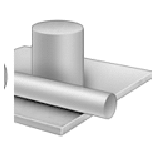
 | Rod and Disc |
Material Material | Show |
|---|
|
Material Material | Hide |
|---|
Melting Temperature Melting Temperature |
|---|
|
Approximate Thickness Approximate Thickness |
|---|
|
Approximate Diameter Approximate Diameter |
|---|
|
DFARS (Defense Acquisition Regulations Supplement) DFARS (Defense AcquisitionRegulations Supplement)  |
|---|
RoHS (Restriction of Hazardous Substances) RoHS (Restriction ofHazardous Substances) |
|---|
|
Approximate Weight Approximate Weight |
|---|
|
Casting Metals
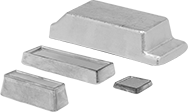
Melt and pour these alloys into molds to create metal parts and prototypes.
Lead-base coppered babbitt is able to withstand shock and vibration and requires less lubrication than other types of babbitt. Use it to cast bearings for low-speed, heavy-load applications.
Lead-Base Coppered Babbitt
Material Composition | Approximate | |||||||||||
|---|---|---|---|---|---|---|---|---|---|---|---|---|
| Material | Melting Temperature, °F | Lead | Tin | Antimony | Copper | Arsenic | Thick. | Dia. | Wt., lbs. | Shape | Each | |
| Lead-Base Coppered Babbitt | 625° | 75% | 10% | 14% | 0.3% | 0.5% | 1 1/2" | 3 3/4" | 4 1/2 | Rod and Disc | 0000000 | 0000000 |