

Clear All
Material Material | Show |
|---|
|
Material Material | Hide |
|---|
Shape Shape |
|---|
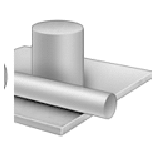
 | Sheet and Bar |
Melting Temperature Melting Temperature |
|---|
|
RoHS (Restriction of Hazardous Substances) RoHS (Restriction ofHazardous Substances) |
|---|
|
Approximate Length Approximate Length |
|---|
|
Approximate Weight Approximate Weight |
|---|
|
Approximate Width Approximate Width |
|---|
|
Approximate Thickness Approximate Thickness |
|---|
|
DFARS (Defense Acquisition Regulations Supplement) DFARS (Defense AcquisitionRegulations Supplement)  |
|---|
Casting Metals
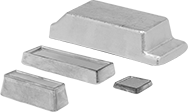
Melt and pour these alloys into molds to create metal parts and prototypes.
Lead-free pewter alloy can be used as an alternative to lead. This alloy has less copper than standard pewter, which makes it easier to pour when melted.
Lead-Free Pewter Alloy
Material Composition | Approximate | |||||||||
|---|---|---|---|---|---|---|---|---|---|---|
| Melting Temperature, °F | Tin | Antimony | Copper | Thick. | Wd. | Lg. | Wt., lbs. | Shape | Each | |
| 525° | 92% | 7% | 0.3% | 1/2" | 1" | 11 1/2" | 1 | Sheet and Bar | 0000000 | 000000 |