

Clear All
Valve Type Valve Type | Show |
|---|
|
Valve Type Valve Type | Hide |
|---|
For Use With For Use With |
|---|
|
Maximum Outlet Vacuum Maximum Outlet Vacuum |
|---|
|

Valve Function Valve Function |
|---|
|
Inlet Thread Type Inlet Thread Type |
|---|
|
Minimum Outlet Vacuum Minimum Outlet Vacuum |
|---|
|
Outlet Thread Type Outlet Thread Type |
|---|
|
Activation Activation |
|---|
|
Body Material Body Material |
|---|
|


Flow Coefficient (Cv) Flow Coefficient (Cv) |
|---|
|
Maximum Temperature Maximum Temperature |
|---|
|
Minimum Temperature Minimum Temperature |
|---|
|
Gauge Port Connection Type Gauge Port Connection Type |
|---|
|
Gauge Port Location Gauge Port Location |
|---|
|
Inlet Connection Style Inlet Connection Style |
|---|
 |
| Threaded |
Number of Gauge Ports Number of Gauge Ports |
|---|
|
High-Accuracy Panel-Mount Vacuum-Regulating Valves for Air and Inert Gas
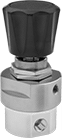
- For Use With: Air, Argon, Nitrogen
- Temperature Range: -40° to 165° F
For precise control over your vacuum level, these valves have ±0.1% accuracy. They throttle a high vacuum source to maintain a lower vacuum level in your system. Adjust the outlet vacuum level within the range. Valves have threads below the adjustment knob and come with a panel-mount nut. All have a gauge port. They are constant-bleed style, so they continually release small amounts of process gas to improve accuracy and repeatability.
 For technical drawings and 3-D models, click on a part number.
Vacuum-Regulating Valves for Air and Inert Gas
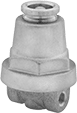
- For Use With: Air, Carbon Dioxide, Inert Gas, Nitrogen
- Temperature Range: -20° to 180° F
Throttle a high vacuum source to maintain a lower vacuum level in your system. Adjust the outlet vacuum level within the range. All valves have a gauge port.
For technical drawings and 3-D models, click on a part number.