We will reply to your message within two hours.
More

These locknuts have good chemical resistance.
Choose these locknuts for their adherence to strict military standards for material and construction.
More corrosion resistant than 18-8 stainless steel locknuts, these locknuts have excellent resistance to chemicals and salt water.

Made from low-strength steel, these locknuts should be used for light duty fastening applications, such as securing.access panels.
Choose these locknuts for their adherence to strict military standards for material and construction. They’re low-strength steel, so they should be used for fastening panels and other light duty fastening applications.

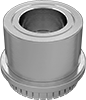
One-third the weight of steel, aluminum locknuts resist corrosion in wet environments.
Brass locknuts are corrosion resistant in wet environments and electrically conductive.
Titanium locknuts have a high strength-to-weight ratio and are resistant to acids and salt water.
These locknuts have good chemical resistance and may be mildly magnetic.
More corrosion resistant than 18-8 stainless steel locknuts, these have excellent resistance to chemicals and salt water.
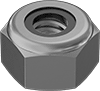
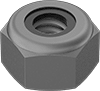
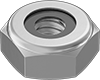
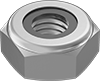
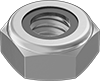
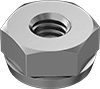
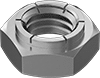
These locknuts are about half the height of standard nylon-insert locknuts. Use them in light duty low clearance applications or jam one against a hex nut to hold it in place.
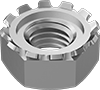
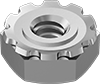
Also known as Keps and K Lock nuts, these locknuts have a free-spinning tooth lock washer that grips the material surface instead of threads for easy installation and mild vibration resistance.
These stainless steel locknuts have good chemical resistance and may be mildly magnetic.
These locknuts have a curved washer that acts as a spring for easy installation and mild vibration resistance. The smooth rim makes them less likely to scratch materials when tightened than locknuts with a tooth lock washer.
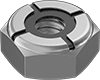
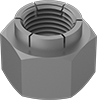
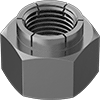
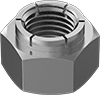
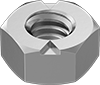
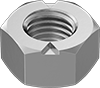
Threads at the top of these locknuts expand to grip the bolt on all sides for a stronger hold than distorted thread locknuts.
Made from 18-8 stainless steel, these flex top locknuts have good chemical resistance and may be mildly magnetic.
Known for their strength, these steel locknuts are cadmium plated to resist corrosion in wet environments.
Stainless steel locknuts have excellent corrosion resistance in most environments.
About half the strength of medium-strength steel locknuts, these are for light duty fastening applications, such as securing access panels.
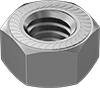
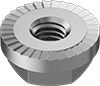
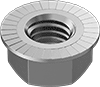
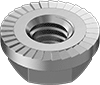
These locknuts have serrations that grip the material surface instead of the threads for easy installation and mild vibration resistance.
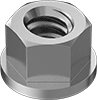
Made from 18-8 stainless steel, these flange locknuts have good chemical resistance and may be mildly magnetic
These flange locknuts have excellent resistance to chemicals and salt water.
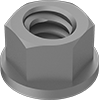
About half the strength of medium-strength steel flange locknuts, these are for light duty fastening applications, such as securing access panels.
Grade F nuts are comparable in strength to Grade 5 bolts.
These flange locknuts have excellent resistance to chemicals and salt water. They have an irregularly shaped thread that grips the bolt for a stronger hold than nylon-insert flange locknuts.
Choose these flange locknuts for their adherence to strict military standards for material and construction.
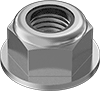
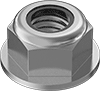
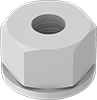
These nylon flange locknuts form threads as they're tightened to resist vibration.
The nylon cap covers and grips the threads to resist loosening.
An irregularly shaped thread grips the bolt for a stronger hold than nylon-insert cap locknuts.
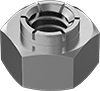
A nylon insert grips threads to resist loosening.
These press-fit nuts have a nylon insert that grips threads to resist loosening.
Teeth bite into surfaces for easy installation and mild vibration resistance.