We will reply to your message within an hour.
The industry standard for fuel and lubricant applications, this tubing can be used intermittently with petroleum-based products without becoming hard or brittle.
With the best oil resistance of all our fuel and lubricant tubing, this tubing won’t deteriorate or become brittle when exposed to oil—even with long-term use.
This tubing can handle the highest temperatures of all of our fuel and lubricant tubing. Use it in applications up to 450° F.
This tubing is soft enough to handle continuous bending and flexing, yet tough enough to resist tearing and abrasion.
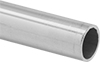
Hard walls give this tubing the strength to handle high-pressure fuel and gasoline applications.
You don’t have to worry about this tubing cracking due to stress or impact—even over a wide range of temperatures.
Ultraviolet light won’t cause this tubing to degrade or deteriorate.
Run chemicals through this tubing at temperatures between -100° F and 500° F.
This durable tubing has the best abrasion and wear resistance of all our hard tubing for chemicals.
A lightweight alternative to stainless steel, this tubing can handle extreme-pressure applications up to 1,000 psi.
Hard walls give this tubing excellent strength in high-pressure and vacuum applications.
Not only can this tubing handle temperatures between -450° F and 500° F, it also has a convoluted spiral design for good flexibility and smooth flow.
The corrugated design allows this tubing to extend and compress just like an accordion.
Keep your work site safe and clutter free—this coiled tubing extends when you need it and retracts out of the way when you don't.
Made of highly chemical-resistant materials, this tubing withstands harsh chemicals such as hydrochloric acid, sodium hydroxide, and sulfuric acid.
Commonly used in applications requiring movement, such as metering (peristaltic) pumps and robotics, this tubing can handle continuous bending and flexing.
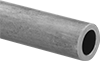
Use this resilient tubing in high-temperature chemical applications up to 400° F.
With excellent resistance to abrasion and tearing, this tubing can hold up in rugged environments.
With a diameter of 2" or larger, this tubing has the girth to handle high volumes of acids and other harsh substances.
This tubing can withstand high-temperature chemical applications up to 400° F.
An FEP liner gives this tubing better chemical resistance than any of our other firm tubing. It also provides a smooth interior for easy cleaning unrestricted flow.
Cold temperatures pose no problems for this tubing—it stays strong and flexible, even when temperatures drop to -100° F.
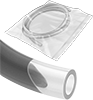
Designed for high-purity applications, this hard tubing is cleaned and bagged to prevent dirt and moisture from contaminating the inside. It is free of plasticizers like DEHP, so it won’t impart tastes or odors to the fluid running through it.
With hard walls and the ability to handle extreme temperatures, this tubing is the preferred material for semiconductor applications. The material contains extremely low levels of additives, so it won’t contaminate the fluid passing through it.
Designed for high-purity processes, this tubing is made without plasticizers like DEHP that can contaminate the fluid passing through it.
Not only is this tubing cured with platinum and free of plasticizers like DEHP, it can handle higher temperatures than any of our other high-purity soft tubing. Use in applications up to 450° F.
Made from TPE plastic, this tubing doesn’t contain plasticizers like DEHP, so it won’t impart tastes or odors to the fluid passing through.
The smooth, nonabsorbing interior on this tubing resists material buildup, so it is easy to clean.
Copper tubing has good corrosion resistance and excellent heat transfer qualities.
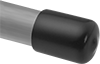
This tubing comes cleaned and capped to prevent moisture and dirt from contaminating the inside. It is also known as refrigeration and air conditioning tubing.
When your application does not require a smooth interior, this tubing is an economical choice.
This tubing has a seamless construction with no weld bead for unrestricted flow and is stronger than welded tubing.
This tubing is made to tighter tolerances than other stainless steel tubing.
Compared to other stainless steel tubing, this tubing is harder, stronger, and more durable.
This tubing is suitable for extreme-pressure applications reaching 15,000 psi—the highest pressure rating of all the tubing we offer.
A titanium additive gives this tubing excellent strength and superior corrosion resistance. It meets MIL-T-8808.
This tubing comes cleaned and capped to prevent moisture and dirt from contaminating the inside.
This tubing withstands high pressures up to 13,700 psi. It is also known as capillary tubing.
The outside of this tubing is polished to a high-luster finish for a shiny appearance.
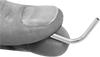
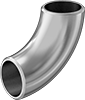
This tubing has a 90° bend that holds its shape.
Also known as hypodermic or needle tubing, this tubing has thin walls and is made to tight tolerances for use in precision applications.
Bend this tubing into the shape you need without special tools or elbow fittings.
Aluminum tubing is lightweight with good corrosion resistance and weldability.
Unlike other aluminum tubing, this tubing is rigid and will not bend.
This tubing meets MIL-T-7081 standards.
Seamless construction with no weld bead gives this tubing an interior with unrestricted flow. It can be flared without splitting.
A thin layer of zinc yellow-chromate gives this tubing extra corrosion resistance, making it an economical alternative to stainless steel.
A soft metal frequently used with air, gasoline, natural gas, propane, and plumbing applications. Tubing is not as corrosion resistant as stainless steel.
Seamless construction with no weld bead gives this tubing an interior with unrestricted flow. It is stronger than welded tubing and can be flared without splitting.
This tubing can withstand temperatures up to 1200° F—the highest temperature rating of all the non-stainless steel tubing we offer. It is also known as Inconel.
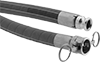
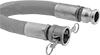
Cut the hose to your desired length and attach the fittings. You don't need any special equipment to install.
Use this durable, flexible hose in pressures up to 5,000 psi. Its braided construction gives it the highest pressure rating of any chemical hose in our offering.
Use this conductive hose in a grounded system to eliminate static buildup. The material is blended with carbon black, which conducts static charges away from the hose walls.
Heat chemicals to prevent them from freezing or becoming too thick. With a self-regulating heating wire, the liquid inside this hose stays warm and keeps flowing.
Yarn reinforcement gives this hose good strength under pressure.
Made of FEP (fluorinated ethylene propylene), this hose can stand up to chemicals at high temperatures.
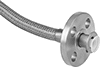
No need for a gasket—this hose’s PTFE liner flares out as it passes through the flanges, so your line’s contents never touch the fittings.
You don’t need a lot of force to bend this low-pressure chemical hose. The extra flexibility makes it good for offset connections and tight spaces.
Step on this hose and it springs back to its original shape.
Expose this UHMW (ultra-high molecular weight) polyethylene hose to harsh physical conditions without worrying about it deteriorating or becoming brittle.
Transfer harsh chemicals while reducing vibration that could damage pumps or other equipment.
Multi-spiral yarn reinforcement gives this hose strength to withstand pressures up to 250 psi.
Transfer fuel oil with a hose that stays flexible in subzero conditions.
Made of tough Buna-N rubber, this hose has the durability to stand up to gasoline, fuel oil, and other petroleum-based products.
With a tighter bend radius than other petroleum hose, this hose can easily twist and turn around equipment.
Commonly used to transfer gasoline, this hose is also known as curb pump hose.
This hose meets CGA (Compressed Gas Association) standards for use with oxygen and acetylene gas.
Change the fuel source for your propane torch from a fuel cylinder to a propane tank. This hose is often used for extended-use applications, or when a propane tank can’t be moved.
Also known as air brake hose, this hose safely powers brakes in semitrucks, trailers, and other vehicles with compressed air.
Quickly set up a line to dispense chemicals—these nozzles come with a hose and fittings that thread onto your drum or intermediate bulk container (IBC).
Dispense chemicals from a line that attaches and detaches from your drum or intermediate bulk container (IBC) in seconds. These nozzles and the included hose come with fittings that connect when you insert the plug into the socket and push the levers down.
These fittings are strong enough to handle extreme pressures, yet small enough to fit into cramped spaces.
The strongest steel fittings we offer, these can withstand extreme-pressure applications.
Typically used with extreme-pressure iron and steel threaded pipe fittings. Also known as Schedule XXH.
These fittings can stand up to high-pressure applications. Use them in noncorrosive environments.
The heavy duty caps and plugs in these assortments come in various sizes and stand up to high-pressure flow applications. Made of steel, they’re for use in noncorrosive environments.
Typically used with high-pressure iron and steel threaded pipe fittings. Also known as Schedule 160.
Also known as Pressure Class 1500 steel flanges, these have the strength to handle high pressures.
A galvanized finish gives these fittings better corrosion resistance than our plain steel high-pressure fittings. Also known as Pressure Class 3000 fittings.
Typically used with high-pressure galvanized iron and steel threaded pipe fittings. Also known as Schedule 160.
Typically used with medium-pressure galvanized iron and steel threaded pipe fittings. Also known as Schedule 80.
A galvanized finish gives these fittings fair corrosion resistance. They have the strength to handle medium-pressure applications.
Use these unions to connect different metals in a piping or plumbing system. They have a gasket with a plastic sleeve that inhibits destructive corrosion.
For use in noncorrosive environments, these fittings have better strength than our low-pressure iron and steel pipe fittings.
Typically used with medium-pressure iron and steel threaded pipe fittings. Also known as Schedule 80.
With better strength than our low-pressure steel flanges, these are for use in medium-pressure applications.
The threads on these fittings have clockwise (right-hand) threads on one end and counterclockwise (left-hand) threads on the other end.
To prevent leaks in low-pressure lines, the male threads on these fittings have an acrylic sealant already applied for extra protection.
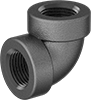
Use these fittings for low-pressure applications in noncorrosive environments.
Use these Pressure Class 150 pipe flanges in low-pressure lines where temperatures drop down to -40° F.
These flanges are for low-pressure applications in noncorrosive environments.
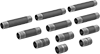
Assortments contain threaded pipe in various lengths.
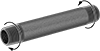
Pipe has clockwise (right-hand) threads on one end and counterclockwise (left-hand) threads on the other end. When you use a wrench to turn, connections on both ends tighten at the same time.
For extra leak protection in low-pressure lines, the threads of this Schedule 40 pipe have sealant already applied.
Suitable for use in fire-protection applications, these pipe fittings are made of cast iron, so they are brittle and can be quickly opened with the strike of a sledge hammer.
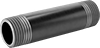
Also known as Schedule 40, this steel pipe is designed for low-pressure applications.
Suitable for use in fire-protection applications, these flanges are brittle and can be quickly opened with the strike of a sledge hammer.
One end of these fittings has clockwise (right-hand) threads and the other has counterclockwise (left-hand) threads. Their galvanized finish gives them fair corrosion resistance.
The galvanized finish on these Pressure Class 150 flanges provides fair corrosion resistance.
The galvanized finish on these fittings provides fair corrosion resistance. Fittings are for use in low-pressure applications.
The male threads on these fittings have a sealant applied for extra leak protection.
The acrylic sealant on this pipe offers extra protection against leaks. Also known as schedule 40 pipe, this pipe is designed for use in low-pressure environments.
Made of galvanized steel, this Schedule 40 pipe has fair corrosion resistance and is designed for low-pressure applications.
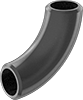
Socket-connect fittings are easier to weld than butt-weld fittings because the fitting doesn't need to align perfectly to the pipe. Slide the pipe into the socket and weld.
With thicker, stronger walls than our standard-wall butt-weld pipe fittings, these fittings stand up to your high strength applications.
Typically used with thick-wall and high-pressure iron and steel unthreaded pipe fittings. Also known as Schedule 80.
Forged for extra strength, these heavy duty unthreaded flanges can withstand high-pressure applications.
Typically used with standard-wall and low-pressure iron and steel unthreaded pipe fittings. Also known as Schedule 40.
FM-approved for fire protection applications, these flanges are cast iron, so they're brittle and can be quickly opened by hitting them with a sledge hammer.
Typically used with extreme-pressure iron and steel unthreaded pipe fittings. Pipe is also known as Schedule XXH .
Even in temperatures as low as -46°, these A350 LF2 steel flanges won’t become brittle, so they absorb impact better than other low-pressure steel flanges.
Also known as Pressure Class 6000 fittings, these heavy duty forged fittings are the strongest steel fittings we offer.
Bolt two flanges of the same size together with a gasket to create an access point in a pipe line.
For excellent strength in extreme-pressure applications, choose these heavy duty Pressure Class 1500 flanges.
Butt-weld fittings allow for a smooth, flush connection that provides maximum flow.
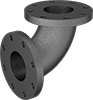
FM approved, these fittings are suitable for use in fire-protection systems. All have flat-surface flanged ends that only mate to another same-size flat-surface flange, pump, or valve with a gasket to create an access point in a pipeline.
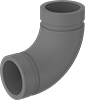
The grooved ends on these iron fittings connect to pipe with a clamp to easily install piping systems.
Install and remove these high-pressure brass fittings with a socket wrench or hex key (sold separately).
Typically used with high-pressure brass and bronze threaded pipe fittings.
These brass fittings have the strength to handle high-pressure applications.
Not only do these brass fittings have the strength to handle high-pressure applications, the male threads have a sealant applied for extra protection against leaks.
The plating on these brass fittings creates a shiny finish and provides extra protection in corrosive environments. Fittings have the strength to handle high-pressure applications.
When you're unsure of the exact thread type you need, these fittings have universal threads that are compatible with the most common ones (NPT, NPTF, BSPP, BSPT).
Choose these fittings when you need better strength than our low-pressure brass and bronze pipe fittings.
Also known as instrumentation fittings, these have the most precise threads and the tightest tolerances of all the brass pipe fittings we offer.
Extreme pressures are no problem for these heavy-duty brass fittings.
Plated with nickel, these brass fittings resist rust better than steel and unfinished brass fittings. Select them when you need more strength in corrosive environments to handle higher pressures than our low-pressure fittings.
Typically used with medium-pressure brass and bronze threaded pipe fittings.
Typically used with low-pressure brass and bronze threaded pipe fittings.
Used in low-pressure pipe lines, these brass fittings have a plating that makes them shiny and improves corrosion resistance.
The male threads on these brass fittings have a sealant applied for extra protection against leaks. Also known as Pressure Class 125 fittings, they are built for use in low-pressure applications.
Use these fittings in low-pressure flow applications. They have good corrosion resistance.
Also known as Pressure Class 150 flanges, these brass flanges are designed for low-pressure applications.
Keep various lengths of brass pipe on hand for applications requiring good corrosion resistance.
Typically used with brass and bronze unthreaded pipe fittings.
Bolt these flanges to another same-size flange with a gasket to create an access point within a pipe line. They are also known as Silbraze flanges.
Also known as Silbraze fittings.
Typically used with standard-wall aluminum unthreaded pipe fittings.
Also known as Schedule 40 fittings, these have thicker walls than our thin-wall aluminum unthreaded pipe fittings.
Use these unthreaded flanges in low-pressure applications. Also known as Pressure Class 125 flanges.
Their small size makes these miniature fittings a good choice for cramped, confined spaces.
Typically used with low-pressure aluminum threaded pipe fittings.
Also known as Pressure Class 125 flanges, these are for use in low-pressure applications. Flanges are aluminum, which is lightweight with good corrosion resistance.
In addition to being lightweight, these aluminum fittings offer good corrosion resistance. Use them in low-pressure flow applications.
Designed for medium-pressure applications, these fittings have better strength than our low-pressure aluminum pipe fittings.
Typically used with high-pressure aluminum threaded pipe fittings.
Typically used with thin-wall aluminum unthreaded pipe fittings.
Thick walls give these Schedule 80 fittings excellent strength.
Socket-connect fittings are easier to weld than butt-weld fittings because the fitting doesn't need to align perfectly to the pipe. Slip the pipe into the socket and weld.
Typically used with thick-wall aluminum unthreaded pipe fittings.
Twist these fittings onto aluminum pipe for quick, sealed connections—no threading, soldering, or welding necessary. Use them to build a compressed air system in half the time it would take to build a copper or steel system.
Build a compressed air system in half the time it would take to build a copper or steel system.
Also called close nipples, these Schedule 40 nipples are threaded on both ends to the center.
These fittings have excellent resistance to stress cracking and have better corrosion resistance than most stainless steel alloys.
Also known as Pressure Class 200 fittings.
Also known as Pressure Class 200 pipe.
Use these fittings in extreme-pressure conditions up to 15,000 psi.
Choose these fittings when you want the same high-quality found in our low-pressure pipe fittings, but need more strength to handle higher pressures.
Use these heavy duty, corrosion-resistant fittings in high-pressure flow applications.
When space is at a premium choose these compact fittings.
Typically used with medium- to high-pressure stainless steel threaded pipe fittings.
Unlike other stainless steel fittings, these are made in the U.S.A. for superior quality. As another marker of quality, they come with a certificate with a traceable lot number and test report that guarantees material composition.
Use these corrosion-resistant fittings in a low-pressure pipe line.
Also known as Pressure Class 150 flanges, these corrosion-resistant flanges are designed for low-pressure pipe applications.
Also known as ANSI flanges.
Typically used with low-pressure stainless steel threaded pipe fittings.
Keep a variety of lengths of pipe and pipe nipples on hand for areas where corrosion is a concern.
Typically used with thin-wall stainless steel unthreaded pipe fittings.
Typically used with thick-wall and high-pressure stainless steel unthreaded pipe fittings.
Bolt two same-size flanges together with a gasket to create an access point within a pipe line.
Typically used with extreme-pressure stainless steel unthreaded pipe fittings.
Also known as Schedule 10 fittings, these are thin, lightweight, and corrosion resistant.
Typically used with standard-wall and low-pressure stainless steel unthreaded pipe fittings.
The strongest socket-connect fittings we offer, these heavy duty forged fittings are also known as Pressure Class 6000.
Use these heavy duty forged flanges for high-pressure applications.
Titanium has similar strength to steel, but is approximately 40% lighter. It has better corrosion resistance than most stainless steel alloys and can handle corrosive substances, such as salt water and acids.
Made of corrosion-resistant plastic, these fittings won’t deteriorate when used in oil applications. They have high strength and impact resistance.
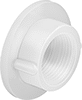
Create a leak-free, durable connection in plastic tanks, walls, or panels without gaskets or sealants.
Flanges have excellent corrosion resistance to handle a wide range of acids and other highly-corrosive chemicals. Use in metal surface treating applications, plating solution lines, and other chemical process applications. They are reinforced with fiberglass layers for better strength and durability than any of our other pipe flanges for chemicals. Bolt two same-size flanges together with a gasket to create an access point within a line.
Made of PVDF that’s finished to a 12 Ra smoothness, these fittings handle some of the harshest chemicals without leaching contaminants into your line. Comparable to Kynar, they handle most organic solvents that would dissolve CPVC, and chlorine or nitric acid that would weaken polypropylene.
With excellent corrosion resistance, this pipe can handle a wide range of acids and other highly-corrosive chemicals. Use in metal surface treating applications, plating solution lines, and other chemical process applications. Layers of fiberglass give this pipe better strength and durability than any of our other pipe for chemicals.
Made of polypropylene, these gravity-flow fittings withstand organic solvents, such as acetone, that would dissolve CPVC pipe. They also stand up to highly corrosive acids, such as hydrochloric acid, and alkalies.
Made of polypropylene, this gravity-flow pipe stands up to tough organic solvents, such as acetone, that would dissolve CPVC pipe. You can also use it for lines with highly corrosive acids, such as hydrochloric acid, and alkalies.
These fittings have excellent corrosion resistance to handle a wide range of acids and other highly-corrosive chemicals. They are commonly used in metal surface treating applications, plating solution lines, and other chemical process applications. Reinforced with layers of fiberglass, they have better strength and durability than any of our other pipe fittings for chemicals.
Made of PVDF that’s finished to a 12 Ra smoothness, this pipe handles some of the harshest chemicals without leaching contaminants into your line.
This assembly converts a propane torch (which normally connects to a fuel cylinder) to be used with a propane tank.
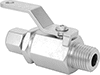
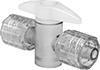
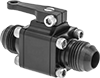
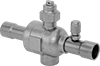
Insert tubing into the fittings on these valves—no heat, solder, or flux required.
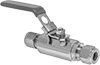
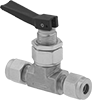
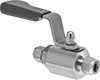
Made of metal, these valves are more durable than plastic valves and withstand higher temperatures. A compression sleeve bites into tubing as you tighten the nut, forming a strong seal.
Easily access the handle of these valves while protecting your line behind an instrument panel. A compression sleeve bites into tubing as you tighten the nut, forming a strong seal.
A short body length and low profile make these valves ideal for installation in tight spaces, such as between pipelines. They have a compression sleeve that bites into tubing as you tighten the nut.
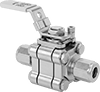
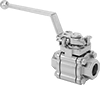
With a three-piece bolted body that disassembles for access to internal components, you can clean and repair these valves without removing them from your line. A compression sleeve bites into tubing as you tighten the nut, forming a strong seal.
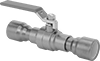
With just a half turn or a light push, these valves connect to luer lock fittings on your line.
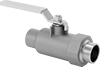
Weld these valves to unthreaded metal pipe for a permanent, flush connection that permits smooth flow through a line. Use with water, oil, inert gas, and steam.
For quick and easy access to your line, these valves attach to pipe with a clamp that fits around their grooved ends. They’re also known as Victaulic valves.
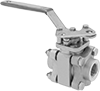
Clean and maintain these valves without removing welded connections. They have a three-piece bolted body that disassembles inline for easy access to internal components. Use with water, oil, air, inert gas, and steam.
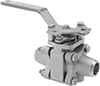
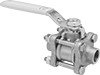
Often used for oxygen service and other high-purity applications, these valves come cleaned and bagged. Insert unthreaded pipe into the socket ends and weld to create a permanent, leak-tight connection. For easy maintenance, they have a three-piece bolted body that disassembles inline so you can access internal components without removing welded connections.
For easy installation from any direction, the body on these valves swivels 360°. They have barbs to securely grip tubing.
Insert unthreaded pipe into the socket ends and bond with primer and cement to create a permanent, leak-tight connection. The socket ends of these valves are lined with PVC for bonding to PVC pipe.
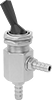
Flip a switch or push a button to control flow while your line stays protected behind an instrument panel. Barbs on these valves grip tubing for a secure hold behind the panel.
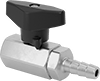
Install these valves in tight spaces—they have a short body length and low profile. A barbed end grips onto tubing for a secure hold.
Built to withstand pressures up to 4,500 psi, these valves are ideal for high-pressure lines. For extra gripping power and a strong seal, they have Yor-Lok fittings with two sleeves that bite into tubing as you tighten the nut. All are compatible with Swagelok®, Let-Lok, and Parker A-Lok fittings
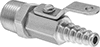
These valves have barbs that grip onto tubing, providing a secure hold. Because they’re made of metal, they are more durable than plastic valves and withstand higher temperatures.
Bolt these valves to ANSI flanges.
Clean and repair these valves without removing them from your line. They have a three-piece bolted body that disassembles for access to internal components. For extra gripping power and a strong seal, these valves have Yor-Lok fittings with two sleeves that bite into tubing as you tighten the nut. All are compatible with Swagelok®, Let-Lok, and Parker A-Lok fittings.
Crimp these valves to metal tubing for a permanent, leak-tight connection that doesn’t require heat or soldering.
Also known as wafer ball valves, these combine the slim body of a butterfly valve with the high flow rates of a flanged ball valve. Bolt these valves to ANSI flanges—they meet ASME standards for dimensions, material, and pressure-temperature rating. Use with water, oil, air, steam and inert gas such as helium.
For extra gripping power and a strong seal, the Yor-Lok fittings on these valves have two sleeves that bite into tubing as you tighten the nut. All are compatible with Swagelok®, Let-Lok, and Parker A-Lok fittings. These valves are for use with water, oil, air, and inert gas.
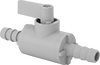
Barbs grip onto tubing, giving these valves a secure hold. Made of plastic, they won’t pit or corrode on the inside like metal valves, and they’re lighter in weight for easy handling.
Fit these short and slim valves in control boxes, panels, and other tight spots. Made of plastic, they won’t pit or corrode on the inside like metal valves, and they’re lighter in weight for easy handling.
Flip the toggle to quickly turn these valves on and off. All have threads and a hex nut below the handle for installation in instrument panels. For extra gripping power and a strong seal, they have Yor-Lok fittings with two sleeves that bite into tubing as you tighten the nut. All are compatible with Swagelok®, Let-Lok, and Parker A-Lok fittings. These valves are for use with water, oil, air, and inert gas.
Install these valves in lines that require frequent maintenance or cleaning. They give you a leak-tight, permanent solder connection to your tubing with the ease of a union fitting to install them without disrupting your line.
Often used in high-purity applications, such as oxygen service, these valves come cleaned and bagged. Use with water, oil, inert gas, and steam.
Easily access the handle of these valves while protecting your line behind an instrument panel. They have threads and a hex nut below the handle for panel mounting. For extra gripping power and a strong seal, they have Yor-Lok fittings with two sleeves that bite into tubing as you tighten the nut. They’re compatible with Swagelok®, Let-Lok, and Parker A-Lok fittings.
Service these valves without cutting soldered connections. The three-piece bolted body can be disassembled inline for easy access to internal components. Use with water, oil, inert gas, and steam.
For fast installation and removal from pipelines, these valves have a union fitting that disassembles into multiple pieces. They’re for use with water, oil, air, inert gas, and steam.
Make connections from any direction—the body of these valves swivels 360° for easy installation. Often used in testing and sampling applications, they quickly open and close with a toggle or button.
Rated for at least three times the pressure of standard threaded valves, these valves are used to start and stop the flow of compressed gas, pressurized water, or steam.
With a three-piece bolted body that disassembles for access to internal components, you can clean and repair these valves without unthreading them from your line.
Solder these valves to metal tubing for a permanent, leak-tight connection.
Monitor and maintain flow quality from a single valve. Thanks to their solder-connect union fitting, these valves are especially useful in lines that require frequent maintenance and cleaning.
Control flow in passageways of manifolds and valve mounting blocks without external pipes. Also known as cartridge valves, they slide into unthreaded holes and secure in place with the included set screw.
Bolt these valves to pipe and pump flanges to start and stop flow before pump maintenance without draining your system.
Access the handle of these valves while protecting your line behind an instrument panel. They have threads and a hex nut below the handle for panel mounting.
Use these valves with water, air, and inert gas.
Attach a gauge to the side port on these valves to monitor pressure, temperature, and other measurements in your line. Use with water and air.
Start or stop flow with the flip of a toggle switch or the push of a button. They fit through a cutout, so the body of the valve stays safe inside your instrumentation panel.
Push a button or flip a toggle switch to start or stop flow.
An easy-to-read flow-indicating handle shows the percentage the valve is open. These valves are for use with water, oil, inert gas, and steam.
For installation through thick insulation, these valves have an extra-long stem.
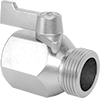
Turn the flow to any garden hose on and off. These valves have garden hose threads, which are a standard size, so they're universally compatible with all standard garden hoses.
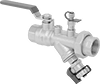
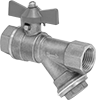
Monitor and maintain flow quality from a single valve—these valves have a gauge port, strainer, and drain built in.
Control flow through any garden hose—the threads on these valves are universally compatible with garden hose connections. Made of PVC, they’re a lightweight and corrosion resistant alternative to metal valves.
Install these valves in tight spots, such as where pipelines are crowded together. They’re less than half as long as standard threaded valves and one-third shorter in height. Use with water, oil, air, and inert gas.
Extend your reach in hard-to-access areas—turn these valves on and off using a square ratchet to grasp the hole at the end of the handle. Use with water, oil, air, and inert gas.
These valves handle twice the pressure of other compact valves. Install them in tight spots, such as where pipelines are crowded together. Use with water, oil, air, and inert gas.
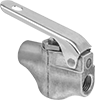
For applications that require intermittent operation, such as spraying and washing, push or pull the lever on these valves to start flow. They spring closed when the lever is released.
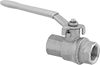
Use these valves in general purpose applications, such as those with water, oil, air, and inert gas.
A built-in strainer traps debris and allows you to replace the screen without disconnecting your pipeline.
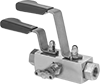
Attach gauges or sensors to these valves so you can remove them for maintenance and calibration without depressurizing your line. They are also known as block and bleed valves.
The most chemical-resistant threaded valves we offer, these have a PTFE seal and an alloy body that can withstand extremely aggressive and corrosive chemicals, such as methyl ethyl ketone and toluene.
For chemical-processing applications in confined areas, these valves have a low-profile handle to fit in tight spots. A rubber seal and a plastic body stand up to aggressive, corrosive solutions.
To withstand aggressive and corrosive solutions in miniature chemical-processing pipelines, these tiny valves have a chemical-resistant fluoroelastomer seal and a corrosion-resistant 303 stainless steel body.
For fast installation and removal from pipelines, these valves have union fittings that disassemble into multiple pieces. All have a fluoroelastomer seal and a plastic body that can stand up to aggressive and corrosive solutions in chemical-processing applications.
There’s no need to unbolt these valves for cleaning—remove the valve handle and slide the valve apart for inline access to internal components. Also known as elliptical valves, they have a fluoroelastomer seal and a polypropylene body to withstand aggressive and corrosive solutions in chemical-processing applications.
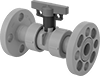
Bolt these valves to ANSI flanges—they meet ASME dimensional standards. They have a plastic body and a seal that withstand aggressive and corrosive solutions in chemical-processing applications.
Made of PVDF to withstand corrosive solutions, these valves are ideal for use in chemical processing. Their luer lock fittings are quick to connect and disconnect for convenience.
Barbs grip onto tubing, providing a secure hold. To withstand aggressive and corrosive solutions in chemical-processing applications, these valves have a plastic body and a chemical-resistant seal.
Insert tubing into the fittings on these valves—no heat, solder, or flux required. To withstand aggressive and corrosive solutions, they have a chemical-resistant fluoroelastomer seal and a plastic body.
For extra gripping power and a strong seal, the Yor-Lok fittings on these valves have two sleeves that bite into tubing as you tighten the nut. All are compatible with Swagelok®, Let-Lok, and Parker A-Lok fittings. These valves have a PTFE seal and a corrosion-resistant Monel ball and body that can stand up to aggressive and corrosive chemicals such as acetone.
Streamline your installation and removal process. These valves give you the leak-tight permanent connection of a socket connect with the ease of fittings that come apart.
Keep your worksite safe when working with diesel fuel, fuel oil, gasoline, and kerosene. Fire-tested to meet American Petroleum Institute (API) 607, these valves are designed to securely isolate fluid and prevent the spread of fire.
These valves have 37° flared tube fittings that form a tight seal on metal tubing lines to transfer diesel fuel, fuel oil, and gasoline.
For extra gripping power and a strong seal, these valves have Yor-Lok fittings with two sleeves that bite into tubing as you tighten the nut. They are compatible with Swagelok®, Let-Lok, and Parker A-Lok fittings. Use with diesel fuel, fuel oil, gasoline, and kerosene.
Install these valves to start and stop the flow of diesel fuel, fuel oil, kerosene, and gasoline. Fire-tested to meet American Petroleum Institute (API) 607, these valves are designed to securely isolate fluid and prevent the spread of fire. Insert unthreaded pipe into the socket ends and weld to create a permanent, leak-tight connection.
A low-profile handle allows these valves to fit in low-clearance pipelines for diesel fuel, fuel oil, and kerosene.
No need to completely remove these valves from your line for servicing. The bolted three-piece body comes apart, so you can easily access their internal components. Fire-tested to meet American Petroleum Institute (API) 607, these valves securely isolate diesel fuel, fuel oil, kerosene, and gasoline to prevent the spread of fire.
Protect personnel and equipment in the presence of diesel fuel, fuel oil, gasoline, and kerosene. Fire-tested to meet American Petroleum Institute (API) 607, Edition 4, these valves are designed to securely isolate fluid and prevent the spread of fire.
Weld these valves to unthreaded metal pipe for a permanent, flush connection that permits smooth flow through a line. They have polished internal surfaces for easy cleaning in food and beverage systems.
To prevent leaks, these valves have barbed fittings that grip onto tubing to create a strong hold. They meet NSF/ANSI standards or are FDA compliant for use with food.
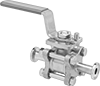
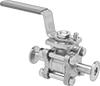
To maintain sanitary standards in food, beverage, and dairy systems that require frequent cleaning, these valves are made of FDA compliant materials. Polished to a 32 Ra finish, they have smooth internal surfaces that prevent product buildup and inhibit bacteria growth. All have sanitary quick-clamp fittings for easy disassembly.
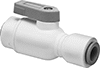
Push tubing into the fittings on these valves and an internal gripping ring and O-ring hold it tight—no heat, solder, or flux required. They meet either NSF/ANSI standards or are FDA compliant for use with food.
Bolt these valves onto ANSI flanges. They meet NSF/ANSI standard 61, so they’re safe for use in drinking water systems.
Insert unthreaded pipe into the socket ends and bond with primer and cement to create a permanent, leak-tight connection. These valves meet NSF/ANSI 61, which means they’re safe to use with drinking water systems.
Solder these valves to metal tubing for a permanent, leak-tight connection. They meet NSF/ANSI 61 for use with drinking water.
For use in drinking water systems, these valves meet NSF/ANSI 61.
Certified to meet NSF/ANSI 61, these valves control the flow of drinking water. With universally compatible threads, they’ll connect to any garden hose or garden hose fittings.
Disassemble the union fittings on these valves for fast installation and removal from your pipeline. All meet NSF/ANSI 61 for use with drinking water.
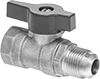
With 45° flared tube fittings, these valves form a tight seal on metal tubing lines for natural gas, propane, and butane.
Install these low-profile valves in low-clearance pipelines for natural gas, propane, and butane.
To create a tight seal in vacuum conditions higher than 29.9” Hg, these valves have ultra-high-vacuum tube fitting connections, which are also known as KF, QF, and NW fittings. They are often used in applications such as vacuum coating and heat treating, leak testing, and analyzing gases.
Install these valves in HVAC and refrigeration systems to control CO2. For a permanent, leak-tight connection, solder them to metal tubing.
Solder these valves to copper tubing for a permanent, leak-tight connection.
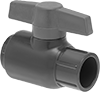
A lightweight alternative to metal valves, these plastic valves have NPT connections for use with threaded pipe. All meet NSF/ANSI 61 for use in drinking water systems.
These valves have socket-weld connections for bonding to unthreaded male plastic pipe.
Easier to install and remove for maintenance than threaded and weld-on valves, these valves bolt and unbolt to flanges. They meet NSF/ANSI 61 for safe use in drinking water systems.
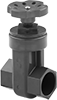
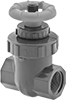
Bond these valves to plastic pipe with PVC primer and cement to create a permanent, leak-tight connection in drinking water lines. Also known as gate valves, they open and close gradually to prevent damage to your system from sudden changes in flow.
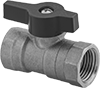
For use with threaded pipe, these valves have NPT connections.
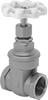
Also known as gate valves, these valves open and close gradually to prevent damage to your drinking water system from sudden starts and stops in flow. They meet NSF/ANSI 61, so they're safe to use with drinking water.
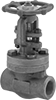
Designed for use in refineries and other demanding environments, these valves have a durable body that can withstand nearly twice the pressure of other gradual on/off valves.
Maintain and repair these valves while they’re still inline—you can disassemble the stem so there's no need to unthread the pipe connections. Also known as gate valves, they open and close gradually to prevent sudden starts and stops.
Control the flow of steam, hazardous gases, and other vapors without risking leaks. These valves have an accordion-like bellows around the stem that expands as they open and contracts as they close, forming an airtight seal.
Easier to install and remove than threaded or weld-on valves, these valves bolt to flanges. They open and close gradually, preventing system damage from sudden starts and stops in flow.
Also known as gate valves, these valves gradually open and close to prevent system damage from suddenly starting and stopping flow.
Insert unthreaded pipe into the socket ends and weld to create a permanent, leak-tight connection.
With a forged steel body and bolted construction, these valves can withstand nearly 10 times the pressure of other socket-connect gradual valves.
Supply fuel oil to boilers, furnaces, and other equipment.
Built to withstand the extreme cold of liquid nitrogen and liquid oxygen, these valves are cleaned and bagged for high-purity applications.
Designed to withstand the high temperatures and pressures in steam service applications.
These valves are rated for use in hazardous locations with flammable gas and combustible dust.
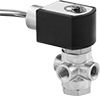
Often used to control single-acting, spring-return air cylinders, these valves have a third threaded port to exhaust media.
Reduce your pipeline footprint with these low-profile valves that are about half the size of standard valves for coolant.
To change the flow rate of antifreeze and cleaning solutions, use the adjustment screw or knob to manually set how much these valves will open when actuated.
With a plastic body and a fluoroelastomer seal, these valves can stand up to aggressive and corrosive solutions in chemical-processing applications.
Avoid pressure surges and system shocks that can damage piping by installing these valves that open and close slowly.
Lower profile and available in smaller connection sizes than standard valves, these fit in tight spots.
Use with coolant and detergent such as ethylene glycol or soap solutions.
Comparable to Asco Red Hat 8210G Series and Parker Gold Ring 23C Series, these valves meet the highest quality standards.
Designed for controlling single-acting, spring-return air cylinders, these valves have a third threaded port to exhaust media.
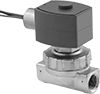
These solenoid valves operate on electricity to automatically start and stop flow. The actuator is directly mounted to the valve body to minimize movement and reduce wear.
Control flow in high-pressure lines in tight spots—these valves have the highest pressure ratings of our compact valves.
To fit in tight spots, these valves have a slimmer body than standard valves with an exhaust port.
For food and beverage systems that require frequent cleaning, these valves have polished internal surfaces and sanitary quick-clamp connections for easy disassembly.
Use these valves to safely transfer fuel and oil.
All valves have threaded NPT connections.
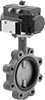
For three times the flow of butterfly valves, these have a ball valve design.
With a slimmer motor than other motor-driven valves, these fit in tight spots.
Maintain and repair these valves without unthreading pipe connections. They have a three-piece bolted body that disassembles inline for access to internal components.
Their ball valve design allows these valves to handle three times the flow of butterfly valves.
Also known as butterfly valves.
For general purpose applications with water, oil, and inert gas.
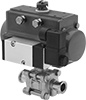
Use air pressure to automatically control the flow of liquids in sanitary environments, such as food and beverage processing plants.
For food and beverage applications that require frequent cleaning, these valves have quick-clamp connections, polished internal surfaces, and a three-piece bolted body for easy disassembly.
With a ball-valve design, these valves can handle three times the flow of butterfly valves.
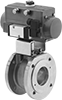
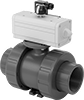
Also known as actuated ball valves, these provide higher flow rates than other air-driven valves.
Their ball-valve design allows these valves to handle three times the flow of butterfly valves.
Also known as diaphragm valves, these have a diaphragm that can handle dirty liquid, slurries, and abrasive media without damage.
A compact, lightweight actuator and an angular body allow you to install these valves in any mounting orientation.
Limit wear and damage in high-cycling applications—these valves have additional seals that prevent leakage to reduce maintenance time.
For use in general purpose applications with water, oil, and inert gas.
Less than half the height of standard severe-duty valves, these fit in small spaces and low-clearance pipelines.
The three-piece bolted body comes apart for access to internal components without unthreading pipe connections and removing the valve from your line.
Accurately and consistently dispense a specific amount of liquid—these actuated valves have a screen and buttons for programming batch size and calibration.
Convert an everyday syringe into a gas sampling syringe. These valves allow you to collect, transport, and store gas samples without worrying about evaporation or leaks.