

Container Type Container Type |
|---|
 |  |
| Spray Bottle | Jug |
 |  |
| Pail | Bottle |
Container Material Container Material |
|---|
|
Specifications Met Specifications Met |
|---|
|
DFARS (Defense Acquisition Regulations Supplement) DFARS (Defense AcquisitionRegulations Supplement)  |
|---|
Chemical Chemical |
|---|
|
RoHS (Restriction of Hazardous Substances) RoHS (Restriction ofHazardous Substances) |
|---|
|
REACH (Registration, Evaluation, Authorization and Restriction of Chemicals) REACH (Registration,Evaluation, Authorization and Restriction of Chemicals) |
|---|
|
Stainless Steel Cleaner/Protectants
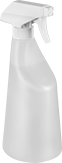
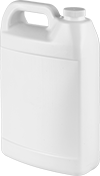
Restore and maintain the surface layer on stainless steel that protects it from corrosion. Also known as passivating fluids, these protectants are made from citric acid, which removes iron from the surface of stainless steel that has been damaged from machining, heat, or chemicals. This exposes the chromium in stainless steel and reacts with air to form a protective layer. These protectants also remove dirt, discoloration, and minor corrosion. Unlike nitric acid and other passivating fluids, citric acid does not create dangerous fumes and is safe for use throughout your plant. These protectants come ready-to-use, so you don’t have to mix them, but you can dilute them with water for 400-series stainless steel and other sensitive parts.
These protectants meet SAE and ASTM international guidelines for passivating stainless steel. They also meet ASTM international guidelines for descaling and cleaning titanium and titanium alloys.
Liquid protectants are thinner than gel protectants, making them ideal for submerging parts. When spot cleaning, however, they will drip down vertical surfaces. Gel protectants are thicker than liquid protectants, so they cling to surfaces. Use them on vertical surfaces, weld joints, and other parts that can’t be submerged.
Protectants for removing dirt and rust contain an additive that eliminates existing rust. Protectants for removing dirt only are less acidic and won’t discolor 400-series stainless steel. Do not use them on parts that have rust.
Container | |||||||
|---|---|---|---|---|---|---|---|
| Type | Size | Composition | Harshness | For Use On | Specifications Met | Each | |
Liquid | |||||||
For Removing Dirt and Rust | |||||||
| Spray Bottle | 22 fl. oz. | Water Based | Moderate | Stainless Steel | ASTM A380, ASTM A967, ASTM B600, SAE AMS2700 | 0000000 | 000000 |
| Jug | 1 gal. | Water Based | Moderate | Stainless Steel | ASTM A380, ASTM A967, ASTM B600, SAE AMS2700 | 0000000 | 00000 |
Gel | |||||||
For Removing Dirt and Rust | |||||||
| Spray Bottle | 22 fl. oz. | Water Based | Moderate | Stainless Steel | ASTM A380, ASTM A967, ASTM B600, SAE AMS2700 | 0000000 | 00000 |
| Jug | 1 gal. | Water Based | Moderate | Stainless Steel | ASTM A380, ASTM A967, ASTM B600, SAE AMS2700 | 0000000 | 00000 |
For Removing Dirt | |||||||
| Spray Bottle | 22 fl. oz. | Water Based | Moderate | Stainless Steel | ASTM A380, ASTM A967, ASTM B600, SAE AMS2700 | 0000000 | 00000 |
| Jug | 1 gal. | Water Based | Moderate | Stainless Steel | ASTM A380, ASTM A967, ASTM B600, SAE AMS2700 | 0000000 | 00000 |
Chemicals
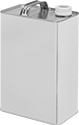
Also known as technical-grade chemicals, these industrial-grade chemicals are not suitable for food or medicinal use.
Nitric acid is used for industrial and laboratory applications such as treating wood, pickling and passivating stainless steel, cleaning electronic components, and etching metals. ACS-reagent-grade nitric acid meets quality standards set by the American Chemical Society. ACS-reagent-grade chemicals are also known as Reagent material.
Container | ||||||||
|---|---|---|---|---|---|---|---|---|
| Size | Net Weight | Type | Material | Form | CAS Number | Specifications Met | Each | |
Citric Acid—100% | ||||||||
| __ | 5 lbs. | Pail | Plastic | Granule | 77-92-9 | __ | 00000000 | 000000 |
| __ | 25 lbs. | Pail | Plastic | Granule | 77-92-9 | __ | 00000000 | 000000 |
Nitric Acid—0.3%, Light Viscosity (70SSU) | ||||||||
| 500 ml | __ | Bottle | Plastic | Liquid | 7697-37-2 | __ | 00000000 | 00000 |
Nitric Acid—4.27%, Light Viscosity (70SSU) | ||||||||
| 500 ml | __ | Bottle | Glass | Liquid | 7697-37-2 | __ | 00000000 | 00000 |
Nitric Acid—10%, Light Viscosity (70SSU) | ||||||||
| 500 ml | __ | Bottle | Glass | Liquid | 7697-37-2 | __ | 00000000 | 00000 |
Nitric Acid—20%, Light Viscosity (70SSU) | ||||||||
| 500 ml | __ | Bottle | Glass | Liquid | 7697-37-2 | __ | 00000000 | 00000 |
Nitric Acid—50%, Light Viscosity (70SSU) | ||||||||
| 500 ml | __ | Bottle | Glass | Liquid | 7697-37-2 | __ | 0000000 | 00000 |
| 1 L | __ | Bottle | Glass | Liquid | 7697-37-2 | __ | 00000000 | 00000 |
| 2.5 L | __ | Bottle | Glass | Liquid | 7697-37-2 | __ | 00000000 | 000000 |
Nitric Acid—70%, Light Viscosity (70SSU) | ||||||||
| 500 ml | __ | Bottle | Glass | Liquid | 7697-37-2 | ACS Reagent Grade | 00000000 | 00000 |
| 1 L | __ | Bottle | Glass | Liquid | 7697-37-2 | ACS Reagent Grade | 00000000 | 00000 |
| 2.5 L | __ | Bottle | Glass with Plastic Liner | Liquid | 7697-37-2 | ACS Reagent Grade | 00000000 | 000000 |