We will reply to your message within two hours.
More

Plastic hinges are a lightweight alternative to metal hinges and provide smooth, silent operation.
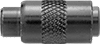

Mount the hinge leaves to the surface of the door and the frame. These hinges are easy to install because they don't require cutouts (mortises).
Turn a set screw to adjust the door up or down after it's hung.
Tighten or loosen an adjustment screw to change the hinge resistance.
These hinges are made of metal.
These hinges allow 360° of motion.
Eliminate slamming lids—these hinges hold lids open at their widest angle and then slowly pull them closed.
Use these hinges on lightweight screen and storm doors as well as small gates.
Only one cutout (mortise) is needed for these hinges—the offset design allows surface mounting the door leaf and mortise mounting the frame leaf.
Lock these hinges open at any angle within their range of motion.
A stop keeps these hinges open at a set angle; push past the stop to open them to 180°.
The mounting hole pattern does not follow an industry standard, which means you can work around worn mounting holes when replacing template hinges.
The mounting holes form an industry-standard half-moon shape.
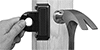
Create precise outlines for hinge mortises (cutouts). Position the cutter on a wood door or frame and hit it with a hammer to imprint the outline.
Made of carbon fiber, these hinges are as strong as aluminum yet lighter in weight. All have leaves that are connected by a strip of flexible Kevlar instead of a pin.
No need for drilling holes or welding, slip these hinges onto panel and door edges for a secure fit.
A spring in these hinges automatically swings doors and gates closed behind you.
These hinges have wide hinge leaves that provide a large mounting surface to keep freezer and refrigerator doors from sagging.
Push a button to adjust the hinge angle and release it to lock the position.
Hinge leaves fit into two cutouts (mortises) to mount flush with door and frame edges.
To ensure a good fit, these hinges have screws for horizontal, vertical, and depth adjustments after installation.
Slip the hinge pins into 11/32" Dia. × 5/16" Dp. holes in a cabinet.
Use hinges to add doors, lids, and machine guards to T-slotted framing.
Pivots provide smooth motion at the junction between two T-slotted rails.
No need for fasteners—friction holds this framing together. Use press-fit framing and fittings to assemble carts, enclosures, and partitions.
Fittings come in two pieces to wrap around rails, so you can quickly modify existing structures without disassembling. Use clamp-on framing and fittings to form temporary partitions, modular conveyors, and workstations.
Commonly used on hood and trunk lids, these simple, three-piece rods telescope from 18 1/2" to 46 3/4" to prop lids open at a variety of angles.
Requiring less space to mount and operate, these supports are often used on small cabinets and enclosures. They gradually slow your lid's motion to prevent it from slamming open. To open lids, lower them and the support will slowly and softly do the rest. Manually shut the lids and the supports will hold them in the closed position.
A spring-loaded socket locks your gas spring to the ball stud—squeeze the ends together to attach and to release.
Lift the clip on these end fittings to secure and release attachment to your ball stud.
These end fittings snap right on a ball stud—an integral retaining clip grips the ball stud for secure attachment until you apply enough force to pop it off.
Slide these shims behind your door’s hinge to align it in the jamb.
Turn the padlock eye to fasten these hasps without a padlock.