



About Threaded Studs and Rods
More
About Hex Head Screws and Bolts
More
Knob-Style Retractable Spring Plungers
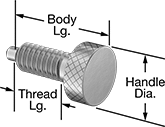 Knurled Knob |  With Thread Locker |
 Without Thread Locker |
Retract the nose by pulling the knob. These spring plungers have a long nose that provides a large bearing surface to handle side loads.
Knurled knob spring plungers provide a slip-resistant surface for controlled adjustment.
Steel is strong and wear resistant. Zinc-plated steel bodies resist corrosion in wet environments.
316 stainless steel is more corrosion resistant than 18-8 stainless steel and can be used in saltwater environments.
Brass is corrosion resistant in wet environments; brass noses are soft to minimize marring.
Spring plungers without thread locker are for use in soft material such as aluminum, in extreme temperatures, and on parts requiring frequent assembly and removal.
Spring plungers with thread locker have a locking patch that adds friction to resist loosening.
Extended nose force is the force required to begin to depress the nose. Compressed nose force is the force required to depress the nose flush with the body. When using a plunger as a detent or stop, a lighter nose force with a shallower hole releases more easily, while a heavier force with a deeper hole holds more securely.
 For technical drawings and 3-D models, click on a part number.
Thread | Nose | Handle | Nose Force, lbs. | |||||||||
|---|---|---|---|---|---|---|---|---|---|---|---|---|
Size | Lg. | Body Lg. | Extended Lg. | Dia. | Dia. | Material | Texture | Extended | Compressed | Choose a Locking Type | Each | |
Zinc-Plated Steel Body and Steel Nose | ||||||||||||
| 3/4"-10 | 1.2" | 2" | 0.45" | 3/8" | 1 1/2" | Steel | Knurled | 1.5 | 16 | 00000000 | 000000 | |
316 Stainless Steel Body and 316 Stainless Steel Nose | ||||||||||||
| 3/4"-10 | 1" | 2" | 0.45" | 3/8" | 1 1/2" | 316 Stainless Steel | Knurled | 1.5 | 16 | 0000000 | 00000 | |
Brass Body and Brass Nose | ||||||||||||
| 3/4"-10 | 1" | 2" | 0.45" | 3/8" | 1 1/2" | Brass | Knurled | 1.5 | 16 | 0000000 | 00000 | |
Twist-to-Lock Knob-Style Retractable Spring Plungers
Knurled Knob | Without Thread Locker |
With Thread Locker |
Lock the nose into the retracted position by pulling the knob and rotating it 90°. These spring plungers have a long nose that provides a large bearing surface to handle side loads.
Knurled knob spring plungers provide a slip-resistant surface for controlled adjustment.
Steel is strong and wear resistant. Zinc-plated steel bodies resist corrosion in wet environments. Black-oxide steel bodies resist corrosion in dry environments.
316 stainless steel is more corrosion resistant than 18-8 stainless steel and can be used in saltwater environments.
18-8 stainless steel is chemical resistant.
Brass is corrosion resistant in wet environments; brass noses are soft to minimize marring.
Plastic is chemical resistant and lightweight; acetal noses are extra soft to minimize marring soft surfaces such as aluminum.
Spring plungers without thread locker are for use in soft material such as aluminum, in extreme temperatures, and on parts requiring frequent assembly and removal.
Spring plungers with thread locker have a locking patch that adds friction to resist loosening.
Extended nose force is the force required to begin to depress the nose. Compressed nose force is the force required to depress the nose flush with the body. When using a plunger as a detent or stop, a lighter nose force with a shallower hole releases more easily, while a heavier force with a deeper hole holds more securely.
For technical drawings and 3-D models, click on a part number.
Thread | Nose | Nose Force, lbs. | Handle | |||||||||
|---|---|---|---|---|---|---|---|---|---|---|---|---|
| Size | Lg. | Body Lg. | Extended Lg. | Dia. | Temp. Range, °F | Extended | Compressed | Dia. | Texture | Choose a Locking Type | Each | |
Zinc-Plated Steel Body and Steel Nose | ||||||||||||
| 3/4"-10 | 1.2" | 2" | 0.45" | 3/8" | __ | 1.5 | 16 | 1 1/2" | Knurled | 000000000 | 000000 | |
Black-Oxide Steel Body and Steel Nose | ||||||||||||
| 3/4"-10 | 1.2" | 2" | 0.45" | 3/8" | __ | 1.5 | 16 | 1 1/2" | Knurled | 0000000 | 00000 | |
316 Stainless Steel Body and 316 Stainless Steel Nose | ||||||||||||
| 3/4"-10 | 1.2" | 2" | 0.45" | 3/8" | __ | 1.5 | 16 | 1 1/2" | Knurled | 0000000 | 00000 | |
18-8 Stainless Steel Body and 18-8 Stainless Steel Nose | ||||||||||||
| 3/4"-10 | 1.2" | 2" | 0.45" | 3/8" | __ | 1.5 | 16 | 1 1/2" | Knurled | 00000000 | 00000 | |
18-8 Stainless Steel Body and Acetal Plastic Nose | ||||||||||||
| 3/4"-10 | 1.2" | 2" | 0.45" | 3/8" | -30° to 190° | 1.5 | 16 | 1 1/2" | Knurled | 0000000 | 00000 | |
Brass Body and Brass Nose | ||||||||||||
| 3/4"-10 | 1.2" | 2" | 0.45" | 3/8" | __ | 1.5 | 16 | 1 1/2" | Knurled | 0000000 | 00000 | |
Pull-Ring Retractable Spring Plungers
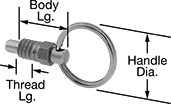
Retract the nose by pulling the ring. The ring allows you to attach these spring plungers to a lanyard to secure them to machinery and prevent accidental drops. They have a long nose that provides a large bearing surface to handle side loads.
Steel is strong and wear resistant. Zinc-plated steel bodies resist corrosion in wet environments.
316 stainless steel is more corrosion resistant than 18-8 stainless steel and can be used in saltwater environments.
18-8 stainless steel is chemical resistant.
Brass is corrosion resistant in wet environments; brass noses are soft to minimize marring.
Spring plungers without thread locker are for use in soft material such as aluminum, in extreme temperatures, and on parts requiring frequent assembly and removal.
Spring plungers with thread locker have a locking patch that adds friction to resist loosening.
Extended nose force is the force required to begin to depress the nose. Compressed nose force is the force required to depress the nose flush with the body. When using a plunger as a detent or stop, a lighter nose force with a shallower hole releases more easily, while a heavier force with a deeper hole holds more securely.
For technical drawings and 3-D models, click on a part number.
Thread | Nose | Handle | Nose Force, lbs. | ||||||||
|---|---|---|---|---|---|---|---|---|---|---|---|
| Size | Lg. | Body Lg. | Extended Lg. | Dia. | Dia. | Material | Extended | Compressed | Choose a Locking Type | Each | |
Zinc-Plated Steel Body and Steel Nose | |||||||||||
| 3/4"-10 | 0.88" | 1.5" | 0.5" | 0.437" | 1.13" | Steel | 1.5 | 6 | 0000000 | 000000 | |
316 Stainless Steel Body and 316 Stainless Steel Nose | |||||||||||
| 3/4"-10 | 0.88" | 1.5" | 0.5" | 0.437" | 1.13" | 316 Stainless Steel | 1.5 | 6 | 0000000 | 00000 | |
| 3/4"-10 | 2.69" | 4.06" | 0.65" | 0.43" | 1.4" | 316 Stainless Steel | 5 | 10 | 0000000 | 00000 | |
18-8 Stainless Steel Body and 18-8 Stainless Steel Nose | |||||||||||
| 3/4"-10 | 0.88" | 1.5" | 0.5" | 0.437" | 1.13" | 18-8 Stainless Steel | 1.5 | 6 | 0000000 | 00000 | |
Brass Body and Brass Nose | |||||||||||
| 3/4"-10 | 0.88" | 1.5" | 0.5" | 0.437" | 1.13" | Steel | 1.5 | 6 | 0000000 | 00000 | |
| 3/4"-10 | 2.69" | 4.06" | 0.65" | 0.43" | 1.4" | Steel | 5 | 10 | 0000000 | 00000 | |
Twist-to-Lock Pull-Ring Retractable Spring Plungers
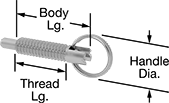
Lock the nose into the retracted position by pulling the ring and rotating it 90°. The ring allows you to attach these spring plungers to a lanyard to secure them to machinery and prevent accidental drops. They have a long nose that provides a large bearing surface to handle side loads.
316 stainless steel is more corrosion resistant than 18-8 stainless steel and can be used in saltwater environments.
Brass is corrosion resistant in wet environments; brass noses are soft to minimize marring.
Spring plungers without thread locker are for use in soft material such as aluminum, in extreme temperatures, and on parts requiring frequent assembly and removal.
Spring plungers with thread locker have a locking patch that adds friction to resist loosening.
Extended nose force is the force required to begin to depress the nose. Compressed nose force is the force required to depress the nose flush with the body. When using a plunger as a detent or stop, a lighter nose force with a shallower hole releases more easily, while a heavier force with a deeper hole holds more securely.
For technical drawings and 3-D models, click on a part number.
Thread | Nose | Handle | Nose Force, lbs. | ||||||||
|---|---|---|---|---|---|---|---|---|---|---|---|
| Size | Lg. | Body Lg. | Extended Lg. | Dia. | Dia. | Material | Extended | Compressed | Choose a Locking Type | Each | |
316 Stainless Steel Body and 316 Stainless Steel Nose | |||||||||||
| 3/4"-10 | 0.88" | 1.5" | 0.5" | 0.437" | 1.125" | 316 Stainless Steel | 1.5 | 6 | 0000000 | 000000 | |
| 3/4"-10 | 2.69" | 4.06" | 0.65" | 0.43" | 1.4" | 316 Stainless Steel | 5 | 10 | 0000000 | 00000 | |
Brass Body and Brass Nose | |||||||||||
| 3/4"-10 | 0.88" | 1.5" | 0.5" | 0.437" | 1.125" | Steel | 1.5 | 6 | 0000000 | 00000 | |
| 3/4"-10 | 2.69" | 4.06" | 0.65" | 0.43" | 1.4" | Steel | 5 | 10 | 0000000 | 00000 | |
Long-Nose Spring Plungers
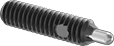
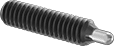
Install from the nose end without depressing the nose using a driver (sold separately). With a nose that is longer than a ball-nose, these provide a large bearing surface to handle side loads.
Steel is strong and wear resistant. Black-oxide steel bodies resist corrosion in dry environments.
18-8 stainless steel is chemical resistant.
Spring plungers without thread locker are for use in soft material such as aluminum, in extreme temperatures, and on parts requiring frequent assembly and removal.
Spring plungers with thread locker have a locking element that adds friction to resist loosening.
Extended nose force is the force required to begin to depress the nose. Compressed nose force is the force required to depress the nose flush with the body. When using a plunger as a detent or stop, a lighter nose force with a shallower hole releases more easily, while a heavier force with a deeper hole holds more securely.
For technical drawings and 3-D models, click on a part number.
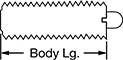
Spring Plungers | ||||||||||
|---|---|---|---|---|---|---|---|---|---|---|
Thread | Body | Nose | Nose Force, lbs. | Drivers | ||||||
| Size | Length | Extended Lg. | Dia. | Extended | Compressed | Choose a Locking Type | Each | Each | ||
Black-Oxide Steel Body and Steel Nose | ||||||||||
| 3/4"-10 | 1.75" | 0.312" | 0.374" | 4 | 16 | Thread Locker | 0000000 | 000000 | 0000000 | 000000 |
| 3/4"-10 | 1.75" | 0.313" | 0.374" | 6.7 | 37.3 | 0000000 | 0000 | 0000000 | 00000 | |
Black-Oxide Steel Body and 18-8 Stainless Steel Nose | ||||||||||
| 3/4"-10 | 1.75" | 0.313" | 0.374" | 6.7 | 37.3 | 0000000 | 00000 | 0000000 | 00000 | |
18-8 Stainless Steel Body and 18-8 Stainless Steel Nose | ||||||||||
| 3/4"-10 | 1.75" | 0.313" | 0.374" | 6.7 | 37.3 | 00000000 | 00000 | 0000000 | 00000 | |
Extra-Long Hex-Nose Spring Plungers
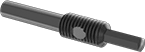
These spring plungers have a nose that is about three-times longer than standard long hex-nose spring plungers. The extra-long nose provides a large bearing surface to handle side loads. Install from the nose end with a wrench for more torque than slotted long-nose spring plungers. They're made from wear-resistant steel. A nylon locking pellet adds friction to resist loosening.
Black-oxide steel bodies resist corrosion in dry environments.
Extended nose force is the force required to begin to depress the nose. Compressed nose force is the force required to depress the nose flush with the body. When using a plunger as a detent or stop, a lighter nose force with a shallower hole releases more easily, while a heavier force with a deeper hole holds more securely.
For technical drawings and 3-D models, click on a part number.
Nose | Nose Force, lbs. | Thread Locker | |||||||
|---|---|---|---|---|---|---|---|---|---|
| Thread Size | Body Lg. | Extended Lg. | Wd. | Extended | Compressed | Type | Temp. Range, °F | Each | |
Black-Oxide Steel Body and Steel Nose | |||||||||
| 3/4"-10 | 3.75" | 1" | 0.375" | 4 | 35 | Nylon Pellet | -50° to 180° | 00000000 | 000000 |
Long Hex-Nose Spring Plungers
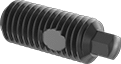
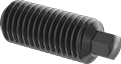
Spring plungers without thread locker are for use in soft material such as aluminum, in extreme temperatures, and on parts requiring frequent assembly and removal.
Spring plungers with thread locker have a nylon locking pellet that adds friction to resist loosening.
Extended nose force is the force required to begin to depress the nose. Compressed nose force is the force required to depress the nose flush with the body. When using a plunger as a detent or stop, a lighter nose force with a shallower hole releases more easily, while a heavier force with a deeper hole holds more securely.
For technical drawings and 3-D models, click on a part number.
Nose | Nose Force, lbs. | |||||||
|---|---|---|---|---|---|---|---|---|
| Thread Size | Body Lg. | Extended Lg. | Wd. | Extended | Compressed | Choose a Locking Type | Each | |
Black-Oxide Steel Body and Steel Nose | ||||||||
| 3/4"-10 | 1.75" | 0.313" | 0.375" | 6.7 | 37.3 | 0000000 | 000000 | |
Drivers for Spring Plungers
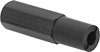
Install spring plungers from the nose end without depressing the nose.
| For Thread Size | For Spring Plunger Nose Type | Each | |
Steel | |||
|---|---|---|---|
| 3/4"-10 | Ball Nose, Long Nose | 0000000 | 000000 |
Partially Threaded Studs
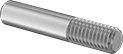
Use the unthreaded end as a pivot point, hinge, shaft, or locator pin. Made from 18-8 stainless steel, these studs are chemical resistant and may be mildly magnetic.
For technical drawings and 3-D models, click on a part number.
Shaft | ||||||||
|---|---|---|---|---|---|---|---|---|
| Lg. | Thread Lg. | Lg. | Dia. | Dia. Tolerance | Tensile Strength, psi | Hardness | Each | |
18-8 Stainless Steel | ||||||||
3/4"-10 | ||||||||
| 2" | 3/4" | 1 1/4" | 3/4" | -0.001" to 0.001" | 70,000 | Not Rated | 000000000 | 000000 |
| 2 1/2" | 3/4" | 1 3/4" | 3/4" | -0.001" to 0.001" | 70,000 | Not Rated | 000000000 | 00000 |
| 3" | 3/4" | 2 1/4" | 3/4" | -0.001" to 0.001" | 70,000 | Not Rated | 000000000 | 00000 |
| 3 1/2" | 1" | 2 1/2" | 3/4" | -0.001" to 0.001" | 70,000 | Not Rated | 000000000 | 00000 |
| 4" | 1" | 3" | 3/4" | -0.001" to 0.001" | 70,000 | Not Rated | 000000000 | 00000 |
| 4 1/2" | 1 1/2" | 3" | 3/4" | -0.001" to 0.001" | 70,000 | Not Rated | 000000000 | 00000 |
| 5" | 1 1/2" | 3 1/2" | 3/4" | -0.001" to 0.001" | 70,000 | Not Rated | 000000000 | 00000 |
| 5 1/2" | 1 1/2" | 4" | 3/4" | -0.001" to 0.001" | 70,000 | Not Rated | 000000000 | 00000 |
| 6" | 1 1/2" | 4 1/2" | 3/4" | -0.001" to 0.001" | 70,000 | Not Rated | 000000000 | 00000 |
T-Bolts with Collar
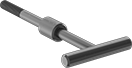
Also known as clamping pins, these bolts have a collar that slides along the shaft and can be welded in place to hold work and prevent over torquing. The large T-shaped head provides a secure grip for steady tightening. The black-oxide finish provides corrosion resistance in dry environments. Length is measured from the top of the head.
For technical drawings and 3-D models, click on a part number.
Head | |||||||||
|---|---|---|---|---|---|---|---|---|---|
| Thread Size | Lg. | Threading | Thread Lg. | Thread Spacing | Wd. | Thick. | Tensile Strength, psi | Each | |
Black-Oxide Steel | |||||||||
| 3/4"-10 | 6 7/8" | Partially Threaded | 3/4" | Coarse | 3 1/2" | 7/8" | 70,000 | 000000000 | 000000 |
Installation Tools for Female-Threaded Anchors
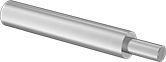
Drive these tools with a hammer to expand anchors.
For technical drawings and 3-D models, click on a part number.
| For Thread Diameter | For Thread Depth | Lg. | For Use In | Each | |
Steel | |||||
|---|---|---|---|---|---|
| 3/4" | 1-3/8" | 7 1/16" | Concrete | 000000000 | 000000 |
Super-Corrosion-Resistant 316 Stainless
Steel Female-Threaded Anchors for Concrete
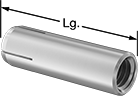
More corrosion resistant than 18-8 stainless steel anchors, these 316 stainless steel anchors have excellent resistance to chemicals and salt water and may be mildly magnetic. Also known as drop-in anchors, they're often used for overhead applications because the anchor's internal plug expands in four directions to hold the anchor firmly inside the hole before inserting a threaded rod or bolt. To install, place the anchor into the hole, insert the required installation tool (sold separately) into the anchor, and drive with a hammer until the thicker portion of the tool makes contact with the anchor. When installed, anchors sit flush with the surface. Pull-out strength and shear strength values are 25% of the ultimate values.
For technical drawings and 3-D models, click on a part number.
Strength, lbs. | |||||||||||
|---|---|---|---|---|---|---|---|---|---|---|---|
| Thread Size | Lg. | Drill Bit Size | Min. Installation Dp. | Dia. | Thread Dp. | Pull-Out | Shear | Tested In | Pkg. Qty. | Pkg. | |
316 Stainless Steel | |||||||||||
| 3/4"-10 | 3 3/16" | 1" | 3 3/16" | 1" | 1 3/8" | 2,350 | 3,920 | 4,000 psi Concrete | 1 | 000000000 | 000000 |
18-8 Stainless Steel Female-Threaded Anchors for Concrete
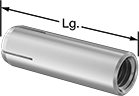
These 18-8 stainless steel anchors have good chemical resistance and may be mildly magnetic. Also known as drop-in anchors, they're often used for overhead applications because the anchor's internal plug expands in four directions to hold the anchor firmly inside the hole before inserting a threaded rod or bolt. To install, place the anchor into the hole, insert the required installation tool (sold separately) into the anchor, and drive with a hammer until the thicker portion of the tool makes contact with the anchor. When installed, anchors sit flush with the surface. Pull-out strength and shear strength values are 25% of the ultimate values.
For technical drawings and 3-D models, click on a part number.
Strength, lbs. | |||||||||||
|---|---|---|---|---|---|---|---|---|---|---|---|
| Thread Size | Lg. | Drill Bit Size | Min. Installation Dp. | Dia. | Thread Dp. | Pull-Out | Shear | Tested In | Pkg. Qty. | Pkg. | |
18-8 Stainless Steel | |||||||||||
| 3/4"-10 | 3 3/16" | 1" | 3 3/16" | 1" | 1 3/8" | 2,350 | 3,920 | 4,000 psi Concrete | 1 | 000000000 | 000000 |
Steel Female-Threaded Anchors for Concrete
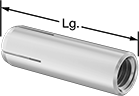
A zinc plating provides corrosion resistance in wet environments. Also known as drop-in anchors, these are often used for overhead applications because the anchor's internal plug expands in four directions to hold the anchor firmly inside the hole before inserting a threaded rod or bolt. To install, place the anchor into the hole, insert the required installation tool (sold separately) into the anchor, and drive with a hammer until the thicker portion of the tool makes contact with the anchor. Pull-out strength and shear strength values are 25% of the ultimate values for normal-weight concrete.
Anchors can be installed below the base of the surface as well as flush with the surface.
For technical drawings and 3-D models, click on a part number.
Strength, lbs. | ||||||||||||
|---|---|---|---|---|---|---|---|---|---|---|---|---|
| Thread Size | Lg. | Drill Bit Size | Min. Installation Dp. | Dia. | Thread Dp. | Pull-Out | Shear | Tested In | Specifications Met | Pkg. Qty. | Pkg. | |
Zinc-Plated Carbon Steel | ||||||||||||
Anchor with UNC Threads | ||||||||||||
| 3/4"-10 | 3 3/16" | 1" | 3 3/16" | 1" | 1 3/8" | 2,350 | 3,920 | 4,000 psi Concrete | FM Approved, UL Listed | 1 | 000000000 | 00000 |
Stainless Steel Adhesive-Grip Female-Threaded Anchors for Concrete
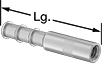
These 316 stainless steel anchors have excellent resistance to chemicals and salt water and may be mildly magnetic. Use them for permanent, high-strength anchoring where vibration is present. To install, fill a clean, drilled hole half full with epoxy adhesive, then insert the anchor until it's flush with the surface. Pull-out strength values are 25% of the ultimate values.
For technical drawings and 3-D models, click on a part number.
| Thread Size | Lg. | Drill Bit Size | Min. Installation Dp. | Dia. | Thread Dp. | Pull-Out Strength, lbs. | Tested In | Each | |
316 Stainless Steel | |||||||||
|---|---|---|---|---|---|---|---|---|---|
| 3/4"-10 | 6 1/2" | 1" | 7 1/2" | 1" | 1 1/2" | 9,000 | 3,000 psi Concrete | 000000000 | 0000000 |
Steel Adhesive-Grip Female-Threaded Anchors for Concrete
A zinc plating provides corrosion resistance in wet environments. Use these anchors for permanent, high-strength anchoring where vibration is present. To install, fill a clean, drilled hole half full with epoxy adhesive, then insert the anchor until it's flush with the surface. Pull-out strength values are 25% of the ultimate values.
For technical drawings and 3-D models, click on a part number.
| Thread Size | Lg. | Drill Bit Size | Min. Installation Dp. | Dia. | Thread Dp. | Pull-Out Strength, lbs. | Tested In | Each | |
Zinc-Plated Steel | |||||||||
|---|---|---|---|---|---|---|---|---|---|
| 3/4"-10 | 6 1/2" | 1" | 7 1/2" | 1" | 1 1/2" | 9,000 | 3,000 psi Concrete | 000000000 | 000000 |
Installation Tools for Shallow-Hole Female-Threaded Anchors
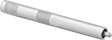
Drive these tools with a hammer to expand anchors.
For technical drawings and 3-D models, click on a part number.
| For Thread Size | Lg. | Each | |
Zinc-Plated Steel | |||
|---|---|---|---|
| 3/4"-10 | 6 1/2" | 000000000 | 000000 |
Shallow-Hole Female-Threaded Anchors for Block and Brick
Also known as caulk-in anchors, these stay secure when there's not much material to hold. When installed, the cone expands the sleeve to hold it firmly inside the hole. To install, insert the anchor cone end first and use an installation tool to drive the sleeve over the cone. Then, insert a screw or threaded rod and tighten. Pull-out strength and shear strength values are 25% of the ultimate values.
For technical drawings and 3-D models, click on a part number.

Strength, lbs. | ||||||||||||
|---|---|---|---|---|---|---|---|---|---|---|---|---|
| Thread Size | Lg. | Min. Installation Dp. | Drill Bit Size | Dia. | Sleeve Material | Pull-Out | Shear | Tested In | For Use In | Pkg. Qty. | Pkg. | |
Zinc Alloy | ||||||||||||
| 3/4"-10 | 2" | 2 1/2" | 1 1/4" | 1 1/4" | Lead | 1,400 | 1,900 | 4,000 psi Concrete | Block, Brick, Concrete | 1 | 000000000 | 00000 |
Drive these tools with a hammer to expand anchors.
| For Thread Size | Lg. | Each | |
Zinc-Plated Steel | |||
|---|---|---|---|
| 3/4"-10 | 6 1/2" | 000000000 | 000000 |
Female-Threaded Anchors for Block and Brick
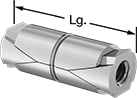
Also known as double expansion anchors, these expand from both sides for full contact and a secure hold. To install, tap into a drilled hole with a hammer and position your fixture. Then, insert a screw or threaded rod and tighten. For maximum expansion, the anchor should protrude slightly above the surface before threading the screw. Pull-out strength and shear strength values are 25% of the ultimate values.
For technical drawings and 3-D models, click on a part number.
Strength, lbs. | |||||||||||
|---|---|---|---|---|---|---|---|---|---|---|---|
| Thread Size | Lg. | Drill Bit Size | Min. Installation Dp. | Dia. | Pull-Out | Shear | Tested In | For Use In | Pkg. Qty. | Pkg. | |
Zinc Alloy | |||||||||||
| 3/4"-10 | 3 15/16" | 1 1/4" | 3 1/2" | 1 1/4" | 2,000 | 3,300 | 4,000 psi Concrete | Block, Brick, Concrete | 1 | 000000000 | 00000 |
Vibration-Resistant Female-Threaded Anchors for Block and Brick

Often referred to as four-way expansion anchors, these expand in four directions to resist loosening from vibration. To install, tap into a drilled hole with a hammer and position your fixture. Then, insert a screw or threaded rod and tighten. Pull-out strength and shear strength values are 25% of the ultimate values.
For technical drawings and 3-D models, click on a part number.
Strength, lbs. | |||||||||||
|---|---|---|---|---|---|---|---|---|---|---|---|
| Thread Size | Lg. | Drill Bit Size | Min. Installation Dp. | Dia. | Pull-Out | Shear | Tested In | For Use In | Pkg. Qty. | Pkg. | |
Zinc Alloy | |||||||||||
| 3/4"-10 | 3 1/8" | 1 1/4" | 3 1/8" | 1 1/4" | 2,400 | 3,800 | 3,000 psi Concrete | Block, Brick, Concrete, Stone | 1 | 000000000 | 000000 |
Threaded Plug Gauges
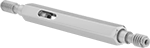
These have a go gauge on one end and a no-go gauge on the other end. They allow you to inspect internal threads on parts. A taperlock handle lets you quickly replace worn gauges.
Check the minimum internal thread size with the go gauge end, and check the maximum internal thread size with the no-go gauge end. A part is within tolerance if it’s easy to thread the go gauge into the part but difficult to thread the no-go gauge more than two turns.
Threads have different classes of fit. Thread fit designates the tightness or looseness of mating threads. For example, inch threads with a 3B fit have tighter tolerances than threads with a 2B fit.
For technical drawings and 3-D models, click on a part number.
Threaded Plug Gauges with Calibration Certificate

These gauges come with a certificate of calibration traceable to NIST that states they’ve passed a test for accuracy. They allow you to inspect internal threads on parts. All have a go gauge on one end and a no-go gauge on the other end. A taperlock handle lets you quickly replace worn gauges.
Check the minimum internal thread size with the go gauge end, and check the maximum internal thread size with the no-go gauge end. A part is within tolerance if it’s easy to thread the go gauge into the part but difficult to thread the no-go gauge more than two turns.
Threads have different classes of fit. Thread fit designates the tightness or looseness of mating threads. For example, inch threads with a 3B fit have tighter tolerances than threads with a 2B fit.
For technical drawings and 3-D models, click on a part number.