We will reply to your message within two hours.
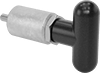
A T-handle makes these pins easy to grip. A spring-loaded, nonlocking retaining ball pops out when the pin is pushed through a hole, and retracts when the pin is pulled out.
A smooth ball handle is easy to grip and won't catch on other parts. A spring-loaded, nonlocking retaining ball pops out when the pin is pushed through a hole, and retracts when the pin is pulled out.
A high-profile knob is easy to grip, but fits in small spaces. A spring-loaded, nonlocking retaining ball pops out when the pin is pushed through a hole, and retracts when the pin is pulled out.
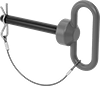
Use these pins for visibility or to color-code processes. For a more secure hold than standard quick-release pins, they lock in place until you push the button to release the spring-loaded retaining balls.
The shaft on these pins retracts into the head to hold thin sheets of material together. Pins lock in place until you push the button to release the spring-loaded retaining balls.
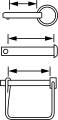
Attach these pins to a machine cover or access panel, then clip them in to receptacles installed in the enclosure for quick access. Pins lock in place until you release them.
A strong magnet in the head holds these pins in place on steel and other ferrous metals. Use them for light duty applications and blind holes.
Plastic pins are a nonconductive and nonmagnetic alternative to metal dowel pins. Use them as pivots, hinges, shafts, jigs, and fixtures to locate or hold parts.
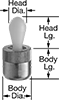
A T-handle makes these spring plungers easy to grip.
A quarter turn of the handle locks these plungers in the retracted position. The T-handle is easy to grip.
A smooth ball handle is easy to grip and won't catch on other parts.
A quarter turn of the handle locks these plungers in the retracted position. The smooth ball handle is easy to grip and won't catch on other parts.
Retract the nose by pulling the knob.
Lock the nose into the retracted position by pulling the knob and rotating it 90°.
Lock the nose into the retracted position by pulling the handle and rotating it 90°.
Two holes in the plate allow these plungers to be mounted to a flat surface.
Install with a hex key for more torque than slotted long-nose spring plungers.
Install with a driver.
Slotted on both ends for installation with a screwdriver.
A flange keeps the plunger from being pushed through a hole when the ball is depressed.
Designed with a flange to keep the plunger from being pushed through a hole when the ball is depressed.
Install these spring plungers with a screwdriver—they're slotted on one or both ends.
You need access to only one side of the material to install these rivets.
A flexible shank allows these rivets to be removed and reused. You need access to only one side of the material to install.
Access to both sides of the material is required for installation.
Corrosion resistant and nonconductive, these rivets are designed to join plastic, fiberglass, wood, and metal.
These anchors are also known as drive rivets. To install, hammer the pin into the body. Pry out the pin to remove.
These anchors are also known as drive rivets. To install, hammer the screw into the body. Unthread the screw to remove.
Also known as tap-in or uni-tap rivets, these anchors are barbed to resist pull out. Made from nylon, they're chemical resistant.
Also known as mungo anchors, these have large fins that prevent rotation.
Easy to install, tap these anchors in like a nail—no drilled hole required.
Fins prevent these anchors from spinning during installation.
These anchors fit a range of sheet metal and wood screw sizes since they form their own threads when installed.
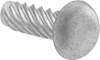
Also known as round-head Type U drive screws.
Cut this stock to length to create the machine key you need. Straight keys, with a square or rectangular cross section, are the most common type of key. Install in a keyway to transmit torque from shafts to gears and other components.
Mount through the counterbored hole with a socket head cap screw to support and position workpieces and fixtures from the bottom or side.
As the workpiece pushes against the pin head in one direction, the internal spring pushes back to hold it in place for clamping.
Sealed at the top to prevent debris from getting inside and making them seize up, these guide pins are a good choice for machining fixtures.
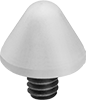
Use these components in coordinate measuring machine (CMM) applications to raise a workpiece and reliably position it on a fixture plate with ¼"-20 holes.
Hold lightweight objects, secure covers, and seal bags.
Hang and organize folders on cubicle walls.
These three-way holders can be inserted under the door, over the top corner of the door, or over the hinge pin to hold a door open.
Use these headers to make quick, temporary connections to development boards and other circuit boards when prototyping.