
Filter by
Filler Material


System of Measurement

For Minimum Nozzle Opening Diameter
Container Type

Weight
Performance

Density
Tensile Strength

Spool Material
Flexibility

Length
Annealing Temperature
For Printer Bed Temperature
Maximum Speed
Maximum Temperature
U.S.–Mexico–Canada Agreement (USMCA) Qualifying
DFARS Specialty Metals
Export Control Classification Number (ECCN)
REACH
RoHS
Minimum Speed
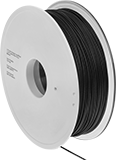
Easy-Print PLA 3D Printer Filaments
 |
 |
Bronze |
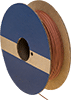
The most commonly used 3D printing material, these PLA filaments make detailed parts at a low melting point, so they won’t warp as they cool, rarely clog nozzles, and don’t require a heated printer bed. They’re also unlikely to drip and produce plastic strings for a clean finished part. In general, they’re best for printing prototypes instead of load-bearing parts since they’re not as strong as ABS or as heat resistant as PEEK. Print them on a fused filament fabrication (FFF) 3D printer.
Filaments with an annealing temperature can be heat treated to make parts harder, stronger, and better at resisting heat. To anneal, heat your finished part to the listed temperature and then let it cool slowly.
Maximum exposure temperature is the point at which a printed part will begin to deform. Above this temperature, your part will start to lose structural integrity. Filaments that can be annealed are also rated for maximum temperature after annealing, which is the new maximum exposure temperature once that process completes.
Copper Filled—Stainless steel-, iron-, copper-, and brass-filled PLA filaments are heavier and transfer heat better than plastic-only filaments. Brush, sand, or polish printed parts for a metallic finish. Stainless steel and iron are abrasive, so use them with abrasion-resistant nozzles only. Iron will also rust if exposed to water.
Tensile Strength—Tensile strength is the best measure of a filament's overall strength. Similar to the stress applied on a rope during a game of tug-of-war, it's the amount of pulling force a material can handle before breaking. A higher rating means a stronger filament. A tensile strength of 5,000 psi and above is considered good; 12,000 psi and above is excellent.
Spool | Each | ||||||||||||||||||||||||||||||||||||||||||||||||||||||||||||||||||||||||||||||||||||||||||||||||||
|---|---|---|---|---|---|---|---|---|---|---|---|---|---|---|---|---|---|---|---|---|---|---|---|---|---|---|---|---|---|---|---|---|---|---|---|---|---|---|---|---|---|---|---|---|---|---|---|---|---|---|---|---|---|---|---|---|---|---|---|---|---|---|---|---|---|---|---|---|---|---|---|---|---|---|---|---|---|---|---|---|---|---|---|---|---|---|---|---|---|---|---|---|---|---|---|---|---|---|---|
Dia., mm | Printing Temp. | For Printer Bed Temp. | Tensile Strength | Hardness | Max. Exposure Temp. | Annealing Temp. | Max. Temp. After Annealing | For Min. Nozzle Opening Dia., mm | Dia., mm | Dp., mm | Material | Wt., g | 1-9 | 10-Up | |||||||||||||||||||||||||||||||||||||||||||||||||||||||||||||||||||||||||||||||||||||
Copper-Filled PLA | |||||||||||||||||||||||||||||||||||||||||||||||||||||||||||||||||||||||||||||||||||||||||||||||||||
Opaque Bronze | |||||||||||||||||||||||||||||||||||||||||||||||||||||||||||||||||||||||||||||||||||||||||||||||||||
| 1.75 | 185° to 215° C 365° to 419° F | 21° to 60° C 70° to 140° F | Not Rated | Not Rated | 60° C 140° F | 100° C to 120° C 212° F to 248° F | 155° C 311° F | 0.4 | 200 | 65 | Cardboard | 500 | 1317N93 | 000000 | 000000 | ||||||||||||||||||||||||||||||||||||||||||||||||||||||||||||||||||||||||||||||||||||
EachIn stock | |||||||||||||||||||||||||||||||||||||||||||||||||||||||||||||||||||||||||||||||||||||||||||||||||||