


Filter by
System of Measurement

Hardness
Tensile Strength

Flexibility

Performance
Weight
For Minimum Nozzle Opening Diameter
Flexural Modulus
For Printer Bed Temperature
Clarity

Color

Container Type

Spool Material
Maximum Speed
U.S.–Mexico–Canada Agreement (USMCA) Qualifying
DFARS Specialty Metals
Export Control Classification Number (ECCN)
REACH
RoHS
Minimum Speed
Foam-Forming Flexible 3D Printer Filaments
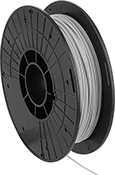 |
Create soft, stretchy parts that are lightweight and foam-like, letting air and gas pass through yet repelling water. These filaments are a TPE blend with a filler that dissolves in water, forming hollow spaces that make up to 45% of the part.
These filaments work with fused filament fabrication (FFF) 3D printers. If using a glass print surface, apply an adhesive to prevent the filament from detaching. The recommended print speed is 25 mm/s. Submerge your part in hot water for about 24 hours after printing to dissolve the filler and expose the pores.
For extra support when printing complex designs, use structural support 3D printer filaments. They dissolve in water at the same time as the filler in these filaments.
Maximum exposure temperature is the point at which a printed part will begin to deform. Above this temperature, your part will start to lose structural integrity.
Tensile Strength—Tensile strength is the best measure of a filament's overall strength. Similar to the stress applied on a rope during a game of tug-of-war, it's the amount of pulling force a material can handle before breaking. A higher rating means a stronger filament. A tensile strength of 5,000 psi and above is considered good; 12,000 psi and above is excellent.
Spool | |||||||||||||||||||||||||||||||||||||||||||||||||||||||||||||||||||||||||||||||||||||||||||||||||||
|---|---|---|---|---|---|---|---|---|---|---|---|---|---|---|---|---|---|---|---|---|---|---|---|---|---|---|---|---|---|---|---|---|---|---|---|---|---|---|---|---|---|---|---|---|---|---|---|---|---|---|---|---|---|---|---|---|---|---|---|---|---|---|---|---|---|---|---|---|---|---|---|---|---|---|---|---|---|---|---|---|---|---|---|---|---|---|---|---|---|---|---|---|---|---|---|---|---|---|---|
Dia., mm | Printing Temp. | For Printer Bed Temp. | Tensile Strength, psi | Hardness | Max. Exposure Temp. | For Min. Nozzle Opening Dia., mm | Dia., mm | Dp., mm | Material | Wt., g | Each | ||||||||||||||||||||||||||||||||||||||||||||||||||||||||||||||||||||||||||||||||||||||||
TPE Blend—Flexible | |||||||||||||||||||||||||||||||||||||||||||||||||||||||||||||||||||||||||||||||||||||||||||||||||||
Opaque Beige | |||||||||||||||||||||||||||||||||||||||||||||||||||||||||||||||||||||||||||||||||||||||||||||||||||
| 1.75 | 220° to 250° C 428° to 482° F | 50° to 70° C 122° to 158° F | 150 | Durometer 91A (Medium Soft) | 49° C 120° F | 0.4 | 200 | 55 | Plastic | 500 | 4661N11 | 000000 | |||||||||||||||||||||||||||||||||||||||||||||||||||||||||||||||||||||||||||||||||||||||
| 2.85 | 220° to 250° C 428° to 482° F | 50° to 70° C 122° to 158° F | 150 | Durometer 91A (Medium Soft) | 49° C 120° F | 0.4 | 200 | 55 | Plastic | 500 | 4661N12 | 00000 | |||||||||||||||||||||||||||||||||||||||||||||||||||||||||||||||||||||||||||||||||||||||
