We will reply to your message within an hour.
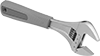
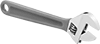
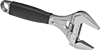
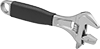
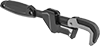
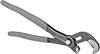
The handle is covered in plastic for a comfortable grip.
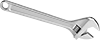
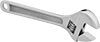
The adjustment knurl won't turn when the wrench is being used, preventing accidental loosening of the jaws.
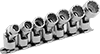
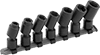
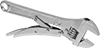
Press the lever to lock the jaw and keep these wrenches clamped on your work, leaving your hands free.
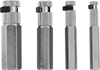
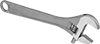
These wrenches are made of stainless steel for excellent corrosion resistance.
A plastic-covered handle provides a comfortable grip.
Made of aluminum-bronze that is Factory Mutual approved, these wrenches inhibit sparking and are nonmagnetic and corrosion resistant.
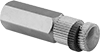
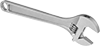
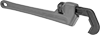
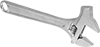
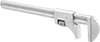
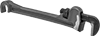
These tools have the heavy duty handle and adjustment mechanism of a pipe wrench and the smooth jaws of a traditional adjustable wrench.
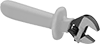
An insulated handle protects against accidental contact with live electrical circuits. These wrenches are tested to 1,000 volts to meet IEC 60900.
Fit the thin head and long jaws into narrow spaces.
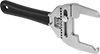
The jaws on these wrenches are shaped to turn slip nuts, jam nuts, and large hex nuts.
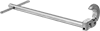
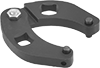
Also known as a basin wrench, this tool has a pivoting head and spring-close jaws for working in tight spaces where it’s difficult to adjust a traditional wrench.
Extend the handle for additional reach.
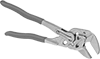
Turn fasteners with the firm grip of a wrench and the adjustability of pliers.
Squeeze the handles and the gripping surfaces adjust to fit your fastener and prevent slipping and stripping.
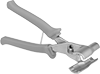
Flip the wrench over to use the raised section on the head as a hammer.
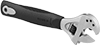
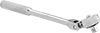
A ratchet mechanism in the head allows you to turn fasteners in tight spaces without removing and repositioning the wrench.
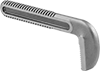
Reverse the movable jaw to convert from a smooth-jaw adjustable wrench to a serrated-jaw pipe wrench.
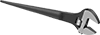
Also known as spud, structural, and construction wrenches, the pointed end of the handle aligns bolt holes during assembly.
The handles are covered in plastic for a comfortable grip.
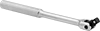
Pivot the head to access fasteners in tight spots.
The 20° offset head provides clearance when reaching over obstructions.
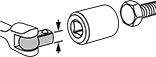
No need to pull the socket off the tool—push a button to release.
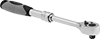
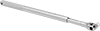
The shaft on these wrenches extends and locks.
Extend the shaft for additional length.
Pivot the head for access to fasteners in tight spots.
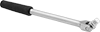
A rubber coating provides a comfortable grip.
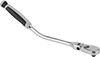
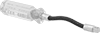
Bend around obstructions to turn hard-to-reach fasteners.
Set the desired torque and the wrench indicates when it's reached with an audible click and an impulse in the grip.
Unlike most torque wrenches, you don’t have to return the torque setting to the lowest value after use. These tools are also known as split-beam torque wrenches.
Made of beryllium copper, these wrenches satisfy OSHA requirements that specify nonsparking tools for locations where flammable vapors and combustible residues are present.
Insulated to protect against accidental contact with live electrical circuits, these wrenches are tested to 1,000 volts to meet IEC 60900.
Convert from one square drive size to another.
Pivot the head to access fasteners from an angle.
Set a desired torque within the range.
Bend these extensions around obstructions to turn hard-to-reach fasteners.
Bend these extensions around obstructions to access hard-to-reach fasteners.
Pivot the box end for access to fasteners in tight spots.
Pivot the socket end to access hard-to-reach fasteners.
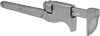
Also known as monkey and auto wrenches, these grip large fasteners and other flat objects.
The jaws grip most round surfaces, even highly polished objects. Push down on the wrench and pull the handle toward you—the jaws will tighten around the workpiece.
Made of aluminum-bronze that is Factory Mutual approved, these wrenches inhibit sparking and are nonmagnetic and corrosion resistant. They are also known as railroad wrenches.
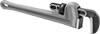
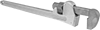
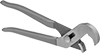
Grip pipe and conduit as well as tighten and loosen fittings.
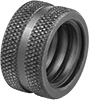
Replace nuts on pipe wrenches.
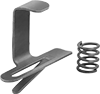
Replace springs in pipe wrenches.
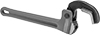
Open and close the jaws with one hand. Press the lever and slide the bottom jaw to the desired position; tension keeps it in place.
There's no adjustment nut or button on these wrenches—a spring-loaded hinge automatically closes the top jaw around pipe.
Made of materials that are Factory Mutual approved, these wrenches inhibit sparking and are nonmagnetic and corrosion resistant.
Use one end as a traditional pipe wrench and the other to loosen valve wheels. These are also known as engineers’ pipe wrenches.
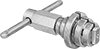
Insert into a pipe or fitting and turn—the wrench grips the walls for easy installation and removal without marring the outside of the pipe.
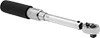
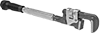
Turn the end of the handle to set torque, and the wrench makes an audible click when it reaches the setting.
Made of stainless steel, these wrenches have excellent corrosion resistance.
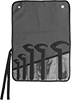
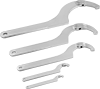
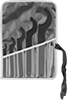
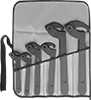
Sets include various sizes of wrenches that fit into slots on the circumference of collars, bearings, and other machine tool components.
In addition to a long handle, these wrenches include two heads with different hook widths.
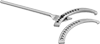
The head pivots to accommodate a range of diameters.
Made of aluminum-bronze that is Factory Mutual approved, these wrenches inhibit sparking and are nonmagnetic and corrosion resistant. They satisfy OSHA requirements that specify nonsparking tools for locations where flammable vapors and combustible residues are present.
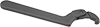
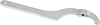
Fit these wrenches into slots on the circumference of collars, bearings, and other machine tool components.
These wrenches are shaped to fit round holes on the circumference of collars, bearings, and other machine tool components.
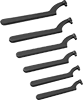
Sets include various sizes of wrenches that are shaped to fit round holes on the circumference of collars, bearings, and other machine tool components.
Reverse the pins when you need to fit different hole sizes on the face of collars, bearings, and other machine tool components.
Use your ratchet wrench as a handle.
The slim profile fits the flanges and nuts on the backing pads of portable sanders and grinders.
Hinged for adjustability, these wrenches fit a range of diameters.
Change out the pins to fit a different hole size.
Grip the round holes on the face of collars, bearings, and other machine tool components.
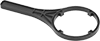
Multiple contact points grip the grooves on plastic water filter housings for loosening and removal.
In addition to standard and pop-up sink drains, these wrenches install and remove overflow outlets and toilet inlet connectors (also known as spuds).
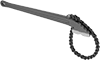
Hold and turn pipe, tubing, and conduit with these heavy duty wrenches.
Using your ratchet wrench as a handle, access hard-to-reach caps and plugs or grip objects of almost any shape.
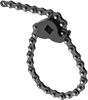
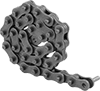
Replace the chain on your chain wrench.
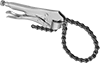
Turn the adjustment screw and squeeze the handle to lock the chain in place; press the lever to release.
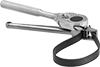
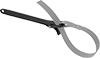
The nonmarring strap grips plastic pipe, tubing, hand wheels, filters, and objects with highly polished surfaces.
Pair these tools with your ratchet wrench to get more leverage.
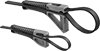
While some wrenches require you hold the strap, these have a shackle that keeps the strap closed for extra turning force and quick adjustment.
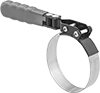
Pivot the head to clear obstructions and turn filters and other cylindrical objects in hard-to-reach areas.
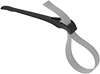
Replace the strap on your strap wrench.
Insert the extractors in these sets into a pipe or fitting and turn with a wrench—the knurls will grip the part so you can twist it out.
Insert these extractors into a pipe or fitting and turn with a wrench—the knurls will grip the part so you can twist it out.
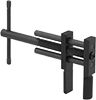
The arms slide along the handle and lock into place with thumb screws. Use these tools to install and remove rings inside a bore or around a shaft.
Move the curved jaws to 15 positions for fine adjustment. These pliers have a bottom jaw that is shorter than the top for a firm grip on the flats of bolt heads and nuts that have rounded corners.
The bottom jaw is shorter than the top for a firm grip on the flats of bolt heads and nuts that have rounded corners.
Assemble and install cord grips in a range of thread sizes.
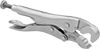
Curved jaws grip bolt heads and nuts with rounded corners. These pliers lock in a vise-like grip and stay clamped in place, leaving your hands free.