Filter by
Product Family

OD


Bearing Trade Number

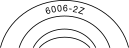
Width

Bearing Construction


For Load Direction


Maximum Rotation Speed
Ball Material
Cage Material


Dynamic Radial Load Capacity


Lubricant
RoHS
DFARS Specialty Metals

About Ball Bearings
%20--%3e%3csvg%20version='1.1'%20id='Layer_1'%20xmlns='http://www.w3.org/2000/svg'%20xmlns:xlink='http://www.w3.org/1999/xlink'%20x='0px'%20y='0px'%20viewBox='0%200%20400%20400'%20style='enable-background:new%200%200%20400%20400;'%20xml:space='preserve'%3e%3cstyle%20type='text/css'%3e%20.st0{fill:%231A70A0;}%20.st1{opacity:0.5;}%20%3c/style%3e%3cg%3e%3cg%3e%3cpath%20class='st0'%20d='M200,56.9c38.35,0,74.4,14.93,101.51,42.05c27.11,27.11,42.05,63.17,42.05,101.51s-14.93,74.4-42.05,101.51%20S238.35,344.02,200,344.02s-74.4-14.93-101.51-42.05c-27.11-27.11-42.05-63.17-42.05-101.51s14.93-74.4,42.05-101.51%20S161.65,56.9,200,56.9%20M200,12.9C96.41,12.9,12.44,96.88,12.44,200.46c0,103.59,83.97,187.56,187.56,187.56%20c103.59,0,187.56-83.97,187.56-187.56C387.56,96.88,303.59,12.9,200,12.9L200,12.9z'/%3e%3c/g%3e%3cg%3e%3cg%20class='st1'%3e%3cpath%20class='st0'%20d='M235.49,152.24h16.15l-27.46,111.87c-1.94,7.8-2.91,12.5-2.91,14.1c0,1.82,0.58,3.29,1.73,4.41%20c1.16,1.12,2.69,1.68,4.61,1.68c5.23,0,11.78-3.85,19.63-11.55l17.22,21.34c-16.95,17.33-34.87,26-53.78,26%20c-8.37,0-15.45-1.47-21.23-4.41c-5.79-2.94-10.44-7.25-13.95-12.92c-3.51-5.67-5.27-11.18-5.27-16.53c0-1.93,0.35-5.24,1.05-9.94%20c1-6.94,2.05-12.54,3.15-16.82l15.22-62.15h-32.69l7.65-30.97C190.89,163.58,214.53,158.88,235.49,152.24z%20M230.44,80.84%20c8.24,0,14.66,2.62,19.26,7.86c4.6,5.24,6.9,11.55,6.9,18.94c0,5.46-1.42,10.7-4.25,15.73c-2.83,5.03-6.88,9.07-12.12,12.12%20c-5.24,3.05-10.33,4.57-15.24,4.57c-4.6,0-9.17-1.23-13.72-3.69c-4.55-2.46-8.02-5.78-10.43-9.95%20c-2.41-4.17-3.61-8.67-3.61-13.48c0-5.35,1.52-10.64,4.57-15.89c3.05-5.24,7.03-9.25,11.96-12.04%20C218.68,82.23,224.24,80.84,230.44,80.84z'/%3e%3c/g%3e%3cg%3e%3cpath%20class='st0'%20d='M214.08,152.24h16.15l-27.46,111.87c-1.94,7.8-2.91,12.5-2.91,14.1c0,1.82,0.58,3.29,1.73,4.41%20c1.16,1.12,2.69,1.68,4.61,1.68c5.23,0,11.78-3.85,19.63-11.55l17.22,21.34c-16.95,17.33-34.87,26-53.78,26%20c-8.37,0-15.45-1.47-21.23-4.41c-5.79-2.94-10.44-7.25-13.95-12.92c-3.51-5.67-5.27-11.18-5.27-16.53c0-1.93,0.35-5.24,1.05-9.94%20c1-6.94,2.05-12.54,3.15-16.82l15.22-62.15h-32.69l7.65-30.97C169.48,163.58,193.11,158.88,214.08,152.24z%20M209.03,80.84%20c8.24,0,14.66,2.62,19.26,7.86c4.6,5.24,6.9,11.55,6.9,18.94c0,5.46-1.42,10.7-4.25,15.73c-2.83,5.03-6.88,9.07-12.12,12.12%20c-5.24,3.05-10.33,4.57-15.24,4.57c-4.6,0-9.17-1.23-13.72-3.69c-4.55-2.46-8.02-5.78-10.43-9.95%20c-2.41-4.17-3.61-8.67-3.61-13.48c0-5.35,1.52-10.64,4.57-15.89c3.05-5.24,7.03-9.25,11.96-12.04%20C197.26,82.23,202.83,80.84,209.03,80.84z'/%3e%3c/g%3e%3c/g%3e%3c/g%3e%3c/svg%3e)
Select bearings by load direction, seal type, capacity, and speed ratings to limit wear and keep your equipment running.
Ball Bearings
Temp. Range, ° F | |||||||||||||
|---|---|---|---|---|---|---|---|---|---|---|---|---|---|
For Shaft Dia., mm | For Housing ID, mm | Wd., mm | ABEC Rating | Dynamic Radial Load Cap., lb. | Max. Rotation Speed, rpm | Min. | Max. | Inner Ring Type | Bearing Trade No. | Each | |||
Open | |||||||||||||
 | |||||||||||||
Steel | |||||||||||||
| 35 | 80 | 21 | 1 | 7,500 | 12,200 | -20 | 230 | Standard | 6307 | 5972K503 | 000000 | ||
| 40 | 80 | 18 | 1 | 5,550 | 8,300 | -20 | 230 | Standard | 6208 | 5972K114 | 00000 | ||
| 55 | 80 | 13 | 1 | 3,700 | 10,000 | -50 | 130 | Standard | 6911 | 6656K147 | 00000 | ||
Corrosion-Resistant 440C Stainless Steel | |||||||||||||
| 50 | 80 | 16 | 1 | 3,000 | 9,900 | -40 | 240 | Standard | 6010 | 6153K148 | 000000 | ||
Shielded | |||||||||||||
 | |||||||||||||
Steel | |||||||||||||
| 35 | 80 | 21 | 1 | 7,950 | 8,500 | -20 | 230 | Standard | 6307-2Z | 5972K354 | 00000 | ||
| 35 | 80 | 21 | 3 | 7,850 | 9,500 | -20 | 230 | Standard | 6307-2Z | 6661K68 | 00000 | ||
| 40 | 80 | 18 | 1 | 6,500 | 8,500 | -20 | 230 | Standard | 6208-2Z | 5972K344 | 00000 | ||
| 40 | 80 | 18 | 3 | 7,300 | 9,000 | -20 | 230 | Standard | 6208-2Z | 6661K49 | 00000 | ||
| 50 | 80 | 16 | 1 | 4,900 | 10,000 | -20 | 230 | Standard | 6010-2Z | 5972K272 | 00000 | ||
| 50 | 80 | 16 | 3 | 5,150 | 9,000 | -20 | 230 | Standard | 6010-2Z | 4481N19 | 000000 | ||
| 55 | 80 | 13 | 1 | 3,700 | 8,700 | -40 | 150 | Standard | 6911-2Z | 6656K235 | 00000 | ||
Corrosion-Resistant 440C Stainless Steel | |||||||||||||
| 35 | 80 | 21 | 1 | 6,350 | 9,400 | -40 | 240 | Standard | 6307-2Z | 6153K168 | 000000 | ||
| 40 | 80 | 18 | 1 | 4,000 | 9,100 | -40 | 240 | Standard | 6208-2Z | 6153K171 | 000000 | ||
| 50 | 80 | 16 | 1 | 3,000 | 8,400 | -40 | 240 | Standard | 6010-2Z | 6153K174 | 000000 | ||
Sealed | |||||||||||||
 | |||||||||||||
Steel | |||||||||||||
| 35 | 80 | 21 | 1 | 7,500 | 5,400 | -20 | 230 | Standard | 6307-2RS | 5972K59 | 00000 | ||
| 35 | 80 | 21 | 3 | 7,850 | 6,000 | -30 | 210 | Standard | 6307-2RS | 6661K128 | 00000 | ||
| 40 | 80 | 18 | 1 | 6,500 | 5,000 | -20 | 230 | Standard | 6208-2RS | 5972K49 | 00000 | ||
| 40 | 80 | 18 | 3 | 7,300 | 5,600 | -30 | 210 | Standard | 6208-2RS | 6661K109 | 00000 | ||
| 50 | 80 | 16 | 1 | 4,900 | 4,400 | -20 | 230 | Standard | 6010-2RS | 5972K234 | 00000 | ||
| 50 | 80 | 16 | 3 | 5,150 | 5,600 | -30 | 210 | Standard | 6010-2RS | 4481N66 | 000000 | ||
Corrosion-Resistant 440C Stainless Steel | |||||||||||||
| 40 | 80 | 18 | 1 | 6,500 | 5,200 | -20 | 210 | Standard | 6208-2RS | 6138K111 | 000000 | ||
Angular Contact Ball Bearings
 |  |  |  |  |
Single Row Open | Single Row Sealed | Double Row Open | Double Row Shielded | Double Row Sealed |
Temp. Range, ° F | |||||||||||||||
|---|---|---|---|---|---|---|---|---|---|---|---|---|---|---|---|
For Shaft Dia., mm | For Housing ID, mm | Wd., mm | ABEC Rating | Material | Dynamic Combined Load Cap., lbf | Max. Rotation Speed, rpm | Lubrication | Contact Angle | Min. | Max. | Bearing Trade No. | Each | |||
Single Row | |||||||||||||||
Open | |||||||||||||||
| 35 | 80 | 21 | 3 | Steel | 8,750 | 10,000 | Required | 40° | -40 | 300 | 7307 | 6680K29 | 0000000 | ||
| 40 | 80 | 18 | 3 | Steel | 8,450 | 11,000 | Required | 40° | -40 | 300 | 7208 | 6680K19 | 000000 | ||
| 50 | 80 | 16 | 5 | Steel | 6,050 | 18,000 | Required | 15° | -40 | 250 | 7010 | 2385K106 | 000000 | ||
Sealed | |||||||||||||||
| 40 | 80 | 18 | 1 | Steel | 7,600 | 5,000 | Lubricated | 40° | -20 | 230 | 7208-2RS | 6680K43 | 000000 | ||
Double Row | |||||||||||||||
Open | |||||||||||||||
| 40 | 80 | 30.2 | 3 | Steel | 10,600 | 8,000 | Required | 30° | -40 | 250 | 3208 | 8828T119 | 000000 | ||
Shielded | |||||||||||||||
| 40 | 80 | 30.2 | 3 | Steel | 10,600 | 8,000 | Lubricated | 30° | -40 | 300 | 3208-2Z | 8828T219 | 000000 | ||
Sealed | |||||||||||||||
| 40 | 80 | 30.2 | 3 | Steel | 10,600 | 5,600 | Lubricated | 30° | -40 | 210 | 3208-2RS | 8828T319 | 000000 | ||
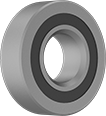
Permanently Lubricated Ball Bearings
 |
Temp. Range, ° F | |||||||||||||
|---|---|---|---|---|---|---|---|---|---|---|---|---|---|
For Shaft Dia., mm | For Housing ID, mm | Wd., mm | ABEC Rating | Dynamic Radial Load Cap., lb. | Max. Rotation Speed, rpm | Min. | Max. | Inner Ring Type | Bearing Trade No. | Each | |||
Open | |||||||||||||
Steel | |||||||||||||
| 35 | 80 | 21 | 1 | 5,750 | 5,000 | 10 | 200 | Standard | 6307 | 2349K718 | 000000 | ||
| 40 | 80 | 18 | 1 | 5,050 | 5,000 | 10 | 200 | Standard | 6208 | 2349K706 | 00000 | ||
Corrosion-Resistant 440C Stainless Steel | |||||||||||||
| 40 | 80 | 18 | 1 | 5,050 | 5,000 | -10 | 200 | Standard | 6208 | 4668K202 | 000000 | ||
Sealed | |||||||||||||
Steel | |||||||||||||
| 35 | 80 | 21 | 1 | 5,750 | 5,000 | 10 | 200 | Standard | 6307-2RS | 2349K774 | 000000 | ||
| 40 | 80 | 18 | 1 | 5,050 | 5,000 | 10 | 200 | Standard | 6208-2RS | 2349K761 | 00000 | ||
| 50 | 80 | 16 | 1 | 3,750 | 4,500 | 10 | 200 | Standard | 6010-2RS | 2349K751 | 00000 | ||
Corrosion-Resistant 440C Stainless Steel | |||||||||||||
| 40 | 80 | 18 | 1 | 5,050 | 5,000 | -10 | 200 | Standard | 6208-2RS | 4668K309 | 000000 | ||
| 50 | 80 | 16 | 1 | 3,750 | 4,000 | -10 | 200 | Standard | 6010-2RS | 4668K299 | 000000 | ||
Self-Aligning Ball Bearings
 |
Open |
 |
Sealed |
Misalignments correct themselves on the fly in these bearings. Two rows of balls have separate raceways in the inner ring and a shared raceway in the outer ring, so the balls rock back and forth to compensate for misalignment. This construction also reduces noise and vibration.
Open—With no rubber seal to block airflow, these bearings dissipate heat quickly, extending the life of the lubricant and reducing friction over time.
Sealed—The best choice for dirty environments. A barrier seals out dust so it won't gunk up or wear down the balls. However, these bearings retain the most heat since air can't flow through.
Steel—Strong and wear resistant. However, these bearings are best for dry environments since moisture will cause them to rust.
ABEC Rating—Bearings with an ABEC rating meet industry tolerance standards established by the Annular Bearing Engineers Committee (ABEC). They're rated on a scale from 1 to 9. The higher the rating, the tighter the tolerance. Bearings rated ABEC 1 or 3 are precise enough for most applications. If your application consistently runs at high speeds or requires high accuracy, consider bearings rated ABEC 5 or higher, since they generate less friction and heat.
Temp. Range | ||||||||||||||
|---|---|---|---|---|---|---|---|---|---|---|---|---|---|---|
For Shaft Dia., mm | For Housing ID, mm | Wd., mm | ABEC Rating | Dynamic Radial Load Cap., lb. | Max. Rotation Speed, rpm | Misalignment Capability | Min. | Max., ° F | Inner Ring Type | Bearing Trade No. | Each | |||
Open | ||||||||||||||
Steel | ||||||||||||||
| 35 | 80 | 21 | 1 | 5,650 | 7,500 | 4° | Not Rated | 210 | Standard | 1307 | 6660K333 | 0000000 | ||
| 35 | 80 | 31 | 1 | 8,900 | 12,000 | 3° | -30° F | 210 | Standard | 2307 | 6660K56 | 000000 | ||
| 40 | 80 | 18 | 1 | 4,300 | 7,500 | 4° | Not Rated | 210 | Standard | 1208 | 6660K334 | 00000 | ||
| 40 | 80 | 23 | 1 | 7,150 | 11,000 | 2.5° | -30° F | 210 | Standard | 2208 | 6660K21 | 000000 | ||
Sealed | ||||||||||||||
Steel | ||||||||||||||
| 35 | 80 | 31 | 1 | 5,950 | 5,600 | 1.5° | -30° F | 210 | Standard | 2307-2RS | 6660K76 | 000000 | ||
| 40 | 80 | 23 | 1 | 4,450 | 5,600 | 1.5° | -30° F | 210 | Standard | 2208-2RS | 6660K69 | 000000 | ||
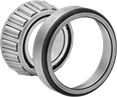
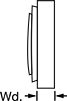
Tapered-Roller Bearings
 |  |
Radial Load Cap., lb. | Thrust Load Cap., lb. | |||||||||||||
|---|---|---|---|---|---|---|---|---|---|---|---|---|---|---|
For Shaft Dia., mm | For Housing ID, mm | Wd., mm | Bearing Trade No. | Dynamic | Static | Dynamic | Static | Max. Rotation Speed, rpm | Lubrication | Temp. Range, ° F | Each | |||
For Combined Radial and Thrust Load—Open with Steel Ring | ||||||||||||||
| 50 | 80 | 19 | 33010 | 4,650 | 25,200 | 2,500 | 23,300 | 2,200 | Required | -60 to 200 | 6677K79 | 0000000 | ||
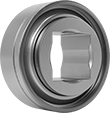
Square-Bore Ball Bearings
Maintenance-Free Turntable Bearings
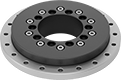 |
With low-friction internal sleeves made of PTFE, these bearings never need lubrication. Also known as slewing-ring bearings, they’re used for slow, controlled rotation. You’ll often see them rotating hoists, robotic arms, and other heavy machinery. They have holes on both the inner and outer ring, so they’re easy to align and mount.
Note: Listed capacities only apply when bearings are mounted parallel to the ground. These bearings can be mounted in other orientations, but their capacities will be reduced.
Thrust Load Cap., lb. | Radial Load Cap., lb. | Bearing | ||||||||||||||
|---|---|---|---|---|---|---|---|---|---|---|---|---|---|---|---|---|
Dynamic | Static | Dynamic | Static | Static Moment Load Cap., ft·lbf | OD, mm | ID, mm | Overall Ht., mm | Material | Type | Material | Plain Bearing Type | Mounting Fasteners Included | Each | |||
For Combined Radial, Thrust, and Moment Loads | ||||||||||||||||
| 890 | 3,350 | 130 | 500 | 70 | 80 | 20 | 24 | Anodized Aluminum | Plain | PTFE | Sleeve | No | 8700K41 | 0000000 | ||
Cylindrical Roller Bearings
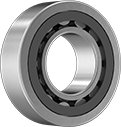 |
With cylindrical rollers to distribute load over a large surface area, these bearings are often used to support heavy loads at high speeds in applications such as power generation and metal recycling. A cage prevents the rollers from touching each other, reducing friction for high-speed use. All of these bearings have an inner ring that's flanged on one side, so they only allow heat expansion in one direction. The bearings can be taken apart, so you can install them with precision and quickly dismantle them for maintenance or replacement.
Radial Load Cap., lb. | Thrust Load Cap. | ||||||||||||||
|---|---|---|---|---|---|---|---|---|---|---|---|---|---|---|---|
For Shaft Dia., mm | For Housing ID, mm | Wd., mm | Dynamic | Static | Dynamic | Static | Max. Rotation Speed, rpm | Lubrication | For Shaft Surface Smoothness, Ra, μm | Temp. Range, ° F | Specs. Met | Each | |||
For Combined Radial and Thrust Load—Open with Steel Ring | |||||||||||||||
| 40 | 80 | 18 | 14,150 | 11,900 | Not Rated | Not Rated | 10,900 | Required | 0.8 | -20 to 245 | DIN 5412-1 | 3635N114 | 0000000 | ||
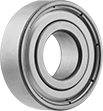
Electrical Insulating Ball Bearings
 |
Shielded |
 |
Sealed |
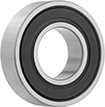
Protect bearings from stray currents. The ceramic balls insulate bearings from electrical charges in electric motors and power generators that can damage the inner ring over time. The balls also generate less heat than metal ones, so you don’t have to lubricate them as often to keep bearings running smoothly.
Shielded—The balls are covered just enough to keep out large particles while allowing air to pass through and dissipate heat.
Sealed—The best choice for dirty environments. A barrier seals out dust so it won't gunk up or wear down the balls. However, these bearings retain the most heat since air can't flow through.
Steel—Strong and wear resistant. However, these bearings are best for dry environments since moisture will cause them to rust.
ABEC Rating—Bearings with an ABEC rating meet industry tolerance standards established by the Annular Bearing Engineers Committee (ABEC). They're rated on a scale from 1 to 9. The higher the rating, the tighter the tolerance. Bearings rated ABEC 1 or 3 are precise enough for most applications. If your application consistently runs at high speeds or requires high accuracy, consider bearings rated ABEC 5 or higher, since they generate less friction and heat.
Temp. Range, ° F | Ceramic Balls | |||||||||||
|---|---|---|---|---|---|---|---|---|---|---|---|---|
For Shaft Dia., mm | For Housing ID, mm | Wd., mm | ABEC Rating | Dynamic Radial Load Cap., lb. | Max. Rotation Speed, rpm | Min. | Max. | Bearing Trade No. | Each | |||
Shielded | ||||||||||||
Steel | ||||||||||||
| 35 | 80 | 21 | 1 | 9,100 | 12,600 | -20 | 245 | 6307-2Z | 1389N56 | 0000000 | ||
| 40 | 80 | 18 | 1 | 6,500 | 12,000 | -20 | 250 | 6208-2Z | 1389N36 | 000000 | ||
Sealed | ||||||||||||
Steel | ||||||||||||
| 40 | 80 | 18 | 1 | 7,300 | 11,000 | -40 | 210 | 6208-2RZ | 1389N25 | 000000 | ||
Spherical-Roller Bearings
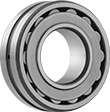 |
Two rows of rollers give these bearings higher dynamic radial load capacities than comparably sized tapered-roller bearings. Also known as rock crusher bearings, they handle heavy shock loads and are used for metal milling machinery, mining and oil field equipment, and in paper mills.
Combined Load Cap., lbf | |||||||||||||
|---|---|---|---|---|---|---|---|---|---|---|---|---|---|
For Shaft Dia., mm | For Housing ID, mm | Wd., mm | Bearing Trade No. | Ring Material | Dynamic | Static | Max. Rotation Speed, rpm | Lubrication | Max. Temp., ° F | Each | |||
Open Bearing | |||||||||||||
| 40 | 80 | 23 | 22208 | Steel | 25,400 | 22,300 | 6,700 | Required | 390 | 2721T4 | 0000000 | ||
Quick-Mount Ball Bearings
 |
Set-Screw Shaft Mount |
 |
Clamp-On Shaft Mount |
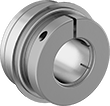
Slip onto a shaft and secure with the turn of a screw. You don't need any special tools to mount these bearings.
Set-Screw Shaft Mount—Tighten the screws against the shaft to hold the bearing in place. For high-speed applications, consider clamp-on shaft mounts, which are less likely to slip.
Clamp-On Shaft Mount—The clamp tightens around the shaft for a strong 360° grip. These mounts attach more securely than set screws to reduce vibration. Plus, there aren't any screws pressing into the shaft, so it stays free from damage. Also known as a concentric lock.
Black-Oxide Steel—Strong and wear resistant. However, these bearings are best for dry environments since moisture will cause them to rust.
Shielded—The balls are covered just enough to keep out large particles while allowing air to pass through and dissipate heat.
Sealed—The best choice for dirty environments. A barrier seals out dust so it won't gunk up or wear down the balls. However, these bearings retain the most heat since air can't flow through.
ABEC Rating—Bearings with an ABEC rating meet industry tolerance standards established by the Annular Bearing Engineers Committee (ABEC). They're rated on a scale from 1 to 9. The higher the rating, the tighter the tolerance. Bearings rated ABEC 1 or 3 are precise enough for most applications. If your application consistently runs at high speeds or requires high accuracy, consider bearings rated ABEC 5 or higher, since they generate less friction and heat.
Retaining Ring, mm | Temp. Range, ° F | ||||||||||||||
|---|---|---|---|---|---|---|---|---|---|---|---|---|---|---|---|
For Shaft Dia., mm | For Housing ID, mm | Wd., mm | OD | Thk. | Bearing Seal Type | ABEC Rating | Dynamic Radial Load Cap., lb. | Max. Rotation Speed, rpm | Min. | Max. | Bearing Trade No. | Each | |||
Set-Screw Shaft Mount | |||||||||||||||
Black-Oxide Steel | |||||||||||||||
| 40 | 80 | 27.8 | 86.5 | 1.6 | Sealed | 1 | 7,300 | 4,150 | -20 | 220 | ER208 | 5629N15 | 0000000 | ||
Clamp-On Shaft Mount | |||||||||||||||
Black-Oxide Steel | |||||||||||||||
| 40 | 80 | 28 | 88 | 1.6 | Shielded | 1 | 7,300 | 4,150 | -20 | 220 | ER208 | 6821N55 | 000000 | ||
One-Way-Locking Ball Bearings
 |
Shielded |
 |
Sealed |
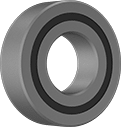
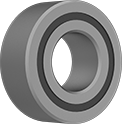
Prevent shafts from reversing direction. These bearings have internal components (sprags) that lock against the outer ring to transmit torque one way but spin freely in the other. They're often found in backstopping, indexing, and overrunning applications. For example, they're used to prevent conveyors from reversing.
Shielded—The balls are covered just enough to keep out large particles while allowing air to pass through and dissipate heat.
Sealed—The best choice for dirty environments. A barrier seals out dust so it won't gunk up or wear down the balls. However, these bearings retain the most heat since air can't flow through.
Steel—Strong and wear resistant. However, these bearings are best for dry environments since moisture will cause them to rust.
ABEC Rating—Bearings with an ABEC rating meet industry tolerance standards established by the Annular Bearing Engineers Committee (ABEC). They're rated on a scale from 1 to 9. The higher the rating, the tighter the tolerance. Bearings rated ABEC 1 or 3 are precise enough for most applications. If your application consistently runs at high speeds or requires high accuracy, consider bearings rated ABEC 5 or higher, since they generate less friction and heat.
Temp. Range, ° F | ||||||||||||||
|---|---|---|---|---|---|---|---|---|---|---|---|---|---|---|
For Shaft Dia., mm | For Housing ID, mm | Wd., mm | ABEC Rating | Dynamic Radial Load Cap., lb. | Max. Rotation Speed, rpm | Max. Torque, ft·lbf | Min. | Max. | Inner Ring Type | Bearing Trade No. | Each | |||
Shielded | ||||||||||||||
Steel | ||||||||||||||
| 40 | 80 | 22 | 1 | 2,010 | 3,000 | 305 | -40 | 170 | Standard | FZ 6208 | 4752N92 | 0000000 | ||
Sealed | ||||||||||||||
Steel | ||||||||||||||
| 40 | 80 | 27 | 1 | 2,010 | 3,000 | 305 | -40 | 170 | Standard | FZ 6208 2RS | 4752N33 | 000000 | ||
High-Load Face-Mount Crossed-Roller Bearings
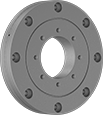 |
With thicker inner and outer raceways, these bearings can handle heavier loads than thin-profile crossed roller bearings. Mounting holes on the inner and outer rings allow for fastening onto hollow joints and shafts. The rollers face in alternating directions to allow for rigid, accurate motion under any combination of radial, thrust, and moment (twisting) loads. Use in applications where highly accurate motion is necessary, such as machine tools and industrial robots.
Open Bearing—Open bearings dissipate heat more efficiently than sealed bearings.
Sealed Bearing—Sealed bearings block out dust and other contaminants better than open bearings, but retain more heat.
Combined Load Cap., lbf | ||||||||||||
|---|---|---|---|---|---|---|---|---|---|---|---|---|
For Shaft Dia., mm | For Housing ID, mm | Wd., mm | Dynamic | Static | Max. Rotation Speed, rpm | Lubrication | Temp. Range, ° F | Features | Each | |||
For Combined Radial, Thrust, and Moment Load—Open with Steel Ring | ||||||||||||
| 25 | 80 | 12 | 1,900 | 2,350 | 1,400 | Required | 0 to 230 | Lubrication Groove, Two Lubrication Holes | 2010N13 | 0000000 | ||
For Combined Radial, Thrust, and Moment Load—Sealed with Steel Ring | ||||||||||||
| 25 | 80 | 12 | 1,900 | 2,350 | 1,100 | Lubricated | 0 to 210 | Lubrication Groove, Two Lubrication Holes | 2010N23 | 000000 | ||
High-Precision Angular Contact Ball Bearings
 |
Open |
 |
Sealed |
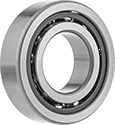
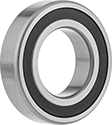
Our most precise bearings for tackling radial and thrust loads at once, with tolerances tighter than a speck of dust. Rated ABEC 7 out of 9, they meet strict tolerance standards established by the Annular Bearing Engineers Committee (ABEC). Choose them for equipment that requires both high speed and pinpoint accuracy, such as machine tool spindles. For example, a bearing on a spindle withstands a radial load as it spins at high speeds and a thrust load when the cutting tool touches the workpiece. These bearings don’t handle as much force from radial loads as standard ones, but you can pair them with a cylindrical roller bearing to increase their load capacity.
Single Row—Single-row bearings withstand thrust loads from one direction.
Open—With no rubber seal to block airflow, these bearings dissipate heat quickly, extending the life of the lubricant and reducing friction over time.
Sealed—The best choice for dirty environments. A barrier seals out dust so it won't gunk up or wear down the balls. However, these bearings retain the most heat since air can't flow through.
Steel—Strong and wear resistant. However, these bearings are best for dry environments since moisture will cause them to rust.
Temp. Range, ° F | |||||||||||||||
|---|---|---|---|---|---|---|---|---|---|---|---|---|---|---|---|
For Shaft Dia., mm | For Housing ID, mm | Wd., mm | ABEC Rating | Material | Dynamic Combined Load Cap., lbf | Max. Rotation Speed, rpm | Lubrication | Contact Angle | Min. | Max. | Bearing Trade No. | Each | |||
Single Row | |||||||||||||||
Open | |||||||||||||||
| 40 | 80 | 18 | 7 | Steel | 8,500 | 19,200 | Required | 15° | -40 | 245 | 7208 | 4487N28 | 0000000 | ||
| 50 | 80 | 16 | 7 | Steel | 6,650 | 17,000 | Required | 15° | -30 | 140 | 7010 | 2385K51 | 000000 | ||
Sealed | |||||||||||||||
| 50 | 80 | 16 | 7 | Steel | 6,100 | 17,700 | Lubricated | 15° | 0 | 230 | 7010 | 4487N15 | 000000 | ||
High-Temperature Graphite-Lubricated Ball Bearings
 |
Temp. Range, ° F | |||||||||||||
|---|---|---|---|---|---|---|---|---|---|---|---|---|---|
For Shaft Dia., mm | For Housing ID, mm | Wd., mm | ABEC Rating | Dynamic Radial Load Cap., lb. | Max. Rotation Speed, rpm | Min. | Max. | Inner Ring Type | Bearing Trade No. | Each | |||
Shielded | |||||||||||||
Steel | |||||||||||||
| 40 | 80 | 18 | 1 | 7,300 | 150 | -70 | 660 | Standard | 6208-2Z | 1258N35 | 0000000 | ||
Ball Bearings for Food and Beverage
 |
Sealed |
Temp. Range, ° F | ||||||||||||||
|---|---|---|---|---|---|---|---|---|---|---|---|---|---|---|
For Shaft Dia., mm | For Housing ID, mm | Wd., mm | ABEC Rating | Dynamic Radial Load Cap., lb. | Max. Rotation Speed, rpm | Min. | Max. | Inner Ring Type | Food Industry Std. | Bearing Trade No. | Each | |||
Sealed | ||||||||||||||
Corrosion-Resistant 440C Stainless Steel | ||||||||||||||
| 35 | 80 | 21 | 1 | 6,350 | 5,000 | -40 | 200 | Standard | FDA Compliant 21 CFR 178.3570 | 6307-2RS | 4648K226 | 0000000 | ||
Tapered-Bore Ball Bearings
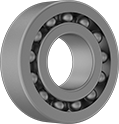 |
Mount these bearings on tapered shafts. Or, pair with an adapter sleeve to install them on round shafts without needing to press fit. The two rows of balls have separate raceways in the inner ring and a shared raceway in the outer ring, so the balls rock back and forth to compensate for misalignment. This construction also reduces noise and vibration.
Open—With no rubber seal to block airflow, these bearings dissipate heat quickly, extending the life of the lubricant and reducing friction over time.
Steel—Strong and wear resistant. However, these bearings are best for dry environments since moisture will cause them to rust.
ABEC Rating—Bearings with an ABEC rating meet industry tolerance standards established by the Annular Bearing Engineers Committee (ABEC). They're rated on a scale from 1 to 9. The higher the rating, the tighter the tolerance. Bearings rated ABEC 1 or 3 are precise enough for most applications. If your application consistently runs at high speeds or requires high accuracy, consider bearings rated ABEC 5 or higher, since they generate less friction and heat.
Bearings | Adapter Sleeves | |||||||||||||||||
|---|---|---|---|---|---|---|---|---|---|---|---|---|---|---|---|---|---|---|
Temp. Range | ||||||||||||||||||
For Shaft Dia., mm | For Housing ID, mm | Wd., mm | ABEC Rating | Dynamic Radial Load Cap., lb. | Max. Rotation Speed, rpm | Misalignment Capability | Rate of Taper | Min. | Max., ° F | Inner Ring Type | Bearing Trade No. | Each | For Shaft Dia., mm | Each | ||||
Open | ||||||||||||||||||
Steel | ||||||||||||||||||
| 40 | 80 | 18 | 1 | 4,300 | 7,500 | 4° | 1:12 | Not Rated | 240 | Standard | 1208K | 7755N28 | 000000 | 35 | 4449N21 | 000000 | ||
| 40 | 80 | 23 | 1 | 5,000 | 7,500 | 4° | 1:12 | Not Rated | 240 | Standard | 2208K | 7755N29 | 000000 | 35 | 4449N23 | 00000 | ||
High-Load Crossed-Roller Bearings
 |
The thicker inner and outer raceways on these bearings can handle heavier loads than the thin-profile crossed-roller bearings. The rollers face in alternating directions to allow for rigid, accurate motion under any combination of radial, thrust, and moment (twisting) loads. Use in applications where highly accurate motion is necessary, such as machine tools and industrial robots.
Open Bearing—Open bearings dissipate heat more efficiently than sealed bearings.
Sealed Bearing—Sealed bearings block out dust and other contaminants better than open bearings, but retain more heat.
Combined Load Cap., lbf | ||||||||||||
|---|---|---|---|---|---|---|---|---|---|---|---|---|
For Shaft Dia., mm | For Housing ID, mm | Wd., mm | Dynamic | Static | Max. Rotation Speed, rpm | Lubrication | Temp. Range, ° F | Features | Each | |||
For Combined Radial, Thrust, and Moment Load—Open with Steel Ring | ||||||||||||
| 50 | 80 | 13 | 3,850 | 4,650 | 1,150 | Required | 0 to 230 | Lubrication Groove, Two Lubrication Holes | 1378N11 | 0000000 | ||
For Combined Radial, Thrust, and Moment Load—Sealed with Steel Ring | ||||||||||||
| 50 | 80 | 13 | 3,850 | 4,600 | 900 | Lubricated | 0 to 210 | Lubrication Groove, Two Lubrication Holes | 1378N21 | 000000 | ||
Food and Beverage Maintenance-Free Turntable Bearings
 |
Made of stainless steel and plastic, these bearings are FDA compliant for direct contact with food. Their low-friction internal sleeves never need to be lubricated. Often used to turn conveyors or spin mixers, these bearings are designed for slow, controlled rotation. They have holes on both the inner and outer ring, so they’re easy to align and mount. They’re also known as slewing-ring bearings.
Note: Listed capacities only apply when bearings are mounted parallel to the ground. These bearings can be mounted in other orientations, but their capacities will be reduced.
Thrust Load Cap., lb. | Radial Load Cap., lb. | Bearing | |||||||||||||||
|---|---|---|---|---|---|---|---|---|---|---|---|---|---|---|---|---|---|
Dynamic | Static | Dynamic | Static | Static Moment Load Cap., ft·lbf | OD, mm | ID, mm | Overall Ht., mm | Material | Type | Material | Plain Bearing Type | Mounting Fasteners Included | Food Industry Std. | Each | |||
For Combined Radial, Thrust, and Moment Loads | |||||||||||||||||
| 890 | 3,350 | 130 | 500 | 70 | 80 | 20 | 24 | Stainless Steel | Plain | Plastic | Sleeve | No | FDA Compliant 21 CFR 177.1550 | 7752N11 | 000000000 | ||
Quick-Mount Ball Bearings for Food and Beverage
 |
Clamp-On Shaft Mount |
Retaining Ring, mm | Temp. Range, ° F | |||||||||||||||
|---|---|---|---|---|---|---|---|---|---|---|---|---|---|---|---|---|
For Shaft Dia., mm | For Housing ID, mm | Wd., mm | OD | Thk. | Bearing Seal Type | ABEC Rating | Dynamic Radial Load Cap., lb. | Max. Rotation Speed, rpm | Min. | Max. | Enclosure Rating | Food Industry Std. | Each | |||
Clamp-On Shaft Mount | ||||||||||||||||
Corrosion-Resistant Nickel-Plated Steel | ||||||||||||||||
| 40 | 80 | 27.8 | 86.5 | 1.6 | Sealed | 1 | 7,300 | 1,750 | -20 | 220 | IP69K | NSF Registered H1 | 7177N29 | 0000000 | ||
Corrosion-Resistant Flush-Mount Screw-Clamp Bushings
 |
 |
For Shaft Dia., mm | OD, mm | Overall Wd., mm | Max. Torque, in·lbf | Fastener Tightening Torque, in·lbf | Includes | Each | |||
|---|---|---|---|---|---|---|---|---|---|
Nickel-Plated Steel | |||||||||
| 50 | 80 | 32 | 17,700 | 360 | Clamping Screws | 5515N16 | 0000000 | ||
Bearing Locknuts
 |
 |
Carbon Steel |
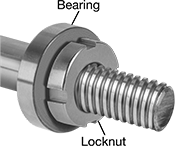
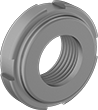
With a nylon insert that grips your threaded shaft or spindle without damaging its threads, these locknuts—also called shaft nuts—hold bearings, bushings, gears, and pulleys prone to vibration tightly in place. They come as one piece, so you can easily clamp them onto your shaft or spindle. But, since they aren’t made entirely of metal, they don’t stand up to heat as well as all-metal locknuts. Slots in their sides mean you can tighten and loosen them with a spanner wrench or spanner socket. Their face is also chamfered to help keep the size and weight of your assembly at a minimum. All meet international standards for bearing locknut dimensions.
Zinc-Plated Carbon Steel—Zinc-plated carbon steel locknuts resist rusting from some moisture, but you shouldn’t use them with salt water or chemicals. They are strong and resist wear, though they don’t stand up to corrosion as well as 303 stainless steel locknuts.
Carbon Steel—All carbon steel locknuts are strong and resist wear, though they don’t stand up to corrosion as well as 303 stainless steel locknuts.
303 Stainless Steel—303 stainless steel locknuts resist corrosion better than carbon steel locknuts but aren’t as strong. They withstand washdowns and chemicals.
Thread Spacing—When choosing your thread spacing, consider the precision of your application. The finer the threads, the more control you have when making adjustments.
Flush-Mount Screw-Clamp Bushings
 | |
Insert these bushings into the bore of your sprocket for flush or recessed mounting. They handle shock loads. When you tighten the included clamping screws, the bushing's inner sleeve contracts onto the shaft and the outer sleeve expands to hold your sprocket, pulley, or gear. They can be mounted on shafts with or without keyways.
For Shaft Dia., mm | OD, mm | Overall Wd., mm | Max. Torque, in·lbf | Fastener Tightening Torque, in·lbf | Includes | Each | |||
|---|---|---|---|---|---|---|---|---|---|
Steel | |||||||||
| 50 | 80 | 66 | 36,400 | 363 | Clamping Screws | 1070N17 | 0000000 | ||
Bearing Nuts
 |
Carbon Steel Chamfered Face |
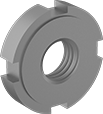 |
Carbon Steel Stepped Face |
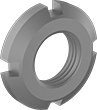
Often paired with spring lock washers to strengthen their hold, these bearing nuts—also known as shaft nuts—keep vibration from shifting bearings, bushings, pulleys, and gears on your threaded shaft or spindle. They have slotted sides, so you can tighten and loosen them with a spanner wrench or spanner socket.
Carbon Steel—Carbon steel bearing nuts are strong and resist wear.
Chamfered Face—Chamfered-face bearing nuts weigh less and produce less heat than stepped-face nuts.
Stepped Face—Use stepped-face bearing nuts with DIN 462 spring lock washers. You can also use them in pairs or with other bearing nuts. For the nut closer to the bearing, position the stepped face towards the bearing. All meet DIN standards for bearing lockout dimensions.
ISO 2982— Some chamfered-face bearing nuts meet ISO 2982 (formerly DIN 981), an international standard for bearing locknut dimensions. Their sizes correspond to SKF KM series. Use them with DIN 5406 spring lock washers.
Thread Spacing—When choosing your thread spacing, consider the precision of your application. The finer the threads, the more control you have when making adjustments.
Thin-Profile Bearing Nuts