We will reply to your message within an hour.
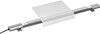
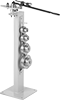
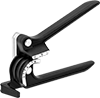
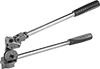
Bend wire and rod up to 1/2" diameter and flat stock up to 1/4"×1" with these rugged steel benders.
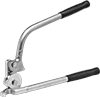
Bend wire and rod up to 3/8" diameter and flat stock up to 1/2"×3/16".
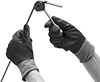
For small projects, these wire benders form steel and other metal wire up to 1/8" diameter.
Create squares, coils, and S‐shapes.
Also known as ring rollers, these curvers shape wire, rods, and flat stock into curves and circles.
A long handle gives you the leverage to quickly bend metal.
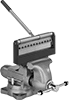
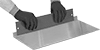
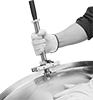
Shape sheet metal using your bench vise as a sturdy base.
Reinforced construction lets these benders handle thicker material than bench-top benders.
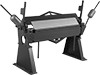
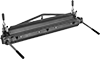
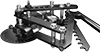
Position the movable forming dies, also known as fingers, to make boxes, trays, and pans in different widths.
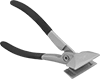
Make bends up to 90° in metal sheets.
Make bends up to 135° in metal sheets. Benders have a clearance of 4" for insertion and removal of large workpieces such as vehicle panels and duct work.
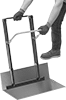
Make deep folds in roofing panels and other large pieces of sheet metal.
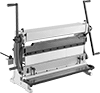
Save space in your shop by cutting, bending, and curving sheet metal with a single machine. Also known as shear brake rolls.
Create long, uniform folds on the edges of sheet metal.
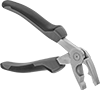
Open sheet metal seams without cutting. The jaws slide under seams to pry the sheets apart.
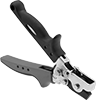
Fold corners in flat metal sheets to create your own bin boxes, drip pans, and other three-dimensional objects. Similar to tucking the corners of a bedsheet, these benders twist and wrap the metal into triangle-shaped folds to form corners.
Also known as slip rolls, these curvers create bends, curves, and circles in sheet metal.
Pull and pinch metal extrusions, such as L-channels, so they fit precisely around contoured edges and frames.
These benders are compatible with plastics such as acrylic, polyethylene, polypropylene, polycarbonate, PVC, CPVC, ABS, and Kydex.
These tools include one slide bar and 10 bending mandrels for 1/4" to 5/8" tube OD.
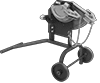
Bending mandrels for 1/2" to 2" tube OD are sold separately.
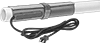
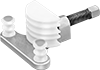
Make bends up to 135° in fuel, brake, and hydraulic lines.
Bend more than one size of tubing without adjusting the bending head.
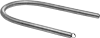
Use one hand to make bends up to 90° in soft metal tubing.
Smoothly bend hard metal tubes, such as steel and titanium, without causing crimps or kinks.
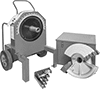
Handle-free and one quarter the size of traditional tube benders, these benders fit in small, hard-to-reach spaces.
Protect thin-wall tubing from crimping and collapsing while bending by hand. These sets include sleeves for 6 different tube sizes.
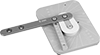
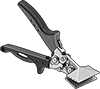
Protect thin-wall tubing from crimping and collapsing while bending by hand.
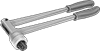
Ratcheting action gives these tools greater leverage than standard tube benders for bending thick‐wall material.
Grip tubing from the side to make bends in tight spaces.
Follow the easy-to-read markings to bend conduit to the angle you need.
Choose these benders for short-radius conduit bending.
When you're working with exposed conduit, these benders make offset bends so your conduit matches knockout holes in electrical boxes.
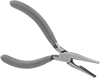
Heat PVC conduit and pipe, then manually bend it to your desired angle.
Make on-the-fly bends in Schedule 40 PVC conduit and pipe without the risk of kinks or cracks. Lightweight and flexible, these benders are easy to keep on hand for occasional use and last-minute adjustments.
Powerful enough to bend conduit and pipe to the angle you need, these are for use on Schedule 40 pipe.
Create smooth, accurate bends in round heat pipe for routing heat away from sensitive electronic components and toward a heat sink.
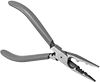
The jaws have V-notches in 1/4" increments to measure the depth of bends.
Offset handles allow you to use these tools in tight spaces.
These tools lock onto your material to prevent them from opening while bending and crimping.
With a single tool, create both sharp creases and soft curves along the edges of sheet metal.
Rounded jaws reduce damage to aluminum and other lightweight metal.
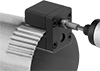
Turn your impact driver into a power crimper, and create raised edges on sheet metal more quickly than hand crimpers.
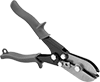
These tools have five blades and compound-leverage action for more power with less effort than other crimpers.
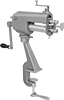
Make different edge styles on your sheet metal with these forming tools. They come with rollers for turning, wiring, burring, beading, and crimping.
Create a raised edge in sheet metal that locks into the rolled edge of another piece.
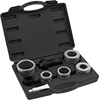
Use the power of an impact wrench to stretch the ends of metal tubing, allowing another tube with the same diameter to fit inside.
Enlarge the end of a tube to allow a second piece of the same diameter to fit inside.
Using a hammer, tap these expanders into the end of a tube to allow a second piece of the same diameter to fit inside.
Designed for building and maintaining equipment with tubes that pass through perforated metal sheets, these expanders have rollers and tapered noses to ensure uniform tube tightness.
Stretch the end of soft plastic and rubber tubing to make room for fittings with the same or slightly larger diameter.
Reach inside panels, disconnects, and raceway to bend and position heavy duty cable with greater precision and less fatigue than bending by hand.
Slide these hose benders over your hose and bend to form any angle up to 90°.
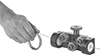
Pull coiled tubing through these straighteners to make it smooth and level.
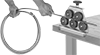
Flatten bumps, bends, and curves on coiled wire with these straighteners.
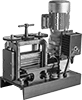
With hardened rollers and precision-machined gears, these rolling mills stand up to heavy use. They’re often used to compress sheets to an uncommon gauge size, convert scrap metal into sheets or wire, or create different thicknesses in a single piece of metal without welding multiple pieces together.
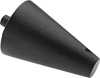
Restore tube ends with a few light blows of a hammer.
Repair ends of thin-wall (EMT) conduit that have been warped by cutting.
Colorful plastic grips make these assorted pliers stand out, so they’re less likely to be misplaced.
The grips drain static from your application, preventing buildup from electrostatic discharge (ESD) that can damage sensitive equipment.
Insulated grips protect against accidental contact with live electrical circuits. These assorted pliers are tested to 1,000 volts to meet IEC 60900 and ASTM F1505.
Choose these stainless steel pliers for environments where moisture and other contaminants are present. They resist corrosion that can hinder joint movement, but the jaws will wear more quickly than a steel tool.
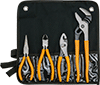
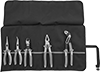
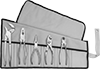
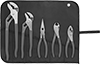
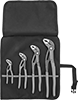
Sets contain an assortment of pliers styles. These tools are steel.
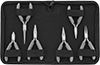
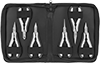
Smooth, consistent movement ensures precision. These assorted pliers have slip-resistant ultra grips that are shaped to fit comfortably in your hand and reduce strain in repetitive tasks. They are also known as miniature and electronics pliers.
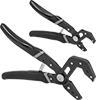
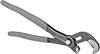
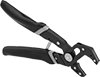
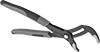
You don't have to move the pivot point on these pliers—squeeze the handle and the jaws adjust to fit your workpiece.
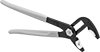
More jaw positions than standard adjustable pliers enable fine adjustment and a firm grip. Push and hold the button to adjust the jaws, and then release the button to lock them in place.
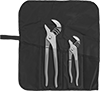
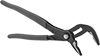
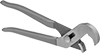
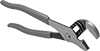
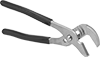
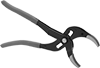
Choose these tools when you need the gripping power of a pipe wrench with the adjustability of pliers. Slide the pivot point of the jaws to a range of positions.
Work under a microscope, and in other small spaces—the pliers in these sets are the smallest we offer.
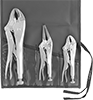
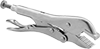
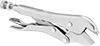
Lock the jaws in a vise-like grip around a workpiece and these assorted pliers stay clamped in place to leave your hands free.
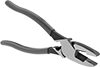
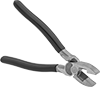
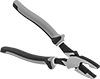
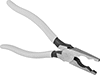
When there isn't clearance to use standard-grip pliers, the angled head on these tools gives you access. Also known as lineman’s and combination pliers, use them to pull, bend, and cut wire.
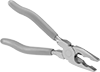
Also known as lineman’s and combination pliers, use these tools to pull, bend, and cut wire.
Extra-long handles enable access to hard-to-reach areas. Also known as lineman’s and combination pliers, use these tools to pull, bend, and cut wire.
Additional features, such as wire terminal crimpers, enable you to perform a variety of electrical wiring and installation work with a single tool. Also known as lineman’s and combination pliers, these pliers have long jaws that pull, bend, and cut wire and other small workpieces.
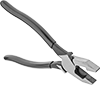
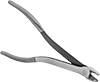
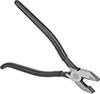
Deep serrations provide the firm grip necessary for pulling rebar tie wire, and the hook-shaped handle end keeps your hand from slipping off. Also known ironworkers’ pliers, these tools also bend and cut wire.
Made of aluminum-bronze that is FM approved, these pliers satisfy OSHA requirements that specify nonsparking tools for locations where flammable vapors and combustible residues are present. Use them to pull, bend, and cut wire.
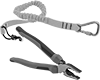
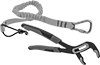
Secure a lanyard to the ring on the handle to prevent dropping your pliers when working at height. Use these tools to pull, bend, and cut wire.
Avoid the potential for an arc flash or short circuit that can occur when using conventional insulated tools with metal components. Completely metal-free, these pliers are plastic with ceramic cutting blades. They are tested to 1,000 volts to meet IEC 60900 and ASTM F1505. Use to pull, bend, and cut wire.
Insulated grips protect against accidental contact with live electrical circuits. These pliers are tested to 1,000 volts to meet IEC 60900 and ASTM F1505. Use them to pull, bend, and cut wire.
Made of stainless steel or titanium, these pliers are good for environments where moisture and other contaminants are present.
Made of beryllium copper that is FM approved, these pliers satisfy OSHA requirements that specify nonsparking tools for locations where flammable vapors and combustible residues are present. Also known as round-nose pliers, use for looping and bending wire.
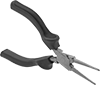
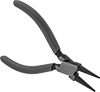
Designed for looping and bending wire, these tools are also known as round-nose pliers.
Choose these stainless steel pliers for environments where moisture and other contaminants are present. They resist corrosion that can hinder joint movement, but the jaws will wear more quickly than a steel tool. Also known as round-nose pliers, use them for looping and bending wire.
Insulated grips protect against accidental contact with live electrical circuits. These pliers are tested to 1,000 volts to meet IEC 60900. Designed for looping and bending wire, they are also known as round-nose pliers.
The smallest round-nose pliers we offer allow you to bend and loop wire in the smallest spaces, including under a microscope.
Smooth, consistent movement ensures precision. These tools have a slip-resistant ultra grip that’s shaped to fit comfortably in your hand and reduce strain in repetitive tasks. Also known as miniature and electronics pliers, they have a round nose for looping and bending wire.
Secure a lanyard to the ring on the handle to prevent dropping your pliers when working at height.
Made entirely of plastic, these pliers eliminate the potential for an arc flash or short circuit that can occur when using conventional insulated tools with metal components. They are tested to 1,000 volts to meet IEC 60900 and ASTM F1505.
Insulated grips protect against accidental contact with live electrical circuits. These pliers are tested to 1,000 volts to meet IEC 60900 and ASTM F1505.
Extra-wide tips give you a better grip on your work. These pliers have insulated grips that protect against accidental contact with live electrical circuits. They are tested to 1,000 volts to meet IEC 60900 and ASTM F1505.
With thinner tips than standard long-nose pliers, these stainless steel tools fit into tight spaces and are good for environments where moisture and other contaminants are present. They resist corrosion that can hinder joint movement, but the jaws will wear more quickly than a steel tool.
Made of stainless steel, these pliers are good for environments where moisture and other contaminants are present. They resist corrosion that can hinder joint movement, but the jaws will wear more quickly than a steel tool.
Also known as duckbill and flat-nose pliers, the extra-wide tips give you better grip on your work. These stainless steel tools are good for environments where moisture and other contaminants are present. They resist corrosion that can hinder joint movement, but the jaws will wear more quickly than a steel tool.
Colorful plastic grips make these tools stand out, so they're less likely to be misplaced.
Extra-long handles enable access in hard-to-reach areas.
With thinner tips than standard long-nose pliers, these tools fit into tight spaces.
Prevent damage to your workpiece.
Tips almost twice as wide as those of standard long-nose pliers give you a better grip on your work. These are also known as duckbill and flat-nose pliers.
Additional features, such as wire terminal crimpers and wire stripping holes, enable you to perform a variety of electrical wiring and installation work with a single tool.
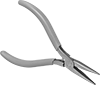
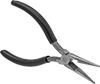
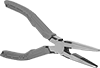
Grip, bend, and twist wire and other small workpieces. Also known as needle-nose and chain-nose pliers, these tools have long, tapered jaws.
The grips drain static away from your application, preventing buildup from electrostatic discharge (ESD) that can damage sensitive equipment.
Made of materials that are FM approved, these pliers satisfy OSHA requirements that specify nonsparking tools for locations where flammable vapors and combustible residues are present.
The smallest long-nose pliers we offer allow you to work in the smallest spaces, including under a microscope.
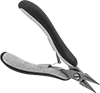
Create smooth, precise movement with these pliers—their handles allow you to apply more force than tweezer-style pliers. These tools have a slip-resistant ultra grip that’s shaped to fit comfortably in your hand and reduce strain in repetitive tasks. They are also known as miniature and electronics pliers.
Pull stripped, rusted, and tamper-resistant screws out of hard-to-reach places.
Vertical and horizontal serrations and a tip shaped to firmly grip the outside of screw heads remove stripped, rusty, and tamper-resistant screws.
A slim head and long, narrow jaws fit into tight spaces.
Move the curved jaws to 15 positions for fine adjustment. These pliers have a bottom jaw that is shorter than the top for a firm grip on the flats of bolt heads and nuts that have rounded corners.
The bottom jaw is shorter than the top for a firm grip on the flats of bolt heads and nuts that have rounded corners.
Avoid damaging workpieces without sacrificing gripping power and adjustability.
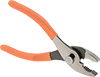
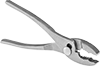
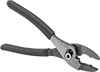
Slide the pivot point of the jaws to a range of positions and squeeze the handles to grip.
You don't have to move the pivot point on these pliers—squeeze the handles and the jaws adjust to fit your workpiece.
Colorful plastic grips make these pliers stand out, so they're less likely to be misplaced.
These stainless steel pliers are good for environments where moisture and other contaminants are present. They resist corrosion that can hinder joint movement, but the jaws will wear more quickly than a steel tool.
Made of aluminum-bronze that is FM approved, these pliers satisfy OSHA requirements that specify nonsparking tools for locations where flammable vapors and combustible residues are present.
The jaws remain parallel as they move to keep irregularly shaped objects from slipping forward when pressure is applied.
Assemble and install cord grips in a range of thread sizes.
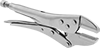
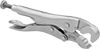
Lock the jaws in a vise-like grip around a workpiece and these pliers stay clamped in place to leave your hands free.
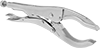
Hold larger workpieces than standard locking pliers. These tools lock in a vise-like grip around a workpiece and stay clamped in place.
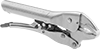
Squeeze the handles and the jaws automatically adjust to fit a workpiece and lock in place.
Attach your locking pliers to a slide hammer to pull stubborn objects.
Choose a stainless steel tool for environments where moisture and other contaminants are present. These pliers resist corrosion that can hinder joint movement, but the jaws will wear more quickly than a steel tool. Lock the jaws around a workpiece and they stay clamped in a vise-like grip.
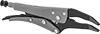
Reach around closely spaced components and other obstructions. These pliers lock in a vise-like grip around a workpiece and stay clamped in place to leave your hands free.
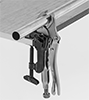
Secure these holders to a table or benchtop and slide in up to three pairs of locking pliers to create a hands-free way to hold your work.
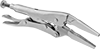
Long jaws reach workpieces in recessed areas. These pliers lock in a vise-like grip around a workpiece and stay clamped in place to leave your hands free.
Curved jaws grip bolt heads and nuts with rounded corners. These pliers lock in a vise-like grip and stay clamped in place, leaving your hands free.
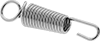
Change out worn or broken springs in the handle of your locking pliers.
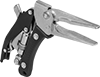
When there isn't clearance to use standard-grip locking pliers, the angled handle on these tools gives you access. Lock the jaws around a workpiece and these pliers stay clamped in place.
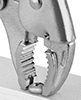
With jaws that lock into position for a good grip, these pliers are designed to remove stripped, rusted, and tamper-resistant screws.
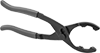
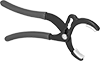
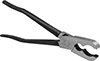
Get the best possible grip on round objects, such as oil filters, connectors, and PVC pipe. Also known as cannon plug pliers, all of these pliers have curved jaws.
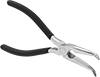
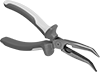
Made of stainless steel, these pliers are good for environments where moisture and other contaminants are present. They have a bent nose to reach around closely spaced components and other obstructions to bend wire and grip small workpieces.
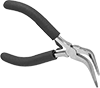
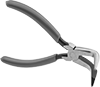
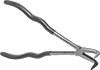
Reach around closely spaced components and other obstructions to bend wire and grip small workpieces.
Extra-long handles enable access to hard-to-reach spots, while the bent-nose shape lets you get around closely spaced components and other obstructions to grip small workpieces.
The jaws are made of brass, which won't damage steel workpieces. These pliers are shaped to reach around closely spaced components and other obstructions.
Insulated grips protect against accidental contact with live electrical circuits. These pliers are tested to 1,000 volts to meet IEC 60900. They are shaped to reach around closely spaced components and other obstructions.
Squeeze the handles to open the jaws; release to snap them closed. Once closed, they stay clamped in place to leave your hands free. These pliers reach around closely spaced components and other obstructions.
Removable and reusable, these rubber covers fit most slip-joint pliers and resist most oils and chemicals.
Move the curved jaws to 25 positions for fine adjustment and a firm grip on round objects, such as oil filters, connectors, and PVC pipe. Push and hold the button to adjust the jaws, and then release the button to lock them in place. They're also known as cannon plug pliers.
Smooth, consistent movement ensures precision. These tools have a slip-resistant ultra grip that’s shaped to fit comfortably in your hand and reduce strain in repetitive tasks. They are also known as miniature and electronics pliers and shaped to reach around closely spaced components and other obstructions.
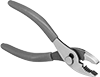
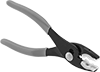
Prevent damage to your workpieces with pliers that have nonmarring jaws. Adjust the pivot point to switch between two different jaw opening sizes.
Replaceable rubber jaw pads protect surfaces from damage. These tools grip round objects and won't mar delicate materials, such as glass and ceramic.
Adjust the pivot point to switch between two different jaw opening sizes.
The narrow jaws fit into tight spaces, and the slip joint allows you to switch between two different jaw opening sizes.
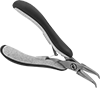
The smallest bent-nose pliers we offer allow you to work in the smallest spaces, including under a microscope. They have a bent nose to reach around closely spaced components.
The round nose on these pliers lets you get into tight spaces when working on burners and gas pipe fittings.
Clamp down on nonreinforced hose and tube to squeeze it shut, eliminating the need to drain the hose when working on pumps, heating and cooling systems, and fuel lines.
Use the tips of these pliers to stretch your brake spring. The handle ends remove and install a spring from an anchor post.
Tighten conduit locknuts and ream both the inside and outside of conduit with one tool.
The jaws on these pliers easily and firmly grasp electrical components without damaging them or surrounding parts.
Pinch leads down on resistors, diodes, and other small components to make precisely shaped 90° bends.