We will reply to your message within an hour.
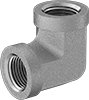
Use these fittings in extreme-pressure conditions up to 15,000 psi.
These fittings are made to tighter tolerances than other stainless steel pipe fittings. They are also known as instrumentation fittings.
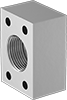
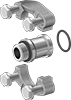
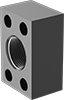
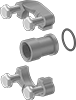
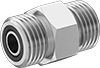
Also known as Code 61 SAE hydraulic flanges.
Also known as Code 61 SAE hydraulic flanges, these let you create an access point in a high-pressure hydraulic line.
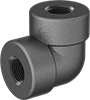
These fittings are strong enough to handle extreme pressures, yet small enough to fit into cramped spaces.
The strongest steel fittings we offer, these can withstand extreme-pressure applications.
Combine an adapter with a two-piece pipe flange (sold separately) to build a customized flange connection for noncorrosive environments.
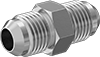
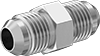
Also known as JIC (Joint Industrial Council) fittings, these provide a tight metal-to-metal seal on steel tubing that is flared to 37°.
Also known as JIS (Japanese Industrial Standard) fittings.
A tube adapter sits flush against the flat face of the fitting so you can slide the steel tubing and fitting sideways to disconnect in cramped spaces. Also known as zero-clearance fittings.
Individually bagged to prevent contamination, these fittings are suitable for applications that require a high level of cleanliness.
Also known as JIC (Joint Industrial Council) fittings, these provide a tight metal-to-metal seal on stainless steel tubing that is flared to 37°.
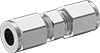
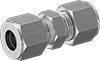
Use these fittings at pressures up to 9,700 psi. Also known as instrumentation fittings, they are made to tight tolerances for use in high-precision applications. They are compatible with Swagelok®, Let-Lok, and Parker A-Lok fittings.
The flat face of the fitting connects to a tube adapter so you can slide the tubing and fitting sideways to disconnect in cramped spaces. They are also known zero-clearance fittings.
A single sleeve (ferrule) bites into tubing as you tighten the nut, creating a strong seal. The nut and sleeve are included.
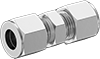
A nut with two sleeves (ferrules) gives these fittings extra gripping power. The sleeves bite into tubing as you tighten the nut, creating a strong seal.
Add quick connection points for mechanical gauges and other diagnostic equipment to your line. These couplings are also known as test ports and diagnostic couplings.
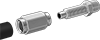
With just a vise and a wrench, make or repair hose assemblies in the field.