
We will reply to your message within an hour.
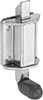
Bolts are spring-loaded to stay latched until you activate the pull.
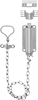
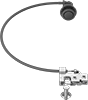
Pull the chain-grip to unlatch hard-to-reach doors and panels.
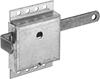
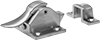
These padlockable latches are often used on 2" and 3" track to keep garage and other sectional overhead doors closed.
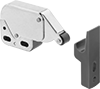
Close and open these roller latches with a push—there's no need for a handle.
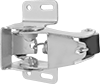
There's no need for a mating strike plate for these latches—their spring-loaded arm snaps to engage when closing the door.
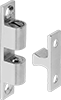
Each latch has top and bottom spring-loaded balls that can grab the strike plate from different directions.
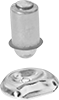
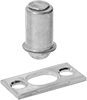
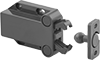
Also known as bullet catches, these latches have a spring-loaded ball that grabs and holds the strike plate to keep doors shut.
These latches are adjustable; push the ball in and rotate it to adjust force as well as compensate for misalignment.
Their spring-loaded design withstands vibration, rattling, and shaking better than other push-to-close grab latches for a more secure hold.
An electrical switch allows these latches to power a light or other signal to indicate whether a door is open or closed.
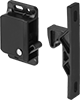
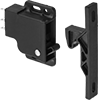
Close and open these grab latches with a push—there's no need for a handle.
These latches snap together to secure doors. They have a return spring to snap tight with a push and release with a pull.
Their spring-loaded design withstands vibration, rattling, and shaking better than other face-mount push-to-close latches for a more secure hold.
Also known as rotary latches, these compensate for door misalignment when closing and then firmly grip the strike bolt for a secure hold.
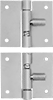
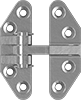
These hinges with holes are spring loaded—pull the handle to retract the pin and disconnect a door; release the handle and the pin snaps back.
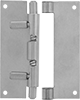
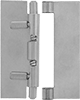
These hinges without holes are spring loaded—pull the handle to retract the pin and disconnect a door; release the handle and the pin snaps back.
To make reconnecting doors easier than other pull release quick disconnect hinges, these have a keeper that holds the pin in a retracted position.
A keeper holds the pin in a retracted position to make reconnecting doors easier than other pull-release quick-disconnect hinges.
Remove the ring to pull out the pin.
To retract the pin and disconnect a door, squeeze the hinge handles together. Release the handles and the pin snaps back.
Squeeze the hinge handles together to retract the pin and disconnect a door; release the handles and the pin snaps back.