We will reply to your message within an hour.
More
Made from silicone, these sealants are RTV (room-temperature vulcanizing).
These sealants include a material certificate with traceable lot number, test report, and product shelf life.
Resistant to mold and mildew, these sealants are well suited to high-humidity environments.
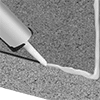
Thinner than non-sagging sealants, these flow easily into cracks and have a smooth finish.
Also known as neutral-cure sealants, these won't discolor copper, brass, and concrete.
This sealant includes a material certificate with traceable lot number, test report, and product shelf life.
A combination of hardness and surface tension makes these sealants resistant to punctures, cuts, and abrasion.
Clear enough to read through, these UV-resistant sealants allow optimal light transmission for use with solar cells and fiber optics.
Apply these sealants in cold temperatures, on wet surfaces, and even through running water.
Clear enough to read through, this UV-resistant sealant allows optimal light transmission for use with solar cells and fiber optics.
Thinner than non-sagging sealants, this sealant flows easily into cracks and has a smooth finish.
Make temporary waterproof seals that peel off when no longer needed.
Mix a small amount of water-based paint with this caulk to match the color of your surface.
Also known as thumb-grade caulk, this forms a non-hardening, moisture-resistant seal that remains pliable.
Press this adhesive-backed plastic tape into place for an immediate light-duty seal.
These structural sealants combine the mechanical strength of an adhesive with excellent sealing properties and high flexibility.
With chemical and metal additives that are picked up by X-ray machines and metal detectors, these sealants are designed to help you comply with Hazard Analysis and Critical Control Point (HACCP) programs in food-processing facilities.
Also known as neutral cure, this sealant won't discolor copper, brass, plastic, and concrete.
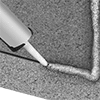
These non-sagging sealants will not drip while hardening on vertical and overhead surfaces.
Impervious to the swelling effects of oil, fuel, and solvents, use these high-strength sealants to assemble and repair fuel systems and tanks.
Make tough, flexible, oil-resistant seals.
These sealants are marine grade, so they stand up to water, corrosion from salt spray, mildew, and UV light.
The strongest submersible sealants we offer, these combine the mechanical strength of an adhesive with excellent sealing properties and high flexibility.
Also known as Torr Seal, this sealant forms a rigid bond that seals leaks on vacuum systems or components.
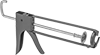
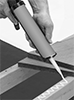
Dispense sealants from cartridges with ease and control.
Minimize mess and waste—when you release the handle on these guns, the rod retracts a bit to stop flow automatically.
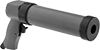
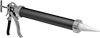
Let compressed air do the work for you when dispensing sealants from cartridges.
Adjust air-flow for precise control and smooth material flow—these guns have a built-in pressure regulator with a control knob.
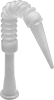
These flexible extensions add length and bend 180° to get into hard-to-reach areas.
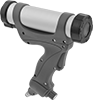
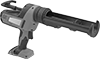
Power without a cord means you can take these sealant-dispensing guns wherever you need them.
Achieve the perfect bead every time.
Dispense sealants packaged in sausage packs.
Create a slippery surface that keeps sealant from smearing or widening when smoothed.
Immerse the nozzle in the sealant and pull back the rod to fill.
Thinner than non-sag sealants, these flow easily into cracks and have a smooth finish.
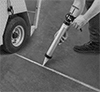
Seal joints and gaps in concrete.
The textured finish matches concrete surfaces.
Designed for use on ovens and kilns, these sealants form a durable, rock-hard seal after firing.
Make seals that support glass under heavy loads in equipment and buildings.
Repair equipment and vehicle windows with these sealants that are rated to withstand impact within three hours of application.
These sealants don't degrade in sunlight.
Press this pliable rope into place to hold glass in window frames and seal leaks.
Also known as glazing compounds, use these sealants to install glass in aluminum, steel, and wood framing.
Seal glass windows in metal and wood fire-rated doors.
These sealants are non-sagging, so they won't drip from vertical and overhead surfaces.
Fix roof leaks in cold and wet conditions. These sealants can even be applied underwater.
Remaining pliable over time, these high-temperature sealants protect against leaks caused by vibration and pressure—they naturally fill voids before leaks can develop.
These sealants come in bottles, cans, and tubes so you can choose the quantity that covers your application.
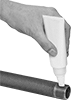
Apply this thread sealant stick without a mess.
Apply these thread sealant sticks without a mess.
Much thicker than sealants for fine threads, these sealants bridge the gaps between coarse threads.
Formulated to flow into small spaces, use these sealants between fine threads.
Often used in high-vibration applications that could cause standard thread sealants to fail, these never fully harden and remain pliable enough to self-heal and stop leaks before they start.
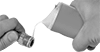
Formulated for high lubricity, these sealants allow easy assembly of finely threaded hydraulic and compressed air system components. They're also free of fillers that could contaminate system media.
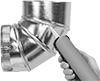
Completely free of oil and chemically inert, these sealants are safe to use with wet and dry oxygen systems.
For use in refrigeration systems and applications exposed to strong chemicals, these sealants have excellent solvent resistance.
Made of PTFE, this tape has a slippery surface that keeps threads from binding to make parts easy to assemble.
This tape has a higher density than standard tape for a better seal between threads.
Use color to identify water, gas, and chemical connections.
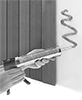
Wind this multifilament cord into the grooves of tapered pipe threads to quickly create a seal.
This tape contains nickel to prevent seizing and galling associated with stainless steel threaded connections. It’s also good for use with other metals.
Form flexible water-resistant seals on metal, plastic, and rubber joints in heating, ventilation, air conditioning, and refrigeration applications.
Seal metal-to-metal joints in ductwork.
Prepare joints and surfaces to ensure proper sealant adhesion.
Apply remover to debond sealant from surfaces and clean it off of work areas and tools.
Clean surfaces before applying sealant to promote bonding.
Provide support for sealants in gaps—insert these backer rods into gaps and fill in with sealant.
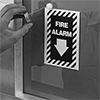
Prevent the edges of tape, signs, and graphics from peeling by sealing out water and debris.
Urethane adhesives are the most flexible, so they bond dissimilar materials and damp vibration.
Install building materials such as wood and drywall with these general purpose adhesives.
Install foam insulation, drywall, and paneling with these adhesives.
Use these adhesives to bond lumber and plywood.
Cover adhesive and sealant cartridges to keep contents from hardening.
Extract all the contents from tubes of adhesives and sealants.
Fill cracks in horizontal, vertical, and overhead concrete surfaces.
This caulk forms a long-lasting, flexible, watertight seal.
Seal small openings in fire-resistant walls and floors.
Remove silicone, foam sealants, caulk, wet or dry latex-based foams, and construction adhesives.
Melt and pour these alloys into molds to create metal parts and prototypes.