




About Ball and Roller Bearings
More
Noncontact-Magnetic Torque Limiters
Using magnetic force instead of friction to transmit torque, these torque limiters won't wear when they slip. Because there's no wear, they give you accurate, repeatable action. Also known as hysteresis clutches, use them to brake, control tension, and prevent torque overload. They are designed to slip during a torque overload while still transmitting the set torque. For example, you can use them to maintain a constant tension while winding and unwinding wire. All are through-shaft torque limiters, so they regulate torque transmission between an input shaft and a mounted component, such as a pulley, sprocket, or gear. Twist the adjustment ring to set the torque limit, then lock the ring into place with the included set screw.
 For technical drawings and 3-D models, click on a part number.

Overload-Protection Spring-Loaded Torque Limiters
Protect your machinery if there is a jam, emergency stop, or other overload by cutting off torque between shafts when a maximum torque is reached. These torque limiters automatically resume transmitting torque once it drops below the set maximum. They should not be used in applications that frequently exceed the maximum torque. Since they come factory-set to a maximum torque, there’s no adjustment required and no risk of unintended changes to the torque setting.
They act as a flexible shaft coupling, so they reduce vibration and protect components from wear by compensating for angular and parallel misalignment. Fasten to your shafts by tightening the set screws, which bite into each shaft to hold it.
Sensor rings help you detect an overload by moving only when the limiter is transmitting torque. Use a sensor (not included) to trigger an alarm or shut down when the ring stops moving.
For technical drawings and 3-D models, click on a part number.

Misalignment Capability | ||||||||||||||
|---|---|---|---|---|---|---|---|---|---|---|---|---|---|---|
| For Shaft Dia. | For Shaft Type | Max. Speed, rpm | Parallel | Angular | OD | Overall Lg. | Keyway Wd. × Keyway Dp. | Material | Center Material | Drive Direction | Re-Engagement Position | Choose a Max. Torque, in.-lbs. | Each | |
| 1" | Keyed | 1,800 | 0.031" | 6° | 3 1/2" | 3" | 1/4" × 1/8" | 6061 Aluminum | Steel | Clockwise and Counterclockwise | Multiple Position | 0000000 | 000000 | |

Sensor Ring
Installed

| Material | OD | Thickness | Each | |
| Steel | 3 1/2" | 0.06" | 000000 | 000000 |
High-Torque Friction Torque Limiters
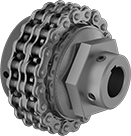
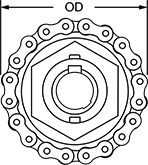
With rugged roller chains, these torque limiters handle more torque than other torque limiters. They have a disc that creates friction to prevent torque overload, control tension, and brake. If there’s too much torque, they’ll slip and only transmit the set torque. For example, they could be used in a machine that tightens a bottle cap to a certain torque without overtightening and breaking the bottle. Because they rely on friction, exposing them to moisture, oil, or lubricants can affect their performance. You can adjust the torque by rotating the hex nut on the hub.
They act as a flexible shaft coupling, so they reduce vibration and protect components from wear by compensating for angular and parallel misalignment. Fasten them to your shafts by tightening the set screws, which bite into each shaft to hold it.
Single-spring torque limiters let you make finer torque adjustments than double-spring torque limiters but can only withstand half as much torque.
Double-spring torque limiters handle twice as much torque as single-spring torque limiters but are not the best for making precise adjustments at low torques.
For technical drawings and 3-D models, click on a part number.
Torque, ft.-lbs. | Misalignment Capability | Roller Chain | ||||||||||||
|---|---|---|---|---|---|---|---|---|---|---|---|---|---|---|
| For Shaft Dia. | For Shaft Type | Min. | Max. | Max. Speed, rpm | Parallel | Angular | OD | Overall Lg. | Keyway Wd. × Keyway Dp. | Drive Direction | Standard | Trade Size | Each | |
Single Spring | ||||||||||||||
| 1" × 1" | Keyed × Keyed | 0 | 75 | 1,800 | 0.01" | 3° | 3 11/16" | 2 13/16" | 1/4" × 1/8" 1/4" × 1/8" | Clockwise and Counterclockwise | ANSI | 40-2 | 00000000 | 0000000 |
Double Spring | ||||||||||||||
| 1" × 1" | Keyed × Keyed | 0 | 150 | 1,800 | 0.01" | 3° | 3 11/16" | 2 13/16" | 1/4" × 1/8" 1/4" × 1/8" | Clockwise and Counterclockwise | ANSI | 40-2 | 00000000 | 000000 |
Soft-Start Centrifugal Clutches
Disengaged until they rotate fast enough to transmit torque, these clutches give the components on your driven side a smooth start by allowing the driving side to start without load. Fasten them to your shaft by tightening the set screws, which bite into the shaft to hold it.
Shaft-to-shaft clutches also act as a shaft coupling, allowing you to regulate torque transmission between two shafts.
Clutches with support rollers are quieter and last longer than other centrifugal clutches because the contact points are supported by urethane rollers to prevent slipping.
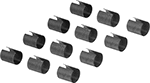
Spring kits allow you to change the speed at which the clutch engages.
For technical drawings and 3-D models, click on a part number.


Misalignment Capability | |||||||||||||
|---|---|---|---|---|---|---|---|---|---|---|---|---|---|
| For Shaft Dia. | For Shaft Type | Engagement Speed, rpm | Max. Speed, rpm | Max. Power, hp | Parallel | Angular | OD | Overall Lg. | Keyway Wd. × Keyway Dp. | Material | Drive Direction | Each | |
Shaft-to-Shaft Clutches with Engagement Springs | |||||||||||||
| 1" | Keyed | 830 | 3,600 | 13 | 0.003" | 0.25° | 4 3/16" | 2 1/2" | 1/4" × 1/8" | Steel | Clockwise and Counterclockwise | 00000000 | 0000000 |
Shaft-to-Shaft Clutches with Support Rollers | |||||||||||||
| 1" | Keyed | 1,100 | 1,750 | 7.5 | __ | __ | 3 63/64" | 3 17/64" | 1/4" × 1/8" | Steel | Clockwise and Counterclockwise | 00000000 | 000000 |
| Includes | Each | |
| Four Green Springs (830 RPM Engagement), Four Red Springs (1200 RPM Engagement), Four Orange Springs (1800 RPM Engagement) | 0000000 | 000000 |
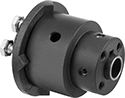
Corrosion-Resistant Overload-Protection Spring-Loaded Torque Limiters
Prevent corrosion from interfering with these torque limiters’ ability to protect your machinery if there’s a jam, emergency stop, or other overload. Made of nylon, they won’t rust or corrode from moisture, salt, and oil. They cut off torque when they reach the set maximum torque and automatically resume transmitting torque once it drops below the set maximum. They should not be used in applications that frequently exceed the set torque. You can adjust the set torque by tightening the hex head screw on the housing.
To help you detect an overload, these torque limiters have a sensor ring that moves out of place when these limiters cut off torque. Use a sensor (not included) to trigger an alarm or a shutdown when the ring moves.
Fasten them to your shaft by tightening the set screws, which bite into the shaft to hold it.
Shaft-to-shaft torque limiters also act as a shaft coupling, allowing you to regulate torque transmission between two shafts.
Through-shaft torque limiters regulate torque transmission between an input shaft and a mounted component, such as a pulley, sprocket, or gear.
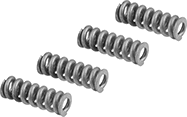
Spring kits let you change the torque range on your torque limiter.
For technical drawings and 3-D models, click on a part number.
Torque | Misalignment Capability | |||||||||||||||
|---|---|---|---|---|---|---|---|---|---|---|---|---|---|---|---|---|
| For Shaft Dia. | For Shaft Type | Min., in.-lbs. | Max., in.-lbs. | Max. Speed, rpm | Parallel | Angular | OD | Overall Lg. | Keyway Wd. × Keyway Dp. | No. of Springs | Material | Drive Direction | Re-Engagement Position | Features | Each | |
Shaft-to-Shaft | ||||||||||||||||
| 1" | Keyed | 40 | 150 | 1,800 | 0.01" | 1° | 4 1/32" | 3 7/16" | 1/4" × 1/8" | 6 | Nylon Plastic | Clockwise and Counterclockwise | Multiple Position | Sensor Ring | 00000000 | 0000000 |
Through Shaft | ||||||||||||||||
| 1" | Keyed | 40 | 150 | 1,800 | __ | __ | 4 1/32" | 3 7/16" | 1/4" × 1/8" | 6 | Nylon Plastic | Clockwise and Counterclockwise | Multiple Position | Sensor Ring | 00000000 | 000000 |
Precision Overload-Protection Spring-Loaded Torque Limiters
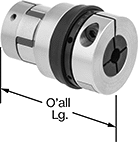
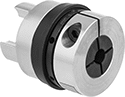
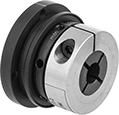
With zero backlash (no play), there’s no motion lost when these torque limiters transfer torque, so machines move smoothly with accurate and repeatable motion. They protect your machinery if there is a jam, emergency stop, or other overload by cutting off torque when a maximum torque is reached. They automatically resume transmitting torque once it drops below the set maximum. When they resume, they start transmitting torque from the same position where they stopped, keeping your drive and output sides in sync. They should not be used in applications that frequently exceed the set torque. You can adjust the set torque by using a spanner wrench to twist the adjustment ring.
To help you detect an overload, they have a sensor ring that moves out of place when these limiters cut off torque. Use a sensor (not included) to trigger an alarm or a shutdown when the ring moves.
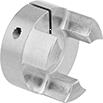
They clamp evenly around your shaft for more holding power than set screws and won't damage your shaft.
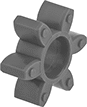
Shaft-to-shaft torque limiters also act as a flexible shaft coupling, so they compensate for angular and parallel misalignment as they regulate torque transmission between shafts. This reduces vibration and protects components from wear. For a complete unit, you’ll need a torque limiter, a hub, and a spider (all sold separately).
Through-shaft torque limiters regulate torque transmission between an input shaft and a mounted component, such as a pulley, sprocket, or gear.
For technical drawings and 3-D models, click on a part number.
Torque Limiters | Spiders | ||||||||||||||
|---|---|---|---|---|---|---|---|---|---|---|---|---|---|---|---|
Torque, in.-lbs. | Hubs | Misalignment Capability | |||||||||||||
| For Shaft Dia. | Min. | Max. | OD | O'all Lg. | Each | For Shaft Dia. | Each | Max. Speed, rpm | Parallel | Angular | Temp. Range, °F | Each | |||
For Keyed Shafts | |||||||||||||||
| 1" | 225 | 705 | 2 7/8" | 3 13/16" | 0000000 | 0000000 | 0000000 | 0000000 | 8,000 | 0.011" | 1° | 0° to 180° | 0000000 | 000000 | |
| 1" | 710 | 1,590 | 3 5/8" | 4 3/16" | 0000000 | 00000000 | 0000000 | 000000 | 7,000 | 0.011" | 1° | 0° to 180° | 0000000 | 00000 | |
Torque, in.-lbs. | ||||||||||
|---|---|---|---|---|---|---|---|---|---|---|
| For Shaft Dia. | Min. | Max. | Max. Speed, rpm | OD | Overall Lg. | Keyway Wd. × Keyway Dp. | Material | Drive Direction | Each | |
For Keyed Shafts | ||||||||||
| 1" | 400 | 1,325 | 4,000 | 3 5/8" | 2 5/16" | 1/4" × 1/8" | Steel | Clockwise and Counterclockwise | 0000000 | 0000000 |
One-Way Clutches
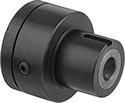
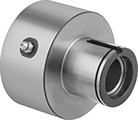
Since they transfer torque in one direction and spin freely in the other, these clutches are useful in applications where you don’t want motion to reverse, such as in backstopping, indexing, and overrunning. For example, they can be used to prevent a conveyor from reversing direction. They’re through-shaft clutches, so they regulate torque transmission between a drive shaft and a mounted component such as a pulley, sprocket, or gear.
When choosing a clutch, consider how much torque you need to transfer. Roller clutches are best for low- to medium-torque transfer in overrunning and indexing applications. Sprag clutches handle higher torque than roller clutches because they have more contact points. This makes them best for backstopping applications.
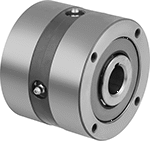
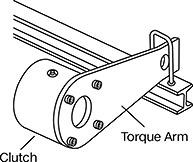
You should also consider how the clutch will attach to your mounted component. Clutches with a keyed hub let you slip on your component. Clutches without a hub have a precision ground outer race, so they can be press fit directly into a component and positioned anywhere along the length of your shaft. They also have mounting holes on their face you can use to secure your component or an anti-rotation device, such as a torque arm, for a different backstopping setup.
Clutches that mount to shafts with set screws bite into your shaft when tightened to hold it. Clutches that mount to shafts with a slip fit must be secured with a shaft collar or in some other way that prevents them from moving along the length of your shaft.
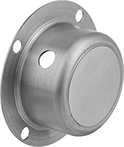
Covers protect you from rotating equipment when the clutch is mounted to the end of the shaft.
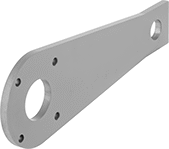
Torque arms work as an anchor for clutches in backstopping applications. Mount to the outer race of your clutch and a stationary piece of equipment.
Shaft | Hub | Clockwise Drive Direction | ||||||||||
|---|---|---|---|---|---|---|---|---|---|---|---|---|
| For Shaft Dia. | Max. Torque, ft.-lbs. | Max. Speed, rpm | OD | Overall Lg. | Material | Keyway Wd. × Keyway Dp. | Mount Type | Dia. | Lg. | Keyway Wd. × Keyway Dp. | Each | |
| 1" | 100 | 1,000 | 3 5/8" | 3 11/32" | Steel | 3/8" × 3/16" | Slip Fit | 2 1/4" | 1 1/2" | 3/8" × 3/16" | 0000000 | 0000000 |
Max. Speed, rpm | Shaft | Hub | |||||||||||
|---|---|---|---|---|---|---|---|---|---|---|---|---|---|
| For Shaft Dia. | Max. Torque, ft.-lbs. | Inner-Race | Outer-Race | OD | Overall Lg. | Material | Keyway Wd. × Keyway Dp. | Mount Type | Dia. | Lg. | Keyway Wd. × Keyway Dp. | Each | |
Clockwise Drive Direction | |||||||||||||
| 1" | 450 | 1,650 | 600 | 3 1/4" | 3.56" | Steel | 1/4" × 1/8" | Set Screw | 1 3/4" | 1 7/16" | 1/4" × 1/8" | 0000000 | 000000000 |
Counterclockwise Drive Direction | |||||||||||||
| 1" | 450 | 1,650 | 600 | 3 1/4" | 3.56" | Steel | 1/4" × 1/8" | Set Screw | 1 3/4" | 1 7/16" | 1/4" × 1/8" | 0000000 | 00000000 |
Clutches | ||||||||||||||
|---|---|---|---|---|---|---|---|---|---|---|---|---|---|---|
Max. Speed, rpm | Shaft | Covers | Torque Arms | |||||||||||
| For Shaft Dia. | Max. Torque, ft.-lbs. | Inner-Race | Outer-Race | OD | Overall Lg. | Material | Keyway Wd. × Keyway Dp. | Mount Type | Each | Each | Each | |||
| 1" | 1,175 | 2,500 | 800 | 4 1/4" | 3 1/2" | Steel | 1/4" × 1/8" | Slip Fit | 0000000 | 000000000 | 00000000 | 0000000 | 00000000 | 0000000 |
Torque Limiters for Chain and Belt Drives
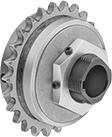
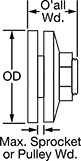
Prevent damage from overloading. When overloaded, these limiters cause your sprocket or pulley to slip. Once the overload is removed, the limiters automatically reset. Set the torque within the range listed. Friction discs are between the hub and pressure plate.
Double-spring limiters have a second spring for handling nearly twice the torque of single-spring limiters.
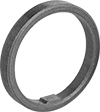
Optional sprockets are designed specifically to fit their corresponding limiters. These hubless sprockets are not interchangeable.
For technical drawings and 3-D models, click on a part number.
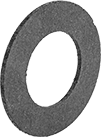
Torque Limiters | |||||||||||||||||||
|---|---|---|---|---|---|---|---|---|---|---|---|---|---|---|---|---|---|---|---|
Keyway | Torque | Optional Sprockets | Replacement Friction Discs for Torque Limiters | Replacement Bushings for Optional Sprockets | |||||||||||||||
| For Shaft Dia. | OD | O'all Wd. | Wd. | Dp. | For Max. Sprocket or Pulley Wd. | Friction Disc Thick. | Min., ft.-lbs. | Max., ft.-lbs. | Hub Material | Each | For Roller Chain Trade Size | Each | Each | For Roller Chain Trade Size | Each | ||||
Single Spring | |||||||||||||||||||
| 1" | 2 1/2" | 1 3/4" | 1/4" | 1/8" | 11/32" | 1/8" | 25 | 60 | Steel | 00000000 | 000000 | 0000000 | 000000 | 0000000 | 00000 | 000000 | 00000 | ||
| 1" | 3 3/8" | 2 1/8" | 1/4" | 1/8" | 1/2" | 1/8" | 11 | 100 | Steel | 0000000 | 000000 | 0000000 | 00000 | 0000000 | 00000 | __ | 000000 | 00 | |
| 1" | 3 1/2" | 2 3/16" | 1/4" | 1/8" | 1/2" | 1/8" | 50 | 120 | Steel | 00000000 | 000000 | 0000000 | 00000 | 0000000 | 00000 | 000000 | 0000 | ||
| 1" | 4 1/2" | 2 7/8" | 1/4" | 1/8" | 7/8" | 1/8" | 18 | 190 | Steel | 00000000 | 000000 | 0000000 | 00000 | 0000000 | 00000 | __ | 000000 | 00 | |
| 1" | 5" | 2 7/8" | 1/4" | 1/8" | 5/8" | 1/8" | 90 | 250 | Steel | 00000000 | 000000 | 0000000 | 00000 | 0000000 | 00000 | 000000 | 0000 | ||
| 1" | 6" | 3" | 1/4" | 1/8" | 13/16" | 1/8" | 24 | 320 | Steel | 00000000 | 000000 | 0000000 | 00000 | 0000000 | 00000 | __ | 000000 | 00 | |
Double Spring | |||||||||||||||||||
| 1" | 2 1/2" | 1 3/4" | 1/4" | 1/8" | 11/32" | 1/8" | 30 | 95 | Steel | 00000000 | 000000 | 0000000 | 00000 | 0000000 | 0000 | 000000 | 0000 | ||
| 1" | 3 3/8" | 2 1/8" | 1/4" | 1/8" | 7/16" | 1/8" | 13 | 175 | Steel | 0000000 | 000000 | 0000000 | 00000 | 0000000 | 00000 | __ | 000000 | 00 | |
| 1" | 3 1/2" | 2 3/16" | 1/4" | 1/8" | 1/2" | 1/8" | 60 | 190 | Steel | 00000000 | 000000 | 0000000 | 00000 | 0000000 | 00000 | 000000 | 0000 | ||
| 1" | 4 1/2" | 2 7/8" | 1/4" | 1/8" | 13/16" | 1/8" | 20 | 285 | Steel | 00000000 | 000000 | 0000000 | 00000 | 0000000 | 00000 | __ | 000000 | 00 | |
| 1" | 5" | 2 7/8" | 1/4" | 1/8" | 5/8" | 1/8" | 120 | 400 | Steel | 00000000 | 000000 | 0000000 | 00000 | 0000000 | 00000 | 000000 | 0000 | ||
| 1" | 6" | 3" | 1/4" | 1/8" | 3/4" | 1/8" | 26 | 440 | Steel | 00000000 | 000000 | 0000000 | 00000 | 0000000 | 00000 | __ | 000000 | 00 | |
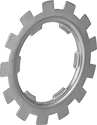
One-Way Locking Needle-Roller Bearing Clutches
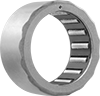
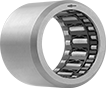
The needles in these bearings roll freely in one direction, but lock to transmit torque when the rotation of the shaft is reversed. Also known as drawn-cup roller clutches. An arrow on the lip indicates the rotational direction that locks the bearings.
Single-row bearings do not support loads from any direction. To support radial loads, use with our Needle-Roller Bearings.
Triple-row bearings support radial loads.
Bearings with 301 stainless steel springs handle higher temperatures than bearings with acetal springs.
For technical drawings and 3-D models, click on a part number.
Radial Load Cap., lbs. | ||||||||||||
|---|---|---|---|---|---|---|---|---|---|---|---|---|
| For Shaft Dia. | For Housing ID | Wd. | Ring Material | Dynamic | Static | Max. Speed, rpm | Max. Torque, ft.-lbs. | Lubrication | For Shaft Surface Smoothness (Ra), microinch | Temp. Range, °F | Each | |
Single Row | ||||||||||||
Acetal Plastic Springs | ||||||||||||
| 1" | 1 5/16" | 5/8" | Steel | __ | __ | 8,700 | 35 | Required | 16 | -20° to 200° | 000000 | 000000 |
301 Stainless Steel Springs | ||||||||||||
| 1" | 1 5/16" | 5/8" | Steel | __ | __ | 8,700 | 35 | Required | 16 | -20° to 250° | 0000000 | 00000 |
Triple Row | ||||||||||||
301 Stainless Steel Springs | ||||||||||||
| 1" | 1 5/16" | 1.063" | Steel | 3,450 | 3,950 | 8,700 | 35 | Required | 16 | -20° to 250° | 0000000 | 00000 |