We will reply to your message within an hour.
This belting has a smooth surface.
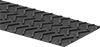
The textured surface grips packages and cartons to prevent material from slipping when traveling on inclines and declines.
Cleats keep material on the belt when traveling along inclines and declines.
Use these cleats to convert any smooth conveyor belt into a belt for inclines.
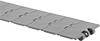
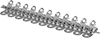
Also known as sprocket-driven conveyor belting, sprockets drive the belt.
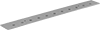
Attach these strips to conveyor frames to reduce friction and abrasion on chain belts.
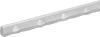
Rivets attach plastic wear strips to the conveyor frame.
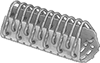
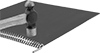
This low-profile lacing requires only a hammer to install so it's good for repairs and tight spaces. Also known as alligator lacing, the lacing teeth bite into the belt to hold. Use on belts up to 0.31" thick.
Insert a pin into the lacing and lock it in place by bending the ends at a 90° angle.
Lacers quickly clinch lengths of lacing in a single operation.
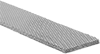
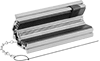
Also known as alligator lacing, this strong, impact-resistant lacing uses a staple driver and installation guide to secure staples. Use on 0.0625" to 0.25" thick belts.
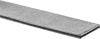
Each installation tool includes a staple driver and guide blocks.
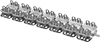
Our heaviest duty lacing uses bolts and nuts to repair and extend 0.25" to 0.625" thick belts.
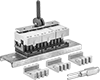
Templates, bolt breakers, wrench bits, and adapters for installing bolt-on lacing.
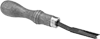
Also known as skivers, these shavers remove the rough top surface of a conveyor belt for secure lacing connections.
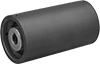
A rubber coating, also known as lagging, increases friction for a better grip on the belt.
Replace worn or damaged pulleys or create new belt conveyors.
The corrosion-resistant stainless steel construction makes these pulleys suitable for washdown applications.
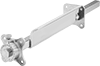
A tensioner extends or retracts the conveyor pulley to adjust the tension on the conveyor belt.
Use on a conveyor pulley with a conveyor belt tensioner to adjust the tension on a conveyor belt.
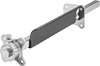
These tensioners have a totally enclosed adjusting screw to prevent debris buildup and thread damage.
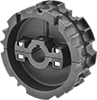
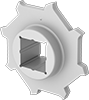
Sprockets transmit power to drive belting.
Use these belt scrapers to remove debris from conveyor belts. Place at the end of a conveyor where it returns.
Use these belt scrapers to remove debris from conveyor belts. If a chip of this blade breaks off near a process line, it can be located by metal detectors to reduce contamination risks in food processing applications.
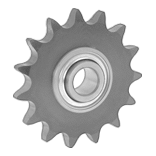
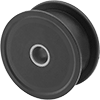
Idler wheels keep the belt moving and prevent sagging.
Choose these sprockets when you need to expand your Ammeraal Beltech MPB conveyor line or replace its worn sprockets.
Slide these coating strips into metal retainers that you attach to your pulley—they add friction that helps conveyor belts stay on pulleys and are replaceable when they’re worn.
Replace worn and broken V-belts on conveyor rollers.
Commonly used for material handling and light to medium duty power transmission, this belting has a textured rubber cover on both sides for gripping material.
A nylon core allows this belting to handle higher speeds than other leather flat belting.
Also known as center-stock belting.
Also known as side-stock belting.
These oil-resistant Buna-N belts have a nylon core.
Made of polyurethane, these belts are chemical and abrasion resistant.
Weld the ends of this belting together for a firm hold.
Made of polyurethane, these belts resist chemicals and abrasion.
Often used with lathes and conveyors, these textured belts grip loads better than standard round belts, making sure heavy loads don’t slip.
These neoprene belts are more flexible than polyurethane belts.
Install these belts without dismantling your drive shafts—hook the ends together with the attached stainless steel connector.
In addition to chemical resistance, these belts also provide increased abrasion resistance over heavy duty round belts.
These belts are reinforced with a polyester cord for strength.
This belting has a smooth, easy-to-clean surface.
Join solid-core round belting by trimming belting ends to a point and twisting them into the threaded ends of these connectors.
The textured surface improves gripping ability.
This polyurethane belting is reinforced with a polyester cord for strength.
The hollow core of this polyurethane belting allows you to join the ends without trimming, welding, or using special tools.
Press these connectors into quick-connect hollow-core round belting to join the ends.
Lengthen or shorten this polyurethane belting without tools or connectors—the interlocking links attach and detach with a twist.
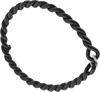
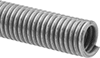
Coiled-metal construction provides flexibility to bend around small-diameter pulleys and accommodate curved belt drives and misaligned pulleys.
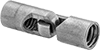
Thread a connector onto each end of belting and hook together to join.
Use with a joining tool to connect two ends of leather belting.
More elastic than polyurethane, this leather belting resists permanent stretch for a long service life.
Often used to join conveyor belt seams, use this lacing for a tight hold with uniform tension across the width of your belt.
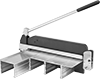
Slice through rubber belts, mats, and sheets.