We will reply to your message within an hour.
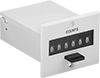
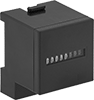
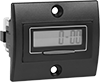
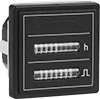
Slot these counters into a control or electrical panel cutout.
For quick installation, these counters fit into standard DIN panel cutouts.
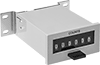
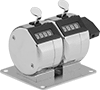
These counters have mounting holes and a base plate for securing to a wall or work surface.
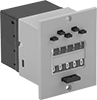
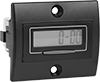
These counters do not require voltage to register a count.
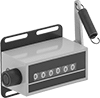
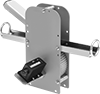
Connect the lever on these counters to an object moving repetitively in a straight line, such as a punch or drill press.
Count metallic objects as they touch or pass within 0.059" of the built-in sensor.
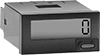
The digits displayed on these counters are visible up to 100 ft. away.
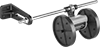
Precisely count rotations by attaching these counters to clutches, couplings, rotors, or other rotating shafts.
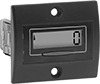
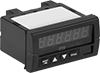
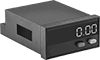
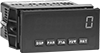
Wire these counters/ratemeters to an electrical pulse-emitting switch, sensor, or encoder to count input while tracking rates in units such as gallons per minute.
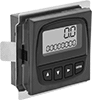
For quick installation, these counters/ratemeters fit a standard 1/8 DIN panel cutout.
Quickly install these meters onto a DIN rail instead of on a surface or into panels.
Send a signal to another device when the counter reaches a set point. The signal can start/stop a process or trigger an alarm.
These meters do not require voltage to register a count.
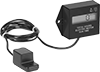
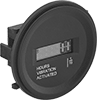
With a sensor that’s activated by your electric motor’s magnetic field, these meters show the motor’s running time.
Record the running time of machines and vehicles that vibrate while operating.
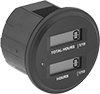
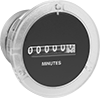
Keep track of time while counting events.
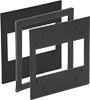
Use these adapters when the size of a meter face is too small for the DIN cutout in a panel or enclosure.
Mount these indicators to your equipment, and their bright LED will catch your attention when it’s time for maintenance or inspection.
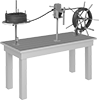
Combine a counter, feeder reel, coiler reel, and stand to create a wire, cable, and cord length measurer.
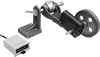
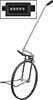
Measure sheets, rolls, and strips using these wheels and their attached counters.
Send sheet, roll, and strip measurements from this measurer to a remote Voltage Actuated Counter (sold separately).
Feed wire through the wheels inside the included counter to take measurements.
Roll these wheels along a surface to measure distances up to 99,999 feet.
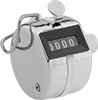
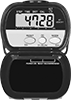
Record steps or miles while you walk or run.
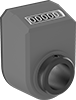
Tracking your machine component as it moves along a rotating threaded shaft, such as a spindle or lead screw, these indicators help you adjust machinery with speed and precision.
More customizable than standard indicators, these digital indicators have programmable features that help you adapt them to your application.
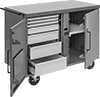
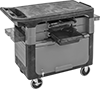
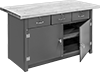
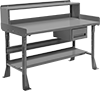
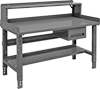
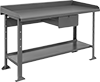
Start with the workbench and then customize the interior by adding drawers and shelves.
These workbenches range in size from 32"-42" wide.
These workbenches are dent and rust resistant.
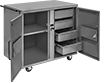
For added security, drawers are concealed behind padlockable doors.
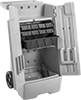
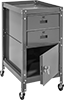
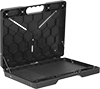
Tilt back these workbenches to roll them anywhere. Open the lid to use it as a work surface.
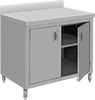
Often used in laboratories and food-processing plants, these workbenches resist corrosion.
Reinforced for strength and durability, these workbenches can hold twice the weight of our standard large-capacity cabinet workbenches.
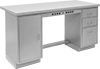
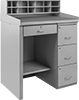
These workbenches have bases with a combination of drawers and doors that offer plenty of storage options for tools and parts.
At 24" wide, these compact workbenches provide storage and a work surface even when space is limited.
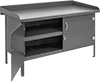
At 48" wide and greater, these workbenches have a larger work surface and more storage than our standard cabinet workbenches.
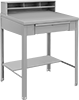
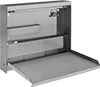
Mount these workstations on a flat vertical surface to create a steady horizontal surface for writing, typing, or tinkering.
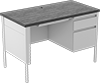
The work surface is positioned at a comfortable height for writing and working while standing.
These workstations have almost twice the top capacity of our standard stand-up-height workstations.
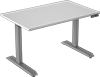
Switch between sitting and standing while working.
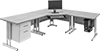
Mix and match components to design an office work area that can be reconfigured as needed.
Add a work surface without taking up any floor space.
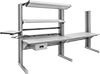
Create a personalized work area by adding accessories. These workstations are often used for small-parts assembly.
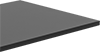
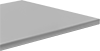
With their extra-smooth surface, these tops won’t trap dirt and oil.
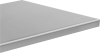
A corrosion-resistant, stainless steel surface and sealed, plastic laminate bottom make these tops suitable for food service.
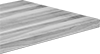
Solid pieces of wood are glued together to ensure durability.
Often used in laboratories, these tops resist chemicals, stains, scratching, and humidity.
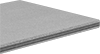
An economical alternative to wood tops, these tops resist stains, oils, and chemicals.
These heavy duty tops have a durable, powder-coated finish.
These tops have a grounding snap and a laminate surface that dissipates static to protect electronic components from electrostatic discharge.
Mount wood and plastic workbench tops to legs and bases.
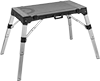
Fold the legs and use the handle to carry these workbenches with one hand.
Choose a workbench and then add any of the optional accessories. All workbenches come with a support brace and have legs with knockouts in the front and back to accept duplex electrical outlets.
These workbenches have plastic frames that won't rust or dent.
Keyhole slots in the legs allow you to adjust the height of these workbenches in 1 1/2" increments.
To keep work from falling off the top, these workbenches have a backstop and side stops.
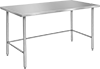
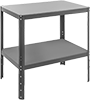
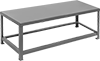
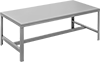
Without a shelf, these tables provide room to pull up a stool or chair. They withstand chemicals, grease, and repeated washdowns for use in laboratories and food-processing areas.
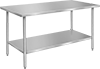
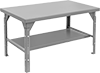
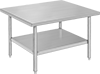
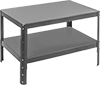
A lower shelf provides additional storage space. Often used in laboratories, these tables stand up to repeated washdowns and resist damage from grease and chemicals.
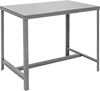
Without a shelf, these tables provide room to pull up a stool or chair. The durable steel top won't warp or splinter.
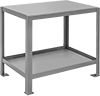
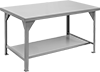
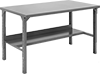
A lower shelf provides additional storage space. The durable steel top won't warp or splinter.
The wood top on these tables is nonconductive, resists impact, and can be sanded and refinished.
With an extra-smooth surface, these tables won't trap dirt and oil, making them easy to clean. They are also nonconductive.
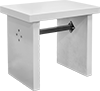
Also known as balance tables, these marble tables provide superior vibration control for sensitive measuring equipment.
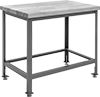
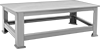
With a thick steel frame and welded construction, these tables have a capacity of at least 10,000 lbs.
With a flatness tolerance of 0.002" per foot, these tables provide an accurate reference surface for layout and inspection work. They have a thick steel frame and welded construction to support 35,000 lbs.
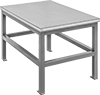
Welded for strength and stability, these tables support 3,000 to 5,500 lbs.
With an extra-smooth nonconductive surface, these tables won't trap dirt and oil, making them easy to clean. They can be configured at a custom height.
Often used in laboratories and food-processing areas, these tables withstand repeated washdowns and resist damage from grease and chemicals. They can be configured for either seated or standing tasks.
These durable tables won't warp or splinter. They can be configured at a custom height.
With a thick steel frame and a capacity of at least 10,500 lbs., these welded tables are our strongest and most durable adjustable-height tables. They can be configured for either seated or standing tasks.
Support 3,000 to 5,000 lbs. with these welded tables. They can be configured for either seated or standing tasks.
With a flatness tolerance of 0.002" per foot, these 24" high tables provide an accurate reference surface for layout and inspection work. They have a thick steel frame and welded construction to support 35,000 lbs.
With a thick steel frame and welded construction, these tables have a capacity of 10,000 lbs. Use them to elevate machinery and equipment 24" from the floor.
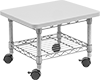
With an extra-smooth nonconductive surface, these tables won't trap dirt and oil, making them easy to clean. They are often used as printer stands.
The wood top is nonconductive as well as impact and chemical resistant. It can be sanded and refinished. Use these tables to elevate machinery and equipment 24" from the floor.
Often used in laboratories, these tables stand up to repeated washdowns and won't corrode from grease and chemicals. Use them to elevate machinery and equipment up to 24" from the floor.
These durable tables won't warp or splinter. Use them to elevate machinery and equipment up to 24" from the floor.
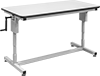
Turn the crank to adjust the height of these tables without clearing off the top or loosening leg bolts. They can be configured for either seated or standing tasks.
Adjust these tables from 18" to 24" to customize the height of machinery and equipment.
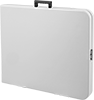
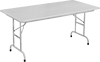
Fold these lightweight tables in half and use the handle to carry them with one hand.
Raise or lower these tables to a comfortable working height.
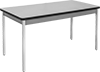
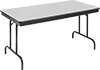
These tables have a fixed height.
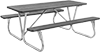
Provide a convenient place outdoors to sit and eat.
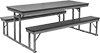
These indoor tables are often used in cafeterias and break rooms.
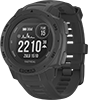
Keep your phone in your pocket and your hands free—these smartwatches perform a variety of functions on your wrist.
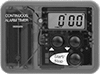
Count down to zero or count up to as much as 24 hours with these digital timers.
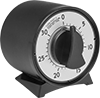
These traditional dial timers count down to zero or count up to 60 minutes.
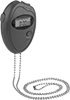
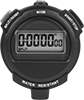
Track time on food processing lines while reducing the risk of contaminating the food. To help you comply with Hazard Analysis and Critical Control Point (HACCP) programs, these plastic stopwatches contain metal and chemical additives that will set off metal detectors and show up on X-ray machines.
Quickly view starts and finishes on a digital screen.
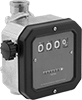
A digital display makes it easy to check both the total amount of liquid that’s flowed through and the batch total.
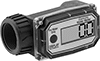
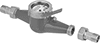
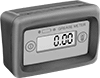
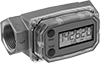
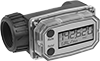
Measure the total amount of liquid flowing through these totalizers.
The digital display on these totalizers makes it easy to check the total amount of high-temperature liquid—up to 200° F—passing through your system.
Use these totalizers to measure the total amount of liquid up to 200° F flowing through your pipe system.
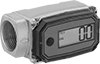
Track batches and the total amount of gasoline, diesel fuel, and kerosene passing through your system.
Determine the amount of gasoline, diesel fuel, and kerosene that flows through these totalizers.
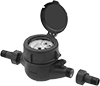
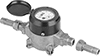
Meeting NSF/ANSI 61, these totalizers measure the cumulative amount of drinking water flowing through them.
Often used in hard-to-access areas, these totalizers let you monitor the total amount of drinking water flowing through them up to 250 feet away.
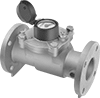
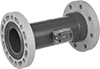
Flanged ends let you securely integrate these totalizers into large drinking water pipelines to measure the cumulative amount of water flowing through them.
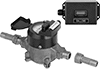
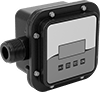
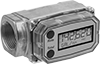
Install this totalizer on your grease gun or valve to measure grease dispensing and reduce waste.
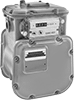
Often used in heating, cooking, and power-generating systems, these totalizers measure the total amount of natural gas, propane, and butane that flow through them.
Measure the amount of light oil that flows through these totalizers.
To withstand water and a variety of caustic chemicals, these flowmeter/totalizers have a corrosion-resistant 316 stainless steel body.
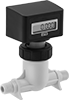
Determine the flow rate and total flow volume of water with the same meter.
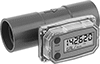
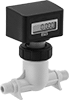
Bond the unthreaded connections to PVC pipe with PVC cement and primer.
For secure connections in large pipelines with high flow rates, these flowmeter/totalizers have flanged ends.
With one meter, these flowmeter/totalizers measure the flow rate and total flow volume of high-temperature liquid up to 200° F.
With a display that can be placed up to 25 feet from the sensor, these flowmeter/totalizers are often used in hard-to-access areas.
Use with oil, gasoline, diesel fuel, and kerosene.
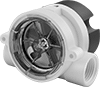
Send flow rate data using these transmitters while also being able to visually confirm liquid is flowing.
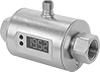
Also known as magmeters, these transmitters use a magnetic field to measure flow rate and temperature with high accuracy.
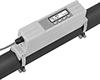
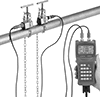
Using ultrasonic waves, these transmitters measure the flow rate of your liquid from outside your pipe.
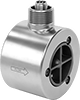
Install these transmitters between two flanges in a flanged pipe system to measure flow rate and send the data to a remote display or programmable logic controller (PLC). For easy cleaning and maintenance, you can slide the transmitter out from between the flanges.
Thread a ring fitting into your pipe connection and insert the probe of these transmitters to measure the flow and temperature of water, oil, or air.
Often used in low-flow metering applications for lubricants or antifreeze, these transmitters measure flow rate and send the data to a remote display or programmable logic controller (PLC).
Send flow rate and temperature measurements simultaneously to a programmable logic controller (PLC), data logger, or other receiving device.
Send flow rate measurements to monitor and control equipment.
Measure and transmit flow rate, pressure, and temperature of industrial gases, such as air, argon, CO2, and nitrogen, flowing through your system.
Commonly referred to as thermal mass flowmeters, these transmitters calculate flow rate by measuring how much they cool as air and other gases pass through them. This means they’re accurate even if there are temperature and pressure changes, unlike most other transmitters.
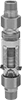
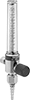
Install these flowmeters in an instrument panel to measure the flow rate of hot water and other liquids reaching up to 212° F.
With a maximum temperature of 240° F and a maximum pressure of 3,500 psi, these flowmeters measure the flow rate of liquids that are too hot or pressurized for standard flowmeters.
Monitor the flow rate of liquids and use the integrated switch to turn equipment on and off, or activate an alarm when liquid reaches a set flow rate.
Measure the flow rate of liquids up to 212° F.
To avoid metal contaminating liquids, such as deionized water, these flowmeters are made entirely of plastic and rubber.
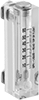
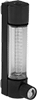
A 304 stainless steel case protects these flowmeters from blows that could shatter the glass body.
Install these flowmeters in an instrument panel where they might be exposed to blows and other impact.
Often used to pinpoint flow issues, these flowmeters clamp onto pipe, so you can spot-check the flow rate at different points without disassembling your system. They measure by tracking the time it takes for ultrasonic waves to pass through your liquid, so they don’t need to come into contact with your liquid.
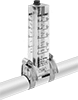
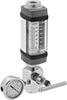
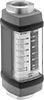
Check the flow rate of liquids in your system.
Liquids with particles up to 1/8" in diameter won't clog this flowmeter.
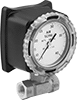
A large dial instead of a scale makes it easier to read the flow rate from a distance.
A spring piston instead of a float allows these flowmeters to measure flow rate in any mounting orientation.
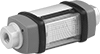
Easily install the unthreaded ends of these flowmeters into a PVC piping system.
Fittings on the back let you install these flowmeters in instrument panels.
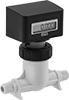
Check the flow rate of liquids up to 200° F from an easy-to-read digital display instead of a scale or dial.
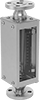
Install these flowmeters securely into large pipelines with the flanged ends.
No need to disassemble your PVC pipeline—insert these flowmeters into a drilled hole and secure them using the included clamps.
Often used to find worn components or leaks, these flowmeters have a valve, so you can test the flow of oil from pumps and other equipment at different pressures.
With a spring piston instead of a float, these flowmeters measure the flow rate of oil in any mounting orientation.
If the oil in your line is too hot or pressurized for standard flowmeters, use these flowmeters to measure the flow rate.
To prevent contaminating your oxygen line, these flowmeters are specially cleaned and bagged.
Instead of a scale, these flowmeters have a large dial that makes it easy to read the flow rate of your gas from a distance.
Instead of a scale calibrated to a specific gas’ flow rate, these flowmeters measure in millimeters and include a conversion chart, so you can check the flow rate of water and multiple gases without any calculations.
A case protects these flowmeters from blows and other impact as they measure the flow rate of gas. Install them in instrument panels using the fittings on the back.
Measure the flow rate of gases in applications where pressure fluctuates, such as compressed air systems.
Monitor the flow rate of air and other gases from your instrument panel—these flowmeters have fittings on the back for panel mounting.
Designed for air and other gases, these flowmeters measure the rate at which they're moving through your pipes.
In addition to a transmitter, these kits include a 6 1/2-ft. cable and a mounting bracket.
Provide motion feedback to counters, controllers, and motor drives for automated motion control and measurement applications.
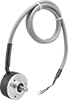
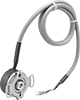
Also known as encoders, these sanitary transmitters convey motion to an electrical signal that conveys distance, direction, and speed. They’re often used in control systems to automate servomotors, robotics, and assembly machines in sanitary environments such as food and pharmaceutical plants.
Often used with servomotors, these transmitters have a mounting hole pattern that fits a three-hole 28 mm BC servomotor face.
Slide one of these transmitters onto a motor shaft in your application—they have a flexible mounting plate that compensates for shaft misalignment and vibration.
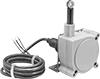
Measure the position of an object moving in a straight line. Also known as string pots, these transmitters have an extending wire cable that measures the relative distance between two points.
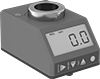
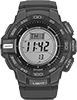
Monitor your environment when working outdoors. These wristwatches display time, date, temperature, barometric pressure, and altitude.
These scoreboards automatically count days.
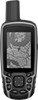
Navigate on foot with real-time GPS data.
Attach these timers to faucets to make sure you’re following handwashing protocols that help prevent the spread of illness.
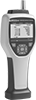
Check your indoor air quality (IAQ) by measuring the amount of particles present. These counters are often used to monitor dust levels in workshops, check for particles in classrooms, and measure filter efficiency in HVAC systems.
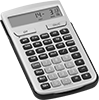
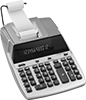
Record your calculations and print receipts.
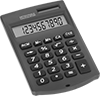
Made with metal and chemical additives, these calculators trigger metal detectors and X-rays if they fall into your food line, helping you comply with Hazard Analysis and Critical Control Point (HACCP) programs for food safety.
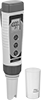
More precise than test strips, this meter is often used to measure the pH of dirty liquids in agricultural systems, aquaculture tanks, and printing fountains.
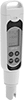
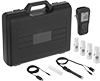
Transmit pH readings to a PC for analysis. These meters have a sensor on a 6-ft. cable for taking remote readings of water and other clean liquids.
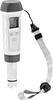
Check pH in harsh field conditions. These floating meters that have a housing that meets IP67 for complete resistance to dust and protection from temporary submersion.
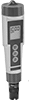
Monitor pH readings from your smartphone or tablet—download the app to view data up to 160 ft. away using Bluetooth.
Measure a solution’s oxidation reduction potential (ORP) to determine its ability to break down contaminants.
Since this oxidation reduction potential (ORP) meter has a housing that meets IP67 for complete resistance to dust and protection from temporary submersion, it’s often used to determine a solution’s ability to break down contaminants in harsh field conditions.
Since these meters float and have a housing that meets IP67, they won’t be damaged by temporary submersion and have complete resistance to dust. They detect total dissolved solids (TDS) in water, hydroponic solutions, and other clean liquids to determine contaminant levels.
Check the oxygen levels of water and other clean liquids in harsh field conditions. This meter has a housing that meets IP67 for complete resistance to dust and protection from temporary submersion.
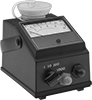
Commonly used to test environmental samples, boiler condensate, wastewater, and other dirty liquids for contaminants, this bench-top meter determines the total dissolved solids (TDS) in a solution.
Pour contaminated water, wastewater, printing fountain solutions, and other dirty liquids into the meter cup to test electrical conductivity levels that indicate the concentration of salts, nutrients, chemicals, and other substances.
Don’t worry about dropping this meter in your tank when checking electrical conductivity—it floats and has a housing that meets IP67 for complete resistance to dust and protection from temporary submersion.
Don’t strain your eyes reading a scale—these bench-top meters indicate exact results on the digital display.
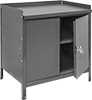
Check the pH and conductivity of water and other clean liquids with one bench-top device.
Test temperature, chemical concentration, contamination, and salt levels in liquid from up to 6 ft. away, then send the results to your computer for analysis.
Take multiple water-chemistry and temperature measurements in hard-to-reach places from up to 3 feet away.
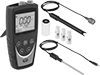
Test different water-chemistry measurements in dirty, wet conditions.
Often used to save rinse water in beverage and pharmaceutical lines, these sensors test the amount of chemicals, cleaners, and other substances in liquids by measuring how well the liquid conducts electricity. They’re 3-A and European Hygienic Engineering and Design Group (EHEDG) certified, thanks to their design that’s easy to keep clean.