We will reply to your message within an hour.
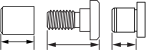
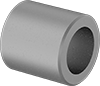
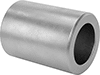
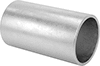
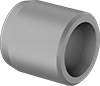
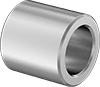
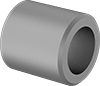
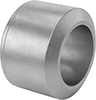
Also known as jig bushings, these drill bushings fit inside fixture plate holes to precisely guide drill bits, counterbores, reamers, and other cutting tools. They improve accuracy so your drilled holes and cuts are consistent from part to part.
With ID tolerances sized specifically for reamers, these bushings ensure steady and precise hole finishing. Press them into a fixture plate with a manual or hydraulic press for permanent installation.
Drill holes close together. These bushings have a thinner wall than typical bushings to fit side by side in a fixture plate.
Larger OD tolerances than standard press-fit bushings allow for finishing. Bushings should be machine ground.
These bushings are made of stainless steel, which provides excellent corrosion resistance.
Made of durable tungsten carbide, these bushings outlast steel.
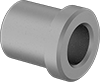
A flanged head on these bushings acts as a stop, so they won’t press through your jig even under extreme drilling pressure. They’re ANSI Type H bushings, also known as headed bushings.
Replace worn bushings and quickly change IDs without needing to repeatedly use a lever press. Instead of pressing bushings in and out of your jig fixture, which can cause damage, these bushings slide in and out of sleeves.
Create a permanent base for removable bushings so you can swap them out as needed.
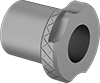
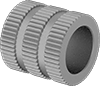
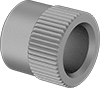
Serrations line the sides of these bushings to keep them from spinning while you drill. Also known as jig bushings, they’re pressed or molded into plastic tooling to guide drill bits, counterbores, and reamers.
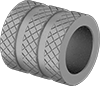
Designed to grip slippery plastic, the knurls on these bushings keep them from spinning while you drill. Their hold is stronger than serrated bushings, so they can withstand more force.
Unlike most bushings, these won’t buckle the material or distort the hole when installed in thin-gauge aluminum and steel fixture plates.
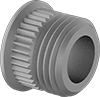
Serrations on these bushings dig into wood, aluminum, and other soft metals to keep them from spinning while you drill. Also known as jig bushings, they fit inside fixture plates to guide drill bits, counterbores, and reamers.
Guide extended-length drill bits into workpieces to create deep, accurate holes.
Also known as chrome-moly steel, these 4130 alloy steel round tubes have low carbon content for good weldability. They’re often used for roll cages and frames.
Also known as mild steel, low-carbon steel is easy to machine, form, and weld. It's widely fabricated into parts that don’t require high strength, such as frames, supports, and conduit.
Offering excellent antifriction qualities, 932 bronze also offers good strength and wear resistance. It's also known as SAE 660 and is often used for bearings, bushings, and thrust washers.
Powdered bronze is pressed and then impregnated with SAE 30 oil to make this material self-lubricating.
An excellent alternative to oil-filled bronze, graphite-filled bronze provides dry lubrication in temperatures as high as 700° F.
An easier-to-machine alternative to 932 bronze, 936 also has better corrosion resistance. It's also called modified SAE 64.
Also known as nylon 6/6, this general purpose material is often used for bearings, gears, valve seats, and other high-wear parts.
Delrin® acetal resin, also known as acetal homopolymer, is stronger and stiffer than acetal copolymer.