


Filter by
System of Measurement
Thread Size


Body Style


Finish

Threading

Movement


Overall Height
Eye Type

Material
Application
DFARS Specialty Metals
Export Control Classification Number (ECCN)
REACH
RoHS
Specifications Met
Eye Shape

Torque
Color

Eyebolts—For Lifting
Steel%20--%3e%3csvg%20version='1.1'%20id='Layer_1'%20xmlns='http://www.w3.org/2000/svg'%20xmlns:xlink='http://www.w3.org/1999/xlink'%20x='0px'%20y='0px'%20viewBox='0%200%20400%20400'%20style='enable-background:new%200%200%20400%20400;'%20xml:space='preserve'%3e%3cstyle%20type='text/css'%3e%20.st0{fill:%231A70A0;}%20.st1{opacity:0.5;}%20%3c/style%3e%3cg%3e%3cg%3e%3cpath%20class='st0'%20d='M200,56.9c38.35,0,74.4,14.93,101.51,42.05c27.11,27.11,42.05,63.17,42.05,101.51s-14.93,74.4-42.05,101.51%20S238.35,344.02,200,344.02s-74.4-14.93-101.51-42.05c-27.11-27.11-42.05-63.17-42.05-101.51s14.93-74.4,42.05-101.51%20S161.65,56.9,200,56.9%20M200,12.9C96.41,12.9,12.44,96.88,12.44,200.46c0,103.59,83.97,187.56,187.56,187.56%20c103.59,0,187.56-83.97,187.56-187.56C387.56,96.88,303.59,12.9,200,12.9L200,12.9z'/%3e%3c/g%3e%3cg%3e%3cg%20class='st1'%3e%3cpath%20class='st0'%20d='M235.49,152.24h16.15l-27.46,111.87c-1.94,7.8-2.91,12.5-2.91,14.1c0,1.82,0.58,3.29,1.73,4.41%20c1.16,1.12,2.69,1.68,4.61,1.68c5.23,0,11.78-3.85,19.63-11.55l17.22,21.34c-16.95,17.33-34.87,26-53.78,26%20c-8.37,0-15.45-1.47-21.23-4.41c-5.79-2.94-10.44-7.25-13.95-12.92c-3.51-5.67-5.27-11.18-5.27-16.53c0-1.93,0.35-5.24,1.05-9.94%20c1-6.94,2.05-12.54,3.15-16.82l15.22-62.15h-32.69l7.65-30.97C190.89,163.58,214.53,158.88,235.49,152.24z%20M230.44,80.84%20c8.24,0,14.66,2.62,19.26,7.86c4.6,5.24,6.9,11.55,6.9,18.94c0,5.46-1.42,10.7-4.25,15.73c-2.83,5.03-6.88,9.07-12.12,12.12%20c-5.24,3.05-10.33,4.57-15.24,4.57c-4.6,0-9.17-1.23-13.72-3.69c-4.55-2.46-8.02-5.78-10.43-9.95%20c-2.41-4.17-3.61-8.67-3.61-13.48c0-5.35,1.52-10.64,4.57-15.89c3.05-5.24,7.03-9.25,11.96-12.04%20C218.68,82.23,224.24,80.84,230.44,80.84z'/%3e%3c/g%3e%3cg%3e%3cpath%20class='st0'%20d='M214.08,152.24h16.15l-27.46,111.87c-1.94,7.8-2.91,12.5-2.91,14.1c0,1.82,0.58,3.29,1.73,4.41%20c1.16,1.12,2.69,1.68,4.61,1.68c5.23,0,11.78-3.85,19.63-11.55l17.22,21.34c-16.95,17.33-34.87,26-53.78,26%20c-8.37,0-15.45-1.47-21.23-4.41c-5.79-2.94-10.44-7.25-13.95-12.92c-3.51-5.67-5.27-11.18-5.27-16.53c0-1.93,0.35-5.24,1.05-9.94%20c1-6.94,2.05-12.54,3.15-16.82l15.22-62.15h-32.69l7.65-30.97C169.48,163.58,193.11,158.88,214.08,152.24z%20M209.03,80.84%20c8.24,0,14.66,2.62,19.26,7.86c4.6,5.24,6.9,11.55,6.9,18.94c0,5.46-1.42,10.7-4.25,15.73c-2.83,5.03-6.88,9.07-12.12,12.12%20c-5.24,3.05-10.33,4.57-15.24,4.57c-4.6,0-9.17-1.23-13.72-3.69c-4.55-2.46-8.02-5.78-10.43-9.95%20c-2.41-4.17-3.61-8.67-3.61-13.48c0-5.35,1.52-10.64,4.57-15.89c3.05-5.24,7.03-9.25,11.96-12.04%20C197.26,82.23,202.83,80.84,209.03,80.84z'/%3e%3c/g%3e%3c/g%3e%3c/g%3e%3c/svg%3e)
 |  |
With Shoulder | Without Shoulder |
With Shoulder—Use for lifting at angles up to 45° or for vertical lifting. Because angular lifting significantly reduces the eyebolt’s capacity, we recommend hoist rings for heavy loads.
Without Shoulder—For vertical lifting only.
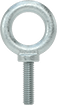
Zinc-Plated Steel
 |  |
With Shoulder | Without Sholder |
Zinc-plated steel eyebolts offer good corrosion resistance.
With Shoulder—Use for lifting at angles up to 45° or for vertical lifting. Because angular lifting significantly reduces the eyebolt’s capacity, we recommend hoist rings for heavy loads.
Without Shoulder—For vertical lifting only.
Swivel-Under-Load Hoist Rings—For Lifting
 |
 |
180° Pivot |
 |
360° Swivel |
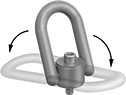
The ball bearing on these hoist rings makes it easy to rotate your load even after it’s suspended. For unbalanced or heavy loads, the base also swivels to compensate for pitch, roll, and sway. Their lifting ring pivots 180° front to back. Ideal for angular lifting, these hoist rings withstand stresses that bend or break eyebolts.
Install the base of these hoist rings flush to your mounting surface. Use a torque wrench to tighten to the recommended torque stamped on the ring.
Note: Capacities listed are for vertical lifting only. As the lift angle changes from vertical, the amount of weight the hoist ring can lift is significantly reduced. For example, when lifting a 1,000 lb. load at a 45° angle, you must choose a hoist ring with a capacity of at least 1,400 lbs. Do not use at an angle less than 30°.
Warning: Never use to lift people or items over people.
Thread Size | Thread Lg. | Inside Wd. | Overall Ht. | Vert. Cap., lb. | Movement | Specs. Met | Certification | Each | |||
|---|---|---|---|---|---|---|---|---|---|---|---|
Forged Yellow Powder-Coated Steel | |||||||||||
| 1 3/4"-5 | 2 5/8" | 2 3/4" | 13 1/4" | 28,210 | 180° Pivot and 360° Swivel | ASME B30.26 | CE Marked | 4137N32 | 000000000 | ||
