


Filter by
Diameter


Material
Tolerance Rating
Hardness Rating
Mechanical Finish
Yield Strength

Export Control Classification Number (ECCN)
DFARS Specialty Metals

Thermal Conductivity
Solder Alloy
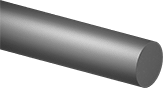
Extra-Hard C2 Tungsten Carbide
Rods
 |
Dia., mm | Dia. Tolerance, mm | Lg., mm | Lg. Tolerance, mm | Mechanical Finish | Yield Strength | Hardness | Temper Rating | Each | |||
|---|---|---|---|---|---|---|---|---|---|---|---|
| 3 | -0.007 to 0 | 38 | -1.5 to 1.5 | Precision Ground | Not Rated | Rockwell C80 (Extra Hard) | Not Rated | 8791A92 | 00000 | ||
| 3 | -0.007 to 0 | 75 | -1.5 to 1.5 | Precision Ground | Not Rated | Rockwell C80 (Extra Hard) | Not Rated | 8791A93 | 0000 | ||
| 4 | -0.007 to 0 | 50 | -1.5 to 1.5 | Precision Ground | Not Rated | Rockwell C80 (Extra Hard) | Not Rated | 8791A95 | 0000 | ||
| 4 | -0.007 to 0 | 75 | -1.5 to 1.5 | Precision Ground | Not Rated | Rockwell C80 (Extra Hard) | Not Rated | 8791A97 | 00000 | ||
| 5 | -0.007 to 0 | 50 | -1.5 to 1.5 | Precision Ground | Not Rated | Rockwell C80 (Extra Hard) | Not Rated | 8791A99 | 0000 | ||
| 5 | -0.007 to 0 | 75 | -1.5 to 1.5 | Precision Ground | Not Rated | Rockwell C80 (Extra Hard) | Not Rated | 8791A12 | 00000 | ||
| 6 | -0.007 to 0 | 50 | -1.5 to 1.5 | Precision Ground | Not Rated | Rockwell C80 (Extra Hard) | Not Rated | 8791A14 | 00000 | ||
| 6 | -0.007 to 0 | 75 | -1.5 to 1.5 | Precision Ground | Not Rated | Rockwell C80 (Extra Hard) | Not Rated | 8791A16 | 00000 | ||
| 10 | -0.007 to 0 | 100 | -1.5 to 1.5 | Precision Ground | Not Rated | Rockwell C80 (Extra Hard) | Not Rated | 8791A42 | 00000 | ||
| 16 | -0.007 to 0 | 125 | -1.5 to 1.5 | Precision Ground | Not Rated | Rockwell C80 (Extra Hard) | Not Rated | 8791A54 | 000000 | ||
| 18 | -0.007 to 0 | 100 | -1.5 to 1.5 | Precision Ground | Not Rated | Rockwell C80 (Extra Hard) | Not Rated | 8791A56 | 000000 | ||
| 20 | -0.007 to 0 | 100 | -1.5 to 1.5 | Precision Ground | Not Rated | Rockwell C80 (Extra Hard) | Not Rated | 8791A58 | 000000 | ||
| 20 | -0.007 to 0 | 150 | -1.5 to 1.5 | Precision Ground | Not Rated | Rockwell C80 (Extra Hard) | Not Rated | 8791A62 | 000000 | ||
| 22 | -0.007 to 0 | 100 | -1.5 to 1.5 | Precision Ground | Not Rated | Rockwell C80 (Extra Hard) | Not Rated | 8791A64 | 000000 | ||
| 25 | -0.007 to 0 | 100 | -1.5 to 1.5 | Precision Ground | Not Rated | Rockwell C80 (Extra Hard) | Not Rated | 8791A66 | 000000 | ||
Rods with Coolant Hole
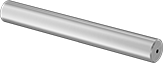 |
Rods with a coolant hole let coolant flow into tools that need it, saving you the effort of drilling a hole yourself.
%20--%3e%3cg%3e%3cg%20id='Layer_1'%3e%3cpath%20class='cls-1'%20d='M68,27.2c-14.6,0-26.4,11.7-26.4,26.3,0,7,2.8,13.7,7.7,18.7v44.8l18.8-16.1,18.7,16.1v-44.9c10.3-10.3,10.3-27,0-37.3-5-4.9-11.7-7.7-18.7-7.7h0ZM81.3,105l-13.2-11.4-13.2,11.4v-28.7c8.2,4.8,18.3,4.8,26.5,0v28.7ZM76.2,70.8c-5.2,2.5-11.2,2.5-16.4,0-9.5-4.5-13.5-15.9-9-25.4,4.5-9.5,15.9-13.5,25.4-9,9.5,4.5,13.5,15.9,9,25.4-1.9,4-5.1,7.1-9,9Z'/%3e%3cpath%20class='cls-2'%20d='M5.8,95.5c-1.2,0-2.1-1-2.1-2.1,0,0,0,0,0,0V29.4h20.9c2.1,0,3.8-1.7,3.8-3.8V3.7c.2,0,.4,0,.5,0h37.5c1.2,0,2.1,1,2.1,2.1v18.6c1.2,0,2.5.1,3.7.3V5.8C72.2,2.6,69.6,0,66.4,0H28.9c-1.5,0-3,.6-4.1,1.7h-.1c0,.1-23,23.2-23,23.2-1.1,1.1-1.7,2.6-1.7,4.1v64.3c0,3.2,2.6,5.8,5.8,5.8h41.7v-3.7H5.8ZM24.7,7.1v18.7H6L24.7,7.1Z'/%3e%3c/g%3e%3c/g%3e%3c/svg%3e)
Certificates with a traceable lot number are available for these products. Download certificates from ORDER HISTORY after your order ships.
Dia., mm | Dia. Tolerance, mm | ID, mm | ID Tolerance, mm | Lg., mm | Lg. Tolerance, mm | Mechanical Finish | Yield Strength | Hardness | Temper Rating | Each | |||
|---|---|---|---|---|---|---|---|---|---|---|---|---|---|
| 6 | -0.006 to 0 | 1 | -0.15 to 0.15 | 58 | 0 to 0.782 | Precision Ground | Not Rated | Rockwell C80 (Extra Hard) | Not Rated | 4702N112 | 000000 | ||
| 8 | -0.006 to 0 | 1.3 | -0.15 to 0.15 | 64 | 0 to 1.000 | Precision Ground | Not Rated | Rockwell C80 (Extra Hard) | Not Rated | 4702N114 | 00000 | ||
| 12 | -0.006 to 0 | 2 | -0.25 to 0.25 | 84 | 0 to 0.84 | Precision Ground | Not Rated | Rockwell C80 (Extra Hard) | Not Rated | 4702N118 | 00000 | ||
| 14 | -0.006 to 0 | 2 | -0.25 to 0.25 | 84 | 0 to 0.84 | Precision Ground | Not Rated | Rockwell C80 (Extra Hard) | Not Rated | 4702N121 | 00000 | ||
Balls
 |
Dia., mm | Dia. Tolerance, mm | Mechanical Finish | Yield Strength | Hardness | Temper Rating | Pkg. Qty. | Pkg. | |||
|---|---|---|---|---|---|---|---|---|---|---|
| 1 | -0.0025 to 0.0025 | Polished | Not Rated | Rockwell C75 (Extra Hard) | Not Rated | 5 | 9686K81 | 00000 | ||
| 2 | -0.0025 to 0.0025 | Polished | Not Rated | Rockwell C75 (Extra Hard) | Not Rated | 5 | 9686K82 | 00000 | ||
| 3 | -0.0025 to 0.0025 | Polished | Not Rated | Rockwell C75 (Extra Hard) | Not Rated | 5 | 9686K83 | 00000 | ||
| 4 | -0.0025 to 0.0025 | Polished | Not Rated | Rockwell C75 (Extra Hard) | Not Rated | 2 | 9686K85 | 00000 | ||
| 5 | -0.0025 to 0.0025 | Polished | Not Rated | Rockwell C75 (Extra Hard) | Not Rated | 2 | 9686K86 | 00000 | ||
| 6 | -0.0025 to 0.0025 | Polished | Not Rated | Rockwell C75 (Extra Hard) | Not Rated | 2 | 9686K87 | 00000 | ||
| 7 | -0.0025 to 0.0025 | Polished | Not Rated | Rockwell C75 (Extra Hard) | Not Rated | 2 | 9686K89 | 00000 | ||
| 8 | -0.0025 to 0.0025 | Polished | Not Rated | Rockwell C75 (Extra Hard) | Not Rated | 2 | 9686K91 | 00000 | ||
| 10 | -0.0025 to 0.0025 | Polished | Not Rated | Rockwell C75 (Extra Hard) | Not Rated | 1 | 9686K93 | 00000 | ||
| 12 | -0.0025 to 0.0025 | Polished | Not Rated | Rockwell C75 (Extra Hard) | Not Rated | 1 | 9686K95 | 00000 | ||
| 13 | -0.0025 to 0.0025 | Polished | Not Rated | Rockwell C75 (Extra Hard) | Not Rated | 1 | 9686K77 | 00000 | ||
| 14 | -0.0025 to 0.0025 | Polished | Not Rated | Rockwell C75 (Extra Hard) | Not Rated | 1 | 9686K78 | 00000 | ||
| 15 | -0.0025 to 0.0025 | Polished | Not Rated | Rockwell C75 (Extra Hard) | Not Rated | 1 | 9686K79 | 00000 | ||
Thermally-Conductive Corrosion-Resistant Tungsten
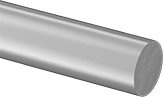
This high-density tungsten alloy is thermally conductive, so it quickly dissipates heat without deforming at high temperatures. Three to four times as thermally conductive as steel, it’s often formed into dies for short cycle times. Also known as Super Chatter Free tungsten, it’s commonly used as a boring bar to dampen vibration during machining, leading to a smoother finished product. This alloy contains molybdenum and nickel, making it easier to machine than pure tungsten and tungsten carbide. It won’t corrode when exposed to outside elements and chemicals.
Certificates with a traceable lot number are available for these products. Download certificates from ORDER HISTORY after your order ships.
Rods
 |
12" Long | |||||||
|---|---|---|---|---|---|---|---|
Dia. | Dia. Tolerance | Conductivity Percentage, IACS | Yield Strength, psi | Hardness | Each | ||
| 3/8" | 0" to 0.03" | 14% | 90,000 | Rockwell C30 (Hard) | 7405N11 | 0000000 | |
| 1/2" | 0" to 0.03" | 14% | 90,000 | Rockwell C30 (Hard) | 7405N12 | 000000 | |
| 5/8" | 0" to 0.03" | 14% | 90,000 | Rockwell C30 (Hard) | 7405N13 | 000000 | |
| 3/4" | 0" to 0.03" | 14% | 90,000 | Rockwell C30 (Hard) | 7405N14 | 00000000 | |
| 1" | 0" to 0.06" | 14% | 90,000 | Rockwell C30 (Hard) | 7405N15 | 00000000 | |
Casting Metals
Indium Alloy
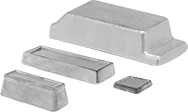 |
Indium alloys expand slightly as they solidify, pushing into the crevices of a mold to produce detailed replicas. These alloys are useful for repairing dies, creating fusible links, and holding delicate parts for machining. They also have a low melting temperature so they can be cast in molds made from glass, quartz, mica, and ceramic.
Material Composition | Approximate | |||||||||||||
|---|---|---|---|---|---|---|---|---|---|---|---|---|---|---|
Melting Temp., ° F | Bismuth | Lead | Tin | Cadmium | Indium | Thick. | Wd. | Lg. | Dia. | Wt., lb. | Shape | Each | ||
| 117 | 45% | 23% | 8% | 5% | 19% | 1/4" | 2" | 4 1/2" | — | 1/2 | Sheet, Bar | 88635K2 | 000000 | |
| 136 | 49% | 18% | 12% | — | 21% | 1/4" | 1 7/8" | 4 1/2" | — | 1/2 | Sheet, Bar | 88635K4 | 00000 | |
| 140 | 48% | 25% | 13% | 9% | 5% | 1/2" | — | — | 3 1/2" | 1 | Rod, Disc | 88635K26 | 000000 | |
| 147 | 48% | 25% | 13% | 10% | 4% | 1/2" | — | — | 3 1/2" | 1 | Rod, Disc | 88635K28 | 000000 | |
Low-Melting-Point Solder for Low-Temperature Applications
Leaded, Flux Required
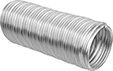 |
Leaded solder has greater tensile strength and density than other indium-based solders, giving it a stronger hold.
Material Composition | 0.16 oz. | ||||||||||
|---|---|---|---|---|---|---|---|---|---|---|---|
Solder Alloy | Indium | Silver | Lead | Dia. | Melting Temp., ° F | Thermal Conductivity, W/(m⋅°C) | Tensile Strength, psi | Each | |||
For Joining Aluminum, Brass, Bronze, Ceramic, Glass, Gold, Nickel, Quartz, Stainless Steel, Steel, and Zinc Alloy | |||||||||||
| In80Pb15Ag5 | 80% | 5% | 15% | 0.030" | 310 | 43 | 2,550 | 6976N11 | 0000000 | ||
Lead-Free, Flux Required
|
Lead-free solder is safer to use than leaded solder and helps meet industry regulations.
100% Indium—Solder that is 100% indium has better thermal conductivity than solder that contains tin, and will cold weld more easily. However, it has lower tensile and shear strength than solder with tin.
48% Tin—Solder with 48% tin has greater tensile and shear strength than 100% indium solder, but lower thermal and electrical conductivity.
Material Composition | 0.11 oz. | ||||||||||
|---|---|---|---|---|---|---|---|---|---|---|---|
Solder Alloy | Indium | Tin | Lead | Dia. | Melting Temp., ° F | Thermal Conductivity, W/(m⋅°C) | Tensile Strength, psi | Each | |||
For Joining Aluminum, Brass, Bronze, Ceramic, Glass, Nickel, Quartz, Stainless Steel, Steel, and Zinc Alloy | |||||||||||
| In52Sn48 | 52% | 48% | 0% | 0.030" | 245 | 34 | 1,720 | 8514N13 | 0000000 | ||
| In100 | 100% | — | 0% | 0.030" | 315 | 86 | 270 | 8514N11 | 000000 | ||
Thermal Interface Foil
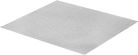 |
Made of indium, this foil is more thermally conductive than thermal interface materials (TIMs) made of plastic. By efficiently pulling heat away from components that produce heat, such as CPUs, this foil lets you use smaller forced cooling systems to extend battery life. It’s also softer and more ductile than paste and putty, covering surfaces better to minimize airflow gaps and increase heat flow. Unlike paste and grease, this foil won’t leach out from between surfaces over time, nor will it dry out and lose effectiveness. It’s clean, easy to install and reposition, and requires no surface preparation. Foil is corrosion resistant and doesn’t need special storage.
48% Tin—Foil with 48% tin has greater tensile and shear strength than foil without tin, but is less thermally conductive.
Each | Package | ||||||||||||
|---|---|---|---|---|---|---|---|---|---|---|---|---|---|
Thk. | Tensile Strength, psi | Shear Strength, psi | Max. Temp., ° F | Thermal Conductivity @ Temp. | Electrical Resistivity | For Use Outdoors | Each | Pkg. Qty. | Pkg. | ||||
2" × 2" | |||||||||||||
Indium | |||||||||||||
| 0.004" | 270 | 890 | 255 | 86 W/(m⋅°C) @ 185° F | 7.2 × 10^-6Ω⋅cm | No | 8898N18 | 000000 | 20 | 8898N12 | 0000000 | ||
| 0.01" | 270 | 890 | 255 | 86 W/(m⋅°C) @ 185° F | 7.2 × 10^-6Ω⋅cm | No | 8898N16 | 00000 | 20 | 8898N14 | 000000 | ||
Indium Alloy (48% Tin) | |||||||||||||
| 0.004" | 1,730 | 1,620 | 190 | 24 W/(m⋅°C) @ 185° F | 1.5 × 10^-5Ω⋅cm | No | 8898N17 | 00000 | 20 | 8898N11 | 000000 | ||
| 0.01" | 1,730 | 1,620 | 190 | 24 W/(m⋅°C) @ 185° F | 1.5 × 10^-5Ω⋅cm | No | 8898N15 | 00000 | 20 | 8898N13 | 000000 | ||
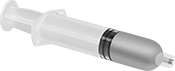
Conductive Gallium
Low-Melting-Point Solder Ribbon for Low-Temperature Applications
Leaded, Flux Required
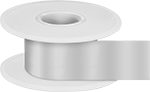 |
Leaded solder has greater tensile strength and density than other indium-based solders, giving it a stronger hold.
Material Composition | 0.1 oz. | ||||||||||||
|---|---|---|---|---|---|---|---|---|---|---|---|---|---|
Solder Alloy | Indium | Silver | Lead | Melting Temp., ° F | Thermal Conductivity, W/(m⋅°C) | Tensile Strength, psi | Lg. | Wd. | Thk. | Each | |||
For Joining Aluminum, Brass, Bronze, Ceramic, Glass, Gold, Nickel, Quartz, Stainless Steel, Steel, and Zinc Alloy | |||||||||||||
| In80Pb15Ag5 | 80% | 5% | 15% | 310 | 43 | 2,550 | 12" | 1" | 0.002" | 5940N11 | 0000000 | ||
Lead-Free, Flux Required
|
Lead-free solder is safer to use than leaded solder and helps meet industry regulations.
Material Composition | 0.1 oz. | ||||||||||||
|---|---|---|---|---|---|---|---|---|---|---|---|---|---|
Solder Alloy | Indium | Tin | Lead | Melting Temp., ° F | Thermal Conductivity, W/(m⋅°C) | Tensile Strength, psi | Lg. | Wd. | Thk. | Each | |||
For Joining Aluminum, Brass, Bronze, Ceramic, Glass, Gold, Nickel, Quartz, Stainless Steel, Steel, and Zinc Alloy | |||||||||||||
| In52Sn48 | 52% | 48% | 0% | 245 | 34 | 1,720 | 12" | 1" | 0.002" | 7906N12 | 0000000 | ||
| In100 | 100% | — | 0% | 315 | 86 | 270 | 12" | 1" | 0.002" | 7906N11 | 000000 | ||
