

Filter by


Export Control Classification Number (ECCN)

DFARS Specialty Metals
Diameter


Thermal Conductivity
Hardness Rating
Surface Resistivity
Solder Alloy
Solder Type
Heat Wands
 |
Shaped like a large flashlight, these wands loosen stuck nuts, heat bearings, and repair dents. They use magnetic induction to heat but do not magnetize parts.
Electrical | |||||||||||||||
|---|---|---|---|---|---|---|---|---|---|---|---|---|---|---|---|
OD | Lg. | Freq., Hz | For Max. Bearing ID | For Max. Bearing OD | Material | Connection | No. of Blades | NEMA Type | Cord Lg., ft. | Includes | Features | Each | |||
120V AC | |||||||||||||||
| 2 1/2" | 15" | 50, 60 | 2" | 3" | Plastic | Straight Blade | 3 | 5-15 | 6 | Plastic Carrying Case Three Heating Coils | Thermal Overload Protection | 6083K11 | 0000000 | ||
Ultra-High-Temperature Tantalum Wire
Harder than platinum and able to withstand higher temperatures than gold, this 99.98% pure tantalum wire also resists corrosion and conducts heat. It’s often used in heating elements for furnaces.
%20--%3e%3cg%3e%3cg%20id='Layer_1'%3e%3cpath%20class='cls-1'%20d='M68,27.2c-14.6,0-26.4,11.7-26.4,26.3,0,7,2.8,13.7,7.7,18.7v44.8l18.8-16.1,18.7,16.1v-44.9c10.3-10.3,10.3-27,0-37.3-5-4.9-11.7-7.7-18.7-7.7h0ZM81.3,105l-13.2-11.4-13.2,11.4v-28.7c8.2,4.8,18.3,4.8,26.5,0v28.7ZM76.2,70.8c-5.2,2.5-11.2,2.5-16.4,0-9.5-4.5-13.5-15.9-9-25.4,4.5-9.5,15.9-13.5,25.4-9,9.5,4.5,13.5,15.9,9,25.4-1.9,4-5.1,7.1-9,9Z'/%3e%3cpath%20class='cls-2'%20d='M5.8,95.5c-1.2,0-2.1-1-2.1-2.1,0,0,0,0,0,0V29.4h20.9c2.1,0,3.8-1.7,3.8-3.8V3.7c.2,0,.4,0,.5,0h37.5c1.2,0,2.1,1,2.1,2.1v18.6c1.2,0,2.5.1,3.7.3V5.8C72.2,2.6,69.6,0,66.4,0H28.9c-1.5,0-3,.6-4.1,1.7h-.1c0,.1-23,23.2-23,23.2-1.1,1.1-1.7,2.6-1.7,4.1v64.3c0,3.2,2.6,5.8,5.8,5.8h41.7v-3.7H5.8ZM24.7,7.1v18.7H6L24.7,7.1Z'/%3e%3c/g%3e%3c/g%3e%3c/svg%3e)
Certificates with a traceable lot number are available for these products. Download certificates from ORDER HISTORY after your order ships.
Wire
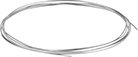 |
1 ft. Long Package | 5 ft. Long Package | 50 ft. Long Package | 100 ft. Long Package | ||||||||||
|---|---|---|---|---|---|---|---|---|---|---|---|---|---|
Dia. | Dia. Tolerance | Melting Point Temp., ° F | Hardness | Each | Each | Each | Each | ||||||
| 0.005" | -0.0003" to 0.0003" | 5,420 | Not Rated | 5627N16 | 000000 | 5627N17 | 000000 | ——— | 0 | 5627N11 | 000000000 | ||
| 0.01" | -0.0004" to 0.0004" | 5,420 | Not Rated | 5627N18 | 00000 | 5627N19 | 00000 | ——— | 0 | 5627N12 | 00000000 | ||
| 0.012" | -0.0005" to 0.0005" | 5,420 | Not Rated | 5627N21 | 00000 | 5627N22 | 00000 | ——— | 0 | 5627N13 | 00000000 | ||
| 0.015" | -0.0005" to 0.0005" | 5,420 | Not Rated | 5627N23 | 00000 | 5627N24 | 00000 | ——— | 0 | 5627N14 | 00000000 | ||
| 0.02" | -0.0005" to 0.0005" | 5,420 | Not Rated | 5627N25 | 00000 | 5627N26 | 00000 | ——— | 0 | 5627N15 | 00000000 | ||
| 0.03" | 0" to 0.002" | 5,420 | Not Rated | ——— | 0 | ——— | 0 | 5627N101 | 0000000 | ——— | 0 | ||
| 0.06" | -0.001" to 0.001" | 5,420 | Not Rated | ——— | 0 | ——— | 0 | 5627N102 | 00000000 | ——— | 0 | ||
Ultra-High-Temperature Niobium Wire
 |
This niobium wire has a higher melting point than most other metal, so it’s also known as refractory metal. It's highly conductive, corrosion resistant, and maintains its strength even at high temperatures. At low temperatures, it becomes a superconductor. This wire holds up in a variety of tough conditions including jet engines, pipelines, and semiconductor manufacturing.
Certificates with a traceable lot number are available for these products. Download certificates from ORDER HISTORY after your order ships.
50 ft. Long | ||||||
|---|---|---|---|---|---|---|
Dia. | Dia. Tolerance | Melting Point Temp., ° F | Hardness | Each | ||
| 0.02" | -0.00075" to 0.00075" | 4,470 | Rockwell B70 (Medium) | 6011N11 | 0000000 | |
| 0.032" | -0.001" to 0.001" | 4,470 | Rockwell B70 (Medium) | 6011N12 | 000000 | |
| 0.062" | -0.0015" to 0.0015" | 4,470 | Rockwell B70 (Medium) | 6011N13 | 000000 | |
| 0.08" | -0.0015" to 0.0015" | 4,470 | Rockwell B70 (Medium) | 6011N14 | 00000000 | |
Low-Melting-Point Solder for Low-Temperature Applications
Leaded, Flux Required
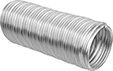 |
Leaded solder has greater tensile strength and density than other indium-based solders, giving it a stronger hold.
Material Composition | 0.16 oz. | ||||||||||
|---|---|---|---|---|---|---|---|---|---|---|---|
Solder Alloy | Indium | Silver | Lead | Dia. | Melting Temp., ° F | Thermal Conductivity, W/(m⋅°C) | Tensile Strength, psi | Each | |||
For Joining Aluminum, Brass, Bronze, Ceramic, Glass, Gold, Nickel, Quartz, Stainless Steel, Steel, and Zinc Alloy | |||||||||||
| In80Pb15Ag5 | 80% | 5% | 15% | 0.030" | 310 | 43 | 2,550 | 6976N11 | 0000000 | ||
Lead-Free, Flux Required
|
Lead-free solder is safer to use than leaded solder and helps meet industry regulations.
100% Indium—Solder that is 100% indium has better thermal conductivity than solder that contains tin, and will cold weld more easily. However, it has lower tensile and shear strength than solder with tin.
48% Tin—Solder with 48% tin has greater tensile and shear strength than 100% indium solder, but lower thermal and electrical conductivity.
Material Composition | 0.11 oz. | ||||||||||
|---|---|---|---|---|---|---|---|---|---|---|---|
Solder Alloy | Indium | Tin | Lead | Dia. | Melting Temp., ° F | Thermal Conductivity, W/(m⋅°C) | Tensile Strength, psi | Each | |||
For Joining Aluminum, Brass, Bronze, Ceramic, Glass, Nickel, Quartz, Stainless Steel, Steel, and Zinc Alloy | |||||||||||
| In52Sn48 | 52% | 48% | 0% | 0.030" | 245 | 34 | 1,720 | 8514N13 | 0000000 | ||
| In100 | 100% | — | 0% | 0.030" | 315 | 86 | 270 | 8514N11 | 000000 | ||
Ultra-High-Temperature Molybdenum Wire
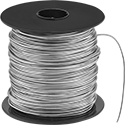 |
Spool |
Able to handle high melting points and conduct heat and electricity, this 99.95% pure molybdenum wire is often used in lights to create a support for filaments. It resists oxidation and won’t corrode. Molybdenum is better at conducting heat and electricity than tantalum and platinum, which also have high melting points. It is not, however, as corrosion resistant.
Certificates with a traceable lot number are available for these products. Download certificates from ORDER HISTORY after your order ships.
1 ft. Long | 5 ft. Long | 100 ft. Long | |||||||||
|---|---|---|---|---|---|---|---|---|---|---|---|
Dia. | Dia. Tolerance | Melting Point Temp., ° F | Hardness | Container Type | Each | Each | Each | ||||
| 0.005" | -0.0003" to 0.0003" | 4,753 | Rockwell C59 (Extra Hard) | Spool | 6225N16 | 000000 | 6225N17 | 0000000 | ——— | 0 | |
| 0.024" | -0.000075" to 0.00075" | 4,753 | Rockwell C59 (Extra Hard) | Spool | 6225N18 | 00000 | 6225N19 | 000000 | 6225N12 | 000000000 | |
| 0.03" | -0.000075" to 0.00075" | 4,753 | Rockwell C59 (Extra Hard) | Spool | 6225N21 | 00000 | 6225N22 | 000000 | ——— | 0 | |
| 0.0315" | -0.000075" to 0.00075" | 4,753 | Rockwell C59 (Extra Hard) | Spool | 6225N23 | 00000 | 6225N24 | 000000 | 6225N14 | 00000000 | |
| 0.04" | -0.000075" to 0.00075" | 4,753 | Rockwell C59 (Extra Hard) | Spool | 6225N25 | 00000 | 6225N26 | 000000 | ——— | 0 | |
Platinum Wire
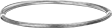 |
99.95% pure, this platinum wire is used for applications that require a soft material that resists corrosion and oxidation and has a high melting point. This wire allows heat and electricity to pass and resists oxide buildup, making it ideal for thermocouple probes, which require accurate readings even at high temperatures. Soft enough to create a good seal between two flanges, it's also used to make high-vacuum O-rings. Platinum's softness means it won't damage the flanges, so they can be used again. The high melting point of this wire makes it a better choice for sealing heated flanges than other materials such as gold.
Certificates with a traceable lot number are available for these products. Download certificates from ORDER HISTORY after your order ships.
1 ft. Long Coil | 5 ft. Long Coil | ||||||||
|---|---|---|---|---|---|---|---|---|---|
Dia. | Dia. Tolerance | Melting Point Temp., ° F | Hardness | Each | Each | ||||
| 0.004" | -0.0003" to 0.0003" | 3,215 | Rockwell B97 (Medium) | 6205N25 | 0000000 | 6205N19 | 0000000 | ||
| 0.005" | -0.0003" to 0.0003" | 3,215 | Rockwell B97 (Medium) | 6205N26 | 000000 | 6205N13 | 000000 | ||
| 0.007" | -0.0004" to 0.0004" | 3,215 | Rockwell B97 (Medium) | 6205N28 | 000000 | 6205N11 | 000000 | ||
| 0.009" | -0.0004" to 0.0004" | 3,215 | Rockwell B97 (Medium) | 6205N32 | 000000 | 6205N14 | 000000 | ||
| 0.012" | -0.0005" to 0.0005" | 3,215 | Rockwell B97 (Medium) | 6205N33 | 000000 | 6205N15 | 00000000 | ||
| 0.014" | -0.0005" to 0.0005" | 3,215 | Rockwell B97 (Medium) | 6205N34 | 000000 | 6205N16 | 00000000 | ||
| 0.018" | -0.0005" to 0.0005" | 3,215 | Rockwell B97 (Medium) | 6205N35 | 000000 | 6205N22 | 00000000 | ||
| 0.02" | -0.0005" to 0.0005" | 3,215 | Rockwell B97 (Medium) | 6205N36 | 000000 | 6205N17 | 00000000 | ||
| 0.031" | -0.00075" to 0.00075" | 3,215 | Rockwell B97 (Medium) | 6205N38 | 00000000 | 6205N21 | 00000000 | ||
