

Filter by


Melting Temperature
Material
Solder Alloy
Export Control Classification Number (ECCN)

U.S.–Mexico–Canada Agreement (USMCA) Qualifying
DFARS Specialty Metals
Solder Type
Thermal Conductivity
For Use On
Surface Resistivity
Density
Casting Metals
Bismuth
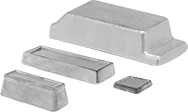 |
Bismuth alloys expand slightly as they solidify, pushing into the crevices of a mold to produce detailed replicas. These alloys are useful for repairing dies, creating fusible links, and holding delicate parts for machining.
Material Composition | Approximate | |||||||||||
|---|---|---|---|---|---|---|---|---|---|---|---|---|
Melting Temp., ° F | Bismuth | Lead | Tin | Cadmium | Thick. | Wd. | Lg. | Wt., lb. | Shape | Each | ||
| 158 | 50% | 27% | 13% | 10% | 1/2" | 3" | — | 1 | Hex Ingot | 8921K12 | 000000 | |
| 160 | 43% | 38% | 11% | 8% | 1/2" | 1 1/2" | 4 1/2" | 1 | Sheet, Bar | 8921K22 | 00000 | |
| 203 | 53% | 32% | 15% | — | 3/4" | 1" | 3" | 1 | Sheet, Bar | 8921K23 | 00000 | |
| 255 | 56% | 44% | — | — | 1/2" | 3" | 3" | 1 | Sheet, Bar | 8921K14 | 00000 | |
| 281 | 40% | — | 60% | — | 1/2" | 1 1/2" | 4 1/2" | 1 | Sheet, Bar | 8921K18 | 00000 | |
| 281 | 58% | — | 42% | — | 1/2" | 1 1/2" | 5 1/2" | 1 | Sheet, Bar | 8921K16 | 00000 | |
Indium Alloy
|
Indium alloys expand slightly as they solidify, pushing into the crevices of a mold to produce detailed replicas. These alloys are useful for repairing dies, creating fusible links, and holding delicate parts for machining. They also have a low melting temperature so they can be cast in molds made from glass, quartz, mica, and ceramic.
Material Composition | Approximate | |||||||||||||
|---|---|---|---|---|---|---|---|---|---|---|---|---|---|---|
Melting Temp., ° F | Bismuth | Lead | Tin | Cadmium | Indium | Thick. | Wd. | Lg. | Dia. | Wt., lb. | Shape | Each | ||
| 117 | 45% | 23% | 8% | 5% | 19% | 1/4" | 2" | 4 1/2" | — | 1/2 | Sheet, Bar | 88635K2 | 000000 | |
| 136 | 49% | 18% | 12% | — | 21% | 1/4" | 1 7/8" | 4 1/2" | — | 1/2 | Sheet, Bar | 88635K4 | 000000 | |
| 140 | 48% | 25% | 13% | 9% | 5% | 1/2" | — | — | 3 1/2" | 1 | Rod, Disc | 88635K26 | 000000 | |
| 147 | 48% | 25% | 13% | 10% | 4% | 1/2" | — | — | 3 1/2" | 1 | Rod, Disc | 88635K28 | 000000 | |
Conductive Gallium
High-Density Low-Melting-Point Solder
Lead-Free, No Flux Required
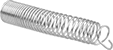 |
Lead-free solder is safer to use than leaded solder and helps meet industry regulations.
1% Silver—Solder with 1% silver forms stronger bonds than solder without silver. It’s also more malleable and ductile. However, it has a higher melting point, so it takes longer to solder.
Bar Solder for Food Service Equipment
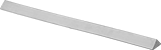 |
This solder is commonly used in solder melting pots. It's composed of pure tin, so it is safe for use with food service equipment. This solder does not have a flux core, so you can choose the flux that works best for your application.
Lead-Free—Lead-free solder is safer to use than leaded solder and helps meet industry regulations.
Material Composition | ||||||||||||
|---|---|---|---|---|---|---|---|---|---|---|---|---|
Solder Alloy | Tin | Lead | Melting Temp., ° F | Solder Type | Lg. | Wd. | Ht. | Wt., lb. | Each | |||
For Joining Brass, Bronze, Copper, Stainless Steel, and Steel | ||||||||||||
| Sn100 | 100% | 0% | 450 | Lead-Free, Flux Required | 11 1/2" | 1" | 1/2" | 1 | 8886K11 | 000000 | ||
Low-Melting-Point Solder for Low-Temperature Applications
Leaded, Flux Required
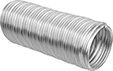 |
Leaded solder has greater tensile strength and density than other indium-based solders, giving it a stronger hold.
Material Composition | 0.16 oz. | ||||||||||
|---|---|---|---|---|---|---|---|---|---|---|---|
Solder Alloy | Indium | Silver | Lead | Dia. | Melting Temp., ° F | Thermal Conductivity, W/(m⋅°C) | Tensile Strength, psi | Each | |||
For Joining Aluminum, Brass, Bronze, Ceramic, Glass, Gold, Nickel, Quartz, Stainless Steel, Steel, and Zinc Alloy | |||||||||||
| In80Pb15Ag5 | 80% | 5% | 15% | 0.030" | 310 | 43 | 2,550 | 6976N11 | 0000000 | ||
Lead-Free, Flux Required
|
Lead-free solder is safer to use than leaded solder and helps meet industry regulations.
100% Indium—Solder that is 100% indium has better thermal conductivity than solder that contains tin, and will cold weld more easily. However, it has lower tensile and shear strength than solder with tin.
48% Tin—Solder with 48% tin has greater tensile and shear strength than 100% indium solder, but lower thermal and electrical conductivity.
Material Composition | 0.11 oz. | ||||||||||
|---|---|---|---|---|---|---|---|---|---|---|---|
Solder Alloy | Indium | Tin | Lead | Dia. | Melting Temp., ° F | Thermal Conductivity, W/(m⋅°C) | Tensile Strength, psi | Each | |||
For Joining Aluminum, Brass, Bronze, Ceramic, Glass, Nickel, Quartz, Stainless Steel, Steel, and Zinc Alloy | |||||||||||
| In52Sn48 | 52% | 48% | 0% | 0.030" | 245 | 34 | 1,720 | 8514N13 | 0000000 | ||
| In100 | 100% | — | 0% | 0.030" | 315 | 86 | 270 | 8514N11 | 000000 | ||
Low-Melting-Point Solder Ribbon for Low-Temperature Applications
Leaded, Flux Required
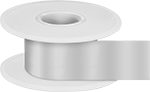 |
Leaded solder has greater tensile strength and density than other indium-based solders, giving it a stronger hold.
Material Composition | 0.1 oz. | ||||||||||||
|---|---|---|---|---|---|---|---|---|---|---|---|---|---|
Solder Alloy | Indium | Silver | Lead | Melting Temp., ° F | Thermal Conductivity, W/(m⋅°C) | Tensile Strength, psi | Lg. | Wd. | Thk. | Each | |||
For Joining Aluminum, Brass, Bronze, Ceramic, Glass, Gold, Nickel, Quartz, Stainless Steel, Steel, and Zinc Alloy | |||||||||||||
| In80Pb15Ag5 | 80% | 5% | 15% | 310 | 43 | 2,550 | 12" | 1" | 0.002" | 5940N11 | 0000000 | ||
Lead-Free, Flux Required
|
Lead-free solder is safer to use than leaded solder and helps meet industry regulations.
Material Composition | 0.1 oz. | ||||||||||||
|---|---|---|---|---|---|---|---|---|---|---|---|---|---|
Solder Alloy | Indium | Tin | Lead | Melting Temp., ° F | Thermal Conductivity, W/(m⋅°C) | Tensile Strength, psi | Lg. | Wd. | Thk. | Each | |||
For Joining Aluminum, Brass, Bronze, Ceramic, Glass, Gold, Nickel, Quartz, Stainless Steel, Steel, and Zinc Alloy | |||||||||||||
| In52Sn48 | 52% | 48% | 0% | 245 | 34 | 1,720 | 12" | 1" | 0.002" | 7906N12 | 0000000 | ||
| In100 | 100% | — | 0% | 315 | 86 | 270 | 12" | 1" | 0.002" | 7906N11 | 000000 | ||
