We will reply to your message within an hour.
This tubing has a seamless construction with no weld bead for unrestricted flow and is stronger than welded tubing.
When your application does not require a smooth interior, this tubing is an economical choice.
This tubing is made to tighter tolerances than other stainless steel tubing.
This tubing is suitable for extreme-pressure applications reaching 15,000 psi—the highest pressure rating of all the tubing we offer.
Compared to other stainless steel tubing, this tubing is harder, stronger, and more durable.
Also known as hypodermic or needle tubing, this tubing has thin walls and is made to tight tolerances for use in precision applications.
This tubing withstands high pressures up to 13,700 psi. It is also known as capillary tubing.
Polished to a 10 Ra finish on the inside, this tubing has the smoothest interior of any tubing we offer. It is commonly used in semiconductor applications.
Aluminum tubing is lightweight with good corrosion resistance and weldability.
Copper tubing has good corrosion resistance and excellent heat transfer qualities.
A soft metal frequently used with air, gasoline, natural gas, propane, and plumbing applications. Tubing is not as corrosion resistant as stainless steel.
Seamless construction with no weld bead gives this tubing an interior with unrestricted flow. It can be flared without splitting.
Tubing is welded with a smoothed weld bead on the inside to reduce particle buildup. It is also known as DOM (drawn over mandrel) tubing.
A thin layer of zinc yellow-chromate gives this tubing extra corrosion resistance, making it an economical alternative to stainless steel.
With the lowest OD tolerance of all our steel tubing, this tubing is designed for precision applications.
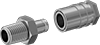
Made of nickel-plated brass, these tube fittings resist corrosion better than plain brass fittings. The male threaded ends connect to NPT, NPTF, BSPP, BSPT, and other universal threads, so you don’t have to bother matching exact thread types.
Make lightweight connections without the hassle of matching the exact thread type—these fittings connect to NPT, NPTF, BSPP, BSPT, and other universal threads.
Often used in outdoor, damp, and washdown environments, these 316 stainless steel fittings will not corrode from water, salt, or chemicals. The male threaded ends mate with NPT, NPTF, BSPT, BSPP, and other universal threads, so you won’t have to worry about matching exact threads when you’re on the job.
Made of nickel-plated brass, these fittings have better corrosion resistance than unplated brass fittings.
Made of brass, these fittings have good corrosion resistance.
The threads on these fittings mate with NPT, NPTF, BSPT, and BSPP threads.
Connect air brake lines with fittings that won’t crack in sub-zero temperatures. They meet Department of Transportation FMVSS 571 safety standards, so they’re often used in commercial trucks and trailers.
An all-metal body and built-in tube support or dual seals allow these fittings to handle the highest pressure ratings of all our push-to-connect tube fittings.
Withstanding up to 300° F, these fittings have the highest temperature rating of all our brass push-to-connect tube fittings for air and water.
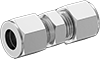
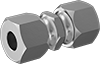
A single sleeve (ferrule) compresses the tubing as you tighten the nut on these fittings, creating a strong seal. They are brass for good corrosion resistance.
Safe for use in your air brake line, these fittings meet Department of Transportation FMVSS 571 standards. They’ve been tested for thermal cycling, vibration, and burst pressure, so put them to work right away.
These fittings include a nut with a built-in sleeve (ferrule), so there’s no need to remove the nut for assembly.
Made of brass, these fittings resist corrosion from water and are more durable than plastic and aluminum fittings.
Also known as instant fittings, these chemical-resistant plastic fittings connect to tubing with a push. An internal gripping ring holds the tubing tight.
Fittings have a barb that grips onto tubing. Use in applications up to 150 psi.
Quick-disconnect couplings consist of a plug and a socket that join with a latch so you can easily connect and disconnect your line. Use in applications up to 150 psi.
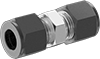
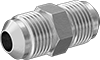
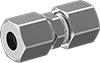
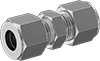
Use these fittings at pressures up to 9,700 psi. Also known as instrumentation fittings, they are made to tight tolerances for use in high-precision applications. They are compatible with Swagelok®, Let-Lok, and Parker A-Lok fittings.
Use with soft plastic tubing to prevent the tube from collapsing.
Save time installing sleeves and nuts—these sets come oriented in the correct direction and order on a dispenser.
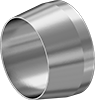
Couple these sleeves with Yor-Lok nuts and fittings to create an extra-strong seal on stainless steel tubing.
For applications that require an extra level of cleanliness, these fittings are individually bagged to prevent contamination.
These fittings have the highest pressure rating of all the Yor-Lok tube fittings we offer.
Use at pressures up to 1,500 psi.
Use at pressures up to 4,300 psi.
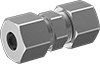
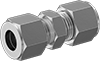
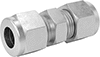
A single sleeve (ferrule) bites into tubing as you tighten the nut, creating a strong seal. The nut and sleeve are included.
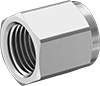
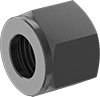
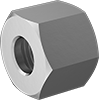
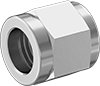
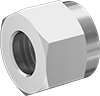
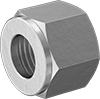
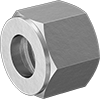
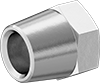
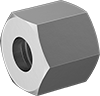
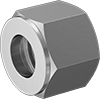
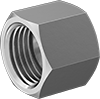
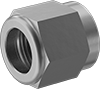
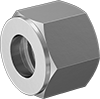
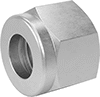
Use these nuts with compression sleeves and fittings to create a strong seal on stainless steel tubing.
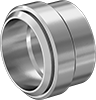
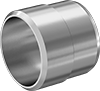
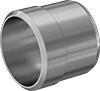
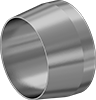
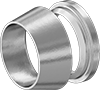
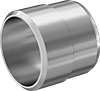
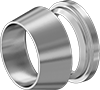
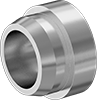
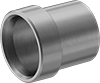
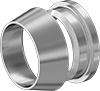
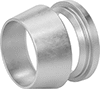
Use these sleeves with compression nuts and fittings to create a strong seal on stainless steel tubing.
When used with high-pressure compression fittings and nuts, these sleeves bite into stainless steel tubing to form a strong seal.
Tighten these nuts onto high-pressure compression sleeves and fittings to create a strong seal on stainless steel tubing.
The thick walls of these fittings can withstand more than twice the pressure of standard compression fittings.
Instead of a metal sleeve (ferrule), these fittings have a rubber sleeve that cushions tubing and absorbs vibration to maintain a tight seal, even when connected to large pumps.
Pair these nuts with vibration-resistant compression sleeves and fittings for a strong seal on stainless steel tubing.
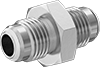
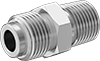
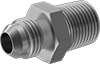
Also known as JIC (Joint Industrial Council) fittings, these provide a tight metal-to-metal seal on stainless steel tubing that is flared to 37°.
The male pipe threads on these fittings have a sealant applied for extra protection against leaks.
Individually bagged to prevent contamination, these fittings are suitable for applications that require a high level of cleanliness.
The threads on the tube end of these fittings are Class 3A or 3B and adhere to tighter tolerances than other 37° flared fittings.
A PTFE seal on the tube end of these fittings allows for an extra-strong connection in high-vibration applications.
Polished to at least a 15 Ra finish on the inside, these fittings have an ultra-smooth interior surface that helps prevent contamination. They are also known as ultra-high-purity fittings.
Originally used on satellites, rocket propulsion systems, and even Mars rovers, these fittings will handle your most challenging industrial environments. They're designed to withstand high vibration and ultra-high vacuum without generating particles that could disrupt your operation.
The flat face of the fitting connects to a tube adapter so you can slide the tubing and fitting sideways to disconnect in cramped spaces. They are also known zero-clearance fittings.
Create a strong connection without heating, flaring, or soldering.
Use these nuts with compression sleeves and fittings to create a strong seal on copper tubing.
With a nickel-plated finish, these compression fittings resist corrosion better than plain brass fittings.
Use these sleeves with compression nuts and fittings to create a strong seal on copper tubing.
Create a strong seal on copper tubing when you couple these nuts with compression sleeves and fittings.
Also known as instrumentation fittings, these are made to tighter tolerances than standard compression fittings. They are compatible with Parker CPI fittings.
These fittings include a nut with a built-in sleeve, so there’s no need to remove the nut for assembly.
The sleeve in these fittings is rubber instead of metal, so it cushions the tubing and absorbs vibration while creating a tight seal.
A nut with two sleeves (ferrules) gives these fittings extra gripping power. The sleeves bite into tubing as you tighten the nut, creating a strong seal.
Use these sleeves with Yor-Lok nuts and fittings to create an extra-strong seal on copper tubing.
No sleeve is required to assemble these fittings, which makes for a faster, more convenient installation compared to 37° flared fittings. They are also known as refrigeration and SAE fittings.
The flared end of the fitting nests inside the fitting body, providing extra support to the tubing. Fittings are also known as inverted 45° flared fittings.
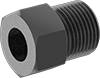
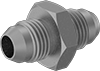
Also known as JIC (Joint Industrial Council) fittings, these connect to tubing that is flared to 37°. They can handle higher pressures than 45° flared fittings.
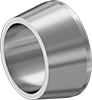
Also known as JIC (Joint Industrial Council) fittings, these provide a tight metal-to-metal seal on steel tubing that is flared to 37°.
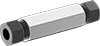
Use these sleeves with a nut and fitting to provide a tight metal-to-metal seal on steel tubing that is flared to 37°.
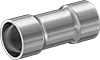
Use these nuts with a sleeve and fitting to provide a tight metal-to-metal seal on steel tubing that is flared to 37°.
The external hex bolt on these fittings allows for easy installation in cramped spaces.
Also known as JIS (Japanese Industrial Standard) fittings.
A single sleeve (ferrule) bites into tubing as you tighten the nut, creating a strong seal.
Use these sleeves with compression nuts and fittings, sometimes called bite fittings, to create a strong seal on steel tubing. They are also known as ferrules.
Use these nuts with compression sleeves and fittings, also known as bite fittings, to create a strong seal on steel tubing.
Pair these nuts with compression sleeves and high-pressure fittings. They withstand about twice as much pressure as nuts for standard compression fittings, so they’re good for hydraulic power applications.
Thicker walls make these fittings—sometimes called flareless or bite fittings—withstand about twice as much pressure as standard compression fittings, so they’re good for hydraulic power applications.
Use these sleeves—also known as ferrules—with high-pressure compression nuts and fittings. They withstand about twice as much pressure as sleeves for standard compression fittings, so they’re good for hydraulic power applications.
These fittings have two sleeves for extra gripping power. They bite into steel tubing as you tighten the nut to form a strong seal.
A tube adapter sits flush against the flat face of the fitting so you can slide the steel tubing and fitting sideways to disconnect in cramped spaces. Also known as zero-clearance fittings.
Also known as JIC (Joint Industrial Council) fittings, these provide a tight seal on tubing that is flared to 37°.
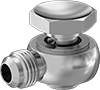
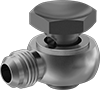
The external hex bolt on these fittings allows for easy installation in cramped spaces. They are also known as banjo-style fittings and JIC (Joint Industrial Council) fittings. They provide a tight seal on tubing that is flared to 37°.
With the best corrosion resistance of any metal fitting we offer, these Hastelloy fittings will stand up to aggressive chemicals and are resistant to pitting and stress cracking. Also known as instrumentation fittings, they include a nut with two sleeves.
These Monel fittings have the corrosion resistance to handle hydrofluoric and sulfuric acid. Also known as instrumentation fittings, they include a nut with two sleeves.
Made of high-purity PVC with 316 stainless steel fittings, this hose won’t contaminate water. It’s often used to transfer deionized water in applications such as semiconductor manufacturing.
A female fitting on one end swivels until tightened, making it easy to install without rotating the entire hose.
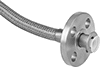
Use this durable, flexible hose in pressures up to 5,000 psi. Its braided construction gives it the highest pressure rating of any chemical hose in our offering.
Heat chemicals to prevent them from freezing or becoming too thick. With a self-regulating heating wire, the liquid inside this hose stays warm and keeps flowing.
Made of FEP (fluorinated ethylene propylene), this hose can stand up to chemicals at high temperatures.
No need for a gasket—this hose’s PTFE liner flares out as it passes through the flanges, so your line’s contents never touch the fittings.
You don’t need a lot of force to bend this low-pressure chemical hose. The extra flexibility makes it good for offset connections and tight spaces.
Transfer harsh chemicals while reducing vibration that could damage pumps or other equipment.
Change the fuel source for your propane torch from a fuel cylinder to a propane tank. This hose is often used for extended-use applications, or when a propane tank can’t be moved.
Rated for low-pressure applications up to 500 psi, this hose works well as a return line in your hydraulic system.
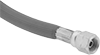
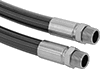
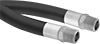
Although only half the weight, this hose resists wear and tear 240 times better than our standard rubber hydraulic hose. The fittings come attached, so this hose is ready to connect to a male threaded fitting on one end and a female one on the other.
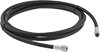
Made of nylon with a polyurethane cover, this hose is half the weight but 240 times better at resisting wear and tear than our standard rubber hydraulic hose. The male threaded fittings come already attached to save you time.
Although only half the weight, this hose resists wear and tear 240 times better than our standard rubber hydraulic hose. It comes with female threaded fittings already attached, so it’s ready to use right out of the box.
The new standard for rubber hydraulic hose, this hose bends twice as sharply and resists wear and tear 80 times better than our basic hydraulic hose.
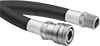
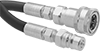
For frequent connections, this hose has a socket end that's faster to connect and disconnect than a threaded fitting. Thanks to two layers of blended rubber, this hose bends twice as sharply and resists wear and tear 80 times better than our basic hydraulic hose.
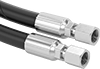
The new standard for rubber hydraulic hose, this hose bends twice as sharply and resists wear and tear 80 times better than our basic hydraulic hose. To save you time, it comes with male threaded fittings already attached.
For frequent connections, this hose has a socket end that's faster to connect and disconnect than a threaded fitting. This hose bends twice as sharply and resists wear and tear 80 times better than our basic hydraulic hose, thanks to its two layers of blended rubber.
The new standard for rubber hydraulic hose, this hose bends twice as sharply and resists wear and tear 80 times better than our basic hydraulic hose. It comes with female threaded fittings already attached, saving you time.
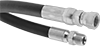
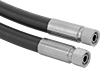
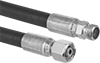
The new standard for rubber hydraulic hose, this hose bends twice as sharply and resists wear and tear 80 times better than our basic hydraulic hose. The fittings come attached, so this hose is ready to connect to a male threaded fitting on one end and a female one on the other.
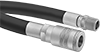
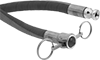
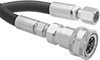
When you need access to your line, don’t waste time threading and unthreading your fittings. This hose has a quick-disconnect fitting on both ends. It bends twice as sharply and resists wear and tear 80 times better than our basic hydraulic hose.
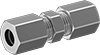
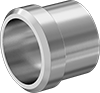
Use this hose to transfer fluid between pumps, cylinders, and other parts of your hydraulic system. It comes with female threaded fittings already attached, so it’s ready to use right out of the box.
Use this hose to transfer fluid between pumps, cylinders, and other parts of your hydraulic system.
Transfer fluid between pumps, cylinders, and other parts of your hydraulic system.
With four steel wire spirals for reinforcement, this hose handles rapid changes in pressure and flow without bursting.
To handle rapid changes in pressure and flow without bursting, this hose is reinforced with four steel wire spirals. It comes with male threaded fittings already attached, so it's ready to use right out of the box.
Internally reinforced with four steel wire spirals, this hose resists bursting from rapid changes in pressure and flow. To save you time, this hose comes with female threaded fittings already attached.
Made of tough Buna-N rubber, this hose has the durability to stand up to gasoline, fuel oil, and other petroleum-based products.
With a tighter bend radius than other petroleum hose, this hose can easily twist and turn around equipment.
Commonly used to transfer gasoline, this hose is also known as curb pump hose.
Metal hose fittings have better durability than plastic barbed hose fittings.
Fittings are metal for better durability than plastic barbed hose fittings. They have sharper barbs than standard barbed hose fittings to grip push-on hose without the need for clamps or ferrules. The more you pull on the fittings, the tighter the hose will grip.
The female connector screws directly onto the hose without the need for a separate adapter. When assembled, the fitting compresses against the hose, forming a strong seal. Also known as reusable fittings, they can be unscrewed from the hose end and used on a new hose.
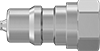
The industry standard for quick-disconnect couplings, these are also known as industrial interchange couplings. Compatible with Industrial-shape plugs and sockets.
Couplings allow for maximum flow because there's no shut-off valve in the plug or the socket. Compatible with Open-Flow-shape plugs and sockets.
Also known as automotive couplings. Compatible with Tru-Flate-shape plugs and sockets.
A slim body allows these couplings to fit into tight spaces. Compatible with Compact-shape plugs and sockets.
Larger, heavier, and rated for pressures up to 10,000 psi, these couplings maximize flow in high-pressure washing applications, such as water blasting.
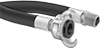
These couplings have a lower profile than other claw-style couplings to fit in cramped spaces. They consist of a plug and a socket that connect with a quarter twist. Also known as Bowes couplings.
Also known as Thor couplings, these have two locking points to give you twice the gripping power of standard grip-lock couplings. They consist of a plug and a socket that connect with a quarter twist.
Crimp these fittings onto hydraulic hose for a permanent, leak-tight connection. Since they crimp on, they handle higher pressure than screw-on fittings.
Fittings are threaded on both ends so you can connect them directly to a threaded hose or to pumps, cylinders, and other equipment in your hydraulic system.
Also known as live swivels, these fittings swivel continuously 360° before and after installation. This not only makes installation easier, but also eliminates the twisting and kinking that can cause hose failure. Fittings are threaded on both ends so you can connect them directly to a threaded hose or to pumps, cylinders, and other equipment in your hydraulic system.
Fittings have sharp barbs that grip push-on hose with no clamps or ferrules required. The more you pull on the fittings, the tighter the hose will grip. Use in low-pressure hydraulic applications up to 350 psi.
Create or repair D.O.T. hose assemblies in the field with just a wrench and a vise, no crimper required.
With just a vise and a wrench, make or repair hose assemblies in the field.
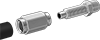
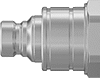
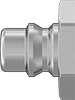
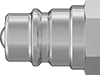
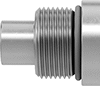
Use these couplings at pressures up to 5,000 psi. They consist of a plug and socket that connect and disconnect quickly. Use them if you need frequent access to a line. They are compatible with International Standard ISO B-shape plugs and sockets.
Use these couplings at pressures up to 10,000 psi. The plug and socket thread together to form a stronger connection than other quick-disconnect couplings. They are compatible with High-Pressure Thread-Lock-shape plugs and sockets.
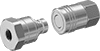
Use these couplings at pressures up to 10,000 psi. Also known as flush-face couplings, the plugs and sockets have a flat face, which allows them to mate close together, reducing fluid loss when connecting and disconnecting the line. They are compatible with High-Pressure Minimal-Spill-shape plugs and sockets.
Use these couplings at pressures up to 7,200 psi. Also known as flush-face couplings, the plugs and sockets have a flat face, which allows them to mate close together, reducing fluid loss when connecting and disconnecting the line. They are compatible with International Standard ISO Minimal-Spill-shape plugs and sockets.
Use these couplings at pressures up to 6,500 psi. They consist of a plug and socket that connect and disconnect quickly. Use them if you need frequent access to a line. They are compatible with Snap-Tite H-Shape plugs and sockets.
Use these couplings at pressures up to 3,000 psi. They consist of a plug and socket that connect and disconnect quickly. Use them if you need frequent access to a line. They are compatible with Pioneer-shape plugs and sockets.
Ideal for lines with rapid changes in pressure and flow, these couplings have threads that lock them together. They connect more securely than push-to-connect couplings, whose bearings wear out in high-impulse conditions.
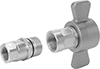
Made of brass with a steel wing nut, these couplings are tough enough to handle occasional drops to concrete and frequent connections on dump truck, oil rigs, and other heavy duty equipment. Compared to push-to-connect couplings, these are threaded, so they're easier to connect when there's pressure in your line.
Add quick connection points for mechanical gauges and other diagnostic equipment to your line. These couplings are also known as test ports and diagnostic couplings.
Use these couplings at pressures up to 5,000 psi. They consist of a plug and socket that connect and disconnect quickly. Use them if you need frequent access to a line. They are compatible with International Standard ISO A-shape plugs and sockets.
Use these two-piece fittings in grease and lubrication lines. They screw directly onto hose without the need for a separate adapter. When assembled, the fitting compresses against the hose, forming a strong seal. Also known as reusable fittings, they can be unscrewed from the hose end and used on a new hose.
Made of stainless steel, these hose fittings are more durable than plastic barbed hose fittings and have excellent corrosion and chemical resistance. Slide the barbed end into hose and secure with a clamp.
Each of these metal fittings is double bagged to prevent contamination in areas that require a high level of cleanliness.
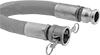
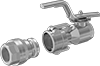
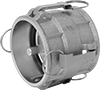
Couplings are metal, which has better durability than plastic cam-and-groove hose couplings. They consist of a plug and a socket that connect and disconnect quickly. Use them if you need frequent access to a line. To connect, insert the plug into the socket and push the levers down.
Couplings are plastic, which is lighter in weight than metal cam-and-groove hose couplings. They consist of a plug and a socket that connect and disconnect quickly. Use them if you need frequent access to a line. To connect, insert the plug into the socket and push the levers down.
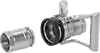
Couplings are metal, which has better durability than plastic cam-and-groove hose couplings. Also known as dry disconnects and double shut-off couplings, they have a shut-off valve in the plug and the socket for minimal fluid loss when disconnecting your hose line.
Connect your hose to a cam-and-groove vapor recovery valve.
To minimize fluid loss when connecting and disconnecting your line, these couplings have flat faces for a close fit and shut-off valves to stop the flow—they meet ISO 16028, which is an international standard for hose couplings.
Quickly connect and disconnect hose lines used with a variety of chemicals, from adhesives to isopropyl alcohol and ink. Any part of these couplings that contacts fluid is made from 316 stainless steel, C-276 Hastelloy, PTFE, or fluoroelastomer to withstand the chemicals in your line.
Also known as dry disconnects and double shut-off couplings, these couplings make connecting and disconnecting your line quick and virtually spill-free. Built to stand up to petroleum products, such as diesel fuel and gasoline, their body and gasket are made from materials that won’t corrode from oil.
Access your line without twisting the hose—these unions separate into three pieces.
Minimize chemical and petroleum spills during accidental disconnects, such as a driver pulling away during loading. These couplings have a shut-off valve on each half to stop flow when they’re separated.
Built with ball bearings, these fittings continuously swivel 360° before and after installation to prevent your hose from twisting, kinking, and failing. They’re made of 316 stainless steel, so they won’t corrode from a wide variety of chemicals, as well as fuels, gasoline, and oil.
Couplings consist of a plug and a socket that connect and disconnect quickly. Use them if you need frequent access to a line. They are designed for coolant applications up to 200 psi. Also known as coolant-line mold couplings.
Use these CGA fittings to connect welding hose to pressure regulators and torches.
These CGA adapters allow you to connect a hose to a propane torch.
These CGA adapters have a male threaded end that connects to a propane tank and a male threaded end that connects to welding hose.
Commonly used in low-pressure welding applications, these fittings connect downstream of your pressure regulator. Slide the barbed end into hose and secure with a crimp-on hose ferrule.
These couplings consist of a plug and socket that connect and disconnect quickly. Use them if you need to frequently link and unlink welding hoses, torches, and regulators. They are also known as CGA couplings.
Commonly used in high-pressure welding applications, these nipples connect your tank to the inlet of a pressure regulator. One side has a threaded pipe end and the other side has a rounded end that sits inside a threaded nut to make a threaded connection.
Designed to handle high-pressure welding applications, these CGA fittings are commonly used to connect pressure regulators to compressed gas tanks or cylinders.
Fittings meet NSF/ANSI Standard 61 for drinking water. Attach them to garden hose for a variety of water supply applications. They are metal for better durability than plastic garden hose fittings.
Fittings meet NSF/ANSI Standard 61 for drinking (potable) water.
Use these couplings when you need frequent access to a gas line. A complete coupling consists of a plug and a socket that connect and disconnect quickly.
Often used for loading and unloading gas tankers, these couplings are tough enough to handle frequent connections and designed to be virtually spill-free.
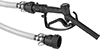
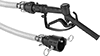
Quickly set up a line to dispense chemicals—these nozzles come with a hose and fittings that thread onto your drum or intermediate bulk container (IBC).
Dispense chemicals from a line that attaches and detaches from your drum or intermediate bulk container (IBC) in seconds. These nozzles and the included hose come with fittings that connect when you insert the plug into the socket and push the levers down.
Press these fittings onto stainless steel pipe using a crimping tool for a permanent, leak-tight connection that's faster than threading or welding and doesn't require heat.
Typically used with thick-wall and high-pressure stainless steel unthreaded pipe fittings.
Socket-connect fittings are easier to weld than butt-weld fittings because the fitting doesn't need to align perfectly to the pipe. Slip the pipe into the socket and weld.
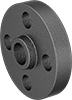
Use these heavy duty forged flanges for high-pressure applications.
Also known as Code 61 SAE hydraulic flanges.
Typically used with extreme-pressure stainless steel unthreaded pipe fittings.
Use these corrosion-resistant fittings in a low-pressure pipe line.
Unlike other stainless steel fittings, these are made in the U.S.A. for superior quality. As another marker of quality, they come with a certificate with a traceable lot number and test report that guarantees material composition.
Typically used with medium- to high-pressure stainless steel threaded pipe fittings.
Use these heavy duty, corrosion-resistant fittings in high-pressure flow applications.
Also known as Code 61 SAE hydraulic flanges, these let you create an access point in a high-pressure hydraulic line.
Also known as ANSI flanges.
Use these fittings in extreme-pressure conditions up to 15,000 psi.
These fittings are made to tighter tolerances than other stainless steel pipe fittings. They are also known as instrumentation fittings.
In addition to being lightweight, these aluminum fittings offer good corrosion resistance. Use them in low-pressure flow applications.
Use these fittings for low-pressure applications in noncorrosive environments.
To prevent leaks in low-pressure lines, the male threads on these fittings have an acrylic sealant already applied for extra protection.
The male threads on these fittings have a sealant applied for extra leak protection.
For use in noncorrosive environments, these fittings have better strength than our low-pressure iron and steel pipe fittings.
Typically used with high-pressure iron and steel threaded pipe fittings. Also known as Schedule 160.
These fittings can stand up to high-pressure applications. Use them in noncorrosive environments.
Also known as Pressure Class 1500 steel flanges, these have the strength to handle high pressures.
Combine an adapter with a two-piece pipe flange (sold separately) to build a customized flange connection for noncorrosive environments.
The heavy duty caps and plugs in these assortments come in various sizes and stand up to high-pressure flow applications. Made of steel, they’re for use in noncorrosive environments.
Typically used with high-pressure galvanized iron and steel threaded pipe fittings. Also known as Schedule 160.
A galvanized finish gives these fittings better corrosion resistance than our plain steel high-pressure fittings. Also known as Pressure Class 3000 fittings.
Typically used with extreme-pressure iron and steel threaded pipe fittings. Also known as Schedule XXH.
The strongest steel fittings we offer, these can withstand extreme-pressure applications.
These fittings are strong enough to handle extreme pressures, yet small enough to fit into cramped spaces.
Made to tighter tolerances than other steel pipe fittings, these are also known as instrumentation fittings.
Crimp these fittings onto steel pipe to form a tightly sealed connection that’s faster than threading or welding and doesn’t require heat.
FM-approved for fire protection applications, these flanges are cast iron, so they're brittle and can be quickly opened by hitting them with a sledge hammer.
Typically used with thick-wall and high-pressure iron and steel unthreaded pipe fittings. Also known as Schedule 80.
Socket-connect fittings are easier to weld than butt-weld fittings because the fitting doesn't need to align perfectly to the pipe. Slide the pipe into the socket and weld.
Forged for extra strength, these heavy duty unthreaded flanges can withstand high-pressure applications.
Typically used with extreme-pressure iron and steel unthreaded pipe fittings. Pipe is also known as Schedule XXH .
For excellent strength in extreme-pressure applications, choose these heavy duty Pressure Class 1500 flanges.
Also known as Pressure Class 6000 fittings, these heavy duty forged fittings are the strongest steel fittings we offer.
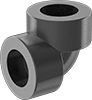
These brass fittings have the strength to handle high-pressure applications.
Not only do these brass fittings have the strength to handle high-pressure applications, the male threads have a sealant applied for extra protection against leaks.
Use these heavy-duty brass fittings for high-pressure drinking water applications.
Used in low-pressure pipe lines, these brass fittings have a plating that makes them shiny and improves corrosion resistance.
Extreme pressures are no problem for these heavy-duty brass fittings.
Choose these fittings when you need better strength than our low-pressure brass and bronze pipe fittings.
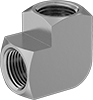
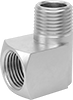
When you're unsure of the exact thread type you need, these fittings have universal threads that are compatible with the most common ones (NPT, NPTF, BSPP, BSPT).
Distribute compressed air, hydraulic fluid, or water from a single supply to multiple locations.
Provide a connection for hose cocks, needle valves, and nozzles by attaching these flanges and turrets to your supply pipe.
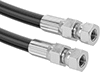
Use these fittings with hydraulic hose.
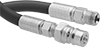
Connect a hose to a ram or pump.
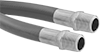
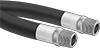
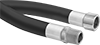
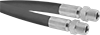
This steel-reinforced hose has male threads.