
We will reply to your message within an hour.
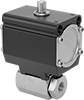
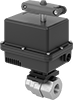
Use these valves in general purpose applications, such as those with water, oil, air, and inert gas.
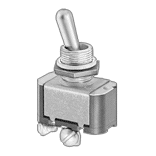
Start or stop flow with the flip of a toggle switch or the push of a button. They fit through a cutout, so the body of the valve stays safe inside your instrumentation panel.
Insert your tubing into the fittings of these valves with just a push—the internal rings will grip it tight. Made of plastic, these valves are a lightweight alternative to metal valves. All meet NSF/ANSI 61 for safe use with drinking water.
Push tubing into the fittings on these valves and an internal gripping ring and O-ring hold it tight—no heat, solder, or flux required. They meet either NSF/ANSI standards or are FDA compliant for use with food.
Control flow in lines where preventing leaks is critical, such as bottling lines. These valves have a compression sleeve that bites into tubing as you tighten the nut.
A low-profile handle allows these valves to fit in low-clearance pipelines for diesel fuel, fuel oil, and kerosene.
For use in general purpose applications with water, oil, and inert gas.
Limit wear and damage in high-cycling applications—these valves have additional seals that prevent leakage to reduce maintenance time.
For general purpose applications with water, oil, and inert gas.
Since both hands are required to simultaneously press the buttons, these valves protect workers from accidental machinery start-up. They create two actions, such as extending and then retracting a double-acting cylinder.
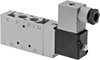
These valves create one action, such as extending a cylinder. Apply voltage to the electrical connection to actuate. They're also known as 3/2 valves.
Often used to extend and then retract a cylinder at different speeds, these valves create two actions and have two exhaust ports, which allows you to control the speed of each action by attaching a flow control valve to each exhaust port. Also known as 5/2 valves, they actuate when voltage is applied to the electrical connection.
These valves close all ports in the off position to stop equipment in a locked position with air pressure holding it in place. Often used to extend and then retract a cylinder at different speeds, they create two actions and have two exhaust ports, which allows you to control the speed of each action by attaching a flow control valve to each exhaust port. Apply voltage to the electrical connection to actuate.
In the off position, these valves exhaust all air pressure, allowing the equipment to return to the neutral position. Often used to extend and then retract a cylinder at different speeds, they create two actions and have two exhaust ports, which allows you to control the speed of each action by attaching a flow control valve to each exhaust port. Apply voltage to the electrical connection to actuate.
Also known as 4-way and 4/2 valves, these valves create two actions, such as extending and then retracting a cylinder. Use your foot to operate them, leaving your hands free to perform other tasks.
A simple automation solution that requires no programming, these valves are activated when an object, such as a box rolling on a conveyor, pushes the actuator. They create one action, such as extending a cylinder. Also known as 3-way and 3/2 valves.
Often used to extend and then retract a cylinder at different speeds, these valves create two actions and have two exhaust ports, which allows you to control the speed of each action by attaching a flow control valve to each exhaust port. They activate when an object, such as a box rolling on a conveyor, pushes the actuator. Also known as 4-way and 5/2 valves.
These valves create one action, such as extending a cylinder. Also known as 3/2 or pilot valves, they use an air signal to actuate, so they're good for environments where electrical use may be dangerous.
Often used to extend and then retract a cylinder at different speeds, they create two actions and have two exhaust ports, which allows you to control the speed of each action by attaching a flow control valve to each exhaust port. Also known as pilot valves and 4-way valves, they use an air signal to actuate, so they're good for environments where electrical use may be dangerous.
Mount valves to a single-station base or to a manifold, which allows a single pressure source for multiple valves, then add or remove valves as your needs change.
Also known as air fuses, these valves close automatically to turn airflow off when air volume exceeds the shut-off flow rate.
The industry standard for quick-disconnect couplings, these are also known as industrial interchange couplings. Compatible with Industrial-shape plugs and sockets.
Also known as automotive couplings. Compatible with Tru-Flate-shape plugs and sockets.
A slim body allows these couplings to fit into tight spaces. Compatible with Compact-shape plugs and sockets.
Use these couplings at pressures up to 10,000 psi. Also known as flush-face couplings, the plugs and sockets have a flat face, which allows them to mate close together, reducing fluid loss when connecting and disconnecting the line. They are compatible with High-Pressure Minimal-Spill-shape plugs and sockets.
Use these couplings at pressures up to 7,200 psi. Also known as flush-face couplings, the plugs and sockets have a flat face, which allows them to mate close together, reducing fluid loss when connecting and disconnecting the line. They are compatible with International Standard ISO Minimal-Spill-shape plugs and sockets.
Use these couplings at pressures up to 6,500 psi. They consist of a plug and socket that connect and disconnect quickly. Use them if you need frequent access to a line. They are compatible with Snap-Tite H-Shape plugs and sockets.
Use these couplings at pressures up to 10,000 psi. The plug and socket thread together to form a stronger connection than other quick-disconnect couplings. They are compatible with High-Pressure Thread-Lock-shape plugs and sockets.
Use these couplings at pressures up to 5,000 psi. They consist of a plug and socket that connect and disconnect quickly. Use them if you need frequent access to a line. They are compatible with International Standard ISO B-shape plugs and sockets.
Ideal for lines with rapid changes in pressure and flow, these couplings have threads that lock them together. They connect more securely than push-to-connect couplings, whose bearings wear out in high-impulse conditions.
Made of brass with a steel wing nut, these couplings are tough enough to handle occasional drops to concrete and frequent connections on dump truck, oil rigs, and other heavy duty equipment. Compared to push-to-connect couplings, these are threaded, so they're easier to connect when there's pressure in your line.
Use these couplings at pressures up to 5,000 psi. They consist of a plug and socket that connect and disconnect quickly. Use them if you need frequent access to a line. They are compatible with International Standard ISO A-shape plugs and sockets.
Use these couplings at pressures up to 3,000 psi. They consist of a plug and socket that connect and disconnect quickly. Use them if you need frequent access to a line. They are compatible with Pioneer-shape plugs and sockets.
Also known as dry disconnects and double shut-off couplings, these couplings make connecting and disconnecting your line quick and virtually spill-free. Built to stand up to petroleum products, such as diesel fuel and gasoline, their body and gasket are made from materials that won’t corrode from oil.
Use these couplings when you need frequent access to a gas line. A complete coupling consists of a plug and a socket that connect and disconnect quickly.